Apparel
Base layers for fishing: the number in the name is the whole spec
A hiker generates heat. You sit in a chair on a frozen lake for six hours. That difference is worth about 100 grams per square meter.
By Sawyer V. · Last updated · How we pick
The short answer
The number in a merino base layer’s name is its fabric weight in grams per square meter, and it is the only spec that decides the garment. Smartwool’s Merino 250 is 250 g/m². Minus33’s midweight is 245. Their lightweights are 150 and 170. Minus33’s heavyweight is 400. For fishing, buy heavier than a hiker would. A hiker is generating heat; you are sitting still in a boat or on a bucket, which is the coldest thing a person can do outdoors. Midweight, around 245 to 250 g/m², is the right default for most cold-weather fishing, and the heavyweight 400 earns its keep on ice.
Reel & Rig earns a commission from qualifying purchases made through links on this page, at no extra cost to you. It does not change which gear we pick or what we say about it. Full disclosure.
Quick picks
| # | Product | Best for | Price |
|---|---|---|---|
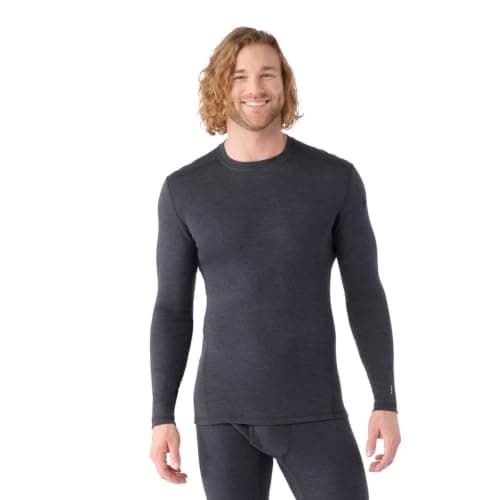
| 1 | Best base layer for fishing Smartwool Classic Thermal Merino Base Layer Crew Published at 250 g/m2, 100% merino next to skin over a nylon core. The reference midweight, and the weight most anglers should start at. | Cold-weather fishing generally - the default weight for sitting still | $125.00 · Check price on Amazon #ad how this is funded · price as of November 2, 2026 |
| 2 | 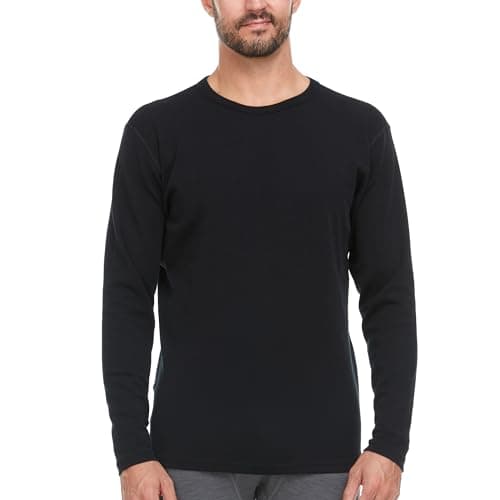 Best value at the same fabric weight Minus33 Midweight Merino Wool Crew Published at 245 g/m2 in 100% merino - within five grams of the Smartwool, at a meaningfully lower price. | Anyone who wants midweight merino without the Smartwool price | $89.99 · Check price on Amazon #ad how this is funded · price as of November 2, 2026 |
| 3 | 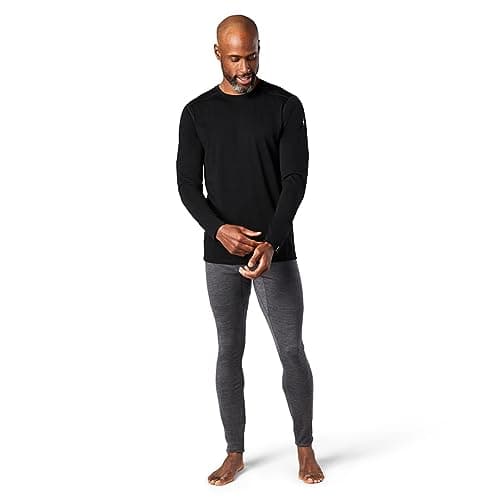 Best for mild days and moving around Smartwool Classic All-Season Merino Base Layer Long Sleeve Published at 150 g/m2 in the same core-spun merino construction. The weight to buy if you are moving rather than sitting. | Fall and spring, walking banks, and anyone who overheats easily | $100.00 · Check price on Amazon #ad how this is funded · price as of November 2, 2026 |
| 4 | 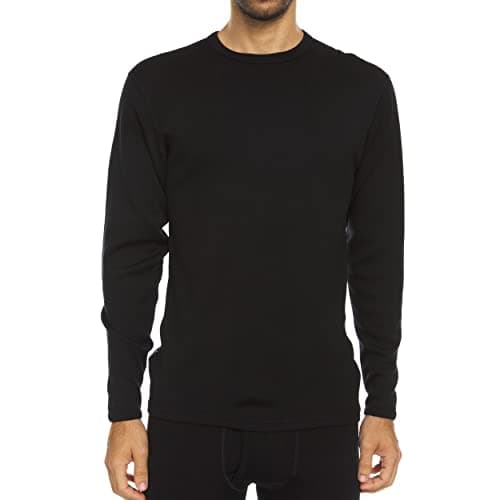 Best for sitting still in real cold Minus33 707 Expedition Weight Merino Wool Crew Published at 400+ g/m2 in 100% merino, with a published garment weight of 17 oz at size Large. The heaviest layer here by a wide margin. | Ice fishing, winter boat days, and anyone who stops feeling their hands | $149.99 · Check price on Amazon #ad how this is funded · price as of November 2, 2026 |
| 5 | 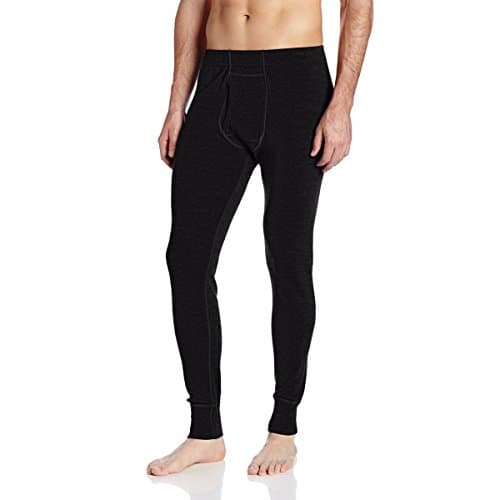 Best base layer bottoms Minus33 706 Midweight Merino Wool Bottoms Published at 245 g/m2 in 100% merino. The half of the system most anglers skip, on a boat seat that is conducting heat out of them. | Everyone, because almost nobody buys the bottom half and everybody should | $89.99 · Check price on Amazon #ad how this is funded · price as of November 2, 2026 |
The number in the name is grams per square meter
Merino 150. Merino 250. Midweight 245. Expedition 400. Every serious wool brand puts a number in the product name, and a startling number of buyers assume it is a model number or a warmth score out of some unstated maximum.
It is neither. It is the mass of one square meter of the fabric, in grams. A 250 fabric weighs 250 g per square meter. A 400 weighs 400. That is the entire convention, and once you know it the whole category becomes legible.
Both makers on this page publish it plainly. Smartwool labels the Classic Thermal fabric Midweight: 250g/m2 and the Classic All-Season fabric Lightweight: 150g/m2. Minus33 goes further and publishes its whole ladder on every product page: lightweight 170, midweight 245, heavyweight 400.
More weight means more warmth, more bulk, slower drying and more money. Less weight means the reverse. There is no cleverness beyond that, and any product that will not tell you its number is asking you to buy on adjectives.
Anglers should buy heavier than hikers do
This is the part the outdoor industry does not write for you, because most base layer copy is written for people who are moving.
A hiker is a heat engine. Climbing a hill in 20 degrees, a person produces several hundred watts of waste heat, and the base layer’s main job is moving sweat away fast enough that they do not soak the thing. For that job, light is right. A 150 is the standard recommendation and it is correct.
An angler is a passenger. Sitting in a boat seat at first light, or on a bucket over a hole, or standing in a run working a drift, you generate close to nothing. Nobody is going to sweat through a base layer on a bucket. The job changes from moisture management to insulation, and the right answer moves up the ladder.
That is the practical rule this page exists to give you: take whatever weight you would buy for hiking in the same temperature and go up one step. Hiking in a 150 means fishing in a 250. Hiking in a 250 means fishing in a 400.
The exception is the walk. If you have a long haul out to the spot with a sled or a pack, you will overheat on the way and then sit in damp wool, which is worse than being slightly cold the whole time. In that case dress for the sitting, carry the top layer, and put it on when you stop.
The ladder, side by side
| Weight class | Smartwool | Minus33 | What it is for, fishing |
|---|---|---|---|
| Lightweight | 150 g/m2 (Classic All-Season) | 170 g/m2 | Fall and spring, walking banks, people who run hot |
| Midweight | 250 g/m2 (Classic Thermal) | 245 g/m2 | The default for cold-weather fishing, sitting still |
| Heavyweight | Not published in this line | 400+ g/m2 | Ice, winter boat days - replaces the mid layer |
| Construction | 100% merino next to skin over a nylon core | 100% merino, no core | Core = more durable; no core = warmer, softer, more delicate |
The two midweights are five grams per square meter apart. Treat them as the same fabric weight and decide on construction and price instead.
Fabric weight and garment weight are different numbers
This trips people up constantly, and Minus33 is one of the few brands that publishes both clearly enough to see the difference.
Fabric weight is g/m² — the density of the cloth. It is a property of the material and does not change with size.
Garment weight is how much the finished shirt weighs. Minus33 publishes 9.6 oz (272 g) for its midweight crew at size Large and 17 oz (482 g) for the expedition crew at the same size. Those are whole-shirt numbers, and they change with size.
You will see retail listings quote a garment weight in grams next to a fabric weight in g/m² without distinguishing them, which is how a 250 g/m² shirt ends up described as “276 g” somewhere else and buyers conclude the numbers are unreliable. They are not unreliable; they are two different measurements. Compare fabric weight to fabric weight, always, and ignore any number that does not say which one it is.
What to look for, in order
1. The published fabric weight. If it is not published, do not buy it. This is a category where the one decisive spec is cheap for the maker to state, so a maker who will not state it is telling you something.
2. Whether the wool is cored. A nylon or polyester core inside the yarn buys durability at the cost of a little warmth and softness. Neither choice is wrong; they are different answers to how roughly you treat your clothes.
3. Top and bottom, not just top. The seat is in contact with you for the whole day. See the bottoms pick above.
4. Fit, which should be snug. A base layer works by holding a thin layer of warm air against your skin and moving moisture into the next layer. Loose defeats both. If you are between sizes and the layer is for fishing rather than sleeping in, size down.
5. Price, last and honestly. Merino is expensive and the cheap stuff is cheap for findable reasons. But two layers at the right weights beat four at the wrong ones, and this is a category where buying once is genuinely cheaper.
The one real mistake: cotton
Everything above is optimization. This is the actual error, and it is worth stating bluntly because people still make it every season.
Cotton holds something like its own weight in water, loses essentially all of its insulating value when wet, and then sits against your skin conducting heat out of you faster than bare skin would. A cotton t-shirt under a good bib is worse than no shirt under a good bib once you have sweated into it.
Merino holds warmth when damp and moves moisture outward. Synthetics dry faster and cost less but hold odor. Either is fine. Cotton is not a budget option here, it is a different and worse category of thing, and no amount of good outerwear rescues it. Our hand warmer page makes the same point from the other end: you cannot heat your way out of a bad layering system.
What this page does not cover, and why
Three real candidates were looked at and left off, and the reasons are all the same one.
Helly Hansen’s LIFA Merino line is a genuinely interesting two-layer construction, and it is not here because Helly Hansen does not publish reachable specifications for it and the retailers who stock it do not agree with each other. Three large retailers list the same garment at three different weights, and two of them describe its fiber content incompatibly. We are not going to pick between those and present the winner as a fact.
icebreaker’s Merino 175 Everyday is still in stock at retail but no longer appears in icebreaker’s own current range, which runs 150, 200 and 260. A product the maker has stopped publishing does not go on this page, for the same reason a discontinued rod does not.
The synthetic-merino blends — Carhartt’s Force line in particular — are reasonable products at roughly half the price, and they are off this page on naming grounds rather than quality. Carhartt sells Force Midweight in several near-identically-named variants, retailers describe the same style under different names, and the fiber split is reported differently depending on where you look. The risk of telling you a specific fabric spec for the wrong garment is too high. If budget is the binding constraint, a blend at half the price is a perfectly sensible buy; just read the fiber content on the listing in front of you rather than trusting a figure from anywhere else, including us.
The pattern across all three is worth naming, because it is the same standard applied on our how we pick page: we will publish a number when the company that made the thing publishes it, and not otherwise.
So what do I actually buy?
Midweight, around 245 to 250 g/m², for most cold-weather fishing. Lightweight if you are moving. Heavyweight for ice. Bottoms in whatever weight you bought the top.
Smartwool Classic Thermal Merino Base Layer Crew
$125.00250 g/m2, merino over a nylon core. The durable default.
#ad how this is funded · price as of November 2, 2026
Minus33 Midweight Merino Wool Crew
$89.99245 g/m2, 100% merino. The same weight for less, with less reinforcement.
#ad how this is funded · price as of November 2, 2026
Smartwool Classic All-Season Merino Base Layer Long Sleeve
$100.00150 g/m2. For moving and for milder days, not a cheaper midweight.
#ad how this is funded · price as of November 2, 2026
Minus33 707 Expedition Weight Merino Wool Crew
$149.99400+ g/m2, 17 oz at Large. Replaces your mid layer; size the bib for it.
#ad how this is funded · price as of November 2, 2026
Minus33 706 Midweight Merino Wool Bottoms
$89.99245 g/m2. The half everyone skips, against the cold thing you sit on.
#ad how this is funded · price as of November 2, 2026
The picks, in full
Every card below lists the specs we could read off a published page, the URL they came from, and one honest reason you might not want it.
1. Best base layer for fishing
Smartwool Classic Thermal Merino Base Layer Crew
Smartwool
Published at 250 g/m2, 100% merino next to skin over a nylon core. The reference midweight, and the weight most anglers should start at.
Smartwool publishes this fabric as 250 g/m² and classes it as midweight, which is why the line is also sold as Merino 250. That one figure tells you more about how the garment will perform than every other number on the page combined.
The construction detail worth understanding is the nylon core. Smartwool publishes this fabric as 100% merino wool next to the skin spun around a nylon core for durability. That is core-spun yarn, and it exists because pure merino at this weight wears out at the elbows and shoulders faster than anyone wants for the money. You get wool against your skin and nylon doing the structural work, which is the right compromise for a garment you will wear under waders and a shell strap.
Why 250 rather than something lighter: fishing is the rare cold-weather activity where you produce almost no heat. A hiker in a 150 is fine because the hiker is an engine. Sitting in a boat seat at first light, or on a bucket over a hole, you are a passenger — and the layer that felt perfect walking from the truck will be inadequate forty minutes later.
It is also the weight that still works under a bib. Our ice bibs and suits page tells you to size the suit over a base layer and a mid layer, and a 250 is what that sentence assumes.
The drawback
It is the most expensive way to buy 250 g/m2 of merino on this page, and Minus33 sells effectively the same fabric weight for about thirty dollars less. The nylon core also means it is not the 100% merino some buyers specifically want, which matters if you are chasing maximum warmth per gram rather than durability. And merino at this weight is slow to dry - if you soak it, it stays damp for the rest of the day in a way a synthetic would not.
Published specs
- Fabric weight
- 250 g/m2, which Smartwool classes as midweight
- Fiber
- 100% Merino wool next to skin, over a nylon core for durability
- Style
- SW016349
- Also sold as
- Smartwool markets this fabric as Merino 250
Specs read from Smartwool - Men's Classic Thermal Merino Base Layer Crew.
#ad how this is funded · price as of November 2, 2026
2. Best value at the same fabric weight
Minus33 Midweight Merino Wool Crew
Minus33
Published at 245 g/m2 in 100% merino - within five grams of the Smartwool, at a meaningfully lower price.
Minus33 publishes its midweight fabric at 245 g/m², against Smartwool’s 250. Five grams per square meter is not a difference any human being can feel. The price difference is one you can.
The honest distinction is construction rather than weight: Minus33 publishes this as 100% merino wool, with no nylon core. That cuts both ways. It is more wool against your skin and slightly warmer for the weight; it is also less durable at the wear points, which is exactly the problem the Smartwool core exists to solve.
Minus33 also publishes the garment weight — 9.6 oz (272 g) at size Large — which almost nobody does, and which is a genuinely useful second number. See the section below on why those two weights are not the same thing and should never be compared against each other.
One thing to know before ordering: the Amazon color option for this shirt reads “235 Midweight” while Minus33’s own site publishes 245 g/m² for its midweight fabric today. We have recorded both as published and have not tried to reconcile them. At this scale the distinction is academic — both numbers describe the same midweight fabric — but it is the kind of thing this page exists to point out rather than paper over.
The drawback
100% merino with no reinforcing core is the softer, warmer and less hard-wearing choice, and at this price you should expect to be careful with it rather than rough. The listing also labels the fabric 235 where the maker's site says 245, which is not a difference that will change your day but is an irritating thing to find on a product whose name is a number. Minus33 is also a smaller operation than Smartwool, and its Amazon listings carry less information - the brand name is not even in the title of this one.
Published specs
- Fabric weight
- 245 g/m2, which Minus33 classes as midweight
- Fiber
- 100% Merino wool
- Garment weight
- Minus33 publishes 9.6 oz (272 g) at size Large
- Maker's name for it
- Chocorua Men's Midweight Wool Crew
- Listing discrepancy
- The Amazon color option reads "235 Midweight" while Minus33 publishes 245 g/m2 for its midweight fabric today. Both figures are recorded as published; we have not reconciled them
Specs read from Minus33 - Chocorua Men's Midweight Wool Crew.
#ad how this is funded · price as of November 2, 2026
3. Best for mild days and moving around
Smartwool Classic All-Season Merino Base Layer Long Sleeve
Smartwool
Published at 150 g/m2 in the same core-spun merino construction. The weight to buy if you are moving rather than sitting.
Smartwool publishes this one at 150 g/m², classed as lightweight and sold as Merino 150. Same construction as the 250 — 100% merino next to skin over a nylon core — with a hundred grams per square meter less of it.
This is the right buy for a specific angler rather than a cheaper version of the 250. If you fish from the bank and walk between spots, wade rivers in fall, or simply run hot, a 250 will have you damp with your own sweat by mid-morning, and damp is how you get cold later. A 150 moves that moisture and keeps moving it.
It is also the layer that works across more of the year, which is what the All-Season name is about. A 250 is a genuinely seasonal purchase. A 150 gets worn in April and October as well as January, under a rain shell or on its own.
The mistake to avoid is buying this one because it is cheaper and then trying to use it for ice fishing. It is not an inadequate version of the midweight; it is a different tool.
The drawback
It is not enough on its own for sitting still in real cold, and the All-Season name encourages people to buy it as a do-everything layer that it is not. At a hundred dollars it is also not cheap for a lightweight shirt - the price gap to the 250 is smaller than the performance gap between them, so if you are buying only one, this is probably not the one.
Published specs
- Fabric weight
- 150 g/m2, which Smartwool classes as lightweight
- Fiber
- 100% Merino wool next to skin, over a nylon core for durability
- Style
- SW016952
- Maker's name for it
- Men's Classic All-Season Merino Base Layer Crew
- Also sold as
- Smartwool markets this fabric as Merino 150
Specs read from Smartwool - Men's Classic All-Season Merino Base Layer Crew.
#ad how this is funded · price as of November 2, 2026
4. Best for sitting still in real cold
Minus33 707 Expedition Weight Merino Wool Crew
Minus33
Published at 400+ g/m2 in 100% merino, with a published garment weight of 17 oz at size Large. The heaviest layer here by a wide margin.
Four hundred grams per square meter is a different category of garment. Minus33 classes it as heavyweight, publishes it at 400+ g/m² in 100% merino, and the 17 oz (482 g) published garment weight at size Large tells you honestly what you are putting on: this is a sweater that happens to go next to your skin.
Minus33’s own description names ice fishing first among its uses, which is unusual candor from a wool company and happens to be correct. Sitting over a hole in single digits is the coldest a person gets on purpose, and it is the one situation where a base layer this heavy stops being overkill.
The important thing to get right is that a 400 replaces your mid layer rather than adding to it. If you put a heavyweight base under a fleece under a bib, you will not fit in the bib and you will sweat in the first hour. Think of it as base and mid in one garment, and size the shell accordingly — which is the same point our ice fishing starter guide makes about every layer in the stack.
The drawback
It is expensive, it is bulky, and it is wrong for most fishing most of the year - this is a genuinely single-purpose garment. Seventeen ounces of wool also takes a long time to dry, so if you sweat into it on the walk out to the hole you will feel it for the rest of the day. And because it eats the space your mid layer would occupy, buying one may mean re-sizing the bib you already own.
Published specs
- Fabric weight
- 400+ g/m2, which Minus33 classes as heavyweight
- Fiber
- 100% Merino wool
- Garment weight
- Minus33 publishes 17 oz (482 g) at size Large
- Style
- 707
- Maker's name for it
- Yukon Men's Expedition Wool Crew
Specs read from Minus33 - Yukon Men's Expedition Wool Crew.
#ad how this is funded · price as of November 2, 2026
5. Best base layer bottoms
Minus33 706 Midweight Merino Wool Bottoms
Minus33
Published at 245 g/m2 in 100% merino. The half of the system most anglers skip, on a boat seat that is conducting heat out of them.
Most people buy a base layer top and stop. It is the single most common gap in a cold-weather fishing kit, and it makes the least sense when you think about what you are actually sitting on: a cold plastic or aluminum seat, or an upturned bucket, conducting heat out of you for six hours.
Minus33 publishes these at the same 245 g/m² midweight as its crew, in 100% merino, with a published garment weight of 9.6 oz (272 g) at size Large. Matching the weight top and bottom is the sensible default — there is no good reason to insulate your chest and not your legs when your legs are the part in contact with the cold thing.
Under waders this matters twice over, because water on the outside of a wader is pulling heat through it continuously. Our waders explained page covers why the wader itself does almost nothing for warmth; the layer under it is doing all of the work.
The drawback
Ninety dollars for long johns is a hard sell, and it is the item people cut when the basket gets expensive. Merino bottoms are also the garment most likely to pill at the seat and inner thigh, which is where 100% merino with no reinforcing core is at its weakest. And if you run hot while walking, midweight bottoms under waders can be too much on a mild day - there is no venting a pair of long johns.
Published specs
- Fabric weight
- 245 g/m2, which Minus33 classes as midweight
- Fiber
- 100% Merino wool
- Garment weight
- Minus33 publishes 9.6 oz (272 g) at size Large
- Style
- 706
- Maker's name for it
- Kancamagus Men's Midweight Wool Bottom
Specs read from Minus33 - Kancamagus Men's Midweight Wool Bottom.
#ad how this is funded · price as of November 2, 2026
Questions people actually ask
What does the number on a merino base layer mean?
It is the fabric weight in grams per square meter. Smartwool's Merino 250 is 250 g/m2; its Merino 150 is 150. Minus33 publishes 170 lightweight, 245 midweight and 400 heavyweight. More weight is warmer, bulkier, slower drying and more expensive. It is the only spec that decides the garment, which is why makers put it in the name.
What weight base layer is best for fishing?
Midweight - around 245 to 250 g/m2 - for most cold-weather fishing. The rule is to take whatever weight you would buy for hiking at the same temperature and go up one step, because fishing is the rare cold activity where you generate almost no heat of your own. For ice fishing, the 400 heavyweight is justified.
Is merino better than synthetic for fishing base layers?
For sitting still, generally yes: merino keeps insulating when damp and resists odor over multiple days, which matters on a trip. Synthetics dry faster and cost less, which matters if you are working hard and sweating. Both are acceptable. Cotton is the only genuinely wrong answer.
Why is 250 g/m2 different from 276 grams?
They measure different things. Fabric weight in g/m2 is the density of the cloth and does not change with size. A garment weight in grams is how much the whole shirt weighs and does change with size. Retail listings often quote one next to the other without saying which is which. Compare fabric weight to fabric weight only.
Do I need base layer bottoms for fishing?
More than you need the top, arguably. You are sitting on a cold seat or a bucket for hours, conducting heat out of your legs the whole time, and under waders there is water on the other side of the fabric pulling heat through continuously. Match the weight to your top; there is no reason to insulate one half and not the other.
Should a base layer be tight or loose?
Snug. It works by holding a thin layer of warm air against the skin and moving moisture outward into the next layer, and a loose fit defeats both jobs. If you are between sizes and it is for fishing rather than lounging, size down.
Can I wear a heavyweight base layer under a bib?
Yes, but treat it as your base and mid layer combined rather than adding it to an existing stack. A 400 g/m2 top under a fleece under a bib will not fit and will have you sweating within the hour. If you buy one, check it against the suit you already own before the first cold morning.
Read next
Sources
Prices on this page come from the retailer at request time and change without notice. If we cannot get a live one we say “check price” rather than show you a number that has gone stale. How we pick.