Guide
Waders explained: two materials, two foot types, one real decision
Breathable vs neoprene, stockingfoot vs bootfoot, what ply count means, and whether you need waders at all.

Reel & Rig
The category where the deciding property is comfort, because the best garment is the one you have not taken off.
Apparel is the one category on this site where the deciding property is not a number. A jacket that is genuinely waterproof and that you took off after an hour because it was clammy has protected you for one hour. A slightly less waterproof jacket you kept on all day has protected you all day.
That makes these pages read differently from the rod and reel ones. There are still published specifications — ply counts, neoprene thickness, sole types, size ranges — and we cite them. But manufacturers publish far less here than they do for tackle, and several of the figures anglers most want (garment weight, breathability ratings, hydrostatic head) are simply not stated on most product pages. We say so where that is the case.
What we can do is explain what the published construction actually implies, which trade-offs are real, and where the sensible cheap answer is genuinely as good as the expensive one.
Each of these carries a published-spec table for every pick, a current-price check on Amazon, and at least one thing we would skip.
Reel & Rig earns a commission from qualifying purchases made through links on this page, at no extra cost to you. It does not change which gear we pick or what we say about it. Full disclosure.
Guide
Breathable vs neoprene, stockingfoot vs bootfoot, what ply count means, and whether you need waders at all.
Picks
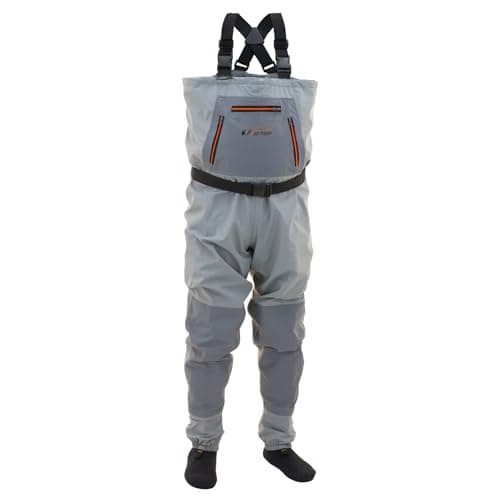
The Hellbender's published construction line by line, what each spec does, and how waders actually fail.
Best chest waders
$139.99Frogg Toggs Hellbender Stockingfoot Chest Wader
#ad how this is funded · price as of October 12, 2026
Picks
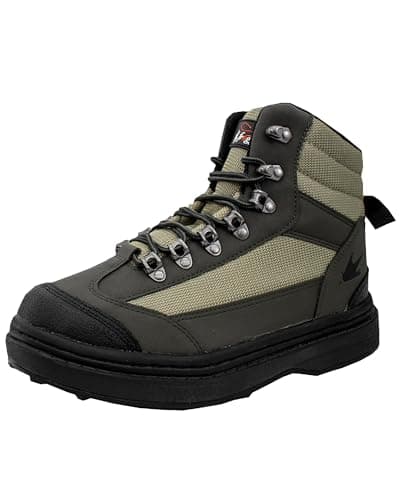
Felt against rubber on grip and legality, the published boot construction, and how to size over neoprene booties.
Best wading boots
$89.95Frogg Toggs Hellbender Cleated Wading Shoe
#ad how this is funded · price as of October 12, 2026
Guide
Why a packable two-piece beats a good jacket, what fishing rain gear needs that hiking gear does not, and the features that matter.
Guide
What UPF ratings mean, why water doubles your exposure, and the case for polarized lenses as safety gear.
Guide
How to choose fishing sunglasses: polarization, lens color by water and light, glass against polycarbonate, and fit.
Guide
Sun gloves, fish-handling gloves and cold-weather gloves compared, with what to look for in each.
Guide
What UPF ratings mean in practice, hooded against crew necks, fit, and why a sun shirt beats sunscreen.
Guide
Wide-brim hats against caps for fishing, why a dark underbrim matters, and what to look for in wind.
1. Sun protection. The cheapest, most-used and most-skipped item. If you fish in daylight you are exposed for hours at a stretch, often with water reflecting light back up at you.
2. Rain gear. Weather ends more sessions than anything except boredom, and a packable shell lives in a bag all season for the few days it saves.
3. Waders and boots, and only if you actually need to get into the water. A great deal of freshwater fishing is done from a bank, a boat or a kayak, and none of that requires waders.
Ply count on waders describes how many bonded fabric layers make up the upper. More plies is generally more durable and less breathable. Makers commonly publish three-, four- and five-ply, and often use more plies in the legs than the chest.
Neoprene thickness on booties, in millimeters, is an insulation figure. Three to five millimeters is the normal range, and it matters more than the upper fabric does for cold-water comfort, because feet get cold first.
Sole type on wading boots is the safety decision on this whole page. Felt grips wet rock far better than rubber; rubber is legal everywhere and travels better. Some states restrict felt because it transports invasive organisms between waters, so the rule where you fish decides this before preference does.
UPF on clothing is a fabric rating for how much ultraviolet light passes through. UPF 50+ is the practical ceiling and is widely published.
Rain shells and sun shirts. The physics is not complicated and the inexpensive options do the job. A packable two-piece rain suit at entry-level money is one of the best-value purchases in fishing.
Where it is not fine: wading boots, because the failure mode is falling over in moving water, and polarized sunglasses, where cheap lenses are genuinely worse at cutting glare and that is the entire reason to own them.
Only if you need to get into the water. Most freshwater fishing from a bank, a boat or a kayak needs none, and waders are the third apparel purchase rather than the first.
Felt grips wet rock noticeably better; rubber is legal everywhere and travels better. Several states restrict felt because it can transport invasive organisms between waters, so check the local rule before choosing on grip.
How many bonded fabric layers make up the upper. More plies is generally more durable and less breathable, and makers often use more plies in the legs than in the chest for exactly that reason.
Five complete builds. Each one is a rod, reel, line and starter lure selection chosen to work together for one species or one budget.
Beginner, bass, spinning, baitcasting and under-$100 combos, compared on the specs the makers publish rather than on the box copy.
Beginner rod picks plus the guides that make the spec sheet readable — power and action, graphite against fiberglass, and what a rod does that a pole does not.