Picks
The best spinning rods for a first real setup
Four beginner spinning rods ranked on power, action, line rating and lure rating, with the spec source for every figure.
Best overall
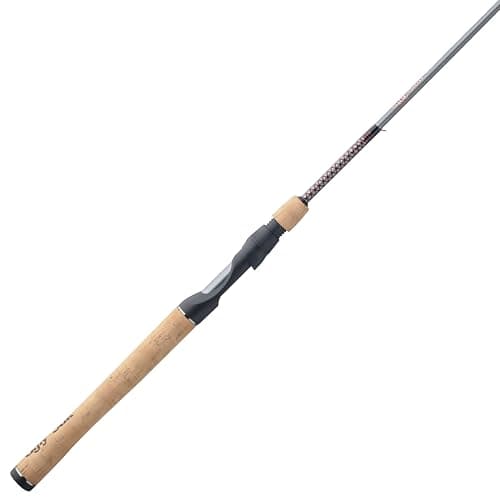
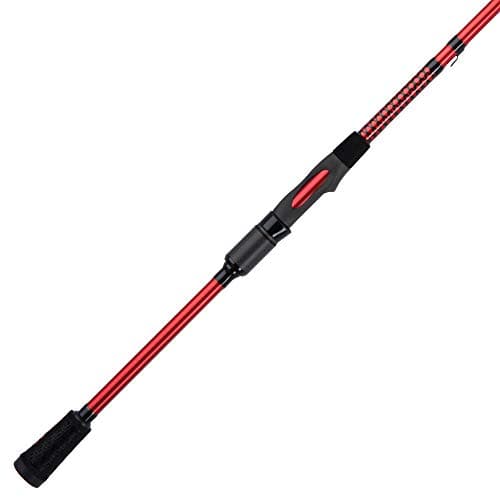
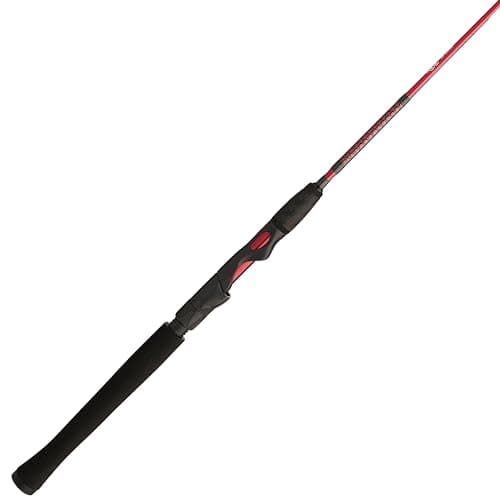
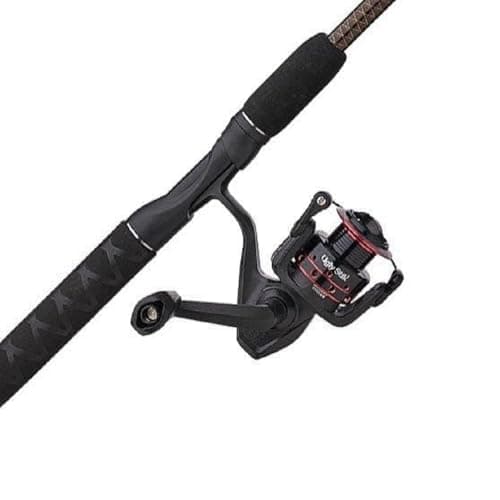
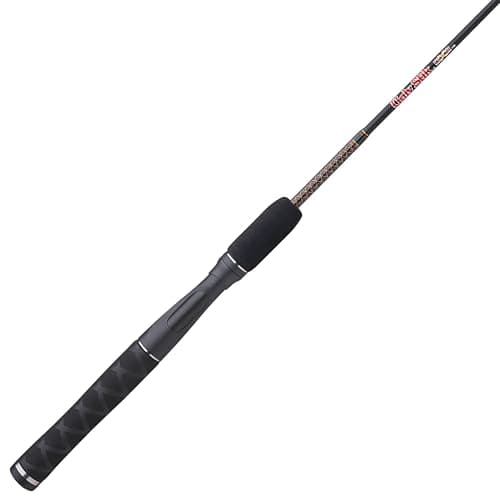
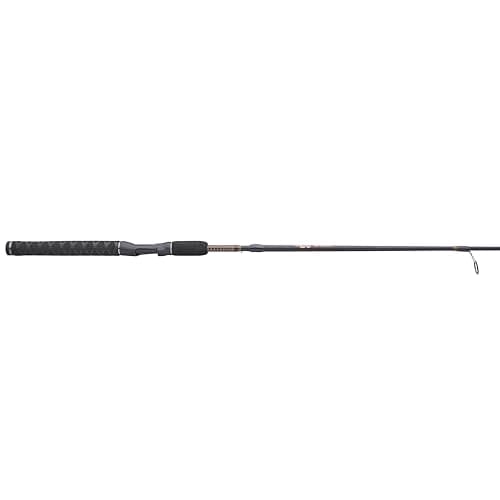
Check priceUgly Stik Elite Spinning Rod (7' Medium)

Reel & Rig
Power, action, line rating, lure rating. Four numbers printed above the handle that decide almost everything about how a rod fishes.
Every rod prints four numbers just above the handle, and once you can read them the rod aisle stops being intimidating. They are power, action, line rating and lure rating, and together they describe almost everything about how a rod behaves.
Power is stiffness — how much force it takes to bend the blank. It runs ultralight, light, medium-light, medium, medium-heavy, heavy. Action is where the bend happens. A fast action bends in the top third and stays stiff below; a moderate action bends further down toward the handle. Line rating is the range the blank was designed around. Lure rating is the weight window the rod loads properly with.
The lure rating is the one people ignore and shouldn’t. A rod casts by flexing under the weight of the lure and unloading. Under the window, there is not enough weight to bend it and your cast dies twenty feet out. Over the window, you are loading the blank past what it was designed for. This is why the same angler can cast beautifully with one rod and badly with another and blame themselves.
For a first real rod, the honest answer is boring: 6′6″ to 7′, medium power, fast action, rated somewhere around 6–14 lb line and 1/4–5/8 oz lures. That covers the overwhelming majority of freshwater fishing, and the reason nearly every entry-level rod is sold in that configuration is that it is genuinely the right default.
Each of these carries live prices, a published-spec table for every pick, and at least one thing we would skip.
Reel & Rig earns a commission from qualifying purchases made through links on this page, at no extra cost to you. It does not change which gear we pick or what we say about it. Full disclosure.

Picks
Four beginner spinning rods ranked on power, action, line rating and lure rating, with the spec source for every figure.
Best overall
Check priceUgly Stik Elite Spinning Rod (7' Medium)

Guide
The four decisions that pick a rod — length, power, action, ratings — in the order that actually resolves them.
Read the guide →
Guide
What power and action actually are, and a lure-by-lure table matching each technique to the rod it wants.
Read the guide →
Head to head
The real trade between graphite, fiberglass and composite blanks, decided by hook type rather than by price.
Read the guide →
Head to head
A rod has guides and a reel; a pole has neither. What that changes in practice, and which one you want.
Read the guide →
Picks
Bass rods sorted by technique — plastics, crankbaits, and distance from the bank — with published ratings for each.
Best for soft plastics
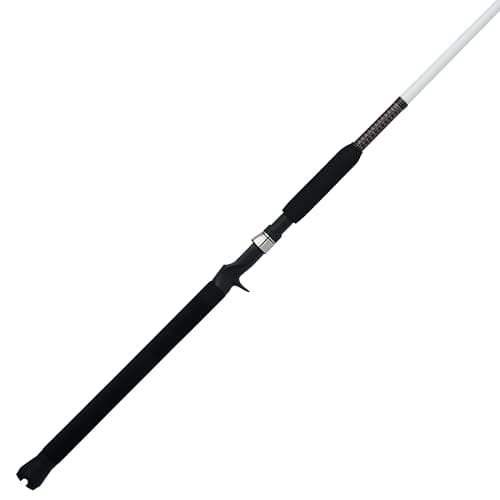
Check priceUgly Stik Carbon Spinning Rod (7' Medium)

Guide
Why rod length is a distance-versus-control trade, and which end of it your fishing actually needs.
Read the guide →Longer rods cast further and give you more leverage to move a fish; shorter rods are more accurate and easier to handle in tight spots. A 7′6″ rod like the St. Croix Triumph is a long-cast tool for open water and bank fishing. A 6′6″ is easier to work with under trees, from a kayak, or anywhere you are casting sidearm.
If you fish mostly from the bank, buy the longer rod. Distance is the constraint you cannot engineer around when you cannot move.
Graphite is stiffer and lighter for the same strength, which makes it more sensitive — you feel a jig ticking rock through a graphite blank in a way you do not through glass. It is also more brittle and less forgiving of a bad hookset.
Fiberglass is heavier and duller in the hand, and it bends further before it breaks. That forgiveness is genuinely useful for treble-hooked moving baits, where a stiff rod pulls hooks free on the hookset, and for anyone learning.
Most beginner rods are composites, and the marketing tells you the ratio without telling you what it means. Ugly Stik’s Elite blank is described as having 35% more graphite than the GX2 blank — that is a real, published difference, and it buys sensitivity at the cost of some of the near-indestructibility the GX2 is known for. The Carbon model goes further, to 100% 24-ton graphite with a solid graphite tip.
On a rod under about $60, the blank is rarely the weak point. The guides are. Cheap guides have inserts that crack, and a cracked insert saws through braid. The reason the Ugly Stik line uses one-piece stainless guides with a PVD coating instead of a ring-in-a-frame design is precisely that there is no insert to fall out.
Look at the reel seat too. If it flexes when you tighten a reel onto it, the rod will feel vague no matter how good the blank is.
We have not cast these rods. Sensitivity, in particular, is a hands-on property that no spec sheet captures — two rods with identical published numbers can feel completely different. What the published specs do tell you reliably is fit: whether a rod will cast the lures you own, hold the line you want, and reach the water you fish. That part is arithmetic, and we show our work.
Seven feet if you fish mostly from the bank, 6'6" if you fish from a kayak or in tight cover. Both are common in medium power with a fast action, which is the most versatile freshwater configuration.
Medium power means it takes a moderate amount of force to bend the blank — enough backbone to set a hook on a bass, soft enough not to tear hooks out of a crappie. Fast action means the bend happens in the top third of the rod, which makes hooksets quicker and bite detection sharper.
Neither, they are for different jobs. Graphite is lighter and more sensitive, which suits jigs, worms and anything where you feel the bite. Fiberglass bends further before breaking, which suits crankbaits and other treble-hook baits where a stiff rod pulls hooks free. Most beginner rods blend the two on purpose.
Yes, more than most people realize. A rod casts by flexing under the lure's weight. Below the rated window there is not enough weight to load the blank and your casts fall short; above it you are overloading the rod. Matching your lures to the printed window fixes more casting problems than practice does.
Five complete builds. Each one is a rod, reel, line and starter lure selection chosen to work together for one species or one budget.
Beginner, bass, spinning, baitcasting and under-$100 combos, compared on the specs the makers publish rather than on the box copy.
Spinning and baitcasting picks for a first real reel, plus the sizing guide that makes 2500 versus 3000 an actual decision instead of a guess.