Complete setup
A complete bass setup that matches your water
A matched bass setup in buy order, with the line-capacity and lure-weight math that makes the components agree.
Starts with the rod
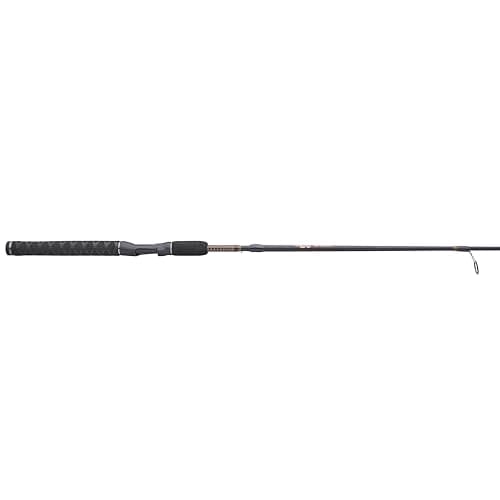
Check priceUgly Stik Elite Spinning Rod (7' Medium)

Reel & Rig
A rod, a reel, line and a handful of lures that actually work together — picked for one species, or one budget, and nothing else.
Almost every “best fishing gear” page treats a rod, a reel and a spool of line as three unrelated shopping decisions. They are not. A 7-foot medium-heavy rod rated 8–20 lb paired with a size-25 reel that holds 90 yards of 6 lb mono is a mismatch you can feel on the first cast, and nothing on either product page tells you so.
This section exists because we could not find a single competitor building the whole stack. Ten sites were checked while planning it. All ten publish “best rod” and “best reel” lists. None of them publish a matched setup. That is the gap.
Each page here picks one target — a species, or a total spend — and builds around it in the order you would actually buy: rod, then reel, then line, then a small, specific handful of lures. Every component says why it is there in terms of the numbers on the other components. When a rod is rated for 1/4–5/8 oz, the lure list stays inside that window. When a reel holds 130 yards of 8 lb, the line recommendation is a spool you can actually fill it with.
Two things these pages will not do. They will not print a running total, because five prices move independently and a total we typed last week is wrong today. And they will not tell you a $600 build is the “real” answer and the $150 one is a compromise. For a first real setup, the $150 one catches the same fish.
Each of these carries live prices, a published-spec table for every pick, and at least one thing we would skip.
Reel & Rig earns a commission from qualifying purchases made through links on this page, at no extra cost to you. It does not change which gear we pick or what we say about it. Full disclosure.

Complete setup
A matched bass setup in buy order, with the line-capacity and lure-weight math that makes the components agree.
Starts with the rod
Check priceUgly Stik Elite Spinning Rod (7' Medium)

Complete setup
A matched walleye setup with the reasoning for a softer rod and lighter line than the bass build.
Starts with the rod
Check priceUgly Stik Carbon Spinning Rod (7' Medium)

Complete setup
The light setup crappie fishing actually requires, and the lure-rating arithmetic that explains why a medium rod fails.
Starts with the rod and reel
Check priceUgly Stik GX2 Spinning Combo (5' Light / size 25)

Complete setup
A complete under-$200 build with the money deliberately allocated to the reel and the line rather than the rod.
Starts with the rod
Check priceUgly Stik Elite Spinning Rod (7' Medium)

Complete setup
The complete under-$100 build, with an honest account of what the budget gives up and what it does not.
Starts with the rod and reel
Check priceUgly Stik GX2 Spinning Combo (6'6" Medium / size 35)
The single most useful question is not “what rod should I buy” but “where am I standing when I cast.” A bank angler on a small lake, a kayak angler working weed edges, and someone casting off the back of a jon boat all need different lengths and different line. The gear follows the water.
Bank and shore fishing rewards length — a 7-foot rod buys you casting distance you cannot get any other way, and distance is most of the game when you cannot move the boat. From a kayak, a 6′6″ rod is easier to land a fish with when you are sitting down and the rod tip is three feet off the water. From a small boat, either works, and the decision comes down to what you are throwing.
Species matters less for the rod than people expect and much more for the line. Crappie and panfish are caught on 4–6 lb line with 1/32–1/8 oz jigs, which needs a light or medium-light rod to load properly. Bass on soft plastics and squarebills sit comfortably at 10–15 lb on a medium or medium-heavy. Walleye splits the difference and often wants a longer, softer tip for live bait rigs.
That is why our species builds differ mostly below the rod. The bass and walleye setups share more than you would guess; what changes is the line diameter and the lure box.
The under-$200 and under-$100 pages are not “the species builds, cheaper.” They are a different optimization. Under $100, the honest answer is a combo — a rod and reel sold together, balanced at the factory, at a price no separate purchase matches. Under $200 you can start splitting them, and the money is best spent on the reel, because a rough drag is the thing you will notice first and can least ignore.
We have not fished any of this gear. We compile the specifications the manufacturers and retailers publish, do the arithmetic where the arithmetic matters — line capacity against reel size, lure weight against rod rating, retrieve rate against technique — and show you where every number came from. Where a maker does not publish a figure, we say so instead of filling the gap.
That means these pages are good at matching components and honest about specs, and they are not a substitute for someone who has spent a season with a particular rod. Both kinds of information are useful. We only publish the kind we actually have.
Under about $100, buy the combo. A factory-matched combo at that price is better balanced than anything you can assemble from two separate budget purchases, and the reel included in a good combo is usually the same reel sold on its own. Above roughly $150, splitting them starts to pay, because you can put most of the money into the reel where you will feel it.
A complete, genuinely good freshwater setup — rod, reel, line and a starter lure selection — sits in the $120 to $250 range. Below about $80 the reel drag becomes the limiting factor. Above about $300 you are buying refinement rather than capability, which is worth it eventually and not on a first setup.
No. One 7-foot medium spinning setup with 10 lb line covers bass, walleye, catfish under about 10 lb, and most of what swims in a typical lake. A second, lighter setup for crappie and panfish is the highest-value addition after that, because 1/16 oz jigs simply will not cast on a medium rod.
It means the rod length is chosen for where you cast from, the line is chosen for what you are casting into, and the reel is sized so it holds a useful amount of that line. Those three decisions constrain each other. Buying the highest-rated item in each category independently is how people end up with a rod that will not load and a reel that runs out of line.
Beginner, bass, spinning, baitcasting and under-$100 combos, compared on the specs the makers publish rather than on the box copy.
Beginner rod picks plus the guides that make the spec sheet readable — power and action, graphite against fiberglass, and what a rod does that a pole does not.
Spinning and baitcasting picks for a first real reel, plus the sizing guide that makes 2500 versus 3000 an actual decision instead of a guess.