Ice
Portable Buddy against Little Buddy: which BTU a shelter actually needs
Two propane heaters from the same family, one twice the output of the other. Shelter floor area decides it, and the published coverage figures make that easy.
By Sawyer V. · Last updated · How we pick
The short answer
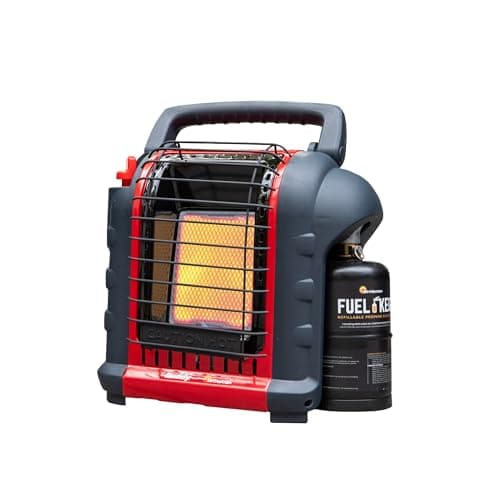
Buy the Portable Buddy for any two-person flip-over or hub: Mr. Heater publishes 4,000 or 9,000 BTU and 225 sq ft. Buy the Little Buddy only for a one-person shelter — it publishes 3,800 BTU and 95 sq ft. Both publish an oxygen depletion sensor, a tip-over shut-off, piezo ignition and a 7,000 ft elevation limit. Both are published as restricted in Massachusetts and Canada, which is the detail most buyers find out too late.
Reel & Rig earns a commission from qualifying purchases made through links on this page, at no extra cost to you. It does not change which gear we pick or what we say about it. Full disclosure.
Quick picks
| # | Product | Best for | Price |
|---|---|---|---|
| 1 | Best shelter heater Mr. Heater Portable Buddy (MH9BX, 9,000 BTU) Published 4,000 or 9,000 BTU, 225 sq ft, 3 h at max and 6 h at min on a 1 lb cylinder, ODS and tip-over shut-off. | Two-person flip-overs, hubs, and anyone who wants one heater to cover everything | $89.97 · Check price on Amazon #ad how this is funded · price as of October 12, 2026 |
| 2 | 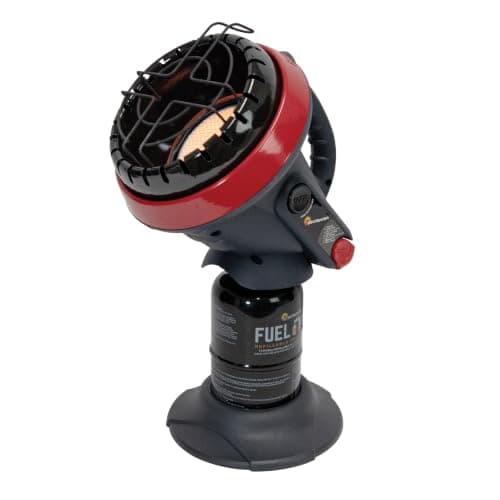 Best for a one-person shelter Mr. Heater Little Buddy (MH4B, 3,800 BTU) Published 3,800 BTU, up to 95 sq ft, 5.6 h on a 1 lb cylinder, ODS and tip-over shut-off. | Solo flip-overs, a bucket and a windbreak, or a heater that lives in the truck | $69.99 · Check price on Amazon #ad how this is funded · price as of October 12, 2026 |
The published figures, side by side
Both columns come from Mr. Heater’s own product pages, linked at the bottom. Where the manufacturer publishes a number without a unit, this table says so rather than guessing.
| Figure | Portable Buddy (MH9BX) | Little Buddy (MH4B) |
|---|---|---|
| Input | 4,000 or 9,000 BTU/hr | 3,800 BTU/hr |
| Coverage | 225 sq ft | Up to 95 sq ft |
| Run time, 1 lb cylinder | 3 h at max, 6 h at min | 5.6 h |
| Burn rate | 0.044 / 0.099 gal/hr | Not published |
| 20 lb tank option | Yes, optional hose and filter | No hose or regulator included |
| Ignition | Piezo | Piezo, push and hold |
| Oxygen depletion sensor | Yes | Yes |
| Tip-over shut-off | Yes | Yes |
| Thermostat | No | No |
| Maximum elevation | 7,000 ft | 7,000 ft |
| Indoor safe | Yes | Yes |
| Weight | 10.6, unit not stated | 5.85, unit not stated |
| Warranty | 1 year limited | 1 year limited |
| Restrictions | Massachusetts, Canada | Massachusetts, Canada |
Which one, by shelter
A one-person flip-over. Little Buddy. 95 sq ft of published coverage against roughly 10 to 12 sq ft of actual floor is ample, and 5.6 hours on a cylinder beats carrying spares.
A two-person flip-over. Portable Buddy, on the low setting. You are buying the 6-hour published run time at 4,000 BTU and keeping 9,000 in reserve for the morning it is well below zero.
A three- or six-person hub. Portable Buddy, and expect to run it on high when the wind is up. A hub has far more fabric surface and far more air volume than a flip-over, and our shelters page covers why floor area in square feet is the figure to read rather than the person count.
No shelter at all. Neither, really. A radiant heater in open wind heats the side of you facing it and nothing else. Spend the money on a bib and suit first — that is the order our beginner gear page puts them in, and it is the right order.
The safety systems, and what they do not cover
Both heaters publish an oxygen depletion sensor and a tip-over shut-off, and both are listed as indoor safe. Those are real protections and they are the reason these two models dominate ice fishing.
An ODS shuts the heater off when the oxygen concentration around it drops far enough. What it is not is a carbon monoxide alarm — it responds to oxygen depletion, not to CO accumulation, and those are different measurements. Our shelters page already makes the point that a propane heater inside a sealed shelter produces carbon monoxide; the honest conclusion is that you want a vent open and, if you fish a sealed hub regularly, a battery CO alarm that costs less than a pack of jigs.
The tip-over switch is the one that matters on ice specifically, because the floor is slippery, uneven and shared with an auger. Both publish it.
Neither publishes a clearance distance on the pages we read, which is the figure you would actually want when you are deciding how far the heater sits from a nylon shelter wall.
Two published details worth knowing before you order
Massachusetts and Canada. Mr. Heater publishes both heaters as restricted in Massachusetts and in Canada, and sells a separate MA/Canada version of the Portable Buddy. If you fish either, check which version a listing is actually shipping before you buy.
7,000 feet. The published maximum elevation is 7,000 ft on both. That rules out a good deal of Rocky Mountain ice, where the ODS can shut the heater down because there genuinely is less oxygen, not because anything is wrong.
What the manufacturer does not publish cleanly
Three gaps, stated because this is a safety-adjacent purchase and the numbers should be better than this.
Run time contradicts itself. On the Portable Buddy page, the specification table says 3 hours at max and 6 at min while the description on the same page says “up to 5.4 hours”. We have published the table figures and flagged the difference rather than picking the flattering one.
Weight and dimensions have no units. Mr. Heater publishes 10.6 and 14.25 x 9 x 15 for the Portable Buddy and 5.85 and 12 x 9.75 for the Little Buddy, with no unit stated on either page. Pounds and inches are the obvious reading, and we are not going to assert it as published when it is not.
No burn rate on the Little Buddy. The Portable Buddy publishes gallons per hour at both settings. The Little Buddy publishes none, so you cannot do the propane arithmetic on it directly — only the 5.6-hour run time.
So what do I actually buy?
Buy the bigger one unless you fish alone in a small flip-over. The price gap between them is small next to the cost of a shelter, and coverage headroom is what you want on the day it matters.
Mr. Heater Portable Buddy (MH9BX, 9,000 BTU)
$89.97Published 9,000 BTU and 225 sq ft, with a 20 lb tank option. The default for two people.
#ad how this is funded · price as of October 12, 2026
Mr. Heater Little Buddy (MH4B, 3,800 BTU)
$69.99Published 3,800 BTU, 95 sq ft and 5.6 h. Half the published weight, for a solo shelter.
#ad how this is funded · price as of October 12, 2026
The picks, in full
Every card below lists the specs we could read off a published page, the URL they came from, and one honest reason you might not want it.
1. Best shelter heater
Mr. Heater Portable Buddy (MH9BX, 9,000 BTU)
Mr. Heater
Published 4,000 or 9,000 BTU, 225 sq ft, 3 h at max and 6 h at min on a 1 lb cylinder, ODS and tip-over shut-off.
The published coverage figure is the one that decides this. 225 sq ft is more floor than any portable ice shelter has — a two-person flip-over is nearer 16 sq ft of fishable floor and a six-person hub is still well under a hundred. Buying the larger heater is not about matching the number; it is about having headroom on the coldest day, when you run the low setting and still stay warm.
The two output settings matter more than the maximum. Mr. Heater publishes 4,000 and 9,000 BTU, with burn rates of 0.044 and 0.099 gal/hr. In a small shelter you will run the low setting most of the time, which is the setting that gives the longer published run time — 6 hours against 3 on a single 1 lb cylinder.
It also accepts a 20 lb tank with an optional hose and filter, published. That is the configuration for anyone who fishes all day: a 1 lb cylinder is convenient and expensive per hour, and a 20 lb tank in the sled changes the arithmetic completely. Our sleds page covers what you can realistically drag out.
Piezo ignition, an oxygen depletion sensor and a tip-over shut-off are all published, and Mr. Heater lists it as indoor safe. There is no thermostat, so temperature control is the two settings and the door zipper.
The drawback
Mr. Heater's own product page contradicts itself on run time: the specification table says 3 hours at max and 6 at min, and the description on the same page says 225 sq ft of coverage "for up to 5.4 hours". The published weight (10.6) and dimensions (14.25 x 9 x 15) carry no units at all on the manufacturer's page. There is no thermostat, the published elevation limit is 7,000 ft, and it is listed as restricted in Massachusetts and Canada — check before you order.
Published specs
- Input
- 4,000 or 9,000 BTU per hour
- Coverage
- 225 sq ft
- Fuel
- Propane, 1 lb cylinder; 20 lb tank with optional hose and filter
- Run time
- 3 h at max BTU, 6 h at min BTU
- Burn rate
- 0.044 gal/hr at 4,000 BTU; 0.099 gal/hr at 9,000 BTU
- Ignition
- Piezo
- Oxygen depletion sensor
- Yes
- Tip-over shut-off
- Yes
- Maximum elevation
- 7,000 ft
- Indoor safe
- Yes
- Thermostat
- No
- Weight
- 10.6 (Mr. Heater does not state the unit)
- Dimensions
- 14.25 x 9 x 15 (Mr. Heater does not state the unit)
- Warranty
- 1 year limited
- Restrictions
- Massachusetts and Canada
Specs read from Mr. Heater - MH9BX Portable Buddy Heater.
#ad how this is funded · price as of October 12, 2026
2. Best for a one-person shelter
Mr. Heater Little Buddy (MH4B, 3,800 BTU)
Mr. Heater
Published 3,800 BTU, up to 95 sq ft, 5.6 h on a 1 lb cylinder, ODS and tip-over shut-off.
3,800 BTU and up to 95 sq ft is genuinely enough for one person in a solo flip-over, and the published weight makes the case: 5.85 against 10.6 for the Portable Buddy, on a manufacturer page that states no unit for either. Roughly half the weight is half the weight however it is measured, and on a sled you drag by hand that counts.
The run time is the quiet advantage. Mr. Heater publishes 5.6 hours, and publishes the same figure at max and min — this heater has one setting. Against the Portable Buddy’s 3 hours at max, a solo angler running a single 1 lb cylinder gets most of a day rather than most of a morning.
It carries the same published safety systems: oxygen depletion sensor, tip-over shut-off, piezo ignition, indoor safe, 7,000 ft elevation limit. Nothing about the safety case is cut down with the output.
This is also the one to own if the heater spends most of its life outside a shelter altogether — in a truck on the way out, under a bucket seat at a windbreak, or on the bank in late fall. Our ice fishing gear page puts a heater lower down the list than most people expect, and the Little Buddy is the cheapest honest way onto that list.
The drawback
One output setting and no thermostat, so your only controls are on and off and the shelter door. Mr. Heater publishes no hose and regulator with it, so there is no 20 lb tank option out of the box — you are on 1 lb cylinders, which is the expensive way to buy propane. 95 sq ft is a real ceiling: in a two-person hub on a bad day it will not keep up. Same 7,000 ft elevation limit and the same Massachusetts and Canada restrictions.
Published specs
- Input
- 3,800 BTU per hour
- Coverage
- Up to 95 sq ft
- Fuel
- Propane, one 1 lb disposable cylinder
- Run time
- 5.6 h (published the same at max and min)
- Ignition
- Piezo, push and hold
- Oxygen depletion sensor
- Yes
- Tip-over shut-off
- Yes
- Maximum elevation
- 7,000 ft
- Indoor safe
- Yes
- Thermostat
- No
- Hose and regulator
- Not included
- Weight
- 5.85 (Mr. Heater does not state the unit)
- Dimensions
- 12 long x 9.75 wide (Mr. Heater does not state the unit)
- Warranty
- 1 year limited
- Restrictions
- Massachusetts and Canada
Specs read from Mr. Heater - Little Buddy Heater.
#ad how this is funded · price as of October 12, 2026
Questions people actually ask
Is the Portable Buddy or the Little Buddy better for ice fishing?
The Portable Buddy for anything bigger than a one-person shelter. Mr. Heater publishes 9,000 BTU and 225 sq ft against the Little Buddy's 3,800 BTU and 95 sq ft, and the bigger heater has a low 4,000 BTU setting that runs 6 hours on a 1 lb cylinder.
How long does a Mr. Heater Buddy run on a 1 lb propane cylinder?
Mr. Heater's specification table publishes 3 hours at 9,000 BTU and 6 hours at 4,000 BTU for the Portable Buddy, and 5.6 hours for the Little Buddy. Note that the Portable Buddy's own product description gives 5.4 hours, which contradicts its spec table.
Are Buddy heaters safe inside an ice shelter?
Both publish an oxygen depletion sensor, a tip-over shut-off and an indoor-safe rating. An ODS is not a carbon monoxide alarm — it responds to falling oxygen, not to CO. Keep a vent open and use a battery CO alarm in a sealed hub.
What size heater do I need for an ice shelter?
Read the published coverage against your shelter's fishable floor area in square feet. A one-person flip-over is comfortably inside the Little Buddy's 95 sq ft; a hub wants the Portable Buddy's 225 sq ft so you can run it on the low setting most of the day.
Can you use a 20 lb propane tank with a Buddy heater?
With the Portable Buddy, yes — Mr. Heater publishes it as connecting to a 20 lb cylinder with an optional hose and filter. The Little Buddy ships with no hose or regulator, so it is a 1 lb cylinder heater out of the box.
Why are Buddy heaters restricted in Massachusetts?
Mr. Heater publishes Massachusetts and Canada as restrictions on both models and sells a separate MA/Canada version of the Portable Buddy. Check which version a listing ships before ordering if you fish either.
Do Buddy heaters work at altitude?
Up to a published 7,000 ft on both. Above that the oxygen depletion sensor can shut the heater down because there is genuinely less oxygen, which rules out a lot of high mountain ice.
Read next
Sources
Prices on this page come from the retailer at request time and change without notice. If we cannot get a live one we say “check price” rather than show you a number that has gone stale. How we pick.