Kayak
The best rods for kayak fishing
The rod aisle assumes you are standing up. From a seat three feet off the water, the arithmetic changes.
By Sawyer V. · Last updated · How we pick
The short answer
Buy around 6 ft 6 in for a kayak, rather than the seven feet you would buy for the bank. Two reasons, neither about casting: seated you have less leverage, and you land fish by reaching over the side — with a long rod the fish ends up further away than your arm reaches.
Reel & Rig earns a commission from qualifying purchases made through links on this page, at no extra cost to you. It does not change which gear we pick or what we say about it. Full disclosure.
Quick picks
| # | Product | Best for | Price |
|---|---|---|---|
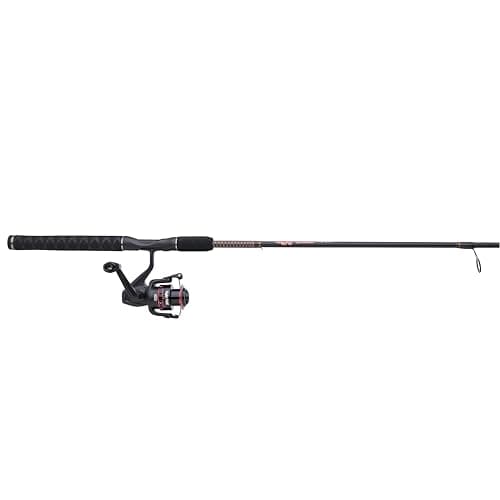
| 1 | Best overall for a kayak Ugly Stik GX2 Spinning Combo (6'6" Medium / size 35) 6 ft 6 in medium rated 6-15 lb and 1/8-5/8 oz, with a size 35 reel and a published 12 lb drag. | One outfit, correct length, nothing to think about | $79.95 · Check price on Amazon #ad how this is funded · price as of October 19, 2026 |
| 2 | 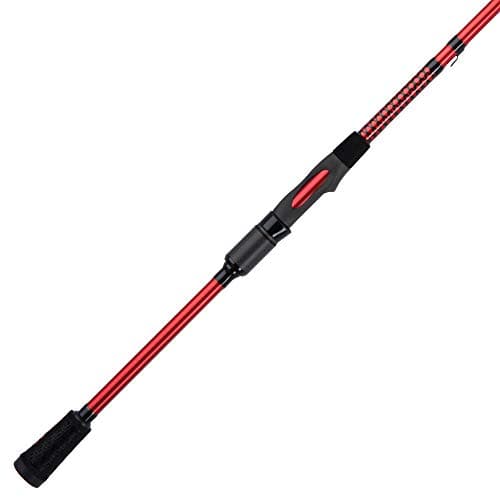 Best for feel Ugly Stik Carbon Spinning Rod (7' Medium) The 6 ft 6 in model is rated 6-12 lb and 1/8-1/2 oz on a 100% 24-ton graphite blank. | Jigs and plastics worked slowly along cover | $99.95 · Check price on Amazon #ad how this is funded · price as of October 19, 2026 |
| 3 | 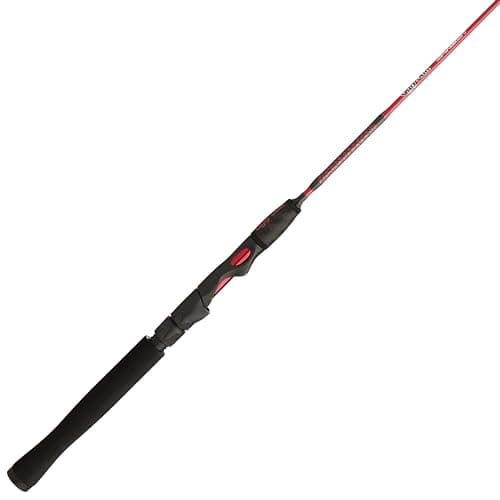 Best for panfish from a kayak Ugly Stik Carbon Crappie Spinning Rod (5'4" Ultra Light) The published range starts at 5 ft 4 in ultralight rated 2-6 lb and 1/32-1/8 oz. | Crappie and bluegill around brush and docks | $79.95 · Check price on Amazon #ad how this is funded · price as of October 19, 2026 |
Why length works against you in a kayak
In open-water rod buying, length is a distance-versus-control trade and longer usually wins for bank anglers. A kayak inverts most of that.
You are seated. Your rod tip starts around three feet above the water rather than six, so the effective arc of your cast is lower and a long rod is harder to keep clear of the water on the backcast.
You land fish by hand, over the side. This is the decisive one. Lift a rod to bring a fish to you and the fish sits at roughly rod-length away. On a 7 ft 6 in rod, that is further than you can reach from a seated position, and the standard fix — grabbing the line and hauling — is how fish come off at the boat.
You can reposition. Which removes the reason bank anglers buy length. A kayak moves silently to within casting range of anything.
There are obstacles everywhere. Paddle shaft, hatch covers, the seat, your own rod holders. Every inch of rod is another inch to catch on something.
The lengths, compared
| Length | In a kayak |
|---|---|
| 5 ft 4 in – 6 ft | Excellent control, easy landing. Short on casting reach; panfish territory |
| 6 ft 6 in | The sweet spot. Enough reach, still lands fish comfortably by hand |
| 7 ft | Workable, and the landing reach starts to be a nuisance |
| 7 ft 6 in + | Genuinely awkward seated. Buy this for the bank, not the boat |
Two rods, not four
The kayak-specific advice on quantity: carry two. One medium for general fishing, and either a light one for panfish or a second medium rigged with a different lure so you can switch without re-tying.
More than two becomes a hazard. Rods stick out, catch on branches, foul the paddle, and get stepped on during launch and landing. The people who carry six rods on a kayak are tournament anglers with purpose-built rod pods, and they still break tips.
Protecting the tips
Rod tips are the most commonly broken thing in kayak fishing, and almost none of the breaks happen while fighting a fish. They happen at the launch, at the car, and under a hatch lid.
Two habits that cost nothing: carry rods to the water separately from the boat rather than leaving them in it, and point them backwards past the stern when moving rather than forward where you cannot see them.
One-piece stainless guides help here too. There is no ceramic insert to crack when a rod gets knocked, which is the failure that quietly saws through braid later.
The picks, in full
Every card below lists the specs we could read off a published page, the URL they came from, and one honest reason you might not want it.
1. Best overall for a kayak
Ugly Stik GX2 Spinning Combo (6'6" Medium / size 35)
Ugly Stik
6 ft 6 in medium rated 6-15 lb and 1/8-5/8 oz, with a size 35 reel and a published 12 lb drag.
The length is the reason this leads. Six foot six is the kayak length, and buying it as a matched combo means the reel is sized to the blank and you are not assembling anything on a dock.
The published ratings are genuinely wide: 6–15 lb line and 1/8–5/8 oz lures. That width matters on a kayak because you are carrying one or two rods rather than six, so each one has to cover more ground.
Ugly Stik publishes a 12 lb maximum drag on the size 35 reel, which almost nobody in this price band states. It is more than enough for anything you will land sitting down.
The blank is the most fiberglass-heavy in the Ugly Stik range, and on a kayak that durability is worth more than it is anywhere else. Rod tips get caught in paddles, hatch covers and overhanging branches.
The drawback
It is a dull rod. You will feel a fish and you will not feel bottom composition or a light tap, so if you intend to fish jigs and soft plastics carefully from the kayak, the Carbon below is the better blank.
Published specs
- Model
- USGXSP662M/35CBO
- Rod length
- 6 ft 6 in
- Power
- Medium
- Line rating
- 6-15 lb
- Lure rating
- 1/8-5/8 oz
- Reel size
- 35
- Gear ratio
- 5.2:1
- Max drag
- 12 lb
- Bearings
- 3 ball + instant anti-reverse
Specs read from Ugly Stik GX2 Spinning Combo product page.
#ad how this is funded · price as of October 19, 2026
2. Best for feel
Ugly Stik Carbon Spinning Rod (7' Medium)
Ugly Stik
The 6 ft 6 in model is rated 6-12 lb and 1/8-1/2 oz on a 100% 24-ton graphite blank.
Ugly Stik publishes this range at 6 ft 6 in, 6 ft 8 in, 6 ft 10 in, 7 ft and 7 ft 3 in, so the kayak length exists within it rather than being a compromise pulled from a longer range.
The 6 ft 6 in medium is rated 6–12 lb and 1/8–1/2 oz with seven guides plus tip. Note that 1/8 oz bottom end — it means light jigs load the rod, which matters because kayak fishing is often slow, close-range work along weed edges rather than long casting.
The blank is published as Ugly Tech 100% 24-ton graphite with a solid graphite tip, so it transmits far more than the GX2 does.
The drawback
Graphite is more brittle, and a kayak is a hostile environment for rod tips — hatch covers, paddle shafts and getting in and out of the boat. If you are hard on gear, the composite is the safer buy.
Published specs
- Model
- USCBSP701M
- Length
- 7 ft
- Power
- Medium
- Action
- Fast
- Line rating
- 6-12 lb
- Lure rating
- 3/16-5/8 oz
- Guides
- 7 + tip, Ugly Tuff one-piece stainless
- Handle
- 14-1/2 in, split grip
- Blank
- Ugly Tech 100% 24-ton graphite, solid graphite tip
Specs read from Tackle Warehouse — Ugly Stik Carbon Spinning Rods.
#ad how this is funded · price as of October 19, 2026
3. Best for panfish from a kayak
Ugly Stik Carbon Crappie Spinning Rod (5'4" Ultra Light)
Ugly Stik
The published range starts at 5 ft 4 in ultralight rated 2-6 lb and 1/32-1/8 oz.
Kayaks are unusually good panfish boats. They get silently into the shallow brush and dock edges where crappie hold, and they let you fish vertically over cover you could never cast into accurately from the bank.
For that job you need a rod that casts 1/16 oz, and this range does. Ugly Stik publishes 5 ft 4 in and 6 ft ultralight models rated 2–6 lb and 1/32–1/8 oz, and light models from 6 ft 4 in up.
The short models are also the easiest rods to handle seated, which is a genuine secondary benefit rather than a consolation.
The drawback
It is a specialist. Rated to 8 lb line and 1/4 oz at the top of the light models, it is the wrong tool for bass in cover and hopeless for anything bigger. This is a second rod, not a first one.
Published specs
- Model
- USCBCRSP541UL
- Length
- 5 ft 4 in
- Power
- Ultra Light
- Action
- Moderate fast
- Line rating
- 2-6 lb
- Lure rating
- 1/32-1/8 oz
- Pieces
- 1
- Blank
- 100% graphite
- Guides
- Ugly Tuff one-piece stainless
- Warranty
- 10 years
- MSRP
- $79.95
Specs read from Ugly Stik - Carbon Crappie Spinning Rod, Compare All Models & Specs.
#ad how this is funded · price as of October 19, 2026
Questions people actually ask
What length rod is best for kayak fishing?
Around 6 ft 6 in. Seated your rod tip is only about three feet off the water, and you land fish by reaching over the side — with a 7 ft 6 in rod the fish ends up further away than your arm reaches.
How many rods should you take in a kayak?
Two. One medium for general fishing and either a light one for panfish or a second medium rigged differently. More than two becomes a hazard at the launch and under hatch lids, which is where most rod tips actually break.
Can I use my 7 foot bass rod from a kayak?
Yes, it just gets progressively more awkward. Seven feet is workable and the landing reach is a nuisance; 7 ft 6 in and up is genuinely difficult seated. If you are buying specifically for the kayak, buy shorter.
Are kayaks good for crappie fishing?
Unusually good. They get silently into shallow brush and dock edges where crappie hold, and let you fish vertically over cover you could never cast into accurately from the bank. Use a rod rated from about 1/32 oz.
Read next
Sources
Prices on this page come from the retailer at request time and change without notice. If we cannot get a live one we say “check price” rather than show you a number that has gone stale. How we pick.