Reels
Spincast vs spinning reels: the one you outgrow, and the one you don't
The closed-face push-button reel is the thing most people are graduating away from. Here is what it was actually good at, and what replaces it.
By Sawyer V. · Last updated · How we pick
The short answer
Buy spinning. A spincast reel hides its spool behind a nose cone and casts with a thumb button, which makes it genuinely easy on day one and limits it permanently. The enclosed cone restricts line capacity, adds friction that shortens casts, and makes the drag small and coarse. Spinning gear is nearly as easy and has no ceiling.
Reel & Rig earns a commission from qualifying purchases made through links on this page, at no extra cost to you. It does not change which gear we pick or what we say about it. Full disclosure.
The mechanical difference
A spincast reel is a closed-face design. The spool sits behind a metal or plastic nose cone with a small hole in it, the line feeds through that hole, and a thumb button releases it. It sits on top of the rod.
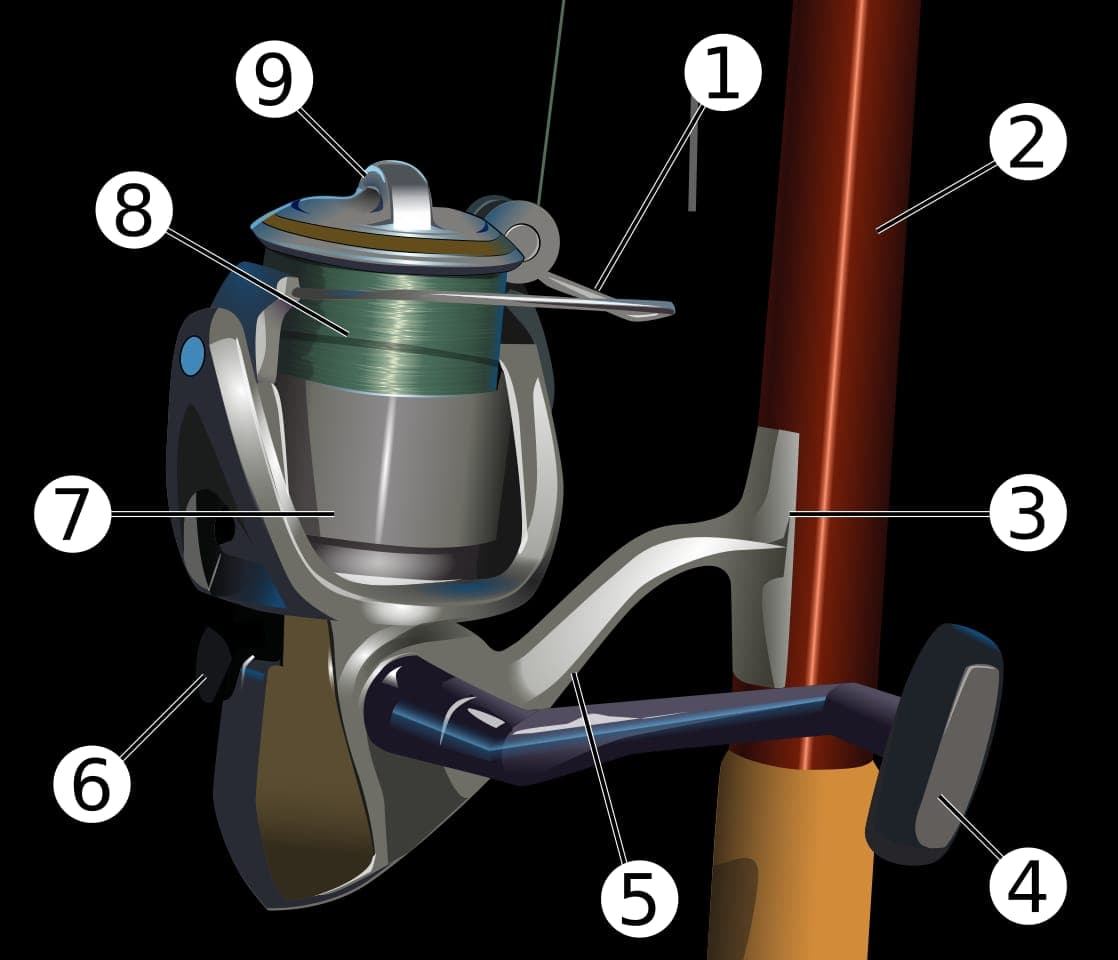
A spinning reel is open-faced. The spool is exposed, a wire bail lifts to release the line, and the line comes off the front of the stationary spool in coils. It hangs below the rod.
Everything below follows from that nose cone.
What a spincast is genuinely better at
Only one thing, and it is a real thing: the first hour. Press a button, swing, release the button. There is no bail to open, no line to trap under a finger, no timing to learn. For a young child, or for someone who wants a rod in a garage for the occasional pond visit, that simplicity has genuine value.
It is also harder to tangle when it is not being used, because the line is enclosed.
What the nose cone costs you
| Dimension | Spincast | Spinning |
|---|---|---|
| Casting distance | Short — line scrapes the cone hole | Long — line leaves a stationary spool freely |
| Line capacity | Small, and rarely published | Published in yards at multiple tests |
| Drag | Small stack, coarse adjustment | Larger stack, fine front-drag adjustment |
| Light lures | Poor — friction eats a light cast | Good down to 1/32 oz on the right rod |
| Braided line | Generally unsuitable | Standard, with a braid-ready spool |
| Fixing a tangle | Requires opening the cone | The spool is right there |
| Day-one ease | Best in class | Takes about ten minutes to learn |
Notice the second row. Every spinning reel we cover publishes its capacity precisely — a Pflueger President 30X holds 145 yd of 6 lb, a Daiwa BG2500 holds 210. Spincast reels are usually sold on the picture rather than the numbers, and that absence is itself informative.
The distance problem is the real one
The others are annoyances. This one changes what you can catch.
On a spincast, every foot of line has to turn a corner and pass through a small hole in the nose cone. That friction bleeds energy out of the cast continuously, and the effect gets worse with lighter lures because there is less momentum to spend.
From a boat you can often paper over it by moving. From the bank you cannot, and reach is the entire constraint. That is why a spincast reel feels fine on a small pond and frustrating on a real lake.
Learning spinning takes about ten minutes
The gap in difficulty is much smaller than the gap in capability, which is the whole argument.
- Hook the line with your index finger against the rod handle.
- Flip the bail open with your other hand.
- Cast, and let the line go off your finger as the rod comes forward.
- Close the bail by hand rather than by cranking.
That is the whole technique. The one habit worth forming from the start is closing the bail by hand — it reduces line twist over a season, and almost nobody is taught it.
When a spincast is still the right answer
Two cases, and we would not talk anyone out of either.
A young child. A push button and no bail means catching starts immediately rather than after a casting lesson, and that is what makes a first trip fun.
A rod that lives in a garage. If it comes out twice a summer for a pond, the enclosed line survives neglect better and nothing about the ceiling matters.
For anyone buying a first real setup — which is who this site is for — it is the wrong purchase, and the reason is that you will hit its limits within a season and buy again.
So what do I actually buy?
If you are moving off a push-button reel, this is the step up. A mid-size spinning reel with published capacity, or the whole outfit matched at the factory if you do not already own a rod.
Pflueger President Spinning Reel (30X)
$73.36The standard step up. 145 yd of 6 lb at 8.8 oz, with a braid-ready aluminum spool.
#ad how this is funded · price as of October 19, 2026
Ugly Stik GX2 Spinning Combo (6'6" Medium / size 35)
$79.95The complete outfit instead: 6'6" medium with a size 35 reel and a published 12 lb drag.
#ad how this is funded · price as of October 19, 2026
Pflueger President Spinning Reel (25X)
$73.02The small version, if what you liked about the spincast was how light it was.
#ad how this is funded · price as of October 19, 2026
Questions people actually ask
What is the difference between a spincast and a spinning reel?
A spincast is closed-face: the spool hides behind a nose cone and a thumb button releases the line. A spinning reel is open-faced with an exposed spool and a wire bail. The nose cone is what makes a spincast easy on day one and limited thereafter.
Is a spincast reel good for beginners?
For a young child or an occasional pond rod, yes. For anyone buying a first real setup, no — the enclosed cone costs casting distance, line capacity and drag quality, and you will hit those limits within a season.
Why do spincast reels cast so short?
Every foot of line has to turn a corner and pass through a small hole in the nose cone, and that friction bleeds energy out of the cast. It gets worse with lighter lures, because there is less momentum to spend.
Is a spinning reel hard to learn?
About ten minutes. Hook the line with your index finger, flip the bail open, release the line as the rod comes forward, then close the bail by hand rather than by cranking. That last habit reduces line twist over a season.
Read next
Sources
Prices on this page come from the retailer at request time and change without notice. If we cannot get a live one we say “check price” rather than show you a number that has gone stale. How we pick.