Rods
The best spinning rods for a first real setup
Four rods, compared on the four numbers that actually decide how a rod casts. Not on how they look in a photograph.
By Sawyer V. · Last updated · How we pick
The short answer
For a first real spinning rod, buy a 6′6″–7′ medium power, fast action blank rated around 6–14 lb line and 1/4–5/8 oz lures. That single configuration covers bass, walleye, catfish and most panfish. Go longer (7′+) if you fish mainly from the bank and need casting distance; go shorter (6′6″) if you fish from a kayak or in tight cover.
Reel & Rig earns a commission from qualifying purchases made through links on this page, at no extra cost to you. It does not change which gear we pick or what we say about it. Full disclosure.
Quick picks
| # | Product | Best for | Price |
|---|---|---|---|
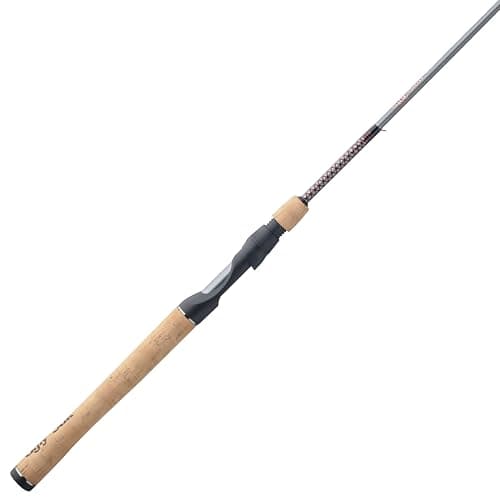
| 1 | Best overall Ugly Stik Elite Spinning Rod (7' Medium) The 7-foot medium sits exactly in the sweet spot, and the composite blank forgives more than a pure graphite rod does. | One rod that does nearly everything | $84.95 · Check price on Amazon #ad how this is funded · price as of October 19, 2026 |
| 2 | 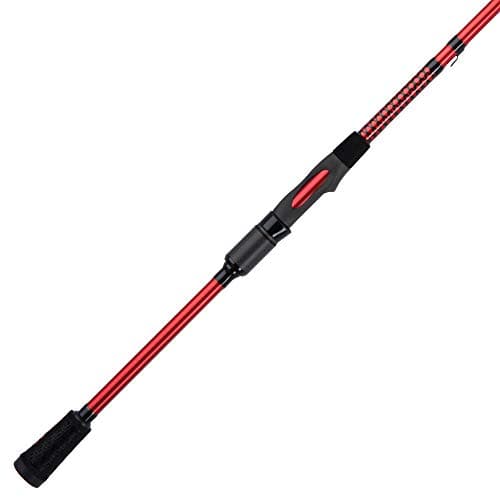 Lightest in the hand Ugly Stik Carbon Spinning Rod (7' Medium) 100% 24-ton graphite with a solid graphite tip. Sharper feedback than the Elite, at the cost of some forgiveness. | Long days and finesse presentations | $99.95 · Check price on Amazon #ad how this is funded · price as of October 19, 2026 |
| 3 | 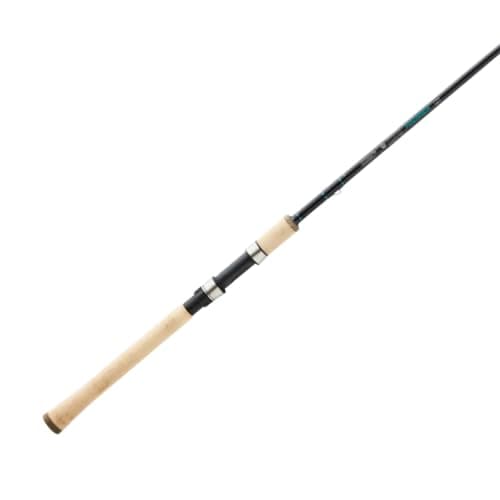 Best for bank fishing St. Croix Premier Spinning Rod (7'6" Medium) Seven and a half feet of SCII carbon. The extra length buys distance you cannot get any other way when you cannot move. | Maximum casting distance from shore | $185.00 · Check price on Amazon #ad how this is funded · price as of October 19, 2026 |
| 4 | 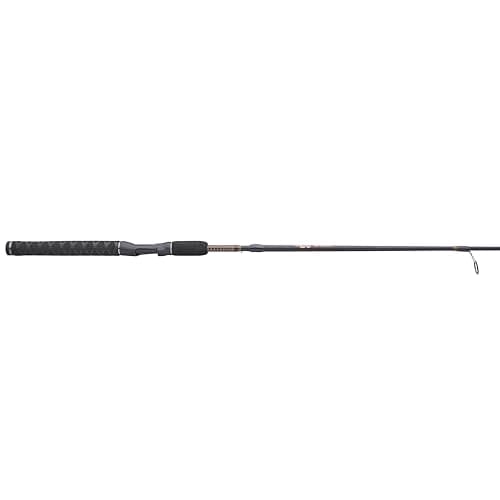 Cheapest one worth owning Ugly Stik GX2 Spinning Rod (7' Medium, 4-piece) The 7-foot four-piece medium is rated 6-15 lb and 1/8-5/8 oz, and it is close to indestructible. | A spare rod, or a genuinely tight budget | $59.95 · Check price on Amazon #ad how this is funded · price as of October 19, 2026 |
How we compared these
Four numbers, read off published spec tables and cross-checked against each other: length, power, action, and the two ratings. Where a maker or retailer does not publish a figure — rod weight and piece count are both missing from the Ugly Stik Carbon table, for instance — it is absent here rather than estimated.
What we did not do is fish them. Sensitivity in particular is a hands-on property that no spec sheet captures; two rods with identical printed numbers can feel entirely different. What published specs tell you reliably is fit: whether a rod will cast the lures you own, hold the line you want to use, and reach the water you can get to. That part is arithmetic, and it is what this page is for.
Why 7 feet, medium, fast is the default
It is not a marketing convention. It is a genuine optimum for freshwater, and the reason is the lure window.
A rod casts by flexing under the weight of the lure and unloading. A medium-power blank rated 1/4–5/8 oz loads correctly with the four lure types that catch most freshwater fish: a 3/8 oz squarebill, a 5-inch weightless stickbait (about 1/2 oz once wet), a 1/4 oz Texas-rigged worm, and a 3/8 oz spinnerbait. Move to medium-heavy and the lighter half of that list stops loading the rod. Move to medium-light and the heavier half overloads it.
Seven feet is the length where casting distance and control cross over for most people. And fast action — bending in the top third — gives you a tip soft enough to feel a bite and a mid-section stiff enough to drive a hook.
Reading a rod's line rating as a limit, not a suggestion
The line rating is the specification people override most often and should not. A rod rated 6–14 lb spooled with 30 lb braid has had its safety mechanism removed. In the intended system, the line breaks before the blank does. With braid well above the rating, that stops being true, and a hard hookset into a snag breaks the rod instead.
If you want to fish braid on one of these — and there are good reasons to — use a test that sits near the top of the printed range, or accept that you have to fish it more carefully. 20 lb Power Pro measures 0.009 inches, which is the diameter of 6 lb mono, so you are not giving up much castability to stay sensible.
One rod we would skip
Not a specific model, a whole category: the telescopic travel rod bundled with a reel and a little bag for around $35. They collapse to a foot long, which is genuinely useful, and every one of them has the same problem — the sections work loose while you cast, and the guides go out of alignment without you noticing until your line is grinding across a blank. If you need portability, buy a two-piece or a proper four-piece travel rod with a real ferrule.
What to buy after the rod
The reel, and it should cost more than the rod did. A rod either fits your fishing or it does not; a reel is a machine with a drag you feel on every fish. Our beginner spinning reel picks pair directly with everything on this page, and the reel sizing guide explains which size matches which rod.
The picks, in full
Every card below lists the specs we could read off a published page, the URL they came from, and one honest reason you might not want it.
1. Best overall
Ugly Stik Elite Spinning Rod (7' Medium)
Ugly Stik
The 7-foot medium sits exactly in the sweet spot, and the composite blank forgives more than a pure graphite rod does.
The published numbers are the ones you want on a first rod: 7 feet, medium power, fast action, rated 6–14 lb line and 1/4–5/8 oz lures. That lure window is wide enough for a 3/8 oz squarebill, a weightless 5-inch stickbait and a 1/4 oz jig without any of them feeling wrong, which is more than most rods manage.
The blank is Ugly Tech composite — graphite and fiberglass — and Ugly Stik publishes the difference against its own cheaper line as “35% more graphite than GX2 series.” That is a real, stated number rather than a vague claim, and it buys sensitivity while keeping enough glass in the blank that a hard hookset on a treble bait does not pull hooks free.
Seven guides plus the tip, one-piece stainless with a PVD coating. That construction matters more than it sounds: there is no ceramic insert to crack and saw through braid, which is the most common way a cheap rod fails. Premium cork on a 15½-inch handle.
The drawback
It is heavier in the hand than an all-graphite rod at the same price, and you can feel that after a few hours of casting. If you fish long sessions and want the lightest thing you can hold, the Carbon model below is the honest answer.
Published specs
- Model
- USELSP701M
- Length
- 7 ft
- Power
- Medium
- Action
- Fast
- Line rating
- 6-14 lb
- Lure rating
- 1/4-5/8 oz
- Guides
- 7 + tip, Ugly Tuff PVD stainless
- Handle
- 15-1/2 in, premium cork
- Blank
- Ugly Tech, 35% more graphite than GX2
Specs read from Tackle Warehouse — Ugly Stik Elite Spinning Rods.
#ad how this is funded · price as of October 19, 2026
2. Lightest in the hand
Ugly Stik Carbon Spinning Rod (7' Medium)
Ugly Stik
100% 24-ton graphite with a solid graphite tip. Sharper feedback than the Elite, at the cost of some forgiveness.
Where the Elite is a composite, this blank is published as Ugly Tech 100% 24-ton graphite with a solid graphite tip. The practical consequence is a rod that transmits more of what is happening at the lure — a jig ticking gravel, the mushy weight of a fish that took on the fall — and weighs less to hold all afternoon.
The 7-foot medium is rated 6–12 lb and 3/16–5/8 oz. Note that lighter bottom end against the Elite’s 1/4 oz: this rod loads with a 3/16 oz jig, which genuinely widens what you can fish. Seven guides plus tip, one-piece stainless, split grip on a 14½-inch handle.
If you already know you are going to fish soft plastics and jigs more than crankbaits, this is the better buy of the two Ugly Stiks.
The drawback
Graphite is less forgiving than composite in both directions — it is more brittle if you high-stick a fish, and it pulls trebles free on hard hooksets more readily than the Elite does. If crankbaits are most of your fishing, buy the Elite instead.
Published specs
- Model
- USCBSP701M
- Length
- 7 ft
- Power
- Medium
- Action
- Fast
- Line rating
- 6-12 lb
- Lure rating
- 3/16-5/8 oz
- Guides
- 7 + tip, Ugly Tuff one-piece stainless
- Handle
- 14-1/2 in, split grip
- Blank
- Ugly Tech 100% 24-ton graphite, solid graphite tip
Specs read from Tackle Warehouse — Ugly Stik Carbon Spinning Rods.
#ad how this is funded · price as of October 19, 2026
3. Best for bank fishing
St. Croix Premier Spinning Rod (7'6" Medium)
St. Croix
Seven and a half feet of SCII carbon. The extra length buys distance you cannot get any other way when you cannot move.
At 7′6″ this is the long-cast tool in the group. If you fish from the bank, distance is the constraint you cannot engineer around — you cannot reposition, so the only way to reach new water is to throw further. Every inch of rod length helps.
Rated 6–12 lb line and 1/4–5/8 oz lures, fast action, eight guides plus tip. The components are a step up from the entry tier: a premium full cork handle on an SCII carbon fiber blank, built in the USA. St. Croix publishes no grip length and no rod weight for this model, so neither is claimed here.
St. Croix publishes a limited 5-year warranty with a $60 service fee on this line. That is worth reading carefully — it is a real warranty with a real cost attached, not a free replacement promise.
The drawback
Seven and a half feet is genuinely awkward in a kayak, under overhanging trees, or anywhere you cast sidearm. If you are not fishing open water from shore, the length is working against you.
Published specs
- Model
- SCPS76MF
- Length
- 7 ft 6 in
- Power
- Medium
- Action
- Fast
- Line rating
- 6-12 lb
- Lure rating
- 1/4-5/8 oz
- Pieces
- 1
- Guides
- 8 + tip
- Handle
- Premium full cork; length not published
- Blank
- SCII carbon fiber
- Rod weight
- Not published
- Warranty
- 5-year limited, with a stated $60 fee
- Made in
- USA
Specs read from St. Croix Rod - Premier (SCPS76MF spec table).
#ad how this is funded · price as of October 19, 2026
4. Cheapest one worth owning
Ugly Stik GX2 Spinning Rod (7' Medium, 4-piece)
Ugly Stik
The 7-foot four-piece medium is rated 6-15 lb and 1/8-5/8 oz, and it is close to indestructible.
The GX2 is the baseline the rest of the Ugly Stik range is measured against — Ugly Stik itself describes the Elite blank in terms of how much more graphite it has than this one. What that means going the other way is that the GX2 has more glass in it, and glass bends a very long way before it breaks.
The 7-foot medium is a four-piece rated 6–15 lb line and 1/8–5/8 oz lures. That is the widest lure window in this roundup, and the four-piece construction means it packs down small enough for a car boot or a rucksack.
Same one-piece stainless Ugly Tuff guides with the PVD coating as the pricier models, and the shrink-tube handle instead of cork — less pleasant, far more durable when it lives in a truck bed.
The drawback
It is noticeably duller than anything else here. You will feel a fish and you will not feel much else — no bottom composition, no light taps. If sensitivity matters to how you want to fish, this is the wrong rod and the Carbon is the right one.
Published specs
- Model
- USGXSP704M
- Length
- 7 ft
- Power
- Medium
- Pieces
- 4
- Line rating
- 6-15 lb
- Lure rating
- 1/8-5/8 oz
- Blank
- Ugly Tech graphite + fiberglass, Clear Tip
- Guides
- 6, PVD-coated Ugly Tuff one-piece stainless
- Reel seat
- Ergonomic, with exposed blank
- Assembly
- Alignment markings printed on the ferrules
- Handle
- Shrink tube EVA
- Warranty
- 10 years
Specs read from Ugly Stik GX2 Spinning Rod product page.
#ad how this is funded · price as of October 19, 2026
Questions people actually ask
What is the best spinning rod for a beginner?
A 6'6" to 7' medium power, fast action rod rated around 6-14 lb line and 1/4-5/8 oz lures. That single configuration covers bass, walleye, catfish and most panfish, and it is why nearly every entry-level rod is sold that way.
Should a beginner buy a one-piece or two-piece rod?
Two-piece, if you drive to your fishing. Modern ferrules cost you very little in feel and the rod fits in a car without threading it through the cabin. One-piece keeps a small real advantage in sensitivity that matters mainly for finesse jig fishing.
How much should a beginner spend on a fishing rod?
Between $40 and $110 buys a rod that will not hold you back. Above that you are paying for lighter weight and sharper feedback, which is worth it eventually. If you are splitting a budget, spend more on the reel than the rod.
Does a longer rod really cast further?
Yes, meaningfully. A longer blank accelerates the lure through a longer arc, so a 7'6" rod throws further than a 6'6" one with identical technique. That is why bank anglers favor length and kayak anglers, who can reposition, do not.
Can I use braid on a beginner rod?
You can, but stay near the top of the rod's printed line rating rather than far above it. On a rod rated 6-14 lb, 20 lb braid is sensible; 50 lb braid removes the line's role as the weak point in the system and puts that load on the blank instead.
Read next
Sources
Prices on this page come from the retailer at request time and change without notice. If we cannot get a live one we say “check price” rather than show you a number that has gone stale. How we pick.