Apparel
Wading boots: the sole is the safety decision, and it may not be your choice
The one piece of fishing equipment where getting it wrong means falling over in moving water.
By Sawyer V. · Last updated · How we pick
The short answer
Felt soles grip wet rock noticeably better. Rubber soles are legal everywhere and travel between waters safely. Check your state rule first — several restrict felt because it transports invasive organisms. Then size up one to two sizes over your wader booties.
Reel & Rig earns a commission from qualifying purchases made through links on this page, at no extra cost to you. It does not change which gear we pick or what we say about it. Full disclosure.
Quick picks
| # | Product | Best for | Price |
|---|---|---|---|
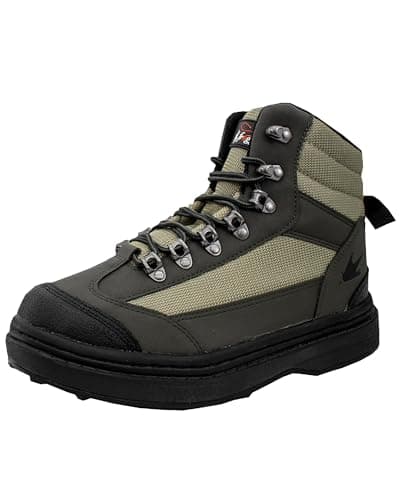
| 1 | Best wading boots Frogg Toggs Hellbender Cleated Wading Shoe Mesh and PVC upper on a polyurethane midsole, cleated outsole, speed laces, sizes 7 to 14. | General freshwater wading with stockingfoot waders | $89.95 · Check price on Amazon #ad how this is funded · price as of October 12, 2026 |
Felt vs rubber, honestly
This is not a close call on grip, and it is worth stating plainly before the legal complication.
| Felt | Rubber | |
|---|---|---|
| Grip on wet rock | Better, clearly | Adequate; varies by compound |
| Grip on mud and banks | Poor - it packs and slides | Better |
| On snow and ice | Poor | Poor without studs |
| Drying time | Slow - stays damp for days | Fast |
| Invasive species risk | High - holds organisms | Low |
| Legality | Restricted in several states | Legal everywhere |
Felt grips wet, algae-covered rock better than rubber because the fibers conform to the surface. On a slippery freestone river it is a real, felt difference.
It is restricted in several states precisely because it works that way: the same fibers hold water, mud and organisms, and a damp felt sole can move invasive species between watersheds days later.
Check the rule where you fish before you choose on grip. Regulations vary by state and change, so a current check with your state agency is the only reliable answer — we are not going to list rules here that may be out of date by the time you read them.
Studs, which change the answer
Carbide studs screw into either sole type and substantially improve grip on rock.
A studded rubber sole is genuinely close to plain felt on wet rock, and it is legal everywhere. For anyone who fishes multiple states, that combination is the sensible answer.
Two cautions. Studs are noisy on rock, which matters in shallow clear water where fish feel vibration. And never wear studded boots in a boat — they destroy decks and they slide on wet fiberglass.
Most boots take screw-in studs without any modification.
Sizing over booties
The single most common wading boot mistake: buying your street size.
A stockingfoot wader ends in a 4 mm neoprene sock, and that sock is inside the boot. That is a lot of extra material around your foot.
Go one to two sizes up from your normal shoe size. Boots built on a wide wading last, which the Hellbender publishes, allow for some of it, but not all.
Fit them wearing the actual waders if you possibly can. A boot that is snug in the shop with a thin sock will crush your foot in the water, and cold feet in a tight boot is a fast way to end a day.
What to look for beyond the sole
Drainage. Mesh panels or drain ports. A boot that holds water is a boot that weighs several pounds more on every step out of the river.
Ankle support. Wading is walking on uneven, invisible rock against current. A high, padded collar is doing real work, and this is the main advantage stockingfoot boots have over bootfoot waders.
Toe protection. You will kick submerged rocks you did not see. A reinforced toe cap is not cosmetic.
Lace hardware that works wet and cold. Speed laces with a locking clip are far easier with numb fingers than conventional eyelets.
Cleaning, which is a legal obligation in places
Between waters, clean and dry your boots. This is not fussiness: it is how invasive organisms spread, and in some states it is a requirement rather than a courtesy.
Scrub off mud and vegetation, rinse, and dry completely. Felt needs considerably longer than rubber and that difference is the whole reason for the restrictions.
Doing this also makes the boots last, because grit left in the mesh grinds at it.
So what do I actually buy?
Choose the sole by your state rule first and grip second. If you fish in more than one state, buy rubber and add studs.
Frogg Toggs Hellbender Cleated Wading Shoe
$89.95Cleated rubber sole, mesh and PVC upper, PU midsole, sizes 7 to 14. Also offered in felt.
#ad how this is funded · price as of October 12, 2026
Frogg Toggs Hellbender Stockingfoot Chest Wader
$139.99The stockingfoot waders these are sized to go over — 4 mm neoprene booties.
#ad how this is funded · price as of October 12, 2026
The picks, in full
Every card below lists the specs we could read off a published page, the URL they came from, and one honest reason you might not want it.
1. Best wading boots
Frogg Toggs Hellbender Cleated Wading Shoe
Frogg Toggs
Mesh and PVC upper on a polyurethane midsole, cleated outsole, speed laces, sizes 7 to 14.
The upper is published as lightweight mesh and PVC. Mesh matters more than it sounds: a wading boot is underwater, and a boot that drains and dries is a boot that is not a waterlogged weight on your foot for the rest of the day.
A polyurethane midsole is published for comfort. This is the layer between your foot and the rocks, and it is what stops a day of standing on cobbles becoming genuinely painful.
The cleated outsole is the version to pick where felt is restricted. Frogg Toggs publishes the same boot with a felt sole as a separate option, which is a useful arrangement — the boot is otherwise identical, so the sole really is the only decision.
Speed laces with a locking lace clip, a padded ankle collar, a nylon heel pull and enhanced toe and heel caps are all published. The wide wading last is deliberate: these are sized to go over a neoprene bootie, not over a sock.
Sizes 7 to 14, with a published 60-day warranty.
The drawback
A 60-day warranty is short for a boot that lives in water, and Frogg Toggs does not publish a boot weight — the figure that most determines how a wading boot feels after four hours. There is also no published half-size or width option, which matters more than usual on a boot you are fitting over a neoprene bootie.
Published specs
- Upper
- Lightweight mesh and PVC
- Midsole
- Polyurethane
- Outsole
- Cleated
- Lacing
- Speed laces with locking lace clip
- Ankle
- Padded collar, nylon heel pull
- Last
- Wide wading last
- Protection
- Enhanced toe and heel caps
- Sizes
- 7 to 14
- Warranty
- 60 day
- Felt option
- Same boot is offered with a felt sole
Specs read from Frogg Toggs - Hellbender Cleated Wading Shoe.
#ad how this is funded · price as of October 12, 2026
Questions people actually ask
Are felt or rubber wading boots better?
Felt grips wet rock noticeably better; rubber is better on mud, dries far faster and is legal everywhere. Several states restrict felt because it can transport invasive organisms between waters, so check the local rule first.
What size wading boots should you buy?
One to two sizes above your normal shoe size. A stockingfoot wader puts a 4 mm neoprene sock inside the boot, and a boot that is snug with a thin sock will crush your foot in the water.
Do wading boot studs work?
Yes. Carbide studs screw into either sole and bring a rubber sole close to plain felt on wet rock, while staying legal everywhere. They are noisy in shallow water and must never be worn in a boat.
Why do you need to clean wading boots between rivers?
Because mud and vegetation in the soles carry invasive organisms between watersheds. Felt holds moisture and organisms far longer than rubber, which is the reason several states restrict it.
Read next
Sources
Prices on this page come from the retailer at request time and change without notice. If we cannot get a live one we say “check price” rather than show you a number that has gone stale. How we pick.