Setups
A river setup: current does half the work and breaks the other half
The one environment where the water is actively working against your presentation, and also delivering your bait.
By Sawyer V. · Last updated · How we pick
The short answer
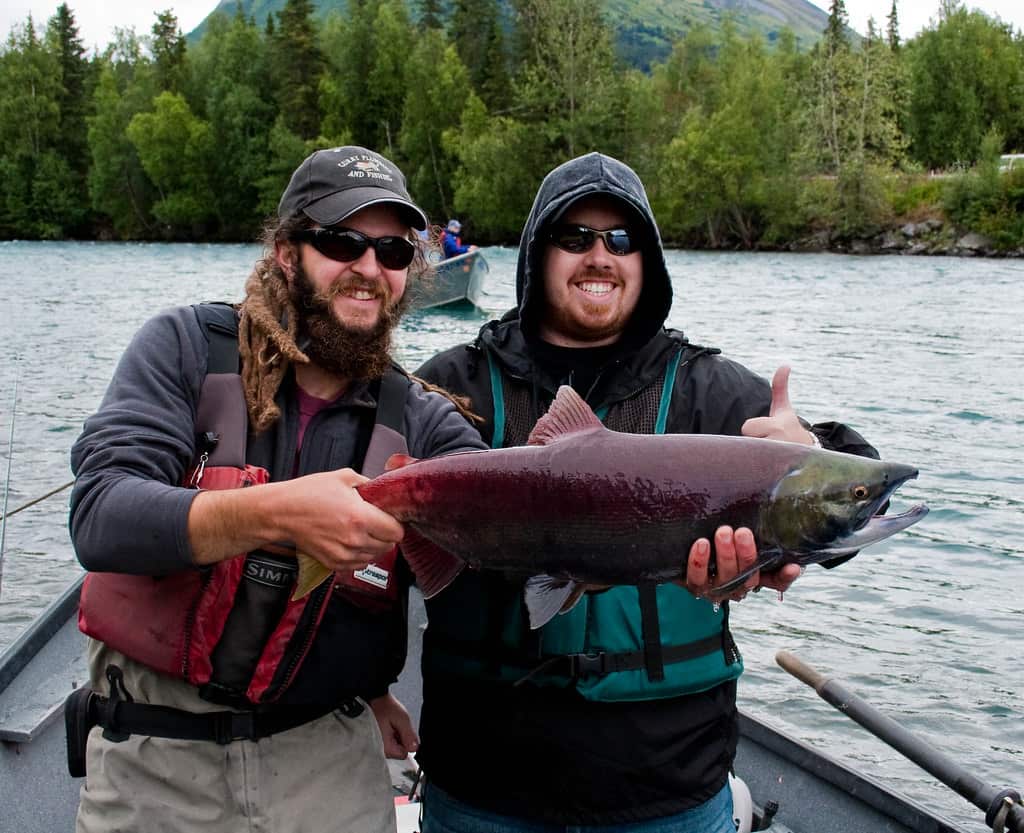
Current changes three things: you need more weight to hold bottom, tougher line for rock, and a presentation that moves with the flow rather than across it. A 7 ft medium rod, a 2500-size reel and 10 lb mono covers most river fishing, with heavier weights than you would use in a lake.
Reel & Rig earns a commission from qualifying purchases made through links on this page, at no extra cost to you. It does not change which gear we pick or what we say about it. Full disclosure.
The stack, in the order you buy it
- 1. Rod
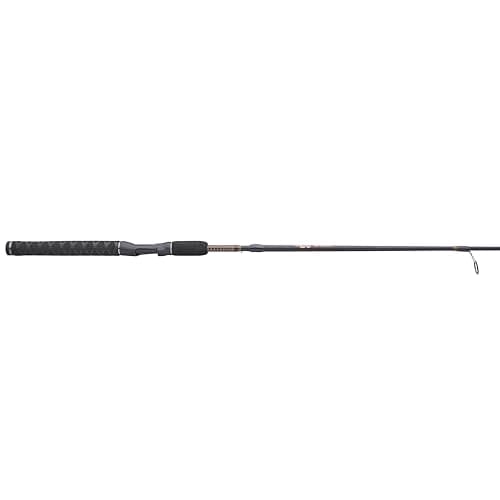
Ugly Stik GX2 Spinning Rod (7' Medium, 4-piece)
$59.957 ft medium, 6-15 lb, 1/8-5/8 oz. Length keeps line off fast water between you and the fish, and the composite blank tolerates being dragged over rock on a wading trip.
$59.95 · Check price on Amazon#ad how this is funded · price as of October 12, 2026
- 2. Reel
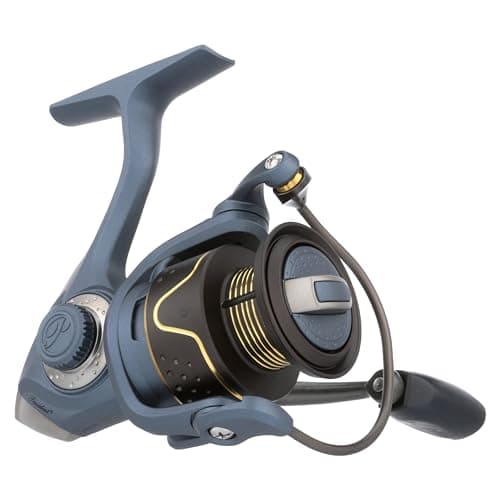
Pflueger President Spinning Reel (30X)
$62.45The 30X holds 130 yd of 8 lb and recovers 25.3 in per turn. In current a fish uses the flow as leverage, so capacity and a smooth drag matter more than they do in still water.
$62.45 · Check price on Amazon#ad how this is funded · price as of October 12, 2026
- 3. Line
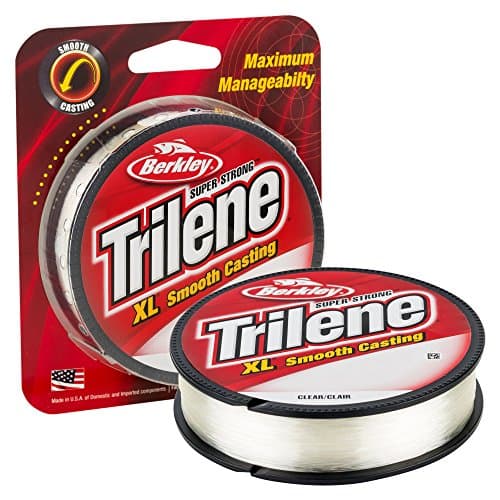
Berkley Trilene XL Monofilament Line
$8.9710 lb mono. Abrasion tolerance is the property that counts here because line is constantly across rock, and mono's stretch cushions a fish that is being pushed downstream by the current.
$8.97 · Check price on Amazon#ad how this is funded · price as of October 12, 2026
- 4. Spinner
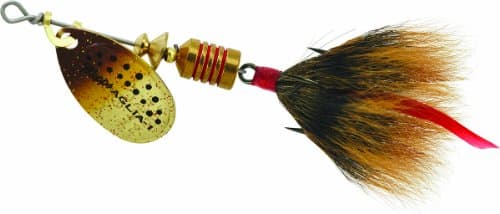
Mepps Dressed Aglia Inline Spinner
$11.57The 1/4 oz size swung across a current seam is one of the most reliable river presentations there is. The current supplies the speed, so you only reel fast enough to keep the blade turning.
$11.57 · Check price on Amazon#ad how this is funded · price as of October 12, 2026
- 5. Spoon
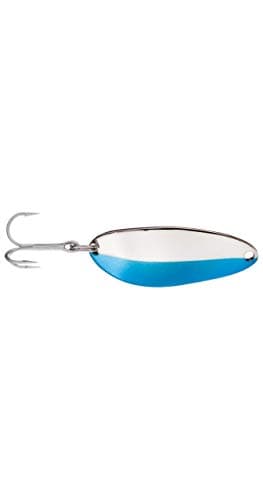
Acme Little Cleo Spoon
$5.90The 2/3 oz at 2 1/4 in holds depth in flow where the lighter version of the same length flutters away. Two densities in one profile is exactly the choice moving water demands.
$5.90 · Check price on Amazon#ad how this is funded · price as of October 12, 2026
- 6. Soft plastic
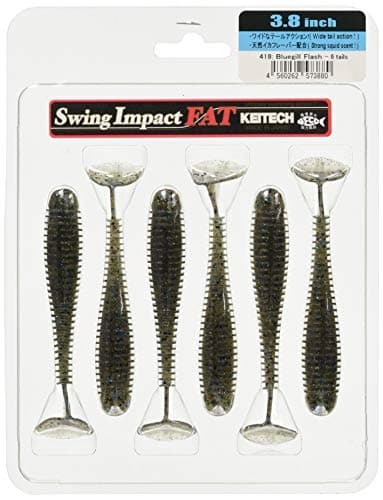
Keitech Swing Impact FAT Swimbait
$10.84A 3.8 in paddle tail on a heavier jig head than you would use in a lake. The tail works at the low retrieve speeds that current fishing forces on you.
$10.84 · Check price on Amazon#ad how this is funded · price as of October 12, 2026
We do not print a running total here. Every one of these prices moves independently, and a total we typed last week would be wrong today — check the five current prices above and add them up, which takes about twenty seconds and is always right.
Three things current changes
1. Weight goes up. A 1/8 oz jig that reaches bottom in a pond will never touch bottom in a river — the flow sweeps it downstream faster than it sinks. Expect to fish two to four times the weight you would use in still water.
2. Line takes a beating. Current pushes your line against rock constantly, and it drags the lure into things you cannot see. Abrasion resistance stops being a preference and becomes the deciding property, which our line comparison covers.
3. The retrieve is mostly the river’s job. This is the part people get wrong. In a lake you supply all the movement. In a river the current moves your lure, and your job is to control the line so the lure behaves naturally.
Reading a river
Fish in current sit where they can hold position without swimming hard, close to fast water carrying food past them. Those two requirements conflict, and the places that satisfy both are where fish are.
| Feature | Why fish are there |
|---|---|
| Seams | The line between fast and slow water. The best feature there is |
| Behind boulders | A pocket of slack water directly downstream |
| Outside bends | Deeper, scoured by the current, often undercut |
| Eddies | Water circling back upstream, collecting food |
| Below riffles | Oxygenated water and food washing in from above |
| Log jams | Cover plus a current break, on one feature |
A seam is visible from the bank once you look for it: a line on the surface where smooth water meets broken water. Fish sit on the slow side and dart into the fast side to feed.
Casting across and down
The default river presentation, and it is different from anything in still water.
Cast across the current and slightly downstream. Let the flow swing the lure across in an arc, reeling just fast enough to keep contact. The swing is the presentation — you are not retrieving so much as steering.
Fish face upstream, so a lure swinging past arrives the way real food does. This works for spinners, spoons and soft plastics alike.
Never cast upstream and reel back fast. That drags the lure downstream faster than the current, which nothing living does.
Fishing bait in current
For bait, the rig is a slip sinker heavy enough to hold bottom, with a leader long enough that the bait waves in the flow behind it.
Weight selection is the whole game and it changes with every spot. Too light and it rolls downstream continuously; too heavy and the presentation is dead. Start heavy enough to hold and take weight off until it just barely stays put.
A flat or pyramid sinker resists rolling far better than a round one, which our sinkers page covers.
Wading safely
Moving water is stronger than it looks and this deserves its own section.
Knee-deep fast water can take you off your feet. Force scales sharply with speed, and a river you can stand in comfortably at walking pace becomes unmanageable in a slightly faster section.
Face upstream and shuffle. Do not cross your feet. Move one foot, plant it, then move the other.
Use a wading staff in anything above knee depth. Three points of contact is a different proposition from two.
Wear a belt. Our waders page explains why, and it is the single most important thing on this page.
Sole choice is a safety decision, not a comfort one — see our wading boots page.
A collapsible wading staff is inexpensive and folds onto a belt when not in use.
Water level changes everything
A river is a different water body at different levels, and this is the biggest variable in river fishing.
Low and clear: fish are spooky and hold in the deepest available water. Go lighter on line and smaller on lures.
Normal: everything above applies.
High and colored: fish move to the edges out of the main flow, often surprisingly shallow and close to the bank. Go bigger and louder — a spinnerbait or a bladed jig that fish can find by vibration.
Rising fast: go home. Rising water is dangerous to wade and rarely fishes well.
Questions people actually ask
How much weight do you need for river fishing?
Two to four times what you would use in still water. A 1/8 oz jig that reaches bottom in a pond will be swept downstream faster than it sinks in current. Use the lightest weight that still holds position.
Where do fish hold in a river?
On current seams — the line between fast and slow water — plus behind boulders, on outside bends, in eddies, below riffles and around log jams. Fish need to hold position without swimming hard while staying near food.
How do you fish a lure in current?
Cast across the current and slightly downstream, then let the flow swing the lure across in an arc while reeling just fast enough to keep contact. Fish face upstream, so a swinging lure arrives the way real food does.
Is knee-deep water safe to wade?
Not always. Force scales sharply with current speed, and knee-deep fast water can take you off your feet. Face upstream, shuffle without crossing your feet, use a wading staff and always wear a wading belt.
Read next
Prices on this page come from the retailer at request time and change without notice. If we cannot get a live one we say “check price” rather than show you a number that has gone stale. How we pick.