Kayak
Anchor trolleys and anchor locks: how a fishing kayak actually holds position
Nobody capsizes because their anchor was too light. They capsize because the line was tied to the side of the boat.
By Sawyer V. · Last updated · How we pick
The short answer
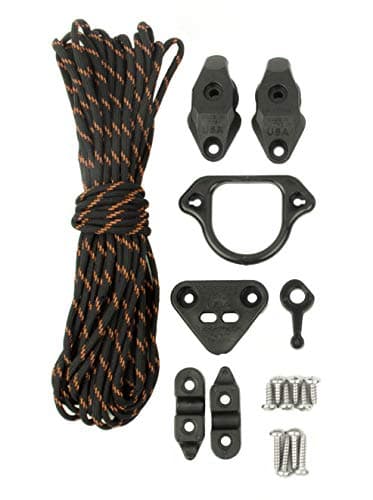
Buy the trolley before you buy the anchor. An anchor trolley is a loop of line down the side of the kayak that lets you slide the anchor attachment point to the bow or the stern from where you sit — and anchoring from the bow or stern instead of broadside is the difference between sitting still and being rolled over. The YakAttack LeverLoc is published with 35 ft of USA-made 550 paracord, Stealth Pulleys and a flip-of-a-switch line clamp. Pair it with a Scotty anchor lock if you want to release line one-handed. The anchor itself is a $25 folding grapnel and it is the least interesting thing you will buy.
Reel & Rig earns a commission from qualifying purchases made through links on this page, at no extra cost to you. It does not change which gear we pick or what we say about it. Full disclosure.
Quick picks
| # | Product | Best for | Price |
|---|---|---|---|
| 1 | Best anchor trolley YakAttack LeverLoc Anchor Trolley Published with 35 ft of USA-made 550 paracord, Stealth Pulleys, a LeverLoc line clamp and PadHook line guides. All hardware included, made in the USA. | Almost everyone - lakes, ponds and gentle rivers, on any kayak with deck space | $37.95 · Check price on Amazon #ad how this is funded · price as of October 29, 2026 |
| 2 | 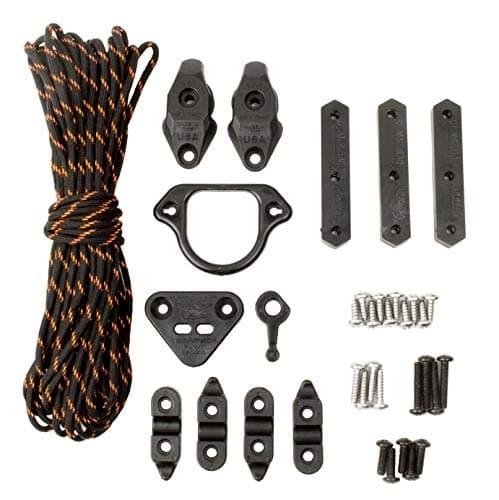 Best for bigger water and hard use YakAttack LeverLoc Anchor Trolley HD The same trolley with backing plates for the pulleys and the LeverLoc, plus two extra PadHooks, in place of the self-threading screws in the standard kit. | Heavier kayaks, current, wind, and anyone who can reach the inside of the hull | $45.95 · Check price on Amazon #ad how this is funded · price as of October 29, 2026 |
| 3 | 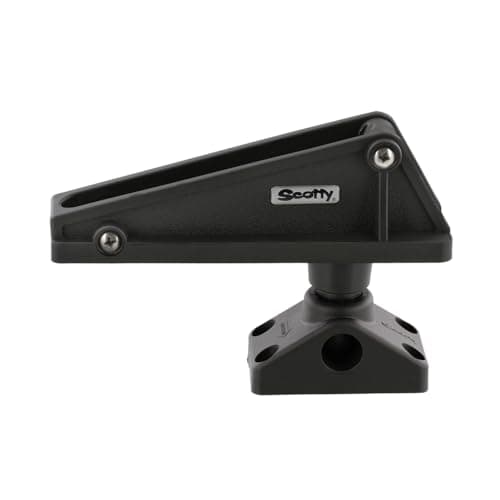 Best anchor lock Scotty 276 Anchor Lock with Side Deck Mount A roller-bearing anchor release that takes line up to 1/2 in and adjusts one-handed. Supplied with the Scotty 241 Side Deck Mount. | Stillwater anglers who want to pay out and lock off line with one hand | $32.14 · Check price on Amazon #ad how this is funded · price as of October 29, 2026 |
| 4 | 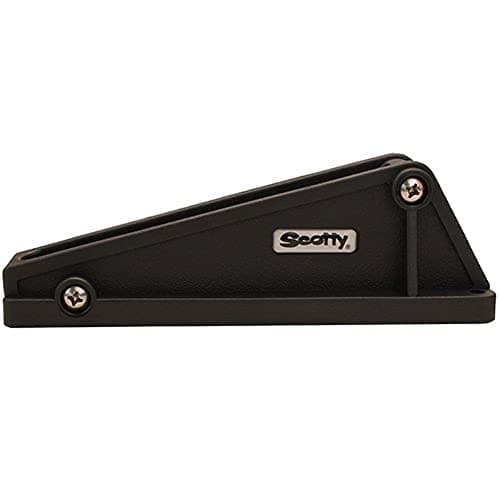 Best if you already have a mount Scotty 278 Anchor Lock with Permanent Mount The same roller-bearing lock and one-handed release, with no mount in the box - designed to be permanently fixed to the boat. | Anyone fixing a lock permanently to one spot, or already running Scotty mounts | $24.33 · Check price on Amazon #ad how this is funded · price as of October 29, 2026 |
An anchor trolley is not an anchor
This is the single most common confusion in the category, and it is worth clearing up before anything else, because people buy the wrong thing and then conclude that anchoring a kayak does not work.
The anchor is the lump of metal on the bottom. On a kayak it is almost always a folding grapnel of about 1.5 to 3.5 lb, and it costs twenty to thirty dollars.
The anchor trolley is a loop of line running down the side of the kayak through two pulleys, with a ring on it. The anchor line clips to the ring. Hauling the loop slides the ring — and therefore the point where the anchor line leaves the boat — anywhere from the bow to the stern, without you leaning over the side.
The anchor lock is a cleat with a roller that lets you pay line out and lock it off with one hand.
Only one of those three is optional, and it is not the trolley.
The rule that makes this page matter
Never anchor a kayak from the side.
If your anchor line is tied to a side handle, the current and wind push against the entire length of the hull while the anchor holds one point of it. The boat turns broadside to the flow and stays there, and the force has the whole beam of the kayak to work against. Lean the wrong way, or let a wave arrive, and the hull rolls.
Anchored from the bow or the stern, the kayak weathervanes: it lines up with the flow and presents the narrowest, most buoyant part of itself to it, exactly as it does when you are paddling. The boat sits still and pointed instead of pinned and sideways.
That is the entire reason an anchor trolley exists. It is not a convenience item for repositioning your drift — it is the mechanism that lets you put the attachment point at the end of the boat and then adjust it from your seat, rather than reaching over the gunwale in moving water to untie a knot.
It is also why every item on this page is sold next to a quick-release. If you cannot get rid of the anchor line fast, in one hand, you do not have an anchoring system; you have a tether. Our kayak fishing safety essentials page covers the rest of what belongs within reach, and a PFD you actually wear is the thing that makes all of this survivable when it goes wrong anyway.
What each part does, side by side
| Part | What it does | Published detail that matters | Can you skip it? |
|---|---|---|---|
| Anchor trolley | Moves the anchor attachment point bow to stern from your seat | 35 ft of 550 paracord, Stealth Pulleys, LeverLoc clamp, PadHook guides | No - it is the safety mechanism |
| Anchor lock | Pays out line and locks it off one-handed | Roller bearing, line to 1/2 in, one-handed adjustment | Yes, with a good cleat - but one-handed is the point |
| Anchor | Holds the bottom | Typically a 1.5 to 3.5 lb folding grapnel | No, but it is the cheapest part |
| Stake-out pole | Pins the kayak in shallow water, silently and instantly | Pole length against your usual depth | Yes, unless you fish skinny water |
| Drift sock | Slows a drift rather than stopping it | Mouth diameter against hull length and wind | Yes - a different tool for a different day |
What to look for, in order
1. A clamp that genuinely holds. Everything else on a trolley is rope and plastic. If the cam slips under load, the ring creeps back toward the middle of the boat and you end up broadside without having touched anything. A published, named locking mechanism is worth paying for; an unnamed one is a guess.
2. How it fixes to your hull. Self-threading screws are held by the plastic. Backing plates spread the load across the inside of the hull and are dramatically stronger — but they require hull access at both pulley positions. Check your hatches before you choose, not after.
3. Whether the line stays off the gunwale. A trolley line that rides up over the edge of the boat snags rods, paddles and PFD straps. Line guides that hold it against the side of the hull are the difference between a clean deck and a rat’s nest — which is the same argument our kayak crate page makes about everything else behind your seat.
4. One-handed release. The other hand has a rod in it, or a paddle. Any anchoring system that needs two hands and a look down is one you will stop using.
5. Line length and visibility, last. Thirty-five feet covers any kayak. A reflective tracer is a small thing that matters at 5 a.m.
Where the anchor itself comes in
A folding grapnel of 1.5 to 3.5 lb is the standard kayak anchor, and for most freshwater fishing the lighter end of that is plenty. You are not holding a boat against a tide; you are holding a 60 lb hull in a lake.
What actually decides whether it holds is the scope — the ratio of line out to water depth. A grapnel dropped straight down pulls up and out, and releases. The same anchor on five to seven times the depth in line pulls sideways along the bottom, which is the direction its flukes are shaped for. Most people who conclude their anchor is too light have actually not let out enough line.
The second thing worth knowing is that a grapnel is designed to be retrievable by deliberately bending or releasing when you pull from the opposite direction — which is why a trolley that lets you move the pull point matters for getting the thing back, not only for how you sit.
What this page does not recommend, and why
There is no anchor in the picks above, and no drift sock, and that is deliberate rather than an oversight.
The anchors. Every folding grapnel anchor currently in stock at a sane price is sold under a house brand with no reachable manufacturer site and no published specification beyond a weight in the listing title. That is not a claim they are bad — a 3.5 lb lump of galvanized steel is a hard thing to get wrong, and this is exactly the product category where buying the cheap one is rational. It is a statement that we cannot check them against anything, which is the standard our how we pick page applies across the site. Buy a 3.5 lb folding grapnel with 40 ft of line, spend the difference on the trolley, and ignore the brand name.
The drift socks. Same situation, and the same advice.
Scotty’s own anchor pack. Worth recording because it was a real candidate: Scotty has sold a 797 Anchor Pack pairing a 1.5 lb folding anchor with line in a watertight jar, and listings for it still exist. It no longer has a product page on scotty.com, and stock is down to a handful of units. A product the maker has stopped publishing is a product we will not put at the top of a page, so it is named here instead.
Fitting it without regretting it
Two mistakes account for most bad trolley installs.
Mounting the pulleys too far inboard. The pulleys want to be as close to the bow and stern as you can reach, because the whole value of the trolley is the range the ring can travel. A trolley that only reaches the middle third of the boat cannot put the attachment point at the end, which is the one thing you bought it for.
Drilling before sitting in it. Sit in the kayak, on the water if you can, and work out where your hand naturally falls. That is where the LeverLoc goes. Everything else follows from it. Our guide to rigging a fishing kayak makes the same argument about rod holders and fish finders, and it is the single piece of advice that saves the most holes.
If you are still choosing the boat itself, the deck layout decides how easy all of this is — our fishing kayak roundup and beginner kayak gear guide are the places to start.
So what do I actually buy?
The trolley first, always. The lock if you want one-handed release, which you do. The anchor last, and cheaply.
YakAttack LeverLoc Anchor Trolley
$37.9535 ft of 550 paracord, Stealth Pulleys, a clamp that holds. The default.
#ad how this is funded · price as of October 29, 2026
YakAttack LeverLoc Anchor Trolley HD
$45.95Backing plates instead of self-threading screws. Only if you can reach inside the hull.
#ad how this is funded · price as of October 29, 2026
Scotty 276 Anchor Lock with Side Deck Mount
$32.14One-handed lock and release, line to 1/2 in, 241 mount included. Stillwater, per Scotty.
#ad how this is funded · price as of October 29, 2026
Scotty 278 Anchor Lock with Permanent Mount
$24.33The same lock with no mount. Cheaper only if you already own a 241.
#ad how this is funded · price as of October 29, 2026
The picks, in full
Every card below lists the specs we could read off a published page, the URL they came from, and one honest reason you might not want it.
1. Best anchor trolley
YakAttack LeverLoc Anchor Trolley
YakAttack
Published with 35 ft of USA-made 550 paracord, Stealth Pulleys, a LeverLoc line clamp and PadHook line guides. All hardware included, made in the USA.
The job of a trolley is simple and badly understood: it moves the point where your anchor line leaves the kayak, without you leaning over the side to move it. A ring runs on a loop of line that travels from near the bow to near the stern through two pulleys. You clip the anchor to the ring, pay the anchor out, then haul the loop until the ring sits where you want it.
What makes this one worth the money over a bag of generic pulleys is the LeverLoc line clamp. YakAttack publishes it as locking the trolley line in place with a flip of a switch, which matters because a trolley that creeps under load puts you back where you started — broadside — without you noticing. A cam that holds is the whole product.
The PadHook is the other published detail that earns its place. It combines a pad-eye and a hook, and its stated job is keeping the trolley line against the side of the hull rather than letting it ride up over the gunwale. A trolley line over the gunwale is a line that catches your rod, your paddle and your PFD straps, and our kayak safety page is largely a list of things that should not be loose in a cockpit.
Thirty-five feet of 550 paracord with a reflective tracer is more than enough for any kayak, and the reflective element is a genuinely good call for anyone who launches before dawn. The trolley ring snaps into the base of the LeverLoc when it is stowed, so it is not swinging into your hull on the drive.
The drawback
It is, viewed unkindly, forty dollars of rope and two pulleys, and the standard kit fixes to the hull with self-threading screws - you are drilling holes in your boat, and if you get the placement wrong you have drilled them twice. The install also assumes you can reach both ends of the hull; on a long sit-on-top with sealed hatches that is a genuine chore. And a trolley does nothing on its own. It is the thing that makes an anchor safe to use, not a thing that holds you anywhere.
Published specs
- SKU
- AMS-1003
- Line
- 35 ft of USA-made 550 paracord with a highly reflective tracer
- Line clamp
- LeverLoc, locks the trolley line in place with a flip of a switch
- Pulleys
- YakAttack Stealth Pulleys
- Line guides
- PadHook, a combined pad-eye and hook that holds the line against the side of the hull rather than over the gunwale
- Trolley ring
- Easy-knot ring that snaps into the base of the LeverLoc when stowed
- Fixings
- Self-threading screws; all hardware for installation included
- Made in
- USA
- Warranty
- YakAttack Built for Life Guarantee
Specs read from YakAttack - LeverLoc Anchor Trolley.
#ad how this is funded · price as of October 29, 2026
2. Best for bigger water and hard use
YakAttack LeverLoc Anchor Trolley HD
YakAttack
The same trolley with backing plates for the pulleys and the LeverLoc, plus two extra PadHooks, in place of the self-threading screws in the standard kit.
The HD is not a different trolley. YakAttack publishes it as the same AMS-1003 design with the fixings upgraded: backing plates for the pulleys and the LeverLoc, and two extra PadHooks, rather than the self-threading screws that come with the standard kit.
That distinction is worth more than the eight dollars between them if you fish anywhere with current or real wind. A self-threading screw in rotomolded plastic is held by the plastic alone. A backing plate spreads the load across the inside of the hull, and the load on an anchor trolley is not trivial — it is your whole boat plus the water pushing on it, concentrated on two small fittings.
The honest test for which one you want is not how big your kayak is. It is whether you can get a hand inside the hull where the pulleys go. If your kayak has accessible hatches at both ends, fit the HD. If it does not, the backing plates are unusable and the standard kit is the right purchase rather than a compromise.
The drawback
The backing plates are the entire reason to buy it and they require hull access, which a lot of sit-on-tops simply do not give you at both ends - check before you order, because an HD kit you cannot fit is just a standard kit with spare parts. It is also plainly overkill for a small pond boat in calm water, and YakAttack recommends a separate rigging tool for installs out of arm's reach, which is another purchase.
Published specs
- SKU
- AMS-1004
- Line
- 35 ft of USA-made 550 paracord with a highly reflective tracer
- Line clamp
- LeverLoc, locks the trolley line in place with a flip of a switch
- Pulleys
- YakAttack Stealth Pulleys
- What HD adds
- Two extra PadHooks plus backing plates for the pulleys and the LeverLoc, in place of the self-threading screws supplied with AMS-1003
- Fixings
- Backing plates; all hardware for installation included
- Made in
- USA
- Warranty
- YakAttack Built for Life Guarantee
Specs read from YakAttack - LeverLoc Anchor Trolley HD.
#ad how this is funded · price as of October 29, 2026
3. Best anchor lock
Scotty 276 Anchor Lock with Side Deck Mount
Scotty
A roller-bearing anchor release that takes line up to 1/2 in and adjusts one-handed. Supplied with the Scotty 241 Side Deck Mount.
An anchor lock solves the other half of the problem. The trolley decides where the line leaves the boat; the lock decides how fast you can change your mind about the length of it. Scotty publishes the 276 as a lock and release action that allows anchor line adjustments with only one hand, which is the specification that matters when the other hand is holding a rod.
The published mechanism is a roller bearing, described as giving smooth and quiet operation, and quiet is not a marketing word on a kayak. You are sitting on a plastic drum a few feet above the fish. Anything that clatters is heard.
It accommodates line up to 1/2 in in diameter, which comfortably covers the paracord and light anchor rode anyone is realistically using, and the 241 Side Deck Mount it ships with fits a flat deck surface or the side of a gunwale or transom. That is the same mounting family as the rest of the Scotty ecosystem, so it shares hardware with rod holders if you have already gone down that road on our kayak rigging page.
The drawback
Read Scotty's own framing before you buy: the company states these locks suit a small vessel that spends most of its time in still, calm water. That is a maker telling you the limits of its product, and it is the opposite of what some people buy an anchor lock for. It is not a current device, it needs deck space you may already have given to a fish finder, and at around thirty dollars it costs more than the anchor it controls.
Published specs
- Model
- 276
- What it is
- An anchor release system for small boats used in stillwater fishing
- Operation
- Lock and release action that allows anchor line adjustments with only one hand
- Mechanism
- Roller bearing, for smooth and quiet operation
- Line capacity
- Accommodates line up to 1/2 in diameter
- Mount included
- Scotty 241 Side Deck Mount, for a flat deck surface or the side of a gunwale or transom
- Maker's stated use
- Scotty states these locks suit a small vessel that spends most of its time in still, calm water
Specs read from Scotty - 276 Anchor Lock with Side Deck Mount.
#ad how this is funded · price as of October 29, 2026
4. Best if you already have a mount
Scotty 278 Anchor Lock with Permanent Mount
Scotty
The same roller-bearing lock and one-handed release, with no mount in the box - designed to be permanently fixed to the boat.
The 278 is the 276 without the mount. Same published lock and release action, same one-handed adjustment, same roller bearing, same 1/2 in line capacity. Scotty publishes this version as not including a separate mount and being designed to be permanently fixed to your boat.
Two sorts of buyer want this. The first already runs Scotty mounts and has a spare one, in which case paying twice for a 241 is silly. The second has decided exactly where the lock lives and is never moving it — and that is a more reasonable position than it sounds, because unlike a rod holder, an anchor lock has one correct location and you work it out on the first trip.
If you are not sure yet, buy the 276. The mount it includes is removable, and the freedom to move the thing for a season is worth the difference.
The drawback
Permanent means permanent: no repositioning, and no mount included, so if you do not already own one this is not actually the cheaper option once you add a 241. It carries the same stillwater caveat Scotty puts on the whole anchor lock line, and for a first kayak the inability to move it while you are still learning where your gear wants to live is a real cost.
Published specs
- Model
- 278
- What it is
- An anchor release system for small boats used in stillwater fishing
- Operation
- Lock and release action that allows anchor line adjustments with only one hand
- Mechanism
- Roller bearing, for smooth and quiet operation
- Line capacity
- Accommodates line up to 1/2 in diameter
- Mount included
- None. This version does not include a separate mount and is designed to be permanently fixed to the boat
- Maker's stated use
- Scotty states these locks suit a small vessel that spends most of its time in still, calm water
Specs read from Scotty - 278 Anchor Lock with Permanent Mount.
#ad how this is funded · price as of October 29, 2026
Questions people actually ask
Do I need an anchor trolley for kayak fishing?
If you anchor at all, yes. A trolley moves the point where the anchor line leaves the boat to the bow or the stern, so the kayak lines up with the current instead of sitting broadside to it. Anchoring from a side handle is how kayaks get rolled over. The trolley is the safety mechanism, not a convenience item.
What is the difference between an anchor trolley and an anchor lock?
The trolley decides where the anchor line leaves the kayak - it is a loop of line with a ring on it, running bow to stern through two pulleys. The lock decides how easily you can pay line out and stop it, with one hand. They solve different halves of the same problem and most people eventually fit both.
How heavy should a kayak anchor be?
A folding grapnel of 1.5 to 3.5 lb covers almost all freshwater kayak fishing. If it is not holding, the usual cause is scope rather than weight: a grapnel needs roughly five to seven times the water depth in line out so it pulls sideways along the bottom rather than straight up.
Should I buy the standard LeverLoc or the HD?
It depends on your hull, not your water. The HD swaps the self-threading screws for backing plates that spread the load inside the hull, which is genuinely stronger - but you have to be able to get a hand in there at both pulley positions. If your kayak does not give you that access at both ends, the standard kit is the correct purchase.
Can you anchor a kayak in a river?
With great care, and only ever from the bow or stern with a quick-release within reach. Moving water is where anchoring a kayak goes wrong, and it is worth noting that Scotty states its anchor locks suit small vessels that spend most of their time in still, calm water. In real current, a stake-out pole in the shallows or simply drifting is often the better answer.
Why does this page not recommend a specific anchor?
Because every folding grapnel in stock at a reasonable price comes from a house brand with no manufacturer site and no published specification. That is not a reason to avoid them - a lump of galvanized steel is hard to get wrong, and the cheap one is the rational buy here. It is a reason we will not rank them as though we had checked something.
Where should the anchor trolley pulleys go?
As close to the bow and stern as you can reach. The value of a trolley is the range the ring can travel, so pulleys mounted too far inboard leave you unable to put the attachment point at the end of the boat, which is the entire purpose. Sit in the kayak and find where your hand falls before drilling anything.
Read next
Sources
Prices on this page come from the retailer at request time and change without notice. If we cannot get a live one we say “check price” rather than show you a number that has gone stale. How we pick.