Kayak
The best fishing kayaks: length, width and the capacity figure
Three published numbers decide almost everything. Read them before you read the marketing.
By Sawyer V. · Last updated · How we pick
The short answer
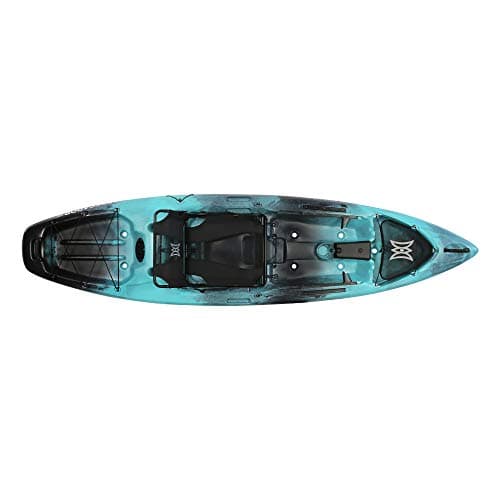
Length is speed and tracking, width is stability, and maximum capacity has to cover you plus everything you carry. The Perception Pescador 10.0 publishes 126 in long, 32 in wide, 52 lb hull weight and 325 lb maximum capacity — a wide, stable, short boat for ponds, rivers and small lakes.
Reel & Rig earns a commission from qualifying purchases made through links on this page, at no extra cost to you. It does not change which gear we pick or what we say about it. Full disclosure.
Quick picks
| # | Product | Best for | Price |
|---|---|---|---|
| 1 | Best fishing kayak Perception Pescador 10.0 Fishing Kayak 126 x 32 x 14 in, 52 lb, 325 lb capacity, sit-on-top with two molded rod holders and a locking bow hatch. | Ponds, small lakes and slow rivers, launched off a car roof by one person | $904.81 · Check price on Amazon #ad how this is funded · price as of October 12, 2026 |
The three numbers, in the order they matter
| Figure | More of it means | Less of it means |
|---|---|---|
| Length | Faster, tracks straighter, better in wind and chop | Turns quicker, easier to store and carry, better on small water |
| Width | More stable, easier to cast and land fish from | Faster and less tiring to paddle |
| Capacity | More gear, more margin, usually a heavier hull | Lighter to carry, less room for error |
Around 30 to 34 in of width is the fishing-kayak band. Below 28 in you are in touring boats that are quick and unstable to fish from; above 36 in you are in stand-up platforms that are stable and slow.
Length, matched to the water you actually fish
9 to 10 ft for ponds, creeks and small rivers. Easy to turn, easy to carry, easy to store, slow over distance.
10 to 12 ft is the general answer for lakes and slower rivers, and where most fishing kayaks sit.
12 ft and up for big open water and long paddles, where tracking in wind matters more than turning.
Our kayak against boat page covers the step before this one, which is whether a kayak is the right answer at all.
Sit-on-top or sit-inside
Nearly every fishing kayak is a sit-on-top, and the reasons are practical. You can move around, turn to cast, get back on after a capsize in deep water, and the hull self-drains through scupper holes.
The cost is that you get wet. Scupper holes let water in as well as out, and a sit-on-top in cold weather needs waders or a dry suit rather than optimism.
Sit-inside kayaks are drier and warmer and much harder to re-enter in deep water. For fishing, the re-entry problem outweighs the comfort.
The capacity arithmetic, done properly
Maximum capacity is a hull limit, not a packing list. A useful working figure is to stay under about 70% of it, because a kayak loaded to its stated ceiling sits low, takes water over the sides and turns badly.
On a 325 lb published capacity that is roughly 225 lb of everything: you, a PFD, a paddle, two rods, a tackle bag, water, a landing net, and a battery and transducer if you add electronics.
Our battery page covers the weight a fish finder actually adds, which is mostly the battery and not the head unit.
What to add first
A better seat, if the hull allows it. The single biggest comfort upgrade on any fishing kayak, and the one that decides whether four hours is pleasant.
A cart. Getting the boat from the car to the water is the part people underestimate, and a 52 lb hull plus gear is a long carry.
An anchor trolley. Being able to set which way the boat faces changes fishing more than any other rigging item. Our rigging page covers it.
Rod and reel choices that suit the seated position. Our kayak rods page and kayak reels page cover why shorter rods win in a boat you cannot stand up in.
So what do I actually buy?
Buy the hull that matches your water and your ability to carry it, then spend on the seat and the safety kit before anything else.
Perception Pescador 10.0 Fishing Kayak
$904.81126 x 32 in, 52 lb, 325 lb capacity. A stable short hull for ponds, creeks and small lakes.
#ad how this is funded · price as of October 12, 2026
Garmin STRIKER 4
$139.99A small, low-draw sonar that suits a kayak's battery budget better than a big screen.
#ad how this is funded · price as of October 12, 2026
Plano Weekend Tackle Backpack 3700
$74.99Tackle carried on your back to the launch, then strapped in the tankwell.
#ad how this is funded · price as of October 12, 2026
The picks, in full
Every card below lists the specs we could read off a published page, the URL they came from, and one honest reason you might not want it.
1. Best fishing kayak
Perception Pescador 10.0 Fishing Kayak
Perception
126 x 32 x 14 in, 52 lb, 325 lb capacity, sit-on-top with two molded rod holders and a locking bow hatch.
32 in of published width is the number that makes this a fishing kayak rather than a touring one. Width is initial stability, and initial stability is what lets you turn sideways to cast, lean out to land a fish, and stand up if the water is calm.
126 in — 10 ft 6 in — is short. Short boats turn quickly and handle small water well, and they are slower and track worse in wind than a longer hull. For a pond, a creek or a small lake that trade is clearly the right way round.
52 lb published hull weight is the figure that decides whether you fish. A kayak you cannot get onto a car by yourself is a kayak that stays in the garage, and 52 lb is at the manageable end for one person with a roller or a cart.
325 lb maximum capacity is the safety number, and it is not a target. Subtract your body weight, then a PFD, paddle, rods, tackle, water and a battery if you fit a fish finder. Load a hull near its stated ceiling and it sits low, gets wet and handles badly.
Two molded rod holders, a locking bow hatch, a rear tankwell with bungee, gear tracks with solo mount recesses and adjustable footpads are all published. The gear tracks matter most — they are what let you add a transducer arm or a rod holder later without drilling the hull.
The drawback
It is a sit-on-top, so you will get wet: water comes up the scupper holes and sits in the seat well, which is fine in July and unpleasant in October. At 10 ft 6 in it is slow and it tracks poorly in a crosswind compared with a 12 ft hull, so it is the wrong boat for a big open reservoir. There is no published seat specification here beyond the hull itself, and the seat is the part you will notice after two hours. And 52 lb is manageable, not light — loading it alone onto a tall vehicle is still a real job.
Published specs
- Length
- 126 in (10 ft 6 in)
- Width
- 32 in
- Height
- 14 in
- Weight
- 52 lb
- Max capacity
- 325 lb
- Paddlers
- 1
- Style
- Sit-on-top, hardshell
- Rod holders
- 2 molded-in
- Storage
- Locking bow hatch and rear tankwell with bungee
- Accessories
- Gear tracks with solo mount recesses
- Footbrace
- Adjustable footpads
Specs read from Confluence Outdoor - Perception Pescador 10.0.
#ad how this is funded · price as of October 12, 2026
Questions people actually ask
What size fishing kayak should I buy?
Around 10 to 12 ft long and 30 to 34 in wide covers most freshwater fishing. Go shorter for ponds, creeks and easy carrying; go longer for big open water where tracking in wind matters more than turning.
How much weight can a fishing kayak carry?
Read the published maximum capacity and plan to stay under about 70% of it. The Pescador 10.0 publishes 325 lb, so roughly 225 lb of angler plus gear keeps it handling properly.
Sit-on-top or sit-inside for fishing?
Sit-on-top, almost always. You can move to cast, the hull self-drains, and you can climb back on in deep water after a capsize. The trade is that you get wet, which matters in cold weather.
Is a 10 ft kayak big enough for lake fishing?
For small lakes and sheltered water, yes. On a big open reservoir a 10 ft hull is slow and tracks poorly in a crosswind, and a 12 ft boat is a significantly better tool.
Read next
Sources
Prices on this page come from the retailer at request time and change without notice. If we cannot get a live one we say “check price” rather than show you a number that has gone stale. How we pick.