Reels
The best reels for catfish and other fish that run
Two specs decide a catfish reel, and the bearing count on the box is neither of them.
By Sawyer V. · Last updated · How we pick
The short answer
Choose a catfish reel on two things: line capacity and drag durability. A catfish takes line and keeps taking it, so you want 200 yards or more of your chosen line on the spool. And catfish rods sit in holders in the rain and the mud, so a sealed drag is worth more than any bearing count.
Reel & Rig earns a commission from qualifying purchases made through links on this page, at no extra cost to you. It does not change which gear we pick or what we say about it. Full disclosure.
Quick picks
| # | Product | Best for | Price |
|---|---|---|---|
| 1 | No photo Best overall Daiwa BG Spinning Reel (BG3000) 240 yd of 8 lb and 37.4 in per turn, on a Hard Bodyz frame with a waterproof carbon drag. | Channel cats on 15-30 lb line | |
| 2 | No photo Best for smaller channels Daiwa BG Spinning Reel (BG2500) 210 yd of 6 lb at 9.3 oz, with the same waterproof drag in a lighter package. | Pond and small-lake catfish | |
| 3 | 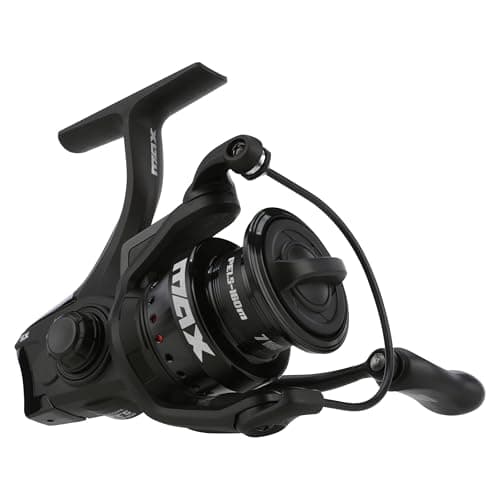 Cheapest that will do Abu Garcia Max SX Spinning Reel (2500) 8.0 oz at the 2500 with 27 in per turn — and a published ladder up to a 4000 at 9.1 oz. | Occasional catfish on a general-purpose outfit | $64.99 · Check price on Amazon #ad how this is funded · price as of October 19, 2026 |
The two specs that decide it
1. Line capacity. This is the one that separates a catfish reel from a bass reel. A bass runs twenty yards and stops; a catfish in current can take a hundred and keep going, and the fight is a long steady pull rather than a burst.
Two hundred yards of your working line is a sensible floor. With braid that is easy — 30 lb Sufix 832 measures 0.011 inches, the same as 8 lb mono, so a spool rated for 240 yards of 8 lb mono holds a great deal of it.
2. Drag durability, not drag maximum. Almost any modern reel has enough maximum drag for freshwater catfish. What matters is whether the drag is still smooth in two years.
Catfishing is hard on reels in a specific way: rods sit in holders on wet banks, in rain, in mud, often overnight. Water gets into the drag stack, corrodes the washers, and the drag starts grabbing and releasing instead of slipping. That spike is what breaks line.
The comparison
| Reel | Capacity | Sealed drag? | In. per turn | Weight |
|---|---|---|---|---|
| Daiwa BG3000 | 8 lb / 240 yd | Yes — waterproof Carbon ATD | 37.4 | 10.8 oz |
| Daiwa BG2500 | 8 lb / 170 yd | Yes — waterproof Carbon ATD | 33.2 | 9.3 oz |
| Abu Garcia Max SX 2500 | 8 lb / 130 yd | Not published | 27 | 8.0 oz |
| Pflueger President 30X | 8 lb / 130 yd | Not published | 25.3 | 8.8 oz |
Read the first two columns and the ranking is obvious. Read the bearing counts — the President has ten and the Daiwas have six — and you would get it backwards, which is the point.
Spinning or baitcasting for catfish?
Both work, and the honest answer is that it depends on how you fish rather than on the fish.
Spinning is simpler, handles a heavy sinker fine, and is what we would recommend for someone starting. It also has no backlash failure mode, which matters when you are casting a two-ounce rig in the dark.
Baitcasting gives more cranking torque, which is genuinely useful on a big fish, and the line comes off the spool in a straight path which suits heavy line. Many dedicated catfish anglers use conventional reels with a clicker for exactly this.
For channel cats on a bank, spinning. For serious flathead fishing, the conventional gear exists for good reasons and is outside what we cover here.
The setting that catches people out
Catfish rods spend a lot of time in holders while you wait. If the drag is set tight and a big fish takes the bait and runs, the rod goes in the water.
Either set the drag light enough that a fish can take line against it, or use a reel with a bait-feeding function that lets line out freely until you engage it. Then tighten once you have the rod in your hands.
Losing a rod to a fish is genuinely common in catfishing and it is entirely preventable.
The picks, in full
Every card below lists the specs we could read off a published page, the URL they came from, and one honest reason you might not want it.
1. Best overall
Daiwa BG Spinning Reel (BG3000)
Daiwa
240 yd of 8 lb and 37.4 in per turn, on a Hard Bodyz frame with a waterproof carbon drag.
This is the largest published capacity in our registry and the only reel in it that states a waterproof drag — which are exactly the two specs that decide a catfish reel.
240 yards of 8 lb mono, or 200 of 10 lb. Spooled with 30 lb braid at 0.011 inches — the diameter of 8 lb mono — you have a very large amount of usable line, which is what you want when a fish decides to go downriver.
37.4 inches per turn is the fastest retrieve in our registry, and it matters more here than it sounds: catfish fishing involves a lot of reeling in to check bait, and a slow reel makes that tedious.
The Hard Bodyz body and side cover are designed to keep the internals aligned under load, which is the right priority for a reel that will spend its life under sustained heavy pressure rather than quick bursts.
The drawback
At 10.8 oz it is the heaviest reel we cover, and on a long rod held all day that is real. It is also more reel than a pond channel cat needs — if your fish are consistently under five pounds, you are paying for capacity you will not use.
Published specs
- Gear ratio
- 5.6:1
- Bearings
- 6 ball + 1 roller
- Weight
- 10.8 oz
- Line capacity
- 8 lb / 240 yd, 10 lb / 200 yd
- Retrieve per turn
- 37.4 in
- Body
- Hard Bodyz body and side cover, Air Rotor
Specs read from Tackle Warehouse — Daiwa BG Spinning Reels.
2. Best for smaller channels
Daiwa BG Spinning Reel (BG2500)
Daiwa
210 yd of 6 lb at 9.3 oz, with the same waterproof drag in a lighter package.
Most catfish most people catch are channel cats between one and eight pounds, and this is the right size of reel for that.
210 yards of 6 lb or 170 of 8 lb is still generous capacity, and it comes with the same waterproof Carbon ATD drag and Air Rotor as the larger model at an ounce and a half less weight.
33.2 inches per turn keeps the bait-checking quick.
The drawback
It is under-gunned if your water genuinely holds flatheads or blues. A twenty-pound fish on 170 yd of line in current is a reel running out of options, and that is the situation the BG3000 exists for.
Published specs
- Gear ratio
- 5.6:1
- Bearings
- 6 ball + 1 roller
- Weight
- 9.3 oz
- Line capacity
- 6 lb / 210 yd, 8 lb / 170 yd
- Retrieve per turn
- 33.2 in
- Body
- Hard Bodyz body and side cover, Air Rotor
- Spool
- Dynamic Cut aluminum ABS
- Drag
- Carbon ATD, waterproof
Specs read from Tackle Warehouse — Daiwa BG Spinning Reels.
3. Cheapest that will do
Abu Garcia Max SX Spinning Reel (2500)
Abu Garcia
8.0 oz at the 2500 with 27 in per turn — and a published ladder up to a 4000 at 9.1 oz.
If catfish are something you do occasionally rather than target, the sensible move is to size up within a range you already own rather than buying a dedicated reel.
Abu Garcia publishes the full ladder, so you can do that deliberately: the 4000 at 9.1 oz is the size to look at for catfish rather than the 2500.
Six ball bearings plus a roller, asymmetric graphite frame and rotor, machined aluminum braid-ready spool.
The drawback
No sealing claim is published, and the 2500's 130 yd of 8 lb is genuinely thin for a fish that runs. This is the compromise pick and we would rather say so than dress it up.
Published specs
- Gear ratio
- 5.2:1
- Bearings
- 6 ball + 1 roller
- Weight
- 8.0 oz
- Line capacity
- 8 lb / 130 yd
- Retrieve per turn
- 27 in
- Body
- A-symmetric graphite frame and rotor
- Spool
- Machined aluminum, braid ready
Specs read from Tackle Warehouse — Abu Garcia Max SX Spinning Reel.
#ad how this is funded · price as of October 19, 2026
Questions people actually ask
What size reel do you need for catfish?
One holding at least 200 yards of your working line — a 3000 or 4000 size for channel cats. Catfish take line and keep taking it, so capacity is the spec that matters most rather than bearings or gear ratio.
Do you need a sealed drag reel for catfish?
It is worth more here than in most fishing. Catfish rods sit in holders on wet banks, in rain and mud, often overnight, and water in the drag stack corrodes the washers so the drag grabs and releases instead of slipping smoothly.
Spinning or baitcasting for catfish?
Spinning for channel cats and for anyone starting — it handles a heavy sinker fine and has no backlash failure mode, which matters casting a two ounce rig in the dark. Baitcasting gives more cranking torque for genuinely big fish.
Why do people lose rods catfishing?
A tight drag plus a rod in a holder plus a fish that runs. Either set the drag light enough that a fish can take line, or use a reel with a bait-feeding function, and tighten only once the rod is in your hands.
Read next
Sources
Prices on this page come from the retailer at request time and change without notice. If we cannot get a live one we say “check price” rather than show you a number that has gone stale. How we pick.