Setups
A complete catfish setup, built around a rod that bends
Almost every instinct from bass fishing is wrong here, starting with the hookset you must not make.
By Sawyer V. · Last updated · How we pick

The short answer
A 7–8 ft medium-heavy rod with a moderate action rated 15–30 lb, a reel with real line capacity, 15–20 lb line, and circle hooks. The counterintuitive part: with circle hooks you do not set the hook. You let the rod load and start reeling, and the hook slides to the corner of the jaw on its own.
Reel & Rig earns a commission from qualifying purchases made through links on this page, at no extra cost to you. It does not change which gear we pick or what we say about it. Full disclosure.
The stack, in the order you buy it
- 1. Rod
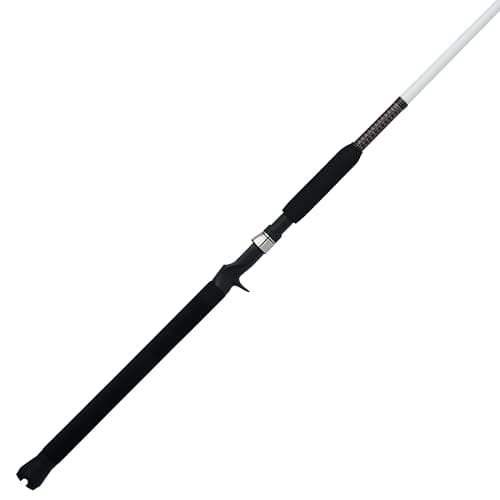
Ugly Stik Catfish Spinning Rod (7' Med-Heavy)
$64.957 ft medium-heavy with a published moderate-fast action, rated 15-30 lb line and 1/2-3 oz. That 3 oz top end is what lets you cast a heavy sinker, and the moderate action is what lets a circle hook work.
$64.95 · Check price on Amazon#ad how this is funded · price as of October 19, 2026
- 2. ReelNo photo
Daiwa BG Spinning Reel (BG3000)
Check price240 yd of 8 lb, 37.4 in per turn, on a Hard Bodyz frame with a waterproof carbon drag. Capacity is insurance on a fish that takes line, and a catfish takes line.
- 3. Line
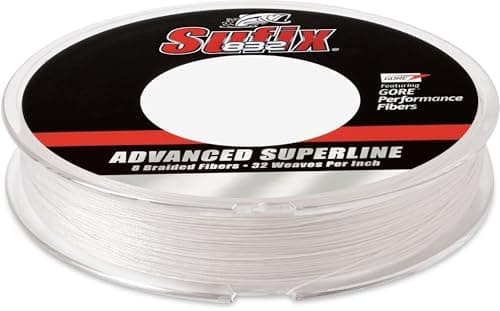
Sufix 832 Advanced Superline Braid
$17.9930 lb braid measures 0.011 in — the diameter of 8 lb mono — with an 8-fiber construction that includes a GORE fiber for abrasion resistance. Catfish live around rock and timber, and abrasion is what breaks you off.
$17.99 · Check price on Amazon#ad how this is funded · price as of October 19, 2026
- 4. Leader
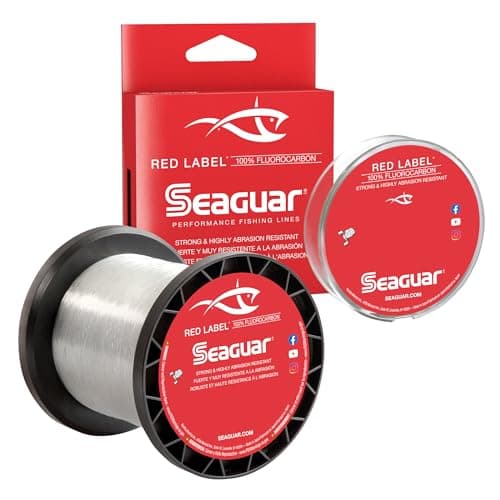
Seaguar Red Label Fluorocarbon Line
$15.4820 lb at 0.016 in, with published abrasion resistance. A fluorocarbon leader between braid and hook takes the rubbing that a main line should not.
$15.48 · Check price on Amazon#ad how this is funded · price as of October 19, 2026
- 5. Bait presentation
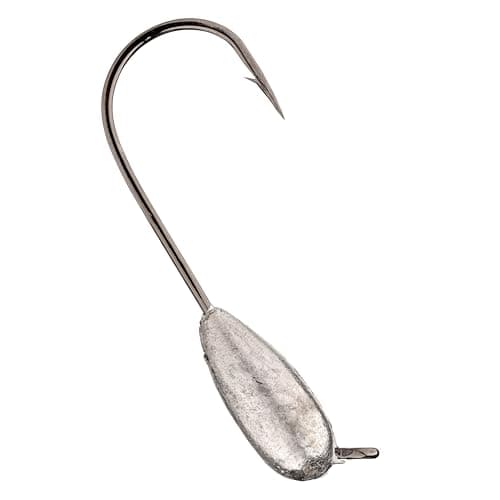
Strike King Tour Grade Shakey Head
$5.99Not the classic catfish rig, but the 1/4 oz head with its bait-holding barb is a genuinely good channel-cat tool on smaller water where a slip sinker is overkill.
$5.99 · Check price on Amazon#ad how this is funded · price as of October 19, 2026
We do not print a running total here. Every one of these prices moves independently, and a total we typed last week would be wrong today — check the five current prices above and add them up, which takes about twenty seconds and is always right.
Why this build inverts the bass rules
Nearly every recommendation elsewhere on this site points toward a fast action, and here we are recommending the opposite. The reason is the hook.
Catfish are usually caught on circle hooks, which work in a completely different way from a standard J-hook. A circle hook is designed to be pulled slowly out of a fish’s throat, rotate as it reaches the jaw, and lodge in the corner of the mouth.
That mechanism needs steady, increasing pressure — not a sharp jab. A fast-action rod with a stiff mid-section delivers exactly the sharp jab that pulls a circle hook straight out before it can turn.
Ugly Stik publishes its catfish range as moderate fast for precisely this reason. The blank loads progressively, which lets the fish do the work.
The thing you must not do
When the rod tip pulls down, do not set the hook.
Point the rod at the fish, let it load, and start reeling steadily. The pressure builds, the circle hook rotates, and it plants in the corner of the jaw.
This is genuinely hard to do the first few times, because every other kind of fishing has trained the opposite reflex. The most common reason people lose catfish is a reflexive hookset that pulls the hook clean out of an open mouth.
The compensation is that a properly-set circle hook almost never comes loose, and the fish is hooked in the jaw rather than the throat — which matters if you intend to release it.
The component arithmetic
| Check | The numbers | Verdict |
|---|---|---|
| Line rating vs reel capacity | Rod 15–30 lb; BG3000 holds 240 yd of 8 lb, 200 yd of 10 lb | Generous with braid |
| Braid diameter vs spool | 30 lb Sufix 832 = 0.011 in, same as 8 lb mono | Fits easily |
| Sinker weight vs rod window | Rod 1/2–3 oz; typical 1–2 oz slip sinker | Mid-window |
| Leader vs main line | 20 lb Red Label = 0.016 in against 30 lb braid at 0.011 in | Leader is the sacrificial end, as intended |
Note the last row. Unlike the bass setups on this site, here you want the leader thicker than the main line. It is doing abrasion duty against rock and timber, and it is the part you expect to replace.
Match the setup to your water
Channel cats in a lake or pond
The build above, and you can go lighter — 15 lb braid and a 1/2–1 oz sinker is plenty. Channel cats run one to eight pounds in most water, and the 7-foot rod is the right length.
River fishing
Go to the 8-foot two-piece model. The extra length keeps more line out of the current, which means you need less sinker weight to hold bottom, which means you feel more. Heavier sinkers — 2 to 3 oz — and the rod is rated for them.
Big flatheads and blues
Honestly outside this build. Fish over twenty pounds want heavier rods, larger reels and 50 lb-plus line, and that is a different purchase rather than an adjustment. We would rather say so than pretend a 15–30 lb rod covers it.
Bait, briefly
Catfish feed primarily by smell, which is why this is one of the few situations on this site where we would tell you bait genuinely beats lures rather than merely competing.
Cut bait, chicken liver, nightcrawlers and commercially prepared stinkbait all work. Fresh matters more than fancy — a fresh piece of cut bluegill from the lake you are fishing outperforms most things in a jar.
The rig
A slip sinker rig is the default and it is simple: sinker on the main line, bead below it, swivel, then leader and circle hook.
The point of the slip is that a fish can pick the bait up and move without feeling the sinker’s weight, which is exactly what you want with a circle hook — the fish takes it confidently and turns before any pressure arrives.
What you still need
- Circle hooks, 3/0 to 7/0 depending on bait size. The whole build depends on these.
- Egg or no-roll sinkers, 1 to 3 oz.
- Barrel swivels and beads.
- Long-nose pliers. Catfish have abrasive mouths and spines that will get you.
- A rod holder. This is genuinely a set-the-rod-down fishery, and a rod propped on a rock goes in the water.
Questions people actually ask
What is a good catfish setup for beginners?
A 7 to 8 ft medium-heavy rod with a moderate action rated 15-30 lb, a reel with generous line capacity, 20 to 30 lb braid with a fluorocarbon leader, and circle hooks. The moderate action is essential — a fast rod pulls circle hooks out.
Do you set the hook on a catfish?
Not with circle hooks, no. Point the rod at the fish, let it load, and start reeling steadily. The hook rotates as pressure builds and lodges in the corner of the jaw. A reflexive hookset pulls it straight out of an open mouth.
What rod action is best for catfish?
Moderate or moderate-fast, which is the opposite of most bass advice. Circle hooks need steady increasing pressure to rotate and set, and a fast-action rod delivers a sharp jab that defeats them.
What line should you use for catfish?
Twenty to thirty pound braid with a heavier fluorocarbon leader. Catfish live around rock and timber, so abrasion is what breaks you off — and the leader should be the sacrificial part rather than the main line.
Is bait better than lures for catfish?
Yes, and this is one of the few places we would say so plainly. Catfish feed primarily by smell. Fresh matters more than fancy — cut bait from the lake you are fishing beats most prepared baits in a jar.
Read next
Sources
Prices on this page come from the retailer at request time and change without notice. If we cannot get a live one we say “check price” rather than show you a number that has gone stale. How we pick.