Tackle
Hook sharpeners: the three-dollar fix for fish that come off
The fish that came off was probably not a bad hookset. It was a hook that bounced off a jaw it should have gone into.
By Sawyer V. · Last updated · How we pick
The short answer
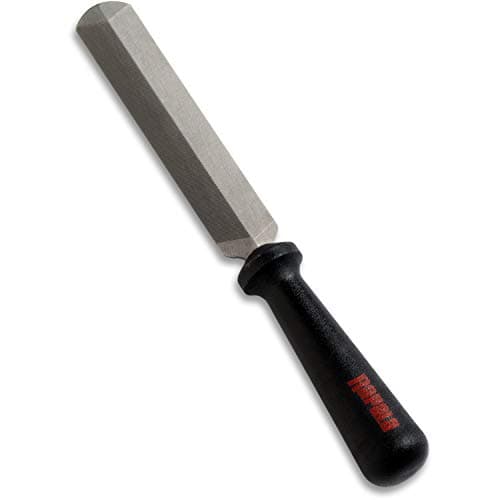
Buy the Rapala Fisherman’s 4 in Hook File. It is double-sided, ultra-fine carbon steel, silicone treated against corrosion, and at four inches it fits the tackle bag pocket where it needs to live. The Luhr-Jensen Original Hook File is the same idea with an ergonomic handle, and is the one to buy if you sharpen at a bench rather than in a boat. Before either: run the point down your thumbnail. If it skates instead of catching, it needs a file. If it catches, put the file away - over-sharpening a hook is a real way to make it worse.
Reel & Rig earns a commission from qualifying purchases made through links on this page, at no extra cost to you. It does not change which gear we pick or what we say about it. Full disclosure.
Quick picks
| # | Product | Best for | Price |
|---|---|---|---|
| 1 | Best hook file Rapala Fisherman's 4 in Hook File Double-sided ultra-fine carbon steel, silicone treated for corrosion resistance, in a 4 in format. | The tackle bag, the boat, and sharpening between casts | $24.17 · Check price on Amazon #ad how this is funded · price as of October 19, 2026 |
| 2 |  Best for sharpening at a bench Luhr-Jensen Original Hook File with Handle High-carbon steel with an ultra-fine cutting edge and an ergonomic handle built for a sure grip and controlled strokes. | Working through a box of trebles before a trip | $23.27 · Check price on Amazon #ad how this is funded · price as of October 19, 2026 |
The two files, side by side
| Rapala Fisherman’s | Luhr-Jensen Original | |
|---|---|---|
| Steel | Carbon steel | High-carbon steel |
| Edge | Ultra-fine, double-sided | Ultra-fine |
| Handle | Not published | Ergonomic |
| Corrosion | Silicone treated | Not published |
| Published length | 4 in | 4 in |
| Grit | Not published | Not published |
| MSRP | $26.49 | $24.49 |
Neither maker publishes a grit. For a sharpening tool that is the specification, and its absence on both sides is the finding rather than an oversight on our part.
The fingernail test
Before you sharpen anything, find out whether you need to. Drag the hook point lightly down your thumbnail at a shallow angle, without pressing.
It digs in and sticks. Sharp. Leave it alone.
It skates across and leaves a line. Blunt. File it.
It catches, then slips. Rolled point - the tip has bent over rather than worn down. A couple of light strokes will straighten it; heavy filing will take the point off entirely.
Do this at the start of a session and after anything that involved rock, timber or a fish. It takes two seconds per hook and it is the entire reason to own a file.
How to use a file without ruining the hook
File toward the point, never away. Strokes run from the bend toward the tip. Filing backwards creates a burr that catches on everything and then folds over on the first hookset.
Three faces, not a cone. The shape you want is a triangular point: two short strokes on each side and two on the inner face. A round, cone-shaped point is harder to drive than a triangular one, which is why most premium hooks are cut, not ground.
Three strokes, then test. Not fifteen. The commonest mistake is removing so much metal that the point becomes long and thin, which gives you a hook that is sharp once and then rolls on the first hard jaw.
Do not file through the coating. Modern hooks carry a plating that is doing the corrosion work. You are going to break through it at the point - that is unavoidable - but every stroke further down the shank is one more spot that will rust. Our hooks page covers what the finishes actually do.
Which hooks not to sharpen
Chemically sharpened hooks, when new. A new chemically sharpened point is finer than any file can produce, and taking a file to one makes it worse. Sharpen these only once they have actually gone blunt.
Anything where the point is already short. A hook that has been sharpened several times eventually has a point too short to penetrate properly. At that stage it is a replacement, and for a treble on a crankbait that means a new treble, not a new lure.
Trebles you cannot reach. Two of a treble’s three points are easy and the third is awkward. If you cannot get a clean stroke on it, replace the treble - a treble with two sharp points and one blunt one is worse than it sounds, because the blunt one is often the one making first contact.
The sharpener you might already own
Worth knowing: the molded sheath on the KastKing Paradox scissors is published as having a built-in hook sharpener. If you carry those for cutting braid, you already have a touch-up tool on the water, and a dedicated file becomes the better-quality one that lives at home. Our line cutter page covers that tool in full.
Either way, a hook file is one of the few pieces of fishing gear where the cheap version and the good version both work, and where the thing that fails is not buying one but never taking it out of the bag.
So what do I actually buy?
One file, carried where you actually fish. Double-sided for the boat and the bag, handled if you work through a box at a table. The fingernail test first, every time.
Rapala Fisherman's 4 in Hook File
$24.17Double-sided carbon steel, silicone treated, 4 in. The one for the tackle bag.
#ad how this is funded · price as of October 19, 2026
Luhr-Jensen Original Hook File with Handle
$23.27High-carbon steel with an ergonomic handle. For sharpening a box of trebles at a table.
#ad how this is funded · price as of October 19, 2026
KastKing Paradox Fishing Scissors (4.5 in)
$6.79Its molded sheath has a published built-in hook sharpener - the one you'll have with you.
#ad how this is funded · price as of October 19, 2026
The picks, in full
Every card below lists the specs we could read off a published page, the URL they came from, and one honest reason you might not want it.
1. Best hook file
Rapala Fisherman's 4 in Hook File
Rapala
Double-sided ultra-fine carbon steel, silicone treated for corrosion resistance, in a 4 in format.
Double-sided is the feature that makes this the on-the-water file. Two cutting surfaces means you can set the angle on one face and finish on the other without turning the hook over in cold fingers - and it means the file lasts twice as long before the fine teeth load up with steel.
Four inches matters for a different reason: it lives in a pocket. A hook file that lives in a toolbox is a hook file used once a season, and the hooks that need attention are the ones you just dragged across rock.
The silicone treatment is Rapala’s published answer to the obvious problem with a carbon steel tool that gets wet. Carbon steel holds an ultra-fine cutting edge far better than stainless does, and it rusts - the treatment buys you time, not immunity, so this is still a tool to dry before it goes back in the bag.
The drawback
Rapala publishes no grit figure, no handle material and no weight, so the only things you can compare against any other file are the length and the steel. Carbon steel rusts regardless of treatment once it has sat damp in a tackle bag, which is exactly where this is designed to live. And Rapala's own store lists it as out of stock at the time of writing, so the direct-from-maker route is not currently open.
Published specs
- Length
- 4 in
- Cutting edge
- Double-sided, ultra-fine carbon steel
- Corrosion protection
- Silicone treated
- MSRP
- $26.49
- Grit, handle material and weight
- Rapala does not publish figures
Specs read from Rapala - Fisherman's 4 in Hook File.
#ad how this is funded · price as of October 19, 2026
2. Best for sharpening at a bench
Luhr-Jensen Original Hook File with Handle
Luhr-Jensen
High-carbon steel with an ultra-fine cutting edge and an ergonomic handle built for a sure grip and controlled strokes.
The handle is the whole difference. Luhr-Jensen publishes it as a comfortable ergonomic handle providing a sure grip and precise sharpening, which is the right design for the job this file is better at: sitting at a table, working through every treble on a box of crankbaits before a trip.
Luhr-Jensen is blunt about why in its own copy - maintaining sticky-sharp hooks is the single biggest thing an angler can do to convert strikes into landed fish - and a handled file is what makes doing twenty hooks in a sitting bearable.
The steel is the same story as the Rapala: high-carbon, taking an ultra-fine edge that stainless cannot match. Published item number is 9140-512-0000 at a $24.49 MSRP.
The drawback
There is a naming problem worth knowing about before you order. Luhr-Jensen publishes a 4 in Original Hook File; the Amazon listing we link is titled Size 5 1/2, and no 5-1/2 in page exists on the maker's site. The specifications above are from the published 4 in page, and the length on the listing is the listing's claim rather than a published figure. The handle also makes it the bulkier of the two in a pocket, and no grit figure is published here either.
Published specs
- Item
- 9140-512-0000
- Material
- High-carbon steel
- Edge
- Ultra-fine
- Handle
- Ergonomic, for a sure grip and precise sharpening
- MSRP
- $24.49
- Length
- Luhr-Jensen publishes a 4 in Original Hook File; the Amazon listing is titled Size 5 1/2 and no 5-1/2 in page exists
Specs read from Luhr-Jensen - 4 in Original Hook File.
#ad how this is funded · price as of October 19, 2026
Questions people actually ask
What is the best hook sharpener?
The Rapala Fisherman's 4 in Hook File for most anglers: double-sided ultra-fine carbon steel, silicone treated against corrosion, and small enough to live in a tackle bag pocket. The handled Luhr-Jensen Original is better if you sharpen at a bench.
How do you know if a fishing hook is sharp enough?
Drag the point lightly down your thumbnail at a shallow angle without pressing. If it digs in and sticks, it is sharp. If it skates across and leaves a line, it is blunt. If it catches and then slips, the point has rolled over and needs two light strokes, not heavy filing.
How do you sharpen a fish hook?
File from the bend toward the point, never backwards, and aim for a triangular point rather than a cone: two short strokes each side and two on the inner face. Three strokes, then re-test on your thumbnail. Removing too much metal leaves a long thin point that rolls on the first hard hookset.
Should you sharpen new hooks?
Not chemically sharpened ones. A new chemically sharpened point is finer than any hand file can produce, and filing it makes it worse. Sharpen those only once they have actually gone blunt on rock, timber or fish.
Does sharpening a hook make it rust?
At the point, yes - you are filing through the plating that does the corrosion work, which is unavoidable. Keep the strokes confined to the point rather than running down the shank, and dry the hook before it goes away.
Is a diamond hone or a steel file better for hooks?
Both work, and neither maker in this category publishes a grit figure, so there is no specification to compare them on. Carbon steel files take the ultra-fine edge manufacturers advertise; diamond hones are cheaper and more tolerant of being left wet.
Read next
Sources
Prices on this page come from the retailer at request time and change without notice. If we cannot get a live one we say “check price” rather than show you a number that has gone stale. How we pick.