Tackle
Jig heads: the component that decides how your plastic behaves
The cheapest component in the box and the one that decides whether your soft plastic works at all.
By Sawyer V. · Last updated · How we pick
The short answer
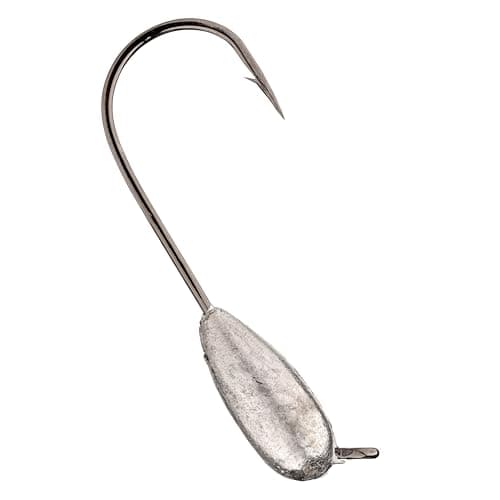
A jig head controls three things: how fast the bait falls, what angle it sits at, and whether it stays on the hook. Weight is chosen by depth. The eye angle decides how the bait hangs. And a bait-keeper barb is the difference between a plastic that lasts a dozen fish and one that slides down the shank after two.
Reel & Rig earns a commission from qualifying purchases made through links on this page, at no extra cost to you. It does not change which gear we pick or what we say about it. Full disclosure.
Quick picks
| # | Product | Best for | Price |
|---|---|---|---|
| 1 | Best all-round Strike King Tour Grade Shakey Head 1/8, 3/16 and 1/4 oz with a 60-degree flat-eye Gamakatsu hook and a barb that stands the bait upright. | Standing a worm up on the bottom | $5.99 · Check price on Amazon #ad how this is funded · price as of October 19, 2026 |
What a jig head actually controls
It looks like a weight with a hook in it. It is doing three jobs, and getting any of them wrong spoils an otherwise good soft plastic.
1. Fall rate. Most soft-plastic bites happen on the drop, so the speed of that drop is the single most important variable you control. Heavier falls faster; slower gets more bites.
2. The angle the bait sits at. This is the eye position, and it is why different head shapes exist at all. A 60-degree eye stands a worm upright off the bottom; a 90-degree eye swims a body horizontally; a 30-degree eye drags nose-down.
3. Whether the plastic stays put. A bait keeper — a barb, a screw lock, or a molded collar — is what stops the plastic sliding down the shank. Without one, a fifteen-cent head ruins a bait every two fish.
Weight by depth, not by fish
| Weight | Depth / conditions | Typical use |
|---|---|---|
| 1/32 oz | Under 8 ft, calm | Panfish, shallow crappie |
| 1/16 oz | 6–15 ft | Crappie default; small finesse plastics |
| 1/8 oz | 10–20 ft | Shakey head for bass; deeper crappie |
| 3/16–1/4 oz | 15 ft +, wind, current | Bass finesse worms on bottom |
| 3/8 oz + | Deep, or heavy current | Swimbait heads, deep structure |
The rule that generalises across this whole site: use the lightest weight that still lets you feel the bottom. Adding weight is a response to losing contact, not to bigger fish.
Eye angle, and what each one is for
| Eye angle | Bait sits | Presentation |
|---|---|---|
| 60 degrees (shakey) | Standing upright off bottom | Worm waving in place; the classic finesse bottom bait |
| 90 degrees (round / ball) | Horizontal, swimming | Casting and retrieving; crappie and panfish jigs |
| 30 degrees (darter / bullet) | Nose-down, streamlined | Dragging through cover and rock |
| Weedless (wire or brush guard) | Point shielded | Anywhere a bare hook would snag |
For a first selection, round heads for panfish and crappie and a few shakey heads for bass covers the great majority of soft-plastic fishing.
The bait keeper is worth paying for
This is where cheap heads cost you money rather than save it.
A plain hook shank with no keeper lets the plastic work its way down after a couple of fish. Once it has slipped, the bait hangs crooked, spins on the retrieve, and puts twist in your line — and you cannot see any of it happening.
A barb, collar or screw lock adds very little to the cost and roughly triples how many fish each soft plastic survives. Over a season that is a lot of plastic.
Painted or unpainted?
Mostly cosmetic and worth about thirty seconds of thought.
Painted heads help slightly in clear water where the head is visible, and matching the head to the body looks tidier. Unpainted lead heads catch fish perfectly well and cost less — Strike King publishes four per pack unpainted against three painted, which is the price difference expressed as quantity.
Where it does matter: a bright head on a natural body gives a fish something to aim at, which some anglers use deliberately as a strike trigger on crappie jigs.
What we would skip
Assorted jig head kits. They arrive with a spread of weights and hook sizes, most of which do not match the plastics you own. Buy two weights in the hook size your baits need.
Very cheap heads with soft hooks. The hook is the part you cannot inspect before buying and the part that fails on a good fish. A named hook — the Strike King heads publish a Gamakatsu — is a reasonable proxy for a hook that will hold.
The picks, in full
Every card below lists the specs we could read off a published page, the URL they came from, and one honest reason you might not want it.
1. Best all-round
Strike King Tour Grade Shakey Head
Strike King
1/8, 3/16 and 1/4 oz with a 60-degree flat-eye Gamakatsu hook and a barb that stands the bait upright.
Two published design details make this worth choosing over a plain round head.
The barb. Strike King publishes a special barb intended to stand baits up and hold soft plastics securely. That solves the single most common jig-head failure: the plastic slides down the hook shank after a couple of fish, and from then on the bait hangs crooked and spins.
The 60-degree flat eye, flush with the head. The angle is what makes a shakey head work — the head sits on bottom and the worm stands vertically, waving, which is a presentation nothing else quite replicates.
Published in 1/8, 3/16 and 1/4 oz, three per pack painted or four unpainted, in green pumpkin, black or unpainted.
The drawback
The range stops at 1/8 oz on the light end, so it does not reach the 1/32 and 1/16 oz sizes that panfish and shallow crappie fishing need. And three per pack is a thin count for a component you lose to rocks regularly.
Published specs
- Weights
- 1/8, 3/16, 1/4 oz
- Hook
- 60-degree flat-eye Gamakatsu
- Pack size
- 3 per pack painted, 4 per pack unpainted
- Head design
- Barb to stand the bait up; eye flush with the head
- Colors
- Green pumpkin, black, unpainted
Specs read from Tackle Warehouse — Strike King Tour Grade Shakey Head.
#ad how this is funded · price as of October 19, 2026
Questions people actually ask
What size jig head should I use?
A sixteenth of an ounce for crappie and panfish, an eighth to a quarter for bass finesse worms. Choose weight by depth and conditions rather than by fish size — use the lightest head that still lets you feel bottom.
What does the hook eye angle on a jig head do?
It sets how the bait sits. A 60-degree eye stands a worm upright off the bottom, a 90-degree round head swims a body horizontally, and a 30-degree darter head drags nose-down through cover.
Why does my soft plastic keep sliding down the hook?
The head has no bait keeper. A barb, collar or screw lock stops the plastic working down the shank after a couple of fish — without one the bait hangs crooked, spins on the retrieve and twists your line.
Are painted jig heads better than unpainted?
Mostly cosmetic. Unpainted lead heads catch fish perfectly well and cost less. A bright head on a natural body can act as a strike trigger, which some anglers use deliberately on crappie jigs.
Read next
Sources
Prices on this page come from the retailer at request time and change without notice. If we cannot get a live one we say “check price” rather than show you a number that has gone stale. How we pick.