Tackle
Rod storage: most rods break in a car, not on a fish
The gear category bought after the accident rather than before it.
By Sawyer V. · Last updated · How we pick
The short answer
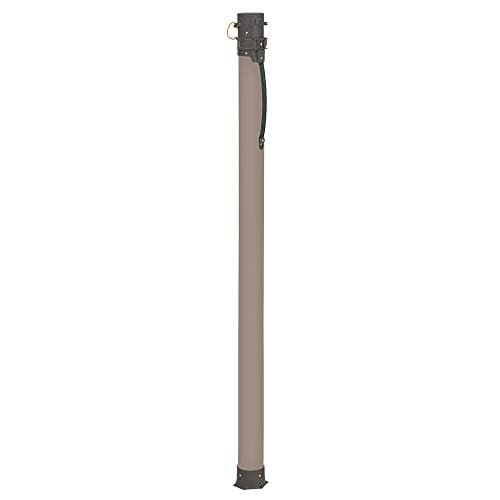
Rods break in car doors, under seats and in garages far more often than they break on fish. A hard tube for travel, a rack for the garage, and sleeves for everyday car transport cover it. The Plano 35102 telescoping rod case extends from 58 to 106 in and locks.
Reel & Rig earns a commission from qualifying purchases made through links on this page, at no extra cost to you. It does not change which gear we pick or what we say about it. Full disclosure.
Quick picks
| # | Product | Best for | Price |
|---|---|---|---|
| 1 | Best rod travel case Plano Telescoping Rod Case (35102) Telescopes from 58 in to 106 in at 3.5 in across, foam-padded and lockable. | Flying and long road trips, for rods up to a published 8 ft 6 in | $77.82 · Check price on Amazon #ad how this is funded · price as of October 12, 2026 |
Where rods actually break
Very few rods break while fighting a fish. A rod that is rated for 15 lb line and properly loaded is a well-engineered object under tension.
What breaks rods is point loading — a sharp force applied across the blank at one spot, which is exactly what a car door, a boot lid or a foot provides.
| Cause | Prevented by |
|---|---|
| Closed in a car door or boot | Putting rods in last, taking them out first |
| Stood on, or crushed under gear | A rack or a tube |
| Tip caught in a door frame or branch | A sleeve, and carrying tip-backwards |
| High-sticking a fish at the boat | Technique - keep the rod under 45 degrees |
| Guides knocked off in transit | Any of the above |
Four of those five are storage and transport problems. That is why this page exists and why the money is well spent.
Three types, three jobs
Hard tubes are for travel — flights, long drives, anywhere the rod leaves your control. Rigid walls, lockable, and the only thing that survives airline baggage.
Racks are for the garage or the boat. They hold rods vertically or horizontally, separated so guides do not tangle, and off the floor where things get dropped on them.
Sleeves and socks are for everyday transport. A cloth or neoprene sleeve over a made-up rod stops the guides catching on everything, keeps hooks contained, and costs very little. This is the one most people should buy first.
Storing rods at home
Vertical or fully horizontal, never leaning. A rod leaning in a corner is under a constant sideways load at one point on the blank. Over a winter that induces a set.
Support horizontal rods at several points. Two supports at the ends of a seven-foot rod leaves it sagging in the middle. Three or four is better.
Loosen the drag. Storing a reel with the drag tight compresses the washers for months and they take a set, which shows up as a jerky drag start-up. Our drag page explains why start-up smoothness matters so much.
Take the lure off. A hook hanging on the line for a winter rusts, and a treble swinging against a blank chips it.
Somewhere cool and dry. A hot loft or a damp shed degrades cork grips, reel seats and line simultaneously.
Rods in a car
The most common situation and the most damaging.
Rods go in last and come out first. The overwhelming majority of car-broken rods are closed in a door or a boot lid by someone who forgot they were there.
Tip toward the rear. If you have to slide something in later, it hits the butt rather than the tip.
Never on the roof or the boot lid, even for a second. This ends the same way every time.
A two-piece rod is safer than a one-piece, and a four-piece travel rod is safer still. That is a real argument for multi-piece rods that has nothing to do with packing for flights.
For a car that carries rods regularly, a fixed interior rod holder is worth more than any case, because it removes the human error entirely.
What about the boat
Rod lockers are what boats have instead of racks, and the same principle applies: separated, supported, and not loose.
On a kayak the constraint is different again — rods must be leashed as well as held, because a capsize sends everything in at once.
So what do I actually buy?
Buy a sleeve first, a rack second, and a hard tube only if you actually travel with rods. Most people buy in the reverse order and it costs them a rod.
Plano Telescoping Rod Case (35102)
$77.8258-106 in telescoping, lockable, foam-padded. For flights and long trips.
#ad how this is funded · price as of October 12, 2026
Ugly Stik GX2 Travel Spinning Rod (6 ft 6 in Medium, 4-piece)
$89.95A four-piece rod is the other answer to car transport, and it needs no case at all.
#ad how this is funded · price as of October 12, 2026
The picks, in full
Every card below lists the specs we could read off a published page, the URL they came from, and one honest reason you might not want it.
1. Best rod travel case
Plano Telescoping Rod Case (35102)
Plano
Telescopes from 58 in to 106 in at 3.5 in across, foam-padded and lockable.
The published dimensions are 58–106 in long by 3.5 in across by 8.5 in high. That length range is the point: it collapses for storage and extends to take rods most cases cannot.
11.5 inches of width is unusually generous and is what makes it a multi-rod case rather than a single-rod tube. Plano does not publish a rod capacity figure, which is a number we would like to state, but the cross-section is clearly built for several.
Published as thick-wall construction and lockable for travel. Both matter for flying: airline baggage handling is exactly the load case a rod tube exists for, and a lockable case is a requirement on some carriers.
The foam padding is the underrated feature. A rod tip is the part that breaks, and padding at the closed end is what stops a tip travelling into a hard wall over a long drive.
The drawback
It is expensive, large, and overkill for anyone who only drives to a local lake — a soft sleeve does that job for a fraction of the cost. Plano does not publish a rod capacity, an empty weight, or the internal diameter, so you cannot confirm before buying that your particular rods will fit.
Published specs
- Model
- 35102
- Length
- Telescopes from 58 in to 106 in
- Diameter
- 3.5 in
- Rod capacity
- Published as holding rods up to 8 ft 6 in
- Padding
- Foam, published as protecting rod tips
- Security
- Lockable hinged door
- Weight
- 4.75 lb
- Color
- Tan
Specs read from Half Hitch Tackle - Plano 35102 Rod Case.
#ad how this is funded · price as of October 12, 2026
Questions people actually ask
How should you store fishing rods at home?
Vertically, or fully horizontal with three or four supports along the length. Never leaning in a corner — that puts a constant sideways load on one point of the blank and induces a set over a winter.
Should you loosen the drag when storing a reel?
Yes. Storing a reel with the drag tight compresses the washers for months and they take a set, which shows up later as a jerky drag start-up — the fault most likely to lose you a fish.
How do most fishing rods break?
In cars. Closed in a door or boot lid, stood on, or with the tip caught in a door frame. Very few break while fighting a fish, because a properly loaded blank is a well-engineered object under tension.
Do you need a hard rod case?
Only if the rod leaves your control — flights especially. For driving to a local lake a soft sleeve does the job for a fraction of the cost, and a four-piece travel rod avoids the problem entirely.
Read next
Sources
Prices on this page come from the retailer at request time and change without notice. If we cannot get a live one we say “check price” rather than show you a number that has gone stale. How we pick.