Tackle
How to choose lure color without buying forty of them
The most over-discussed variable in fishing. Two colors of each lure type will cover nearly every day you fish.
By Sawyer V. · Last updated · How we pick
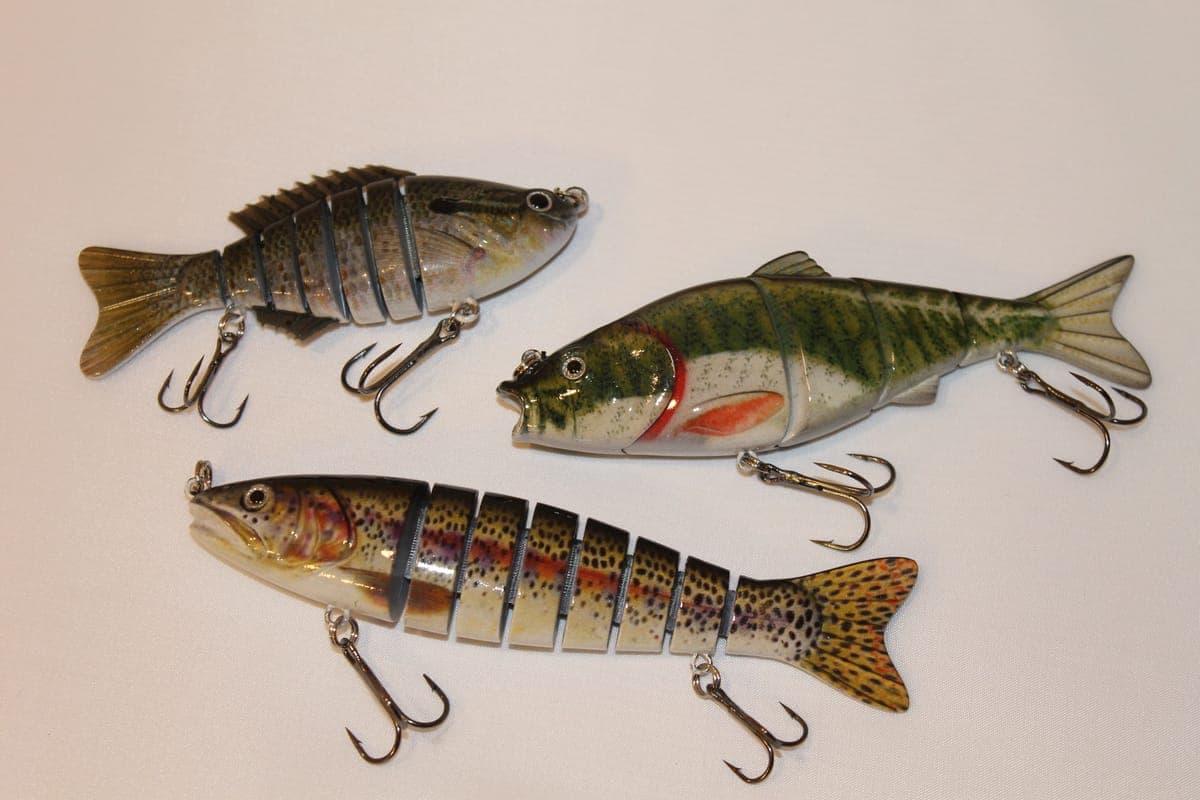
The short answer
Clear water or bright sun → natural colors (green pumpkin, watermelon, shad patterns). Stained water or overcast → darker or brighter (black and blue, junebug, chartreuse).
That is the whole system. Color matters far less than depth, retrieve speed and where you cast, and buying forty colors is how a tackle box fills up without a catch rate changing.
Reel & Rig earns a commission from qualifying purchases made through links on this page, at no extra cost to you. It does not change which gear we pick or what we say about it. Full disclosure.
Why the rule works
Two different mechanisms, depending on the water.
In clear water, the fish can see the lure properly. That means it can also see that it is wrong. A natural color that resembles what actually lives there gives it less to object to.
In stained water, the fish is working from silhouette. Fine detail is lost, so what matters is contrast against the light coming from above. A dark lure produces a harder silhouette than a translucent one, which is why black and blue is a stained-water staple rather than a color anything in the lake actually is.
Chartreuse is the odd one out and it earns its place: it stays visible deeper than most colors in stained water, which is why it survives on so many lures as an accent.
What actually happens to color underwater
Worth knowing, because it explains why deep-water color choices are mostly theater.
Water absorbs light by wavelength, and it takes the long wavelengths first. Red disappears first, then orange, then yellow. By fifteen or twenty feet in stained water, a red lure is not red to a fish — it is dark gray.
Two practical consequences. Deep, color choice collapses toward light-versus-dark and the specific hue barely matters. Shallow and in clear water, hue genuinely does matter, which is exactly where the natural-color rule applies.
The two colors to actually buy
| Lure type | Clear / bright | Stained / overcast |
|---|---|---|
| Soft plastics | Green pumpkin | Black and blue, or junebug |
| Crankbaits | A shad or bluegill pattern | Chartreuse with a dark back, or red craw |
| Panfish jigs | White, or clear with flake | Chartreuse, or pink |
Six items. If you own those and you are still not catching, the answer is not a seventh color — it is depth, speed, or where you are casting.
Green pumpkin deserves a specific mention: it is the single most useful soft plastic color in freshwater, because it reads as crawfish, as bluegill, and as generally-alive across a wide range of water clarity. If you buy one color, buy that.
What matters more than color
In rough order of how much difference each makes:
- Where you cast. A perfect lure in empty water catches nothing. Cover, structure, and edges are where fish are.
- Depth. Fish hold at a depth for reasons — temperature, oxygen, forage — and a lure two feet above them may as well be on the bank.
- Retrieve speed. The most common beginner mistake, and it is nearly always too fast.
- Size and profile. Matching roughly what the fish are eating matters more than matching its color.
- Color. Genuinely last.
The reason color gets so much attention is that it is the easiest variable to change and the easiest thing to sell. Fifty color options on a product page is a merchandising decision, not a fishing one.
When color genuinely does matter
Being fair, because the above could read as dismissive.
Clear water and heavily pressured fish. Where fish see the lure well and have seen a lot of lures, a natural color is measurably better than a bright one.
Very stained or muddy water. Here a dark silhouette or a high-visibility chartreuse genuinely out-performs a subtle natural color, because the fish has to find it before it can eat it.
When a local pattern exists. Some waters do have a color that consistently works, usually because it matches a dominant forage. That is worth learning locally and is not something a spec sheet can tell you.
The practical habit
Tie on the natural color first. Fish it properly for twenty minutes at the depth you think fish are holding. If nothing happens, change the depth or the speed before you change the color.
Change color when you have exhausted the other variables, not as the first move. That sequence will teach you more in a season than a tackle box of colors will.
So what do I actually buy?
Two colors of each of these covers nearly every day. Buy the natural color first and add the dark or bright one when you meet stained water.
Gary Yamamoto Senko
$7.99Green pumpkin for clear water, black and blue for stained. The rest of the range is merchandising.
#ad how this is funded · price as of October 19, 2026
Zoom Trick Worm
$12.72Over fifty colors published; you need two. Twenty per pack means you can afford to lose them.
#ad how this is funded · price as of October 19, 2026
Strike King KVD 1.5 HC Squarebill Silent Crankbait
$11.99A shad pattern for clear water, chartreuse with a dark back for stained.
#ad how this is funded · price as of October 19, 2026
Questions people actually ask
What color lure should I use?
Natural colors like green pumpkin or a shad pattern in clear water and bright sun; darker or brighter colors like black and blue or chartreuse in stained water or overcast light. Those two rules cover nearly every day you will fish.
Does lure color really matter?
Less than where you cast, what depth you fish, and how fast you retrieve — in roughly that order. It matters most in clear water with pressured fish, and in very stained water where the fish has to find the lure before it can eat it.
What is the best all-round soft plastic color?
Green pumpkin. It reads as crawfish, as bluegill and as generally-alive across a wide range of water clarity, which is why it is the single most useful soft plastic color in freshwater.
Why does red disappear underwater?
Water absorbs light by wavelength and takes the long ones first — red goes first, then orange, then yellow. By fifteen or twenty feet in stained water a red lure is dark gray to a fish, which is why deep color choices collapse toward light versus dark.
Should I change lure color if I am not catching?
Change depth or retrieve speed first. Color is the easiest variable to change and the least important one, so changing it first teaches you nothing and usually is not the problem.
Read next
Sources
Prices on this page come from the retailer at request time and change without notice. If we cannot get a live one we say “check price” rather than show you a number that has gone stale. How we pick.