Tackle
The four lures a beginner actually needs
Four lure types, not forty. Buying more than this early is how people end up with a full tackle box and one confused afternoon.
By Sawyer V. · Last updated · How we pick
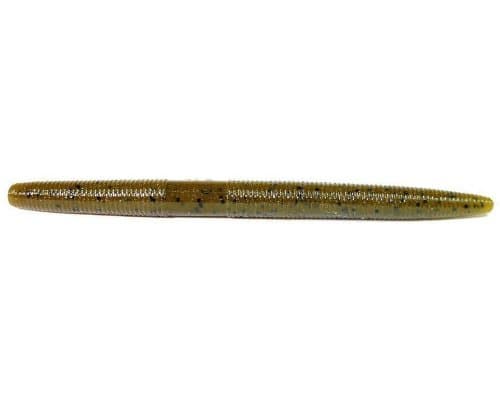
The short answer
Four lure types cover most freshwater fishing: a soft stickbait fished weightless, a straight-tail worm Texas-rigged, a squarebill crankbait, and a small jig for panfish. Between them they cover falling, dragging, covering water fast, and catching something on a slow day. Everything beyond those four is refinement.
Reel & Rig earns a commission from qualifying purchases made through links on this page, at no extra cost to you. It does not change which gear we pick or what we say about it. Full disclosure.
Quick picks
| # | Product | Best for | Price |
|---|---|---|---|
| 1 | Best first lure Gary Yamamoto Senko Heavily salt-impregnated so it falls horizontally with a shimmy. Requires no action from you, which is why it is the right first lure. | Catching a fish when nothing else works | $7.99 · Check price on Amazon #ad how this is funded · price as of October 19, 2026 |
| 2 | 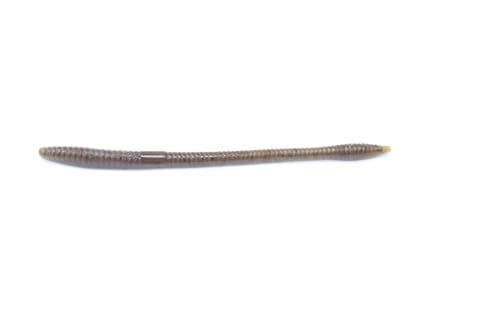 Best value Zoom Trick Worm 6.5 in, twenty per pack, salt impregnated, made in the USA. Four rigging options from one bag. | Fishing where a weightless bait cannot go | $12.72 · Check price on Amazon #ad how this is funded · price as of October 19, 2026 |
| 3 | 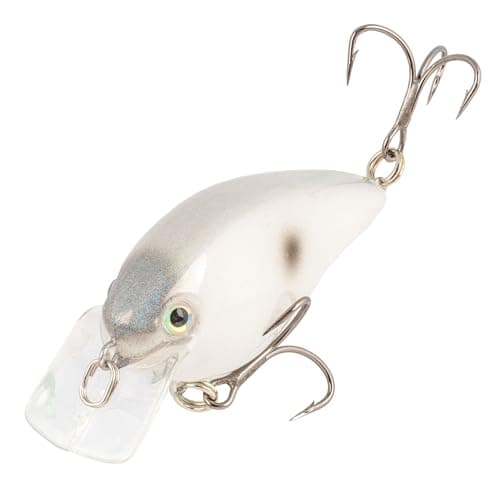 Best for covering water Strike King KVD 1.5 HC Squarebill Silent Crankbait 2-1/4 in, 3/8 oz, runs 3-6 ft, no rattle. The square lip is designed to deflect off cover rather than snag in it. | Finding out where fish are, fast | $11.99 · Check price on Amazon #ad how this is funded · price as of October 19, 2026 |
| 4 | Best for panfish and slow days Gary Yamamoto Senko The same bait in 3 or 4 inches on a light jig head — the honest answer to a day when nothing is happening. | Catching something when the bass will not cooperate | $7.99 · Check price on Amazon #ad how this is funded · price as of October 19, 2026 |
Why four, and why these four
Because they cover four genuinely different presentations, and almost every other lure in the shop is a variation on one of them.
- Something falling. The stickbait. Most bites come on the drop, and this is the presentation that works when fish are inactive.
- Something dragging on bottom, through cover. The Texas-rigged worm. Slow, weedless, and the presentation that reaches fish other lures cannot.
- Something moving fast. The squarebill. Your search tool.
- Something small. The panfish jig. The one that keeps a slow day interesting.
A spinnerbait is a fast-moving search bait like the crankbait. A jerkbait is a fast-moving search bait. A swimbait is a fast-moving search bait. Buying all three before you have fished one is how a tackle box fills up without your catch rate changing.
Match the lure weight to your rod
This is where most beginner lure purchases quietly go wrong. Your rod prints a lure weight window, and a lure outside it will not cast properly no matter how good your technique is.
| Lure | Rigged weight | Medium rod (1/4–5/8 oz) | Light rod (1/8–1/2 oz) |
|---|---|---|---|
| 5″ stickbait, weightless, 4/0 hook | ~1/2 oz | Yes | Yes |
| 6.5″ worm, Texas rig, 3/16 oz weight | ~3/8 oz | Yes | Yes |
| Squarebill crankbait | 3/8 oz | Yes | Yes |
| Half a 4″ bait on a 1/16 oz head | ~1/8 oz | No | Marginal |
| 1/32 oz panfish jig | ~1/32 oz | No | No — needs ultralight |
Three of the four cast fine on a standard medium setup. The panfish presentation genuinely needs a lighter rod, which is the honest argument for owning two outfits.
Colors: two, not twenty
Lure color is the most over-discussed variable in fishing and one of the least important. A simple rule that will not fail you:
Clear water, sunny: natural colors — green pumpkin, watermelon, shad patterns.
Stained water, or overcast: darker or brighter — black and blue, junebug, chartreuse.
Green pumpkin covers most soft plastic situations and a shad pattern covers most crankbait situations. Two colors of each. The 50+ options on the Zoom page and the dozens on the Yamamoto page exist for people fishing specific conditions on specific lakes, and they are not a decision a beginner needs to make.
What you also need, which nobody mentions
Hooks and weights. Soft plastics do not come rigged.
- 3/0 and 4/0 offset worm hooks for the stickbait and Texas rigs.
- 3/16 and 1/4 oz bullet weights for Texas rigging.
- 1/16 and 1/8 oz jig heads for the panfish presentation.
- A pair of pliers. Not optional with treble hooks.
That is roughly another $20 and it is the difference between owning lures and being able to fish them.
What we would skip
The 100-piece assorted lure kit. It contains a handful of usable baits and ninety pieces of terminal tackle sized for nothing you are doing. Its purpose is to make the piece count on the box impressive, and every experienced angler has one in a drawer, untouched.
The picks, in full
Every card below lists the specs we could read off a published page, the URL they came from, and one honest reason you might not want it.
1. Best first lure
Gary Yamamoto Senko
Gary Yamamoto
Heavily salt-impregnated so it falls horizontally with a shimmy. Requires no action from you, which is why it is the right first lure.
This is the most forgiving lure in freshwater and the reason is what it does when you do nothing. Yamamoto publishes it as heavily salt-impregnated, which makes it dense enough to fall on its own, and the fall is horizontal with a side-to-side shimmy along the whole body.
Almost every bite comes on that fall. Which means the technique is: cast it, watch your line, and wait. If your line jumps or starts moving sideways, set the hook. That is a technique a beginner can execute perfectly on day one.
Published in 3, 4, 5, 6 and 7 inch lengths, at ten per pack for the three smaller sizes and five per pack for the two larger. The 5-inch is the standard and the right place to start.
Rig it weightless on a 3/0 or 4/0 worm hook, either through the nose or wacky-rigged through the middle. Both work; wacky-rigged gives more shimmy and gets destroyed faster.
The drawback
It is soft, which is the point and also the cost — a decent fish frequently destroys one, and a pack of ten disappears fast. The salt content also means they degrade in the pack over a season if the bag is left open.
Published specs
- Lengths
- 3, 4, 5, 6, 7 in
- Pack size
- 10 per pack (3-5 in), 5 per pack (6-7 in)
- Material
- Soft plastic, heavily salt impregnated
- Signature action
- Horizontal fall, side-to-side shimmy, weightless
Specs read from Tackle Warehouse — Yamamoto Senko.
#ad how this is funded · price as of October 19, 2026
2. Best value
Zoom Trick Worm
Zoom
6.5 in, twenty per pack, salt impregnated, made in the USA. Four rigging options from one bag.
Twenty worms per pack against ten stickbaits changes the arithmetic of learning considerably. You can afford to lose them in cover, which means you can afford to fish where the fish actually are.
Zoom publishes it at 6.5 inches, salt-impregnated, made in the USA, and lists Texas, Carolina, wacky and weightless rigging. Texas-rigged — hook point buried back in the plastic — is what makes it weedless and what makes it the cover bait of the four.
The technique is different from the stickbait: cast past your target, let it sink, then drag it slowly with the rod rather than the reel, pausing often. Bites feel like weight rather than a tap.
The drawback
Texas rigging is a genuine skill — the hook has to come back through the worm at the right point or the bait hangs crooked and spins on the retrieve. Expect to get this wrong for the first few dozen rigs.
Published specs
- Length
- 6.5 in
- Pack size
- 20 per pack
- Material
- Soft plastic, salt impregnated
- Made in
- USA
- Rigs
- Texas, Carolina, wacky, weightless
Specs read from Tackle Warehouse — Zoom Trick Worm.
#ad how this is funded · price as of October 19, 2026
3. Best for covering water
Strike King KVD 1.5 HC Squarebill Silent Crankbait
Strike King
2-1/4 in, 3/8 oz, runs 3-6 ft, no rattle. The square lip is designed to deflect off cover rather than snag in it.
The other three lures are slow. This one is fast, and that difference matters more than it sounds — a crankbait lets you fish a hundred yards of bank in the time a Senko fishes ten, which is how you find out where the fish are.
Published at 2-1/4 inches, 3/8 oz, running 3–6 feet, with a square bill and no internal rattle. The square lip is the important part: it makes the bait deflect off rocks and wood instead of snagging, and that deflection is what triggers most strikes.
Which means the technique is counterintuitive. You throw it at cover on purpose. Bounce it off a laydown, grind it through rock, let it deflect. A crankbait retrieved through open water catches far less.
The silent version is genuinely useful on pressured water where everyone else is throwing a rattling bait.
The drawback
It has treble hooks, which snag more, tangle in the net, and hurt when you get one in a finger. It also needs a rod with some give — a stiff fast-action rod pulls those small trebles out of a fish beside the boat.
Published specs
- Length
- 2-1/4 in
- Weight
- 3/8 oz
- Running depth
- 3-6 ft
- Rattle
- None — silent
- Lip
- Square bill, deflection design
Specs read from Tackle Warehouse — Strike King KVD 1.5 HC Squarebill Silent Crankbait.
#ad how this is funded · price as of October 19, 2026
4. Best for panfish and slow days
Gary Yamamoto Senko
Gary Yamamoto
The same bait in 3 or 4 inches on a light jig head — the honest answer to a day when nothing is happening.
This is the same product in a smaller size, and it is here deliberately rather than as filler. A day of steady bluegill beats a day of not catching a bass, and for someone learning that is not a consolation prize — it is the point.
The 3 and 4-inch sizes come ten to a pack. Cut one in half, thread it onto a 1/16 oz jig head, and you have a bait that catches bluegill, crappie, perch, small bass and almost anything else in the lake.
Fish it under a small float in three to eight feet of water near any cover, or cast and retrieve it very slowly. Both work, and the float version tells you about bites you would otherwise never detect.
The drawback
A 1/16 oz jig head will not cast properly on a medium rod rated from 1/4 oz — you need a light-power outfit for this, which is a second combo. On a medium setup, use the whole 4-inch bait on a heavier head instead and accept less action.
Published specs
- Lengths
- 3, 4, 5, 6, 7 in
- Pack size
- 10 per pack (3-5 in), 5 per pack (6-7 in)
- Material
- Soft plastic, heavily salt impregnated
- Signature action
- Horizontal fall, side-to-side shimmy, weightless
Specs read from Tackle Warehouse — Yamamoto Senko.
#ad how this is funded · price as of October 19, 2026
Questions people actually ask
What lures should a beginner buy?
Four types: a soft stickbait fished weightless, a straight-tail worm Texas-rigged, a squarebill crankbait, and a small jig for panfish. They cover falling, dragging through cover, covering water fast, and catching something on a slow day.
What is the easiest lure to catch bass on?
A soft stickbait fished weightless. It is heavily salt-impregnated so it falls horizontally with a shimmy on its own, which means the technique is to cast it and watch your line. Most bites come on that fall and you do nothing to cause them.
What color lures should I buy?
Two: a natural color like green pumpkin for clear water and sun, and something darker or brighter like black and blue or chartreuse for stained water and overcast days. Color is the most over-discussed variable in fishing.
Why does my squarebill crankbait keep snagging?
It probably is not snagging as much as you think — the square lip is designed to deflect off cover, and that deflection is what triggers strikes. Throw it at rocks and laydowns on purpose. If it genuinely hangs up, it is running deeper than the published 3-6 ft because you are reeling too fast.
Do I need hooks and weights as well as lures?
Yes, and it catches people out. Soft plastics come unrigged. Budget for 3/0 and 4/0 offset worm hooks, 3/16 and 1/4 oz bullet weights, 1/16 and 1/8 oz jig heads, and a pair of pliers — roughly another $20.
Read next
Sources
Prices on this page come from the retailer at request time and change without notice. If we cannot get a live one we say “check price” rather than show you a number that has gone stale. How we pick.