Reels
Spincast reels: the closed-face reel, and who it is genuinely right for
The reel everyone starts with, dismissed by everyone who moves on, and still the correct answer in two specific cases.
By Sawyer V. · Last updated · How we pick
The short answer
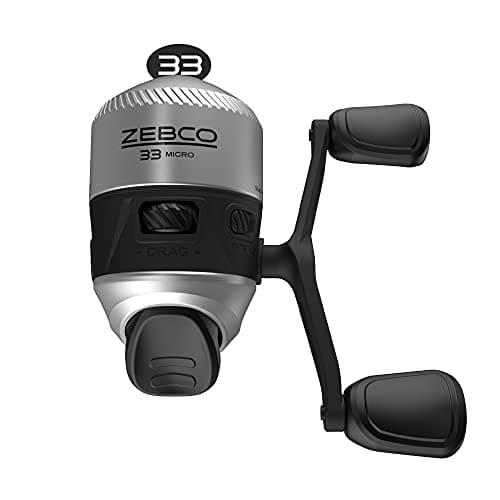
A spincast reel hides the spool under a nose cone and casts with a thumb button. The Zebco 33 is published at 4.1:1 with 120 yd of 10 lb capacity and all-metal gears. It is genuinely the right reel for a young child and for anyone who wants to fish without learning to manage a bail. It is the wrong reel for almost everything else.
Reel & Rig earns a commission from qualifying purchases made through links on this page, at no extra cost to you. It does not change which gear we pick or what we say about it. Full disclosure.
Quick picks
| # | Product | Best for | Price |
|---|---|---|---|
| 1 | Best spincast reel Zebco 33 Spincast Reel 4.1:1 with 120 yd of 10 lb capacity, all-metal gears and a ball-bearing drive with dual ceramic pickup pins. | Children, and anyone who wants one button and no technique | $22.39 · Check price on Amazon #ad how this is funded · price as of October 12, 2026 |
How a spincast reel actually works
The spool is fixed, like a spinning reel’s, and does not rotate during the cast. Line peels off the end of it.
The difference is that the whole assembly is covered by a nose cone with a small hole in the front, and instead of a bail arm there is a pin that swings out to catch the line on the retrieve.
Casting is one motion: press and hold the thumb button, swing the rod, release the button at the front of the stroke. Press it again to stop the line. There is nothing to flip, no finger to place on the line, and no bail to close.
Compared with the two-handed coordination a spinning reel needs — flip the bail, trap the line, cast, close the bail — that is a real reduction in things to get wrong.
What the closed face costs
| Spincast | Spinning | |
|---|---|---|
| Learning curve | Minutes | An afternoon |
| Casting distance | Shorter - line drags on the cone hole | Longer |
| Light lures | Poor below about 1/8 oz | Good down to 1/32 oz on the right rod |
| Drag quality | Basic | Far better at this price |
| Cleaning | Cone must come off; grit hides inside | Everything is visible |
| Line changes | Fiddly | Straightforward |
The distance loss is physics, not build quality. Line leaving a fixed spool comes off in expanding coils; a spinning reel lets those coils open and shrink through progressively smaller guides. A spincast reel forces them through one small hole immediately, and every contact with the rim costs speed.
Who should actually buy one
A child under about ten. This is the strongest case and it is not a compromise. A young child cannot reliably coordinate a bail, and a tangled spinning reel ends the trip. A button they can press ends nothing.
Anyone who wants to fish without a hobby. Someone who goes twice a year with live bait under a float, wants no maintenance and no technique, and would rather the equipment disappear. A spincast reel is honestly the right tool.
A spare that lives in a car or a shed. The all-metal gears and the sealed face mean it survives neglect that would ruin a good spinning reel.
Who should not: anyone fishing lures under 1/8 oz, anyone who needs casting distance from a bank, and anyone who expects to be doing this in two years. Our spincast vs spinning comparison goes through that decision in more depth, and our spinning reels under $100 page covers the obvious upgrade.
Looking after a closed-face reel
The enclosed design is the reason it survives neglect and also the reason neglect eventually kills it. Water and grit get in through the line hole and stay there.
Unscrew the nose cone occasionally — two or three times a season is plenty — and look inside. Rinse out sand, dry it, and check the pickup pins for grooves. A grooved pin cuts line under load, and it is the single most common reason a spincast reel starts losing fish.
Change the line yearly. Line under a cone is out of sight, so it ages unnoticed in a way line on an open spool does not.
What to pair it with
A medium-light to medium rod of 5 to 6 ft. Spincast reels are heavy for their capacity and mount on top of the rod, so a long rod becomes unbalanced quickly.
Monofilament, and nothing else. Braid is slippery, it does not sit well on a spincast spool and the pickup pins handle it badly. Fluorocarbon’s stiffness is wrong for a reel that already fights coil memory.
If you are buying for a child, the matched combo is a better purchase than a reel on its own — the rod is chosen to balance it, and the price is lower.
So what do I actually buy?
Buy this reel for a specific person and a specific reason. If neither the child nor the twice-a-year angler describes you, the money is better spent on a spinning reel.
Zebco 33 Spincast Reel
$22.394.1:1, 120 yd of 10 lb, all-metal gears. The default spincast reel for good reasons.
#ad how this is funded · price as of October 12, 2026
Zebco 33 Classic Spincast Rod and Reel Combo (5 ft 6 in)
$74.99The same reel already matched to a 5 ft 6 in rod, which is the better buy for a beginner.
#ad how this is funded · price as of October 12, 2026
Berkley Trilene XL Monofilament Line
$8.97Monofilament only. Braid and fluorocarbon both handle badly on a closed-face reel.
#ad how this is funded · price as of October 12, 2026
The picks, in full
Every card below lists the specs we could read off a published page, the URL they came from, and one honest reason you might not want it.
1. Best spincast reel
Zebco 33 Spincast Reel
Zebco
4.1:1 with 120 yd of 10 lb capacity, all-metal gears and a ball-bearing drive with dual ceramic pickup pins.
The published figures are 4.1:1 and 120 yd of 10 lb line, on model 21-38863. That capacity is genuinely useful — it is more line than most bank anglers will ever need, at a test heavy enough for bass and catfish.
All-metal gears is the specification that explains why this reel has been in production for decades. Cheap spincast reels use plastic gears that strip; metal gears are the reason a Zebco 33 survives being dropped, sat on and left in a shed.
Zebco publishes a ball-bearing drive with dual ceramic pickup pins. The pickup pin is the part that catches the line and winds it onto the spool, and it is the classic spincast failure point — a worn pin cuts line. Two of them, in ceramic, is a direct answer to that.
It arrives pre-spooled with 10 lb line and the retrieve swaps between right and left hand. For a reel intended to be handed to someone who has never fished, both matter more than any performance figure.
The drawback
The closed face is the whole problem: line comes off through a small hole, which costs casting distance against any spinning reel, and the enclosed spool traps water and grit where you cannot see or clean it. Neither L&M nor Zebco publishes a max drag figure or an inches-per-turn rate for this reel, which are two numbers we would normally insist on before recommending anything.
Published specs
- Model
- 21-38863
- Gear ratio
- 4.1:1
- Line capacity
- 120 yd / 10 lb
- Pre-spooled
- 10 lb line included
- Gears
- All metal
- Pickup
- Ball-bearing drive with dual ceramic pickup pins
- Anti-reverse
- QuickSet multi-stop
- Covers
- Stainless steel
- Retrieve
- Reversible, right or left hand
- Retrieve rate
- Not published; Zebco states 20% faster than the prior model
- Max drag
- Not published on this page
Specs read from L&M Fleet Supply - Zebco 33 Spincast Reel.
#ad how this is funded · price as of October 12, 2026
Questions people actually ask
Are spincast reels any good?
For two people, yes: a child who cannot yet coordinate a bail, and someone who fishes twice a year and wants no technique. For everyone else a spinning reel casts further, handles light lures and has a better drag.
Why do spincast reels cast shorter than spinning reels?
Physics, not build quality. Line leaves a fixed spool in expanding coils, and a spincast reel forces those coils through one small hole in the nose cone immediately. Every contact with that rim costs speed.
What line should you use on a spincast reel?
Monofilament. Braid is too slippery for the spool and the pickup pins handle it badly, and fluorocarbon's stiffness fights a reel that already struggles with coil memory.
How do you maintain a spincast reel?
Unscrew the nose cone two or three times a season, rinse out grit, dry it, and check the pickup pins for grooves. A grooved pin cuts line under load and is the usual reason a spincast reel starts losing fish.
Read next
Sources
Prices on this page come from the retailer at request time and change without notice. If we cannot get a live one we say “check price” rather than show you a number that has gone stale. How we pick.