Tackle
The best fishing line, and which one to spool first
The cheapest upgrade on the whole setup, and the one people get wrong most often.
By Sawyer V. · Last updated · How we pick
The short answer
Spool 10 lb monofilament on a first setup. It knots forgivingly, costs little enough to change often, and its stretch masks the imperfect hooksets everyone starts with. The upgrade once you are casting confidently is 20–30 lb braid with a 10–15 lb fluorocarbon leader — and the reason is diameter: 30 lb Power Pro measures 0.011 in, exactly the same as 12 lb mono.
Reel & Rig earns a commission from qualifying purchases made through links on this page, at no extra cost to you. It does not change which gear we pick or what we say about it. Full disclosure.
Quick picks
| # | Product | Best for | Price |
|---|---|---|---|
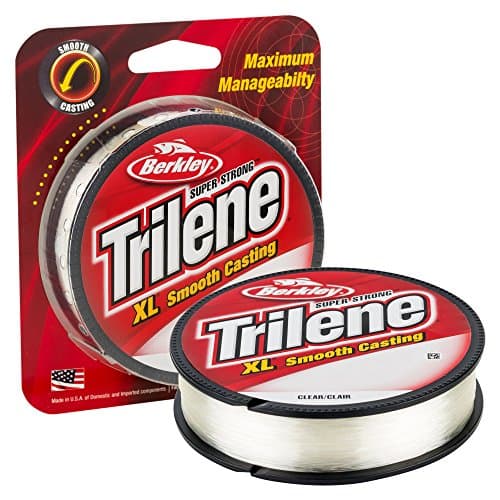
| 1 | Best first line Berkley Trilene XL Monofilament Line 10 lb measures 0.011 in, knots forgivingly, and the stretch is a feature rather than a fault while you learn. | Learning, and for treble-hook baits | $8.97 · Check price on Amazon #ad how this is funded · price as of October 19, 2026 |
| 2 | 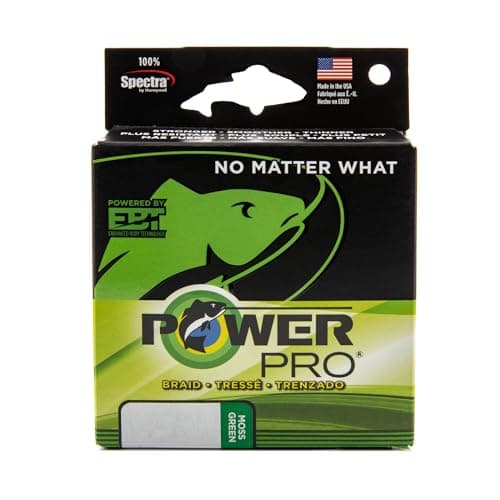 Best upgrade Power Pro Spectra Braided Line 30 lb measures 0.011 in — the same as 12 lb mono, at two and a half times the strength. | Sensitivity, and thin line at high strength | $44.25 · Check price on Amazon #ad how this is funded · price as of October 19, 2026 |
| 3 | 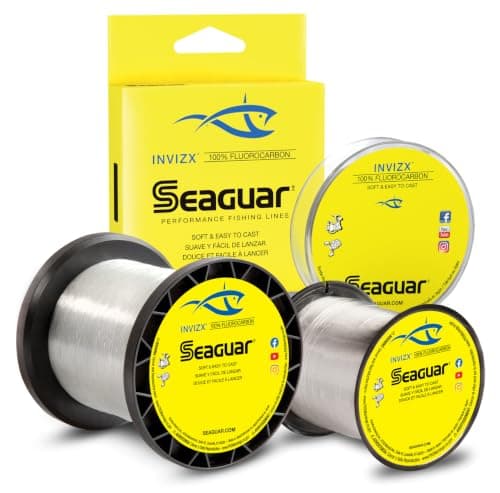 Best leader material Seaguar InvizX Fluorocarbon Line 12 lb at 0.011 in, 100% fluorocarbon, low stretch and a fast sink rate. | The last four feet, where visibility matters | $23.26 · Check price on Amazon #ad how this is funded · price as of October 19, 2026 |
The diameter comparison, in one table
These are the published figures from all three spec charts, lined up. It is the most useful table on this site and it is not something you can get from a product page.
| Pound test | Power Pro braid | Seaguar InvizX fluoro | Trilene XL mono |
|---|---|---|---|
| 6 lb | — | 0.008 | 0.009 |
| 8 lb | 0.005 (= 1 lb mono) | 0.009 | 0.010 |
| 10 lb | 0.006 (= 2 lb mono) | 0.010 | 0.011 |
| 12 lb | — | 0.011 | 0.013 |
| 15 lb | 0.007 (= 4 lb mono) | 0.013 | — |
| 17 lb | — | 0.015 | 0.015 |
| 20 lb | 0.009 (= 6 lb mono) | 0.016 | 0.016 |
| 30 lb | 0.011 (= 8 lb mono) | — | 0.020 |
| 50 lb | 0.014 (= 12 lb mono) | — | — |
Two things fall out of this that are worth stating plainly.
Braid’s advantage is enormous and real. At 0.011 in you choose between 12 lb fluorocarbon, 12 lb mono, and 30 lb braid. Two and a half times the strength at the same thickness.
Fluorocarbon is not thinner than mono. At every comparable test the two are within about 0.002 in. Fluorocarbon’s advantages are visibility and sink rate, not diameter, and anyone selling it on thinness is selling you something else.
What to spool, by situation
| Situation | Line | Why |
|---|---|---|
| First setup, learning | 10 lb mono | Forgiving knots, forgiving hooksets, cheap to replace |
| Crankbaits and treble baits | 10–12 lb mono | Stretch stops trebles tearing out on the surge |
| Jigs and Texas rigs | 20–30 lb braid + fluoro leader | Feel the bite, drive the hook through plastic |
| Clear water, spooky fish | Fluorocarbon main line | Refractive index close to water |
| Panfish and crappie | 4–6 lb mono | Thin enough to cast 1/16 oz jigs |
| Heavy cover | 30–50 lb braid | Cutting through weed without stretching |
| A beginner baitcaster | 12–15 lb mono | Stiff enough that a backlash is pickable |
Stay inside the rod's line rating
The most common bad advice online is to spool 50 lb braid on a rod rated 6–14 lb because “braid is thin so it doesn’t count.”
The diameter argument is true. The strength argument is the problem. In a correctly rated system the line is the fuse: when you set the hook on a snag, the line breaks and you lose a lure. Put 50 lb braid on a rod rated to 14 and the line is no longer the weakest link, so something else gives — usually the rod tip.
On a rod rated 6–14 lb, 15–20 lb braid is sensible. For 30 lb braid, buy the medium-heavy rod rated 8–20 lb.
When to change it
More often than you do, and the top ten yards more often than the whole spool.
The first ten yards absorb every cast, every knot, every rub against a rock, and all the UV. The other 120 yards mostly sit there. Cutting back ten yards and re-tying every few trips costs nothing and prevents most break-offs.
Replace mono annually, whether or not it looks bad — UV degradation is invisible. Braid lasts several seasons and can often be reversed on the spool to put the fresh end outward. Fluorocarbon sits between the two.
What we would skip
“Copolymer” and “hybrid” lines that do not clearly state what they are. The three materials here have well-understood, published, measurable properties. A line sold on a proprietary name with no published diameter chart is asking you to take marketing on trust, and there is no reason to.
The picks, in full
Every card below lists the specs we could read off a published page, the URL they came from, and one honest reason you might not want it.
1. Best first line
Berkley Trilene XL Monofilament Line
Berkley
10 lb measures 0.011 in, knots forgivingly, and the stretch is a feature rather than a fault while you learn.
Monofilament is a single nylon strand, and everything about how it fishes follows from that. It stretches, which forgives a hookset that is too hard and cushions a fish that surges at the boat. It floats, which suits topwater. And it is forgiving of a badly tied knot in a way braid and fluorocarbon simply are not.
The published diameter ladder is useful for picking a test: 6 lb at 0.009 in, 8 lb at 0.010, 10 lb at 0.011, 12 lb at 0.013, 17 lb at 0.015. Ten pound at 0.011 in fills a 2500-size spool properly and sits comfortably inside the rating of any medium rod.
Spool sizes run from 110 yd to 1000 yd, and Berkley states it is made in the USA. The 330 yd size does two mid-size reels with some left over.
The drawback
That stretch cuts both ways. On a long cast with a Texas rig, a meaningful fraction of your hookset is absorbed by the line rather than reaching the hook. It also degrades in UV, so a spool left on a reel in the sun for two seasons is genuinely weaker than the label says.
Published specs
- 6 lb diameter
- 0.009 in / 0.23 mm
- 8 lb diameter
- 0.010 in / 0.25 mm
- 10 lb diameter
- 0.011 in / 0.28 mm
- 12 lb diameter
- 0.013 in / 0.33 mm
- 17 lb diameter
- 0.015 in / 0.38 mm
- Spool sizes
- 110 to 1000 yd
- Made in
- USA
Specs read from Tackle Warehouse — Berkley Trilene XL Monofilament Line.
#ad how this is funded · price as of October 19, 2026
2. Best upgrade
Power Pro Spectra Braided Line
Power Pro
30 lb measures 0.011 in — the same as 12 lb mono, at two and a half times the strength.
The published diameter chart is the entire argument for braid and it does not need embellishing. Power Pro publishes both the actual diameter and the mono equivalent: 10 lb braid is 0.006 in and behaves like 2 lb mono for thickness; 30 lb is 0.011 in and behaves like 8 lb.
Thin means longer casts and more line on the spool. No stretch means you feel everything — a jig ticking gravel, a fish inhaling a worm on slack line — and your hookset arrives at the hook rather than being absorbed on the way.
Available in 150, 300, 500 and 1500 yd spools. On a freshwater reel, 150 yd over mono backing is plenty.
The drawback
It is highly visible in clear water and needs a fluorocarbon leader, which means an extra knot. It also has zero stretch, so a hard hookset on a treble-hook bait pulls hooks free — and it will cut through a cracked guide insert like a saw.
Published specs
- 10 lb diameter
- 0.006 in / 0.15 mm (2 lb mono equivalent)
- 15 lb diameter
- 0.007 in / 0.18 mm (4 lb mono equivalent)
- 20 lb diameter
- 0.009 in / 0.23 mm (6 lb mono equivalent)
- 30 lb diameter
- 0.011 in / 0.28 mm (8 lb mono equivalent)
- 50 lb diameter
- 0.014 in / 0.36 mm (12 lb mono equivalent)
- Spool sizes
- 150, 300, 500, 1500 yd
- Material
- Braided Spectra fiber
Specs read from Tackle Warehouse — Power Pro Spectra Braided Line.
#ad how this is funded · price as of October 19, 2026
3. Best leader material
Seaguar InvizX Fluorocarbon Line
Seaguar
12 lb at 0.011 in, 100% fluorocarbon, low stretch and a fast sink rate.
Fluorocarbon has a refractive index close to water, so it is harder for fish to see. It also sinks rather than floats, which keeps a bait down and removes the belly of slack line that costs you hooksets.
Published diameters: 8 lb at 0.009 in, 10 lb at 0.010, 12 lb at 0.011, 15 lb at 0.013, 20 lb at 0.016. Note that 12 lb fluorocarbon and 12 lb Trilene XL mono are within 0.002 in of each other — fluorocarbon being “thinner” than mono is largely a myth.
Seaguar publishes it as 100% fluorocarbon made in Japan, with low stretch and a fast sink rate. Spools run 200, 600, 1000 and 3000 yd; a 200 yd spool is years of leader material.
The drawback
It is stiffer and less forgiving to knot than mono, and a badly tied fluorocarbon knot fails at a fraction of the rated strength. It is also the most expensive of the three per yard, which is exactly why using it as a leader rather than a main line makes sense.
Published specs
- 8 lb diameter
- 0.009 in / 0.23 mm
- 10 lb diameter
- 0.010 in / 0.26 mm
- 12 lb diameter
- 0.011 in / 0.28 mm
- 15 lb diameter
- 0.013 in / 0.33 mm
- 20 lb diameter
- 0.016 in / 0.40 mm
- Spool sizes
- 200, 600, 1000, 3000 yd
- Material
- 100% fluorocarbon, made in Japan
Specs read from Tackle Warehouse — Seaguar InvizX Fluorocarbon Line.
#ad how this is funded · price as of October 19, 2026
Questions people actually ask
What pound test fishing line should a beginner use?
Ten pound monofilament on a medium spinning setup. It measures 0.011 in, sits comfortably inside a 6-14 lb rod rating, knots forgivingly, and its stretch masks the imperfect hooksets everyone starts with.
Is braid stronger than monofilament?
At the same diameter, dramatically. Power Pro publishes 30 lb braid at 0.011 in — the same thickness as 12 lb Trilene XL mono. That is two and a half times the strength for identical diameter, which is the whole argument for braid.
Is fluorocarbon thinner than monofilament?
No, that is largely a myth. At every comparable test the two are within about 0.002 in — 12 lb Seaguar InvizX is 0.011 in and 12 lb Trilene XL is 0.013. Fluorocarbon's real advantages are low visibility and a fast sink rate.
How often should I change my fishing line?
Replace monofilament annually because UV degradation is invisible, and cut back the top ten yards and re-tie every few trips. That first ten yards absorbs every cast, every knot and every rub against structure while the rest of the spool sits idle.
Can I put heavy braid on a light rod?
Not far above its rating. In a correctly rated setup the line is the fuse that breaks before the rod does. Fifty pound braid on a rod rated 6-14 lb removes that protection, and a hard hookset into a snag breaks the blank instead.
Read next
Sources
Prices on this page come from the retailer at request time and change without notice. If we cannot get a live one we say “check price” rather than show you a number that has gone stale. How we pick.