Tackle
Catch and release gear: four things decide whether the fish swims away
Most of releasing a fish well is decided before you hook one, by two pieces of gear and two habits that cost nothing.
By Sawyer V. · Last updated · How we pick
The short answer
Buy a knotless rubber or micromesh net, and something that removes a hook without your fingers going near it. Those two purchases cover most of it. The other two things that matter — keeping the fish in the water and pinching the barbs down — are free, and between them they do more than any net you can buy.
Reel & Rig earns a commission from qualifying purchases made through links on this page, at no extra cost to you. It does not change which gear we pick or what we say about it. Full disclosure.
Quick picks
| # | Product | Best for | Price |
|---|---|---|---|
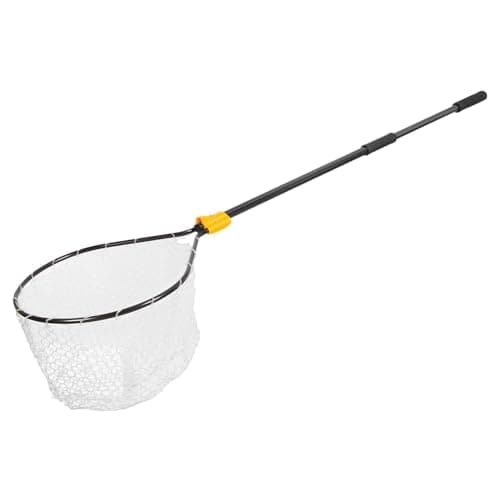
| 1 | Best net for a boat Frabill Conservation Telescoping Handle Net (23 in x 26 in) 23 in x 26 in teardrop hoop, 100% knotless mesh, flat bottom, telescoping handle published to 60 in. | Reaching a fish over a gunwale, and anything bigger than a few pounds | $139.99 · Check price on Amazon #ad how this is funded · price as of October 12, 2026 |
| 2 | 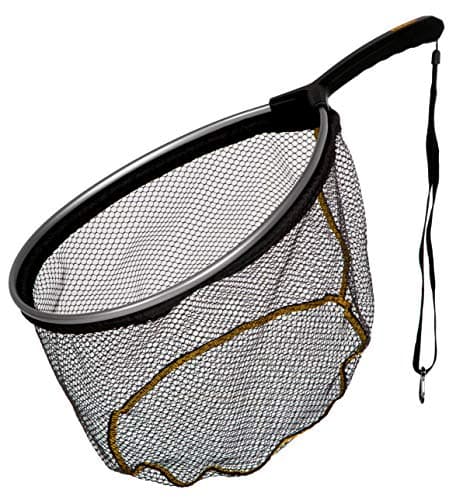 Best net for wading and kayaks Frabill Teardrop Floating Trout Net (13 in x 18 in) 13 in x 18 in hoop with a published 13 in depth, rubberized micromesh, floating hoop, lanyard and carabiner. | Trout, panfish and bass landed within arm's reach | $44.99 · Check price on Amazon #ad how this is funded · price as of October 12, 2026 |
| 3 | 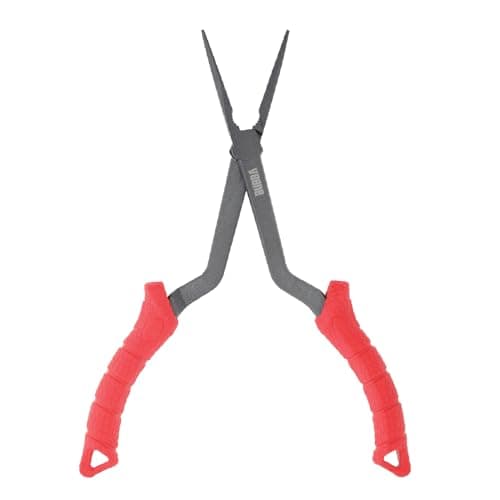 Best hook remover Bubba Forged Fishing Pliers (11 in) 11 in high-carbon forged steel with a titanium nitride coating, published carbide cutters, an internal spring-loaded hinge and a molded sheath. | Deep hooks, toothy fish, and anyone releasing fish regularly | $43.19 · Check price on Amazon #ad how this is funded · price as of October 12, 2026 |
| 4 | 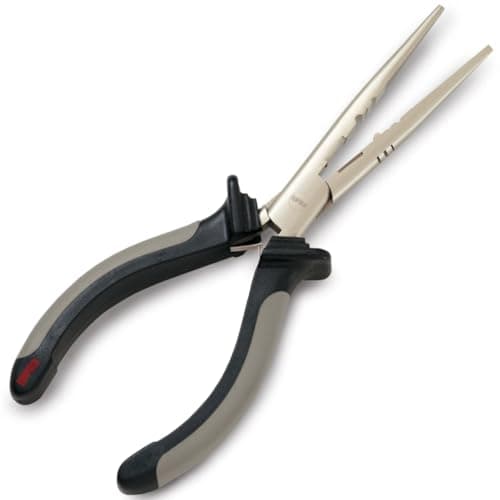 Best value hook remover Rapala Fisherman's Pliers 6-1/2 in and 8-1/2 in published, nickel-plated carbon steel, double leaf spring, co-molded grips. | Occasional release fishing, and a spare pair for the boat | $11.97 · Check price on Amazon #ad how this is funded · price as of October 12, 2026 |
The four things, in order of how much they matter
It is worth being blunt about the ranking, because it is not the order a tackle shop would give you.
1. Time out of the water. Free. Costs nothing, needs no purchase, and is the single largest lever you have. A fish held up for a photograph for a minute has had a much worse time than one unhooked in the net and let go.
2. The hook you tied on. Nearly free. A barbless or pinched-barb hook comes out in a second; a treble with three barbs in a bony mouth does not.
3. What the fish lands in. A knotless rubber or micromesh net, or no net at all. Knotted nylon is the worst option and it is what most cheap nets are.
4. What you remove the hook with. Long-nosed pliers or a dedicated hook-out. Fingers are slow and slow is the actual problem.
Two of those four are habits and two are purchases. The purchases are on this page; the habits are worth more.
Mesh material is the one net specification that matters
If you read nothing else about nets, read this. The material of the bag is the decision, and everything else on a net’s spec sheet is secondary to it.
| Material | What it does | Hooks in the mesh |
|---|---|---|
| Knotted nylon | Hard knots scrape at every contact point | Bury deeply, slow to free |
| Knotless nylon | Better, but still absorbs water and abrades | Still catch readily |
| Rubberized micromesh | Smooth and non-absorbent | Sit on the surface, lift out |
| Clear rubber | Smoothest option, heaviest | Almost never bury |
Both nets on this page publish knotless construction, and Frabill publishes it explicitly as a fish-protection feature rather than a durability one. Our fly fishing nets page makes the same argument for fly anglers and goes further on hoop shape.
The hooks-in-the-mesh column is not a side issue. A treble buried in knotted nylon can take a minute to free, and that minute is spent with the fish out of the water — so the mesh material ends up driving the thing that matters most.
Hoop size and depth, from the published figures
| Net | Hoop sizes offered | Depth | Handle |
|---|---|---|---|
| Teardrop Floating Trout | 11x15, 13x18, 17x22, 19x23 in | 10, 13, 13, 15 in | Not published |
| Conservation Telescoping | 17x19, 20x23, 21x24, 23x26 in | 11 to 22 in, not mapped to hoop | Telescoping to 60 in |
Two honest observations from that table. The small net publishes depth against each hoop size and the larger one does not, which is the sort of gap worth knowing before you order. And the handle is the only spec that genuinely separates a wading net from a boat net.
Size the hoop to the largest fish you realistically expect, not the average one. A fish that does not fit gets bent, half-netted and dropped, which is worse than landing it by hand.
Keeping the fish in the water is the free half of this
A net is not only a landing tool. Left in the water alongside the boat or against the bank it becomes a holding pen, and that is how you get the hook out without the fish being in the air at all.
The sequence that works: land the fish, leave the net in the water, reach in with pliers, back the hook out, and tip the net. Nothing about that requires lifting anything.
If you want a photograph, have the camera ready before the fish comes up, support it horizontally with both hands, and put it back. Holding a heavy fish vertically by the jaw puts its whole weight on structures that were never built to carry it.
Wet your hands first. Dry hands and dry surfaces are what a slime coat comes off on, and the slime coat is the layer the manufacturers are talking about when they advertise knotless mesh.
Hooks: the cheapest change on this page
Pinching a barb down with the pliers you already own costs nothing and makes hook removal dramatically faster. You will drop a few more fish; that is the trade, and for most people it is a good one.
Single hooks come out faster than trebles for the obvious reason. If you fish a lure with two or three trebles and release most of what you catch, swapping to single replacement hooks is a real option and it will cost you fewer fish than you expect.
Circle hooks are the bait-fishing answer, because they tend to find the corner of the jaw rather than being swallowed. Our hooks page covers the three shapes and why the sizing runs backwards.
And if a fish is hooked deep, cut the line close rather than digging for the hook. That is the one situation where the best tool on this page is a pair of snips.
What you do not need to buy
A weigh net or a lip grip scale, unless you genuinely want the weight. Hanging a fish from a grip by the jaw is exactly the vertical load described above.
A second net, in most cases. If you fish from both a boat and the bank, the long-handled net covers both awkwardly and the short one does not cover the boat at all, so buy the long one first.
Gloves, for handling. Our gloves page covers the three jobs gloves actually do, and protecting a fish is not one of them — a wet hand is kinder than a dry glove.
What this page is not claiming
We have not put a survival percentage anywhere on this page, and that is deliberate. Release mortality varies enormously by species, water temperature, depth and how the fish was hooked, and a single number lifted out of that context would be worse than no number.
What is on this page is what the manufacturers publish about their own products — hoop sizes, depths, netting materials, handle lengths — plus the mechanical reasoning that follows from it. Where Frabill does not publish a figure, such as the handle length on the trout net or the depth mapping on the telescoping net, we have said so rather than filling the gap.
We also have not tested these nets against each other. This site does not claim testing it has not done, and our pliers page takes the same line about the tools on it.
So what do I actually buy?
A knotless net sized to your biggest realistic fish, and something that gets a hook out without your fingers in the way. Then pinch your barbs down, which is free.
Frabill Conservation Telescoping Handle Net (23 in x 26 in)
$139.9923 x 26 in knotless, telescoping to a published 60 in. Buy this one if you fish from a boat.
#ad how this is funded · price as of October 12, 2026
Frabill Teardrop Floating Trout Net (13 in x 18 in)
$44.9913 x 18 in, 13 in deep, floats, and clips to you. The wading and kayak answer.
#ad how this is funded · price as of October 12, 2026
Bubba Forged Fishing Pliers (11 in)
$43.19Published hook-pulling holes and a sheath. The tool if you release fish often.
#ad how this is funded · price as of October 12, 2026
Rapala Fisherman's Pliers
$11.978-1/2 in reaches a pike's mouth for a third of the money. Light-duty cutters.
#ad how this is funded · price as of October 12, 2026
The picks, in full
Every card below lists the specs we could read off a published page, the URL they came from, and one honest reason you might not want it.
1. Best net for a boat
Frabill Conservation Telescoping Handle Net (23 in x 26 in)
Frabill
23 in x 26 in teardrop hoop, 100% knotless mesh, flat bottom, telescoping handle published to 60 in.
A handle that extends to a published 60 in is the specification that makes this a boat net. The distance from where you stand to where the fish is decides whether you can net it at all, and from a gunwale or a raised deck a short handle means leaning out over the water with a rod in the other hand.
100% knotless mesh is published. Knots are the part of a traditional net that does the damage — they are the hard points that scrape, and on a fish that is going back they are what you are paying to avoid. Frabill publishes the flat bottom separately, to support the weight of the fish evenly rather than folding it into a U.
The tangle-free coating is published as stopping hooks snagging in the mesh. That sounds like a convenience feature and it is really a release feature: every second you spend picking a treble out of netting is a second the fish is out of the water.
23 x 26 in is the large end of Frabill’s published range, which also offers 17x19, 20x23 and 21x24. If you fish for pike or catfish, size up — our pike combos page treats landing gear as part of the setup rather than an accessory.
The drawback
It is a large object. A 23 x 26 in hoop on a handle that extends to 60 in has to live somewhere, and on a small boat or a kayak that is a genuine problem rather than a quibble. Frabill publishes net depths of 11 to 22 in across the range but does not map depth to hoop size on this page, so you cannot confirm how deep this specific net is before buying. No net weight is published either, and telescoping handles are the part of any net most likely to stick with grit in them.
Published specs
- Hoop
- 23 in x 26 in teardrop
- Hoop sizes offered
- 17x19, 20x23, 21x24 and 23x26 in
- Handle
- Telescoping, extends up to 60 in
- Netting
- 100% knotless mesh
- Coating
- Tangle-free, to stop hooks snagging in the mesh
- Bottom
- Flat bottom, to support the fish's weight evenly
- Hoop protection
- MeshGuard
- Yoke
- Pow'R Lok with a rubber grip
- Net depth
- Frabill publishes 11 to 22 in across the range without mapping depth to hoop size
- Net weight
- Frabill does not publish one
Specs read from Frabill - Telescoping Conservation Net.
#ad how this is funded · price as of October 12, 2026
2. Best net for wading and kayaks
Frabill Teardrop Floating Trout Net (13 in x 18 in)
Frabill
13 in x 18 in hoop with a published 13 in depth, rubberized micromesh, floating hoop, lanyard and carabiner.
The floating hoop is the feature worth paying for here, and it is published. Wading or sitting in a kayak you have nowhere to put a net down, so you drop it — and a net that floats is one you pick up again instead of watching go downstream.
13 in of published depth behind a 13 x 18 in hoop is a real number and a useful one. Depth is what stops a fish flipping straight back out while you reach for pliers, and it is the specification most small nets quietly skip.
Rubberized micromesh is published as tangle-free. Rubber and rubberized mesh is the material this whole page is really about: it does not absorb water, hooks do not bury in it, and it is far kinder to a fish than knotted nylon.
The lanyard and carabiner clip are published as included, which matters because the net you are actually carrying is the one that gets used. Our kayak safety page makes the same argument about everything you handle over deep water.
The drawback
Frabill publishes no handle length for this net at all, and from the product photography it is short — this is a net for a fish you can already reach, not one you are stretching for. A 13 x 18 in hoop is genuinely too small for a big pike or a channel catfish, and trying to net a fish that does not fit is worse for it than not netting it. The floating hoop also makes it bulkier than a plain frame of the same size.
Published specs
- Hoop
- 13 in x 18 in teardrop
- Net depth
- 13 in
- Hoop sizes offered
- 11x15, 13x18, 17x22 and 19x23 in
- Depths offered
- 10, 13, 13 and 15 in respectively
- Netting
- Tangle-free rubberized micromesh
- Flotation
- Floating hoop, so the net stays on the surface
- Bottom
- Flat bottom, to support the fish's weight evenly
- Hoop finish
- Gun metal, published as less likely to spook fish
- Carry
- Lanyard with a carabiner clip
- Handle length
- Frabill does not publish one for this net
Specs read from Frabill - Teardrop Floating Trout Net.
#ad how this is funded · price as of October 12, 2026
3. Best hook remover
Bubba Forged Fishing Pliers (11 in)
Bubba
11 in high-carbon forged steel with a titanium nitride coating, published carbide cutters, an internal spring-loaded hinge and a molded sheath.
Hook-pulling holes are published on this tool, and they are the reason it is on a release page rather than only on our pliers page. A hole sized to take a hook bend lets you back a hook out along the path it went in, which is the difference between removing a hook and tearing one out.
11 in of length keeps your fingers out of a mouth that may contain teeth or several other trebles. This is as much about you as the fish, and it is the single most common reason people give up on unhooking quickly and start cutting line.
High-carbon forged steel with a titanium nitride coating is published. A plier that has seized up in a damp bag is a plier you are not using at the moment you need it, and release gear only works if it works every time. Note that the coating is the corrosion defense here, not the steel — this is not a stainless tool.
An internal spring-loaded hinge is published, which means one-handed operation. With the other hand holding a fish, one-handed is the only mode that matters — and the published carbide cutters mean the same tool trims a leader without a second trip to the bag.
The drawback
Bubba publishes no weight, which at this price is a conspicuous blank on a tool you wear all day. At 11 in it is a lot of plier for a bluegill, and the wrong tool if you mostly unhook small fish. No lanyard is published with it, only the sheath and belt clip. And it is the most expensive item here by some way for a job that a much cheaper plier does adequately most of the time.
Published specs
- Length
- 11 in
- Material
- Premium high-carbon forged steel
- Finish
- Titanium nitride coating
- Cutters
- Carbide
- Jaws
- Crimping cutouts, cross-arm design for a minimized profile
- Hinge
- Internal spring-loaded
- Grips
- Bubba non-slip grip
- Included
- Molded polymer sheath with belt clip
- Sizes in this line
- 6, 7.5 and 11 in
- Part number
- BUB-1207216
- Weight
- Bubba does not publish a weight
Specs read from Discount Tackle - Bubba Forged Steel Pliers 11 inch.
#ad how this is funded · price as of October 12, 2026
4. Best value hook remover
Rapala Fisherman's Pliers
Rapala
6-1/2 in and 8-1/2 in published, nickel-plated carbon steel, double leaf spring, co-molded grips.
Two published lengths is the reason to consider this over the pricier tool. The 8-1/2 in version reaches into a pike’s mouth in a way a 6-1/2 in plier does not, and reaching further is most of what a release tool does.
The double leaf spring is published, so the jaws return open on their own. Same one-handed argument as above, at roughly a third of the price.
A split-shot crimper and a lure-tuning tool are published as part of it. Neither has anything to do with releasing fish, and both mean this is the plier that ends up in your pocket rather than in a drawer.
For panfish and trout on small single hooks, this is genuinely all the tool you need. Our hooks page covers why small hooks come out easily and large trebles do not.
The drawback
Nickel-plated carbon steel is the limitation. The plating wears at the jaw tips and the cutting edges first, which are the parts you use, and once it goes the steel underneath can rust and the tool stiffens. Rapala publishes the cutters as light duty, which is honest and also a warning. No sheath is published on this page, so carrying it is your problem.
Published specs
- Sizes
- 6 1/2 in and 8 1/2 in
- Material
- Carbon steel
- Finish
- Nickel plated
- Spring
- Double leaf
- Grips
- Co-molded soft grip handles
- Cutters
- Light duty side cutters
- Extras
- Split shot crimper and lure tuning tool
- Sheath
- Not published on this page
Specs read from Rapala - Fisherman's Pliers.
#ad how this is funded · price as of October 12, 2026
Questions people actually ask
What is the best net for catch and release?
A knotless rubber or rubberized micromesh net. Knots are the hard points that scrape a fish, and hooks bury in knotted nylon, which keeps the fish out of the water while you free them.
What size landing net do I need?
Size the hoop to the largest fish you realistically expect, not the average one. Frabill publishes 11x15 up to 19x23 in on its floating trout net and 17x19 up to 23x26 in on the telescoping conservation net.
Does a rubber net really help the fish?
Manufacturers publish knotless and rubberized netting as protecting the fish's slime coat, and the practical benefit is easy to verify yourself: hooks sit on the surface of rubber mesh instead of burying, so the fish is out of the water for far less time.
Should I use barbless hooks for catch and release?
Pinching the barb down with pliers costs nothing and makes hook removal much faster. You will drop a few more fish, which is the trade. For bait fishing, circle hooks tend to find the jaw corner rather than being swallowed.
What should I do if a fish is hooked deep?
Cut the line as close to the hook as you can rather than digging for it. Digging does more damage than leaving the hook, and it keeps the fish out of the water far longer.
Do I need a net at all?
Not for small fish you can swing or hand-land quickly. A net earns its place once fish are big enough that hand-landing means a long fight alongside the boat, or where a dropped fish would land on rocks.
Read next
Sources
Prices on this page come from the retailer at request time and change without notice. If we cannot get a live one we say “check price” rather than show you a number that has gone stale. How we pick.