Tackle
Headlamps for fishing: four things that matter, and only one of them is lumens
Every headlamp sells itself on maximum brightness. On the water, the three figures that decide it are the red LED, the water rating and what happens to the battery at twenty degrees.
By Sawyer V. · Last updated · How we pick
The short answer
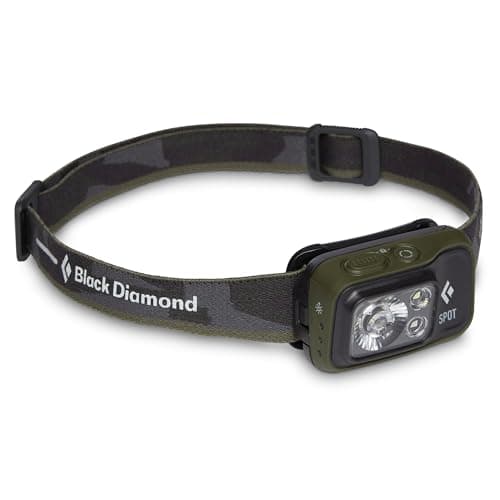
Buy the Black Diamond Spot 400. It publishes a red LED, an IPX8 water rating tested to at least 1.1 m for 30 minutes, 200 hours of published burn time on low, and it runs on three AAA alkalines you can replace with cold hands. Take the Coast FL75R instead only if you want a focusing beam and 530 lm — it is brighter and it publishes no water rating at all. Maximum lumens is the least important number on either box.
Reel & Rig earns a commission from qualifying purchases made through links on this page, at no extra cost to you. It does not change which gear we pick or what we say about it. Full disclosure.
Quick picks
| # | Product | Best for | Price |
|---|---|---|---|
| 1 | Best fishing headlamp Black Diamond Spot 400 Headlamp Published 400 lm, IPX8 tested to 1.1 m for 30 minutes, red LED with its own modes, 200 h on low, runs on three AAA or a Li-ion pack. | Bank, boat, kayak and ice, and anyone who fishes in the cold | $47.88 · Check price on Amazon #ad how this is funded · price as of October 12, 2026 |
| 2 | 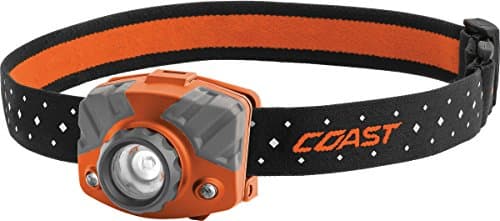 Best if you need reach Coast FL75R Rechargeable Headlamp Published 530 lm and 511 ft on high, a focusing optic, white and red beams, rechargeable pack or alkaline batteries. | Big water, finding a boat ramp, and anyone who wants a beam they can focus | $59.97 · Check price on Amazon #ad how this is funded · price as of October 12, 2026 |
The four criteria, in the order they actually matter
Headlamps are sold on maximum lumens, and maximum lumens is close to irrelevant for fishing. You will spend almost the whole session on the lowest setting and the high beam will be used for about four seconds at a time, to find something. Here is what decides it instead.
1. A red LED. Not a nice-to-have. Two separate reasons: white light destroys the dark adaptation that lets you see a float, a rod tip or the edge of the bank, and it takes twenty minutes to get back. And white light pulls in every insect on the water, which on a summer evening is genuinely miserable. Red does neither. Both lamps here publish one.
2. A published water rating, with a test condition. “Water resistant” is not a specification. An IP rating is. Black Diamond publishes IPX8 and states what it was tested to — at least 1.1 m for 30 minutes. The Coast source page publishes no rating at all. For a device that lives in rain and spray and gets dropped over the side, that difference is the whole purchase.
3. A battery you can fix in the cold. This is the criterion nobody writes about. A sealed rechargeable headlamp in January is a countdown. Lithium cells lose usable capacity as temperature falls, and when the pack is empty you are done. A lamp that takes alkaline cells means a spare set in an inside pocket solves the problem. Both lamps here take disposable batteries as well as a pack, which is why both are on the page.
4. A lock mode. The commonest way a headlamp fails is that it switched itself on inside a tackle bag and ran flat. Black Diamond publishes a digital lockout. It is a small feature that changes whether the light works when you reach for it.
Lumens is fifth, and the gap between 400 and 530 will not change a night’s fishing.
The two lights, as published
| Figure | Spot 400 | Coast FL75R |
|---|---|---|
| High output | 400 lm | 530 lm |
| Low output | 6 lm | 65 lm |
| Burn time, high | 2.5 h on AAA, 4 h on BD 1500 | 2 h 15 min |
| Burn time, low | 200 h on AAA, 225 h on BD 1500 | 11 h |
| Distance, high | 100 m | 511 ft |
| Beam | Proximity and distance modes | Focusing, flood to spot with a halo |
| Red LED | Yes, with dimming and strobe | Yes |
| Water rating | IPX8, tested to 1.1 m for 30 min | Not published |
| Power | 3 x AAA alkaline, or BD 1500 Li-ion | Li-ion pack, or three alkaline cells |
| Charging | Pack sold separately | Micro USB, in or out of the lamp |
| Weight | 86 g with AAA, 72 g with the pack | 3.2 oz |
| Lock mode | Yes, digital lockout | Not published |
Note that the two makers publish distance in different units — 100 m against 511 ft — which flatters the Coast in a side-by-side unless you convert. The Coast figure is roughly 156 m, so it does genuinely throw further; it is just not five times further.
Why the low setting is the one to compare
The two lamps publish wildly different ideas of low: 6 lm for 200 hours against 65 lm for 11 hours. That single row tells you more about how each one was designed than the headline brightness does.
Six lumens sounds like nothing and is enough to tie a clinch knot, re-bait a hook and find something in a tackle tray without wrecking your night vision or lighting up the water in front of you. A 200-hour published runtime means a set of AAAs lasts a season of evening sessions.
Sixty-five lumens is a working light. You can move around a boat with it and actually see where you are putting your feet, which is the right choice if you fish from a larger boat at night. Eleven hours still covers a long session.
Neither is wrong. The question is whether your dark hours are spent sitting still watching a float or moving around a deck.
The thing that will actually annoy you: a light on the water
Shining a headlamp across the water you are about to fish is the fastest way to move fish out of it, particularly in shallow or clear water. This is the practical skill that matters more than the hardware.
Angle it down. Set the lamp so the beam lands at your feet, not at the horizon, and tilt your head rather than the lamp when you need to look up.
Use red for everything except finding things. Tying, unhooking, re-baiting and reading a sonar screen all work fine in red.
Switch off before you cast. Obvious, routinely forgotten, and the reason the first cast of a night session so often produces nothing.
Where this fits with the rest of the kit
A headlamp is a hands-free tool, and the whole point is that both hands are free for the job in front of you — which is usually unhooking a fish. Our pliers page covers the other half of that, and our catch and release page makes the case that time out of the water is what decides whether a fish swims away, and fumbling in the dark is time.
On ice, a headlamp is on the short list for a different reason: it is dark at both ends of a January day and you will be rigging, drilling and packing in it. Our ice gear page and our shelter heater comparison cover the rest of the cold-weather kit.
For bank fishing, add it to the list on our bank fishing setup, where everything you own is carried and a light that locks off in the bag is worth more than a bright one that does not.
What we are not telling you
We have not tested either lamp. Every figure above is the manufacturer’s or retailer’s published specification from the two pages linked below, and the gaps are stated rather than filled: Coast’s source page publishes no water rating, no medium output and no warranty, and describes the battery only as three alkaline cells without a size, where other retailer copy says AAA.
We have also not run a beam-distance comparison. The two makers measure and publish distance differently and in different units, and lining up numbers from two test methods as if they were measured the same way would be the dishonest part of a page like this.
Two lights is a short list on purpose. The criteria at the top of this page — a published red LED, a published water rating, a battery you can replace in the cold and a lock mode — rule out most of the category, and padding the list with lamps that fail them would make this page longer and worse.
So what do I actually buy?
Buy the Spot 400 unless you specifically need reach. Buy spare AAA cells at the same time and keep them somewhere warm — that is the whole cold-weather strategy.
Black Diamond Spot 400 Headlamp
$47.88Published IPX8 to 1.1 m for 30 min, red LED, lock mode, 200 h on low. The default.
#ad how this is funded · price as of October 12, 2026
Coast FL75R Rechargeable Headlamp
$59.97Published 530 lm and a focusing beam to 511 ft. Brighter, with no published water rating.
#ad how this is funded · price as of October 12, 2026
Rapala Fisherman's Pliers
$11.97The other half of a hands-free unhooking in the dark, and the tool you reach for first.
#ad how this is funded · price as of October 12, 2026
The picks, in full
Every card below lists the specs we could read off a published page, the URL they came from, and one honest reason you might not want it.
1. Best fishing headlamp
Black Diamond Spot 400 Headlamp
Black Diamond
Published 400 lm, IPX8 tested to 1.1 m for 30 minutes, red LED with its own modes, 200 h on low, runs on three AAA or a Li-ion pack.
The published water rating is why this one wins, and it is published with a test condition rather than a marketing word: IPX8, tested to operate at least 1.1 m underwater for 30 minutes. A headlamp lives in rain, spray and the splash from a fish coming over the gunwale, and it is the one piece of electronics on you that will eventually go in the water. Almost nobody publishes a number you can check.
The dual-fuel battery is the cold-weather argument. Black Diamond publishes three AAA alkaline cells included, or a BD 1500 Li-ion sold separately. Lithium packs lose usable capacity as temperature drops, and a sealed rechargeable light that dies at 4pm in January is a light with no fix. Spare AAAs in a pocket are the fix. Our ice fishing gear page makes the same argument about everything battery powered on the ice.
The red LED is published with its own dimming and strobe modes, not as an afterthought toggle. Red preserves the dark adaptation you need to see a float or a rod tip, and it does not light up every insect within thirty feet the way white does.
Two features that sound like marketing and are not. Lock mode is a digital lockout that stops the lamp switching itself on in a bag — which is how most headlamps are found dead. Brightness Memory keeps your chosen setting through power off and on, so it does not blast 400 lm into your night vision every time you switch it on at the right setting.
Published burn times are 2.5 h high, 5 h medium and 200 h low on AAA, and 4/8/225 on the BD 1500. The 200-hour low setting is the number that matters: at 6 lm it is plenty to tie a knot by, and it means the light outlasts the season.
The drawback
At 400 lm it is the dimmer of the two, and it publishes no focusing optic — you get proximity and distance modes rather than a beam you can narrow by hand, so picking a far bank marker out of the dark is not its strength. The BD 1500 rechargeable pack is sold separately, so the rechargeable option costs extra on top. 86 g with AAA is not heavy but it is heavier than the Coast, and Black Diamond's own site had the lamp out of stock when this page was written, which is a reminder that the Amazon listing and the manufacturer's stock are different things.
Published specs
- Output
- High 400 lm, medium 200 lm, low 6 lm
- Burn time on AAA
- High 2.5 h, medium 5 h, low 200 h
- Burn time on BD 1500
- High 4 h, medium 8 h, low 225 h
- Distance
- High 100 m, medium 60 m, low 12 m
- Power
- Three AAA alkaline (included) or BD 1500 Li-ion (sold separately)
- Weight
- 86 g with AAA, 72 g with the BD 1500
- Water rating
- IPX8, tested to operate at least 1.1 m underwater for 30 minutes
- Red LED
- Yes, with its own dimming and strobe modes
- Modes
- Proximity and distance, dimming, strobe, lock mode
- Brightness Memory
- Keeps the chosen brightness through power off and on
- PowerTap
- Instant switching between set brightness and full output
Specs read from Black Diamond - Spot 400 Headlamp.
#ad how this is funded · price as of October 12, 2026
2. Best if you need reach
Coast FL75R Rechargeable Headlamp
Coast
Published 530 lm and 511 ft on high, a focusing optic, white and red beams, rechargeable pack or alkaline batteries.
The focusing optic is the reason to choose this one. Coast publishes an ultra-wide flood that narrows to a long spot with a transition halo around it, and a published beam distance of 511 ft on high. That is a genuinely different tool from a fixed-beam lamp: flood for unhooking a fish at arm’s length, spot for finding the ramp, the trail or the marker across the bay.
530 lm on high against the Spot’s 400 is the headline, but the useful figure is the low setting: 65 lm for a published 11 hours. That is an order of magnitude brighter than the Spot’s 6 lm low and runs a fraction as long, which tells you the two lamps are designed around different ideas of “low”.
Coast’s Flex Charge is the better charging system of the two: the lithium pack recharges by micro USB either inside the headlamp or removed from it, and the lamp also runs on alkaline batteries. Being able to charge a spare pack while the lamp is in use is a real advantage on a multi-day trip.
White and red beams are both published, so it meets the red-light criterion that matters most for fishing after dark.
The drawback
The source page publishes no water or dust rating at all, which on a light you will fish in the rain with is the single most important omission on this page — Black Diamond publishes IPX8 with a test condition and Coast publishes nothing you can check. No medium output and no warranty are published there either. The listed battery is ambiguous: the page we cite says three alkaline batteries without specifying size, while other retailer copy says AAA, so confirm before you buy spares. 2 h 15 min on high is short, and stock was thin at the time of writing.
Published specs
- Output
- High 530 lm, low 65 lm
- Beam distance
- High 511 ft, low 177 ft
- Runtime
- High 2 h 15 min, low 11 h
- Power
- Rechargeable lithium-ion pack, or three alkaline batteries
- Charging
- Micro USB, in or out of the headlamp (Flex Charge)
- Beam
- Focusing optic: ultra-wide flood to a long spot, with a transition halo
- Weight
- 3.2 oz
- Beam colors
- White and red
- Water or dust rating
- Not published on the source page
- Medium output
- Not published on the source page
- Warranty
- Not published on the source page
Specs read from Sportsman's Warehouse - Coast FL75R 530 Lumens Rechargeable Pure Beam Headlamp.
#ad how this is funded · price as of October 12, 2026
Questions people actually ask
What is the best headlamp for fishing?
The Black Diamond Spot 400. It publishes a red LED with its own modes, an IPX8 water rating tested to at least 1.1 m for 30 minutes, a lock mode, and 200 hours of burn time on its 6 lm low setting — and it runs on three AAA alkalines you can swap with cold hands.
Do you need a red light headlamp for fishing?
Yes, for two reasons. White light destroys the dark adaptation that lets you see a float or a rod tip, and it takes about twenty minutes to recover. It also attracts insects. Red light does neither, and it is bright enough to tie knots and unhook fish by.
How many lumens do you need for night fishing?
Far fewer than the box implies. You will spend almost the whole session on the low setting — 6 to 65 lm depending on the lamp — and use high output for a few seconds at a time to find something. Water rating, red light and battery type matter much more than maximum lumens.
Are rechargeable headlamps good for cold weather fishing?
Only if they also take disposable batteries. Lithium cells lose usable capacity as temperature drops, and a sealed rechargeable light that goes flat in January cannot be fixed on the ice. Both lamps here accept alkaline cells as well as a pack, which is why they are the two recommended.
What water rating should a fishing headlamp have?
Look for a published IP rating with a test condition rather than the words water resistant. Black Diamond publishes IPX8 on the Spot 400 and states it was tested to operate at least 1.1 m underwater for 30 minutes. The Coast source page publishes no rating at all.
Will a headlamp scare fish?
Shining one across shallow or clear water will move fish out of it. Angle the beam at your feet rather than the horizon, use red for tying and unhooking, and switch it off before you cast. The habit matters more than the hardware.
What is lock mode on a headlamp?
A digital lockout that stops the lamp switching itself on inside a bag, which is the commonest way a headlamp is found dead when you need it. Black Diamond publishes it on the Spot 400; Coast does not publish one on the FL75R.
Read next
Sources
Prices on this page come from the retailer at request time and change without notice. If we cannot get a live one we say “check price” rather than show you a number that has gone stale. How we pick.