Electronics
The best fish finder for a bass boat
The only freshwater hull where the right answer is usually two screens doing different jobs.
By Sawyer V. · Last updated · How we pick
The short answer
A bass boat has two fishing stations and they need different things. The console wants mapping and depth for running; the bow wants a bigger screen you can read standing up while casting. If you buy one unit, put it at the bow — that is where you actually fish.
Reel & Rig earns a commission from qualifying purchases made through links on this page, at no extra cost to you. It does not change which gear we pick or what we say about it. Full disclosure.
Quick picks
| # | Product | Best for | Price |
|---|---|---|---|
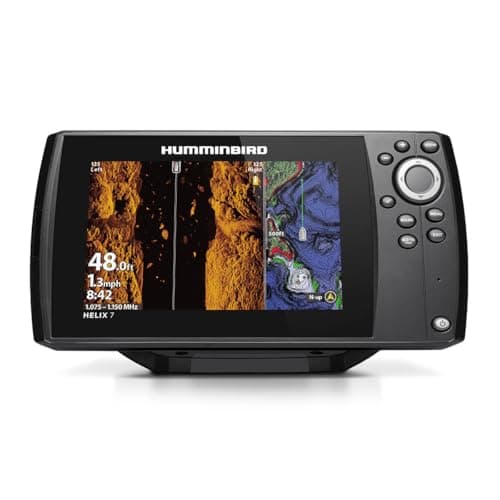
| 1 | Best at the bow Humminbird HELIX 7 CHIRP MEGA SI GPS G4 A 7 in screen with MEGA side imaging, which is the spec that finds fish beside the boat. | The station you fish from, standing up | $699.00 · Check price on Amazon #ad how this is funded · price as of October 12, 2026 |
| 2 | 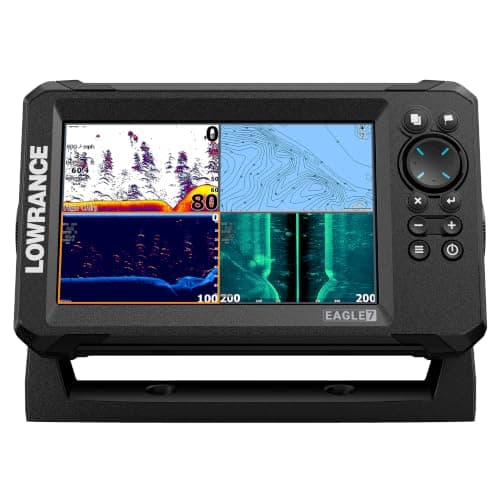 Best at the console Lowrance Eagle 7 with TripleShot HD A 7 in unit with TripleShot HD and preloaded charts for 17,000+ US lakes. | Running the lake and marking spots | $599.99 · Check price on Amazon #ad how this is funded · price as of October 12, 2026 |
Why this hull is different
Every other craft on this site fishes from one position. A bass boat has two, and they are at opposite ends of the boat with different requirements.
The console is where you sit to run. You need depth so you do not hit anything, mapping to navigate, and a way to mark waypoints.
The bow is where you fish, standing, on a trolling motor. You need a screen legible from standing height and sonar that shows you where to cast.
That split is the whole reason bass boats commonly carry two units. It is not redundancy.
If you only buy one, put it at the bow
This is the recommendation people get backwards, because the console feels like the “main” position.
You spend most of a fishing day at the bow. A unit at the console tells you about water you have already left behind, and it is behind you while you cast. A bow unit is in front of you for hours.
Navigation without a screen is manageable on water you know. Fishing without one is the thing you actually paid for.
What each station needs
| Bow | Console | |
|---|---|---|
| Screen size | 7 in or larger - read standing | 5 in is workable, 7 in better |
| Most useful sonar | Side imaging - shows the cast target | Down sonar and depth |
| Mapping | Useful | Essential |
| Transducer | On the trolling motor | Transom |
| Works when | Trolling motor down, fishing | Under way |
Note the last row. A transom transducer stops working properly once the outboard is off and the boat is being held by a trolling motor, which is most of a fishing day. That is not a fault; it is why the bow gets its own transducer.
Transducer placement, which is the whole install
At the console, the rules are the ones on our installation page: starboard side, clear of the propeller, not behind rivets or strakes, face parallel to the water.
At the bow, the transducer goes on the trolling motor so it points wherever the motor is aimed. That is an advantage — the sonar looks where you are heading — and it means the cable has to tolerate the motor rotating through its full range without pulling taut or chafing.
Run bow cabling with deliberate slack and secure it along its length. A cable that snags when the motor swings is how transducers get torn off.
Power, and why two units changes it
Two screens draw roughly twice the current of one, and neither Humminbird nor Lowrance publishes current draw on these units — a gap our battery guide covers.
On a bass boat with a cranking battery and a trolling motor bank, power is usually the least of your problems. The rule that still applies: run each unit from the battery with its own inline fuse, not from a shared accessory circuit, or electrical noise from the trolling motor shows up as banding across both screens.
What to skip
Networking the two units together, at least at first. It is genuinely useful for sharing waypoints and it is an extra cable, extra settings and an extra failure mode. Get both working independently first.
Forward-facing live sonar. It is impressive and it costs more than both units above combined. It is not a first purchase, and our screen-reading page will do more for your catch rate than upgrading hardware will.
A bow transducer bracket is the one accessory worth buying with the unit rather than after it.
So what do I actually buy?
Buy the bow unit first and add the console unit later. Reversing that order is the most common bass boat electronics mistake.
Humminbird HELIX 7 CHIRP MEGA SI GPS G4
$699.007 in with MEGA side imaging — the bow unit that shows your cast target.
#ad how this is funded · price as of October 12, 2026
Lowrance Eagle 7 with TripleShot HD
$599.997 in with TripleShot HD and charts for 17,000+ US lakes. The console unit.
#ad how this is funded · price as of October 12, 2026
Humminbird HELIX 5 CHIRP GPS G3
$349.99A 5 in CHIRP GPS unit if the console budget is tighter.
#ad how this is funded · price as of October 12, 2026
The picks, in full
Every card below lists the specs we could read off a published page, the URL they came from, and one honest reason you might not want it.
1. Best at the bow
Humminbird HELIX 7 CHIRP MEGA SI GPS G4
Humminbird
A 7 in screen with MEGA side imaging, which is the spec that finds fish beside the boat.
Seven inches is the practical minimum at a bow station, because you are reading it standing up from four or five feet away rather than seated at arm’s length. Screen size is doing legibility work here, not luxury.
Side imaging is the reason this unit belongs at the bow specifically. Down imaging shows you what you have already driven over; side imaging shows what is out to the sides, which is where the cast goes. On a bass boat working a bank or a brush line, that is the difference between fishing blind and fishing a target.
CHIRP and GPS are both published, so it doubles as the mapping unit if you only ever fit one.
The drawback
It is the most expensive unit on this site and the most complicated to install, because side imaging needs the transducer positioned where it has a clean view to both sides — harder on a bow mount than a transom. Humminbird also does not publish current draw, so battery sizing is guesswork with margin rather than arithmetic.
Published specs
- Display
- 7 in, 1024H x 600V
- Transducer
- XNT 9 HW MSI 150 T
- Sonar
- Dual Spectrum CHIRP 83/200 kHz; 50/83/200/455/800 kHz and 1.2 MHz
- Coverage
- 20, 42, 60 and two 86 deg @ -10 dB
- MEGA Down Imaging
- Up to 75 ft
- MEGA Side Imaging
- 250 ft per side
- Max depth
- 1,200 ft
- Power output
- 4,000 W peak-to-peak / 500 W RMS
- Mapping
- Basemap (10,000+ lakes), AutoChart Live (8 h)
- Dimensions
- 10.54 W x 5.8 H x 3.68 D in (gimbal)
Specs read from L&M Fleet Supply — Humminbird Helix 7 Chirp Mega SI GPS G4.
#ad how this is funded · price as of October 12, 2026
2. Best at the console
Lowrance Eagle 7 with TripleShot HD
Lowrance
A 7 in unit with TripleShot HD and preloaded charts for 17,000+ US lakes.
A console unit has a narrower job than a bow unit: get you across the lake safely, show depth, and let you mark and return to spots. Preloaded mapping does most of that, and the published coverage of 17,000+ US lakes is the figure that matters rather than the sonar detail.
TripleShot HD gives you down and side coverage from one transom transducer, which keeps the console install simple — one hole, one cable.
At the console you are seated and close to the screen, so seven inches is generous rather than marginal.
The drawback
Preloaded charts are only as good as the survey behind them, and coverage on small or private waters is patchy — check your lake is in the set before buying for the mapping. A transom transducer is also useless while the outboard is trimmed up and you are fishing off the bow, which is exactly why this is the second unit rather than the only one.
Published specs
- Display
- 7 in, 800 x 480, 1000 nits
- Viewing angle
- 80 deg top/bottom, 80 deg left/right
- Transducer
- TripleShot HD
- Sonar
- CHIRP, DownScan Imaging, SideScan
- SideScan range
- Up to 600 ft per side
- Mapping
- C-MAP inland, 17,000+ US lakes
- Dimensions
- 8.89 x 5.5 x 3.48 in
- Power draw
- 550 mA @ 12 V, full backlight
- Operating temp
- 5 to 131 deg F
Specs read from L&M Fleet Supply — Lowrance Eagle 7 with TripleShot HD Transducer.
#ad how this is funded · price as of October 12, 2026
Questions people actually ask
Do you need two fish finders on a bass boat?
Not strictly, but the two stations want different things — the console needs mapping and depth for running, the bow needs a screen legible standing up and sonar showing where to cast. Two units is a genuine split of jobs rather than redundancy.
If you buy one fish finder for a bass boat, where should it go?
The bow. You spend most of a fishing day there, and a console unit sits behind you while you cast and shows water you have already left. Navigation without a screen is manageable; fishing without one is not.
Where does the bow transducer go?
On the trolling motor, so the sonar points wherever the motor is aimed. Run the cable with deliberate slack along its length — a cable that snags when the motor swings is how transducers get torn off.
Is side imaging worth it on a bass boat?
At the bow, yes. Down imaging shows what you have already driven over; side imaging shows what is out to the sides, which is where the cast goes. Working a bank or brush line, that is the difference between fishing blind and fishing a target.
Read next
Prices on this page come from the retailer at request time and change without notice. If we cannot get a live one we say “check price” rather than show you a number that has gone stale. How we pick.