Electronics
The best fish finder under $1000
The band where side imaging becomes properly useful, and the last one before the price curve leaves freshwater behind.
By Sawyer V. · Last updated · How we pick
The short answer
Under $1000 buys high-detail side imaging and a 7 to 9 in screen. Side imaging is the genuine capability jump: it shows what is beside the boat rather than only beneath it. For most freshwater this is the sensible ceiling — above it you are buying forward-facing live sonar, which is a different product.
Reel & Rig earns a commission from qualifying purchases made through links on this page, at no extra cost to you. It does not change which gear we pick or what we say about it. Full disclosure.
Quick picks
| # | Product | Best for | Price |
|---|---|---|---|
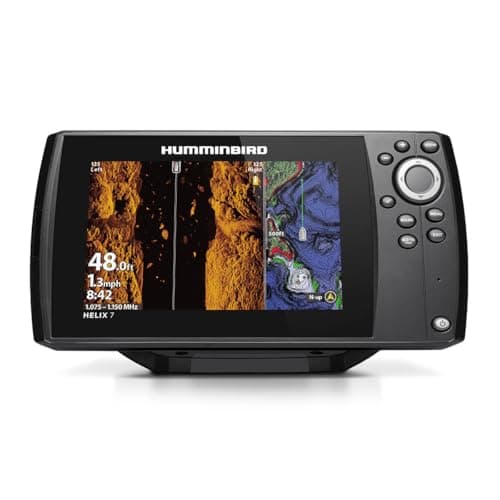
| 1 | Best under $1000 Humminbird HELIX 7 CHIRP MEGA SI GPS G4 7 in with MEGA side imaging, CHIRP and GPS. | Finding cover beside the boat, and bow-station fishing | $699.00 · Check price on Amazon #ad how this is funded · price as of October 12, 2026 |
| 2 | 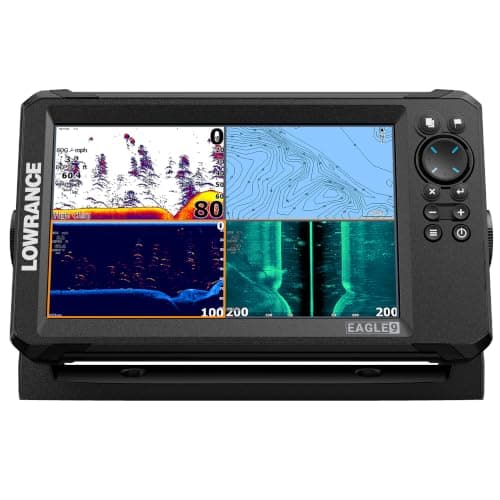 Best screen for the money Lowrance Eagle 9 with TripleShot HD 9 in with TripleShot HD and preloaded charts for 17,000+ US lakes. | Mapping-led fishing where legibility matters most | $749.99 · Check price on Amazon #ad how this is funded · price as of October 12, 2026 |
What the money buys here
Two things, and they are worth separating because they suit different anglers.
High-detail side imaging. The genuine capability jump. Below this band side coverage exists but is coarse; here it becomes detailed enough to identify what you are looking at.
A 7 to 9 in screen. Which matters because imaging and charts both generate detail a small screen discards.
Note what is not on that list: sonar quality. CHIRP at $200 and CHIRP at $900 are not dramatically different at freshwater depths. You are buying coverage and legibility, not a better depth reading.
Why side imaging is the real upgrade
Every other sonar mode on this site looks down. That means the useful information arrives after you have driven over it, and it covers a narrow column — a 20-degree cone in 15 ft of water covers a circle roughly 5 ft across, as our sonar types page works out.
Side imaging looks sideways, tens of feet each way. Instead of a narrow column of history you get a strip of the lake bed either side of your track.
The practical effect is that you find cover without hitting it. A brush pile forty feet to port is something you can cast at rather than something you discover next season.
Where the curve flattens
| Band | Main addition | Freshwater value |
|---|---|---|
| Under $200 | Sonar, depth, basic GPS | High - answers the two core questions |
| Under $500 | Charts, down imaging, bigger screen | High on unfamiliar water |
| Under $1000 | Detailed side imaging, 7-9 in screen | Moderate to high, if you fish cover |
| Above $1000 | Forward-facing live sonar | Low for most freshwater anglers |
The last row is the honest part. Live forward-facing sonar is remarkable and it is a different category rather than a better fish finder — and it is a poor purchase for anyone who cannot yet read a conventional screen fluently. Our reading page is cheaper and will do more for your catch rate.
Install stops being optional work
This is where installation quality determines whether you got what you paid for.
A side imaging transducer needs an unobstructed view to both sides. Mounted behind a strake, too high, or angled off level, it will still show depth perfectly and produce useless side images — which is a confusing failure because the unit looks like it works.
Everything on our installation page applies with less tolerance. Test before drilling, at every speed you use.
On a bass boat, a bow transducer on the trolling motor is the standard answer, and our bass boat page covers the cabling.
Who should not spend this much
Small craft anglers. A 9 in screen on a canoe is worse than a 4 in one — heavier, thirstier, and harder to mount.
Anyone on water under about twenty feet. Side imaging needs some depth to spread out. In very shallow water the strip either side is narrow and the advantage shrinks.
Anyone still learning to read sonar. Buy the entry unit, learn it thoroughly, and spend this money in two seasons knowing exactly what you want.
So what do I actually buy?
Buy side imaging if you fish cover, and a bigger screen if you fish charts. Do not buy this band as a first unit.
Humminbird HELIX 7 CHIRP MEGA SI GPS G4
$699.007 in with MEGA side imaging — the genuine capability jump in this band.
#ad how this is funded · price as of October 12, 2026
Lowrance Eagle 9 with TripleShot HD
$749.999 in with TripleShot HD and charts, for mapping-led fishing.
#ad how this is funded · price as of October 12, 2026
Lowrance Eagle 7 with TripleShot HD
$599.99The 7 in version of the same platform if console space is tight.
#ad how this is funded · price as of October 12, 2026
The picks, in full
Every card below lists the specs we could read off a published page, the URL they came from, and one honest reason you might not want it.
1. Best under $1000
Humminbird HELIX 7 CHIRP MEGA SI GPS G4
Humminbird
7 in with MEGA side imaging, CHIRP and GPS.
MEGA side imaging is what this band is for. Down imaging tells you about water you have already crossed; side imaging shows you what is out to both sides, which is where you are about to cast.
On a bank line, a brush row or a standing timber flat, that turns searching into targeting. It is the largest genuine change in capability between any two bands on this page.
CHIRP and GPS are both published as well, so it remains a complete unit rather than a specialist one, and seven inches is enough to read imaging detail properly.
The drawback
Side imaging demands a transducer position with a clean view to both sides, which is materially harder than a plain transom mount and is the most common reason people do not get the imaging they paid for. Humminbird does not publish current draw, and this is the highest-draw unit on this site.
Published specs
- Display
- 7 in, 1024H x 600V
- Transducer
- XNT 9 HW MSI 150 T
- Sonar
- Dual Spectrum CHIRP 83/200 kHz; 50/83/200/455/800 kHz and 1.2 MHz
- Coverage
- 20, 42, 60 and two 86 deg @ -10 dB
- MEGA Down Imaging
- Up to 75 ft
- MEGA Side Imaging
- 250 ft per side
- Max depth
- 1,200 ft
- Power output
- 4,000 W peak-to-peak / 500 W RMS
- Mapping
- Basemap (10,000+ lakes), AutoChart Live (8 h)
- Dimensions
- 10.54 W x 5.8 H x 3.68 D in (gimbal)
Specs read from L&M Fleet Supply — Humminbird Helix 7 Chirp Mega SI GPS G4.
#ad how this is funded · price as of October 12, 2026
2. Best screen for the money
Lowrance Eagle 9 with TripleShot HD
Lowrance
9 in with TripleShot HD and preloaded charts for 17,000+ US lakes.
Nine inches is a large screen by freshwater standards, and it changes chart work specifically. A contour map you can read at a glance while running is more useful than one you have to stop and study.
TripleShot HD gives down and side coverage from one transom transducer, so you get imaging with the simplest possible install — a real advantage over multi-element setups.
The same 17,000+ US lake chart coverage as the smaller Eagle, on a screen that does it justice.
The drawback
A 9 in unit needs real console or mount space and is physically awkward on a small boat, and the side imaging resolution does not match a dedicated MEGA unit — you get coverage rather than fine detail. Chart coverage is still patchy on small and private waters.
Published specs
- Display
- 9 in IPS, 1024 x 600, 1000 nits
- Transducer
- TripleShot HD with FishReveal
- Sonar
- CHIRP, DownScan Imaging, SideScan
- SideScan range
- Up to 600 ft per side
- Mapping
- C-MAP inland, 17,000+ US lakes
- Storage
- 3,000 waypoints / 100 routes / 100 trails
- Dimensions
- 11.30 x 6.39 x 3.54 in
- Weight
- 1.98 lb
- Power draw
- 640 mA @ 12 V, full backlight
- Water rating
- IPX7
Specs read from L&M Fleet Supply — Lowrance Eagle 9 with TripleShot HD Transducer.
#ad how this is funded · price as of October 12, 2026
Questions people actually ask
What does a fish finder under $1000 give you?
High-detail side imaging and a 7 to 9 inch screen. Sonar quality itself barely changes from the entry band at freshwater depths — you are buying coverage and legibility, not a better depth reading.
Is side imaging worth the money?
If you fish cover, yes. Down-looking sonar covers a narrow column of water you have already crossed; side imaging shows a strip tens of feet either side, so you find brush and timber before you hit them.
Should you spend more than $1000 on a freshwater fish finder?
For most freshwater anglers, no. Above this band you are buying forward-facing live sonar, which is a different product category and a poor purchase for anyone who cannot yet read a conventional screen fluently.
Why does my side imaging look useless?
Almost always transducer placement. Side imaging needs an unobstructed view to both sides, and a transducer mounted behind a strake, too high, or off level will show depth perfectly while producing worthless side images.
Read next
Prices on this page come from the retailer at request time and change without notice. If we cannot get a live one we say “check price” rather than show you a number that has gone stale. How we pick.