Electronics
The best fish finder for a canoe, float tube or small craft
Everything must be removable, everything must be light, and nothing can be drilled.
By Sawyer V. · Last updated · How we pick
The short answer
On a canoe or float tube, three constraints decide everything: no drilling, minimal weight, and it must all come off at the end of the day. A compact 3.5 to 5 in unit, a clamp-on transducer arm on the gunwale, and a small sealed battery in a dry box is the whole system.
Reel & Rig earns a commission from qualifying purchases made through links on this page, at no extra cost to you. It does not change which gear we pick or what we say about it. Full disclosure.
Quick picks
| # | Product | Best for | Price |
|---|---|---|---|
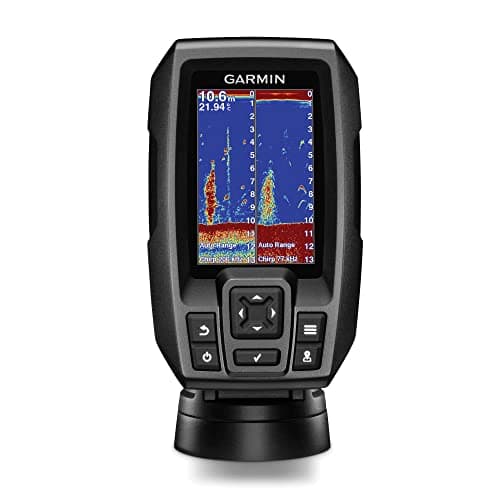
| 1 | Best for a canoe Garmin STRIKER 4 A compact CHIRP unit with basic GPS, low draw and a small footprint. | Canoes, float tubes and anything you carry to the water | $139.99 · Check price on Amazon #ad how this is funded · price as of October 12, 2026 |
| 2 | 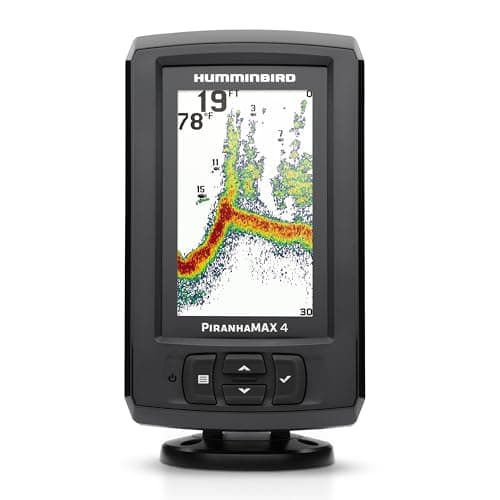 Simplest small-craft option Humminbird PiranhaMAX 4 A compact transom-mount unit with straightforward sonar and no extra features to manage. | Occasional use, and the lowest-fuss setup | $139.00 · Check price on Amazon #ad how this is funded · price as of October 12, 2026 |
The three constraints
1. No drilling. A canoe hull is thin and often not yours. A float tube has no hull to drill. Every mount has to clamp, strap or suction.
2. Weight. You carried this boat to the water and you will carry it back. A unit, a bracket and a battery is three items you did not have before, and on a float tube the weight is on you rather than on the boat.
3. It all comes off. Nothing stays rigged. Which means the whole system has to be quick to fit and quick to strike, or you will stop bringing it.
Mounting without drilling
The transducer goes on a clamp-on arm over the gunwale, angled so the face sits parallel to the water an inch or two below the hull. On a canoe there is no prop wash to avoid, which makes placement far easier than on any powered hull — you are only avoiding your own paddle stroke.
The screen clamps to a thwart or a rail within arm’s reach while seated. On a float tube it goes on a small board across your lap or on the tube’s own apron.
The battery lives in a small dry box low and centered. On a canoe, weight placement affects stability noticeably, and a battery on a thwart is worse than a battery on the floor.
Leash everything, for the same reason our kayak safety page gives: a capsize sends every loose item in at once.
Canoe vs kayak vs float tube
| Craft | Mounting surface | Main constraint |
|---|---|---|
| Canoe | Gunwales and thwarts - good clamping | Stability; keep weight low and central |
| Kayak | Molded tracks and scupper holes | Deck space; see the kayak page |
| Float tube | None - everything is on you | Total weight and water contact |
| Small dinghy | A real transom, if small | Usually the easiest of the four |
A kayak has molded accessory tracks and is the easiest of the paddle craft to rig. A canoe has better clamping surfaces but worse stability. A float tube has neither and needs the smallest possible everything.
What sonar actually gives you here
Depth first. On small water in a small craft, knowing you are over eleven feet rather than four changes what you tie on, and you have no other way to know.
Bottom hardness second. The thick bright line that means rock or gravel, as our screen-reading page describes, is the most actionable thing on a small-craft screen.
Fish arches last, and they matter least. A canoe moves slowly enough that you often get flat lines rather than arches even with fish under you — which is a property of the scroll, not a fault.
The alternative worth considering
For a float tube specifically, a castable sonar ball is genuinely competitive. There is nothing to mount, nothing to power beyond the ball itself, and you are moving slowly enough that a transect per cast is not much worse than a continuous trace.
On a canoe, a mounted unit wins — you have the gunwale to clamp to and you cover enough water for a continuous trace to be worth having.
A portable clamp mount kit is the piece that turns any of these units into a small-craft setup.
So what do I actually buy?
Buy small, buy removable, and spend the difference on the mount and the battery rather than the screen.
Garmin STRIKER 4
$139.99Compact CHIRP with GPS — small, light, low draw. The canoe default.
#ad how this is funded · price as of October 12, 2026
Humminbird PiranhaMAX 4
$139.00Simplest option with the fewest settings to manage while drifting.
#ad how this is funded · price as of October 12, 2026
Plano Guide Series Two-Tier StowAway 3700
$15.99A sealed box keeps the battery and connections dry, low and central.
#ad how this is funded · price as of October 12, 2026
The picks, in full
Every card below lists the specs we could read off a published page, the URL they came from, and one honest reason you might not want it.
1. Best for a canoe
Garmin STRIKER 4
Garmin
A compact CHIRP unit with basic GPS, low draw and a small footprint.
Small and light is the whole specification here. On a canoe you are weight-limited and space-limited, and a large screen with a heavy bracket unbalances a hull that is already tippy.
CHIRP sonar and basic GPS are published, which covers everything a canoe angler needs: depth, bottom hardness and a waypoint on the spot that produced.
Low draw matters more here than on any other craft, because your battery is whatever you were willing to carry. A small unit on a 7 Ah pack runs a full day with margin, as our battery guide works through.
The drawback
The screen is genuinely small, and reading it in bright sun over the side of a canoe is harder than on a mounted console. There is no preloaded mapping either, so on unfamiliar water you are building your own waypoints rather than reading a survey.
Published specs
- Display
- 3.5 in color
- Transducer
- Dual-beam CHIRP, 77/200 kHz, transom + trolling motor mounts
- Transmit power
- 200 W RMS / 1,600 W peak-to-peak
- GPS
- Built-in high-sensitivity, waypoint map
- Extras
- Built-in flasher, sonar history rewind, speed
Specs read from Fish307 — Garmin STRIKER 4 FishFinder with 77/200 kHz transducer.
#ad how this is funded · price as of October 12, 2026
2. Simplest small-craft option
Humminbird PiranhaMAX 4
Humminbird
A compact transom-mount unit with straightforward sonar and no extra features to manage.
Fewer features is a real advantage on a craft where you are managing a paddle, a rod and a screen with two hands. This unit does depth and sonar and stops there.
It pairs naturally with a clamp mount, because the supplied transom bracket adapts to a gunwale clamp with no modification.
For a float tube in particular, simplicity wins: you are sitting at water level with no deck at all, and anything that needs configuring is something you will do wrong while drifting.
The drawback
No GPS, so you cannot mark or return to a spot — on unfamiliar water that is a real loss, because finding structure again is half the value of sonar. Humminbird does not publish current draw here either.
Published specs
- Display
- 4.3 in, 272H x 480V, 256-color TFT
- Transducer
- XNT 9 28 T, transom mount
- Sonar
- Dual Beam, 200/455 kHz
- Coverage
- 28 deg and 16 deg @ -10 dB
- Max depth
- 600 ft @ 200 kHz / 320 ft @ 455 kHz
- Power output
- 2,400 W peak-to-peak / 300 W RMS
- Dimensions
- 3.91 W x 7.34 H x 3.62 D in (gimbal)
- Input
- 10.8-20 VDC
Specs read from L&M Fleet Supply — Humminbird PiranhaMAX 4.
#ad how this is funded · price as of October 12, 2026
Questions people actually ask
Can you put a fish finder on a canoe?
Yes, without drilling. A clamp-on transducer arm over the gunwale, the screen clamped to a thwart within reach, and a small sealed battery low and centered is the whole system — and it strikes in a couple of minutes.
Where does the transducer go on a canoe?
On a clamp arm over the gunwale, face parallel to the water an inch or two below the hull. With no propeller there is no prop wash to avoid, which makes canoe placement far easier than on any powered boat.
What is the best fish finder for a float tube?
The smallest one you are willing to carry, or a castable sonar ball. On a float tube everything is on your person with no mounting surface at all, and you move slowly enough that one transect per cast loses little.
What battery do you need for a canoe fish finder?
A small sealed 7 Ah pack runs a compact unit for a full day with margin. Keep it low and central in a dry box — on a canoe, weight placement affects stability more than the number suggests.
Read next
Prices on this page come from the retailer at request time and change without notice. If we cannot get a live one we say “check price” rather than show you a number that has gone stale. How we pick.