Kayak
Fishing gear for a canoe: wider, higher, and nowhere to put anything
Canoe anglers get sent kayak advice, and most of it is wrong. The hull is a different shape and it changes four specific things.
By Sawyer V. · Last updated · How we pick
The short answer
A canoe is wider than a kayak and seats you higher, so a double-bladed paddle needs to be at the long end of the published range — 260 to 280 cm rather than 240. There is no tank well and no scuppers, so storage has to be chosen rather than assumed, and everything that can roll will.
Reel & Rig earns a commission from qualifying purchases made through links on this page, at no extra cost to you. It does not change which gear we pick or what we say about it. Full disclosure.
Quick picks
| # | Product | Best for | Price |
|---|---|---|---|
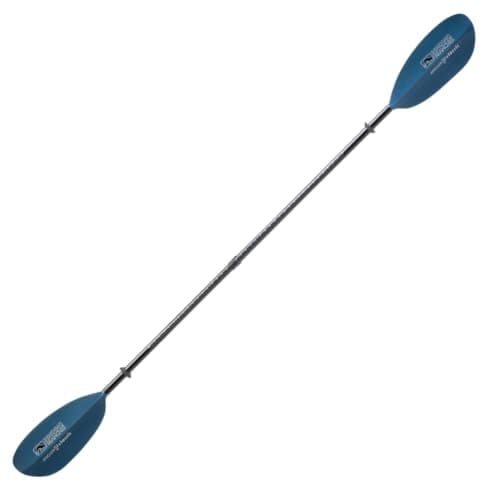
| 1 | Best paddle for a canoe Bending Branches Angler Classic Kayak Paddle 35.5 oz, 7.5 x 18 in blade, published in 240, 250, 260, 270 and 280 cm with a snap-button ferrule. | Solo canoe anglers who want to paddle and fish without swapping tools | $219.95 · Check price on Amazon #ad how this is funded · price as of October 12, 2026 |
| 2 | 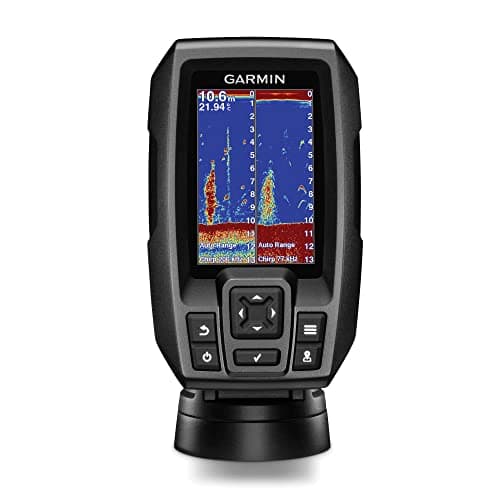 Best sonar for a canoe Garmin STRIKER 4 3.5 in color, dual-beam CHIRP 77/200 kHz, 200 W RMS, built-in GPS with a waypoint map. | A small, low-draw unit that a canoe can actually power and mount | $139.99 · Check price on Amazon #ad how this is funded · price as of October 12, 2026 |
| 3 | 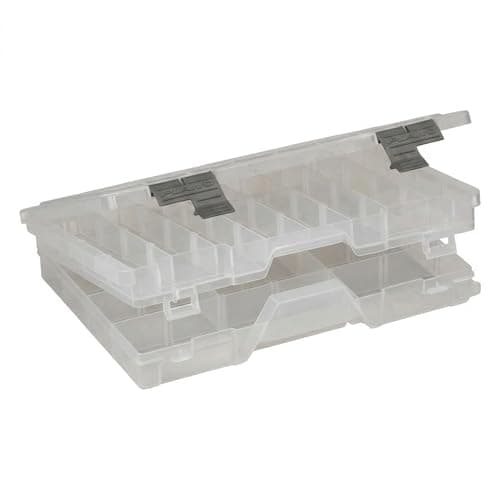 Best storage for a canoe Plano Guide Series Two-Tier StowAway 3700 14 x 9 x 2.75 in, classic 3700 footprint, 13 to 45 adjustable compartments. | Keeping tackle dry and accessible with no tank well to drop a crate into | $15.99 · Check price on Amazon #ad how this is funded · price as of October 12, 2026 |
| 4 | 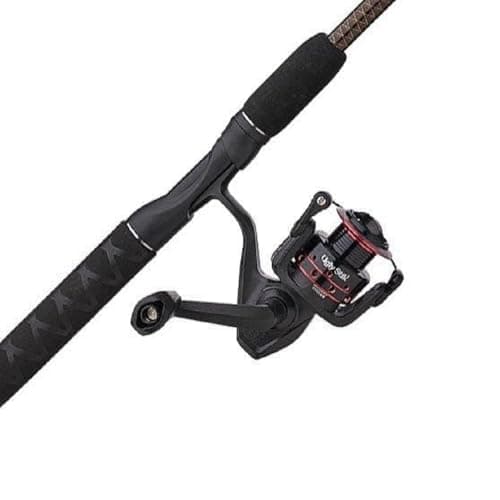 Best rod for a canoe Ugly Stik GX2 Travel Spinning Rod (6 ft 6 in Medium, 4-piece) 6 ft 6 in medium, four pieces, published 6-15 lb and 1/8-5/8 oz, with alignment markings on the ferrules. | Anyone portaging, car-topping, or fishing from a seat with limited room | $89.95 · Check price on Amazon #ad how this is funded · price as of October 12, 2026 |
Four ways a canoe is not a kayak
Canoe anglers get handed kayak advice constantly, because the two get lumped together as paddle craft. The hulls are different enough that a good deal of it does not transfer.
| Difference | Consequence |
|---|---|
| Wider beam | A double-bladed paddle must be longer to clear the gunwales |
| Higher seat | Longer paddle again, and more wind on the upper blade |
| No tank well | Crate-based storage advice does not apply at all |
| No scuppers | Water that comes in stays in, so dry storage matters more |
| Open floor | Far more room for gear, and everything rolls around in it |
| Often tandem | Two anglers, two rods, and a real risk of crossed lines |
The open floor is the genuine advantage. A canoe carries far more than a kayak and carries it where you can reach it, which is why they remain the better craft for a long day or a multi-day trip.
Paddle length is the decision to get right
Most kayak paddle sizing advice assumes a boat 28 to 36 in wide with the seat close to the water. A canoe is often wider and always seats you higher.
Both of those push the paddle longer. The published range on the paddle above runs 240 to 280 cm, and a solo canoe angler is generally at 260 cm and up, where a kayak angler might be at 240.
Too short is the common error and it is miserable: you knuckle the gunwales on every stroke and end up reaching down rather than across. Our paddles page covers sizing from the boat rather than from your height.
Stability, and what to do about it
A canoe is generally less initially stable than a wide sit-on-top fishing kayak. It is a hull designed to be knelt in or sat low in, and standing to cast is not the plan.
Practically: keep your weight low and centered, do not lean out to land a fish, and use a net with a reasonable handle rather than reaching. Stay seated. A canoe punishes weight shifts more abruptly than a kayak does.
If you fish tandem, agree who casts which side before you launch. Our safety essentials page covers the gear you cannot improvise, and all of it applies here.
Everything rolls
A kayak has molded recesses, cup holders and a tank well. A canoe has a smooth floor with a slight curve, which means a dropped lure box travels to the lowest point and a loose bottle rolls under your seat.
Flat boxes rather than round containers, a bag that can be clipped to a thwart, and a lanyard on anything you handle over the water. Our boat and kayak storage page covers what gets wet and what has to stay dry.
The same applies to rods. There are no molded rod holders in a canoe, so a rod laid on the floor gets stood on. A simple clamp-on holder on a thwart is worth more here than on a kayak.
Anchoring matters more than in a kayak
A canoe has more freeboard and catches more wind than a low-slung fishing kayak, so it blows off a spot faster.
A small anchor or a drag chain does more for your fishing than most tackle purchases, because holding position over a drop-off is the difference between fishing it and drifting past it.
Anchor from the bow or stern, never from the side. Anchoring a canoe from amidships in any current turns the hull broadside and is a genuine capsize risk rather than a theoretical one.
So what do I actually buy?
Start with the paddle, because the wrong length ruins every trip. Then sonar sized to a battery you are willing to carry, and flat storage that will not roll.
Bending Branches Angler Classic Kayak Paddle
$219.95Published to 280 cm. A canoe usually needs the long end of the range, not the short.
#ad how this is funded · price as of October 12, 2026
Garmin STRIKER 4
$139.993.5 in and low draw. Small enough to mount on a thwart and power off a small pack.
#ad how this is funded · price as of October 12, 2026
Plano Guide Series Two-Tier StowAway 3700
$15.9914 x 9 x 2.75 in. Flat, slides under a seat, and does not roll.
#ad how this is funded · price as of October 12, 2026
Ugly Stik GX2 Travel Spinning Rod (6 ft 6 in Medium, 4-piece)
$89.95Four pieces at 6 ft 6 in. The right length seated, and it packs for a portage.
#ad how this is funded · price as of October 12, 2026
The picks, in full
Every card below lists the specs we could read off a published page, the URL they came from, and one honest reason you might not want it.
1. Best paddle for a canoe
Bending Branches Angler Classic Kayak Paddle
Bending Branches
35.5 oz, 7.5 x 18 in blade, published in 240, 250, 260, 270 and 280 cm with a snap-button ferrule.
A canoe seats you higher above the water and is beamier than a kayak, and both push you toward a longer paddle. The published range here goes to 280 cm, and a solo canoe angler is usually at the 260 to 280 end rather than the 240 most kayak advice assumes.
A double blade is not traditional in a canoe, and plenty of people will tell you so. It is also far easier to fish from: a single blade needs a correction stroke on every pull to keep you straight, and a double blade does not, which matters when you are trying to reposition quietly with a rod in your lap.
The published ferrule offers 0 or 60 degree feather and left or right hand control. Feathering matters more from a higher seat, where the upper blade catches more wind.
The built-in hook retrieval system and the published 40 in tape measure on the shaft are the sort of details that seem gimmicky until you are twenty feet from a snagged lure. Our paddles page covers sizing in detail.
The drawback
35.5 oz is heavy for a paddle you hold all day, and the fiberglass shaft with nylon blades is the reason. A canoe is also slower to accelerate than a kayak, so you feel paddle weight more over distance. If you already own a good single blade and paddle well with it, this is a want rather than a need.
Published specs
- Weight
- 35.5 oz (1,006 g)
- Blade size
- 7.5 x 18 in (102.5 sq in / 661 sq cm)
- Lengths
- 240, 250, 260, 270 and 280 cm
- Shaft
- Fiberglass, ovalized grip
- Blade
- Fiberglass reinforced nylon
- Ferrule
- Snap-button, 0 or 60 degree feather, left or right hand control
- Ferrule insert
- Carbon
- Extras
- Built-in hook retrieval system and a 40 in tape measure on the shaft
Specs read from Bending Branches - Angler Classic Snap-Button.
#ad how this is funded · price as of October 12, 2026
2. Best sonar for a canoe
Garmin STRIKER 4
Garmin
3.5 in color, dual-beam CHIRP 77/200 kHz, 200 W RMS, built-in GPS with a waypoint map.
A canoe has no console, no battery box and no obvious flat surface. That makes physical size the first specification, and a 3.5 in unit is far easier to mount on a thwart or a gunwale clamp than anything larger.
Power is the second. Everything on a canoe runs off a small battery you are also carrying, so a modest unit at 200 W RMS is the sensible end of the range. Our battery page covers sizing a pack you are willing to lift.
Built-in GPS with a waypoint map is the feature worth having. A canoe covers less water than a powered boat, so knowing exactly where the drop-off was last time saves more time than imaging would.
The transducer mounts with a transom bracket or a trolling-motor mount, and on a canoe most people clamp it to a gunwale arm. Our canoe and small craft page covers the options.
The drawback
3.5 in is genuinely small, and in bright sun on open water you will squint at it. There is no imaging and no lake cartography, only a waypoint map, so it tells you depth and structure rather than showing you a picture. On a canoe the transducer also picks up more noise from hull flex than it would on a rigid boat.
Published specs
- Display
- 3.5 in color
- Transducer
- Dual-beam CHIRP, 77/200 kHz, transom + trolling motor mounts
- Transmit power
- 200 W RMS / 1,600 W peak-to-peak
- GPS
- Built-in high-sensitivity, waypoint map
- Extras
- Built-in flasher, sonar history rewind, speed
Specs read from Fish307 — Garmin STRIKER 4 FishFinder with 77/200 kHz transducer.
#ad how this is funded · price as of October 12, 2026
3. Best storage for a canoe
Plano Guide Series Two-Tier StowAway 3700
Plano
14 x 9 x 2.75 in, classic 3700 footprint, 13 to 45 adjustable compartments.
This is the specification that separates canoe advice from kayak advice. A fishing kayak has a tank well behind the seat sized for a milk crate; a canoe does not. Every crate recommendation you read is therefore useless to you.
What a canoe has instead is a long open floor between the thwarts. A flat box at 14 x 9 x 2.75 in slides under a seat or sits against a thwart without becoming a trip hazard, which a tall crate does.
Two tiers with independent latches means you open one half at a time. In a boat that tips more readily than a kayak, an open tray of hooks is worth avoiding.
13 to 45 adjustable compartments covers a day’s tackle without carrying a system. Our organizing page argues for sorting by technique, which is how you fit a day into one box.
The drawback
It is not waterproof. A canoe takes water over the gunwale more readily than a sit-on-top kayak sheds it through scuppers, and anything that must stay dry needs a sealed case instead. It also holds far less than a crate, so a full day with several techniques means a second box or a compromise.
Published specs
- Exterior
- 14 x 9 x 2.75 in
- Footprint
- Classic 3700
- Compartments
- 13 to 45, adjustable
- Design
- Two tiers, independent latches
Specs read from Tackle Warehouse — Plano Guide Series Two Tier Stowaway 3700.
#ad how this is funded · price as of October 12, 2026
4. Best rod for a canoe
Ugly Stik GX2 Travel Spinning Rod (6 ft 6 in Medium, 4-piece)
Ugly Stik
6 ft 6 in medium, four pieces, published 6-15 lb and 1/8-5/8 oz, with alignment markings on the ferrules.
A four-piece rod is the canoe answer for a reason kayaks do not share: portaging. If any part of your fishing involves carrying the boat between waters, a rod that breaks into four pieces and goes inside a pack is worth real money.
6 ft 6 in is also the right length from a seated position. Our kayak rods page argues for going shorter than you would on the bank, and the reasoning — you are sitting, casting sidearm, and landing fish by hand over the side — applies identically in a canoe.
Published alignment markings on the ferrules is a small detail that matters when you are assembling a rod in a boat. Misaligned guides on a four-piece rod is the commonest way people conclude travel rods are bad.
6–15 lb and 1/8–5/8 oz is a genuinely useful all-round rating, so this is not a compromise rod that only exists for packing.
The drawback
Four ferrules is three more places for a rod to fail than a one-piece, and they work loose during a day of casting if you do not reseat them. Ugly Stik publishes no rod weight. And if you never portage and always car-top the canoe, a two-piece rod does the same job for less money — our travel rods page is honest that the four-piece is a convenience rather than a performance choice.
Published specs
- Model
- USGXSP664M
- Length
- 6 ft 6 in
- Pieces
- 4
- Power
- Medium
- Line rating
- 6-15 lb
- Lure rating
- 1/8-5/8 oz
- Light model
- USGXSP503L, 5 ft, 4-10 lb, 1/16-3/8 oz
- Longer models
- USGXSP604M 6 ft and USGXSP704M 7 ft, both Medium
- Blank
- Ugly Tech graphite + fiberglass, Clear Tip design
- Guides
- PVD-coated Ugly Tuff one-piece stainless
- Assembly
- Alignment markings printed on the ferrules
Specs read from Ugly Stik - GX2 Travel Spinning Rod.
#ad how this is funded · price as of October 12, 2026
Questions people actually ask
What length paddle do I need for a canoe?
Longer than a kayak paddle. A canoe is wider and seats you higher, so a solo angler using a double blade is generally at 260 to 280 cm where a kayak angler might use 240. Size from the boat, not your height.
Can you use a kayak paddle in a canoe?
Yes, and many solo canoe anglers do. A double blade needs no correction stroke to keep you straight, which makes repositioning far easier with a rod in your lap. You need a longer one than a kayaker would.
How do you store tackle in a canoe?
Flat boxes rather than crates. A canoe has no tank well, so the crate advice written for fishing kayaks does not apply. A box around 14 x 9 x 2.75 in slides under a seat and will not roll.
Is a canoe or a kayak better for fishing?
A canoe carries far more and carries it where you can reach it, which suits long trips and tandem fishing. A fishing kayak is more stable, sheds water through scuppers, and comes with storage and rod holders built in.
Should I anchor a fishing canoe?
Yes, and only from the bow or stern. A canoe catches more wind than a low fishing kayak and blows off a spot quickly. Anchoring from the side turns the hull broadside and is a real capsize risk.
Read next
Sources
Prices on this page come from the retailer at request time and change without notice. If we cannot get a live one we say “check price” rather than show you a number that has gone stale. How we pick.