Ice
Rattle reels: how to fish a second hole without watching it
The hole you are jigging is the one you are watching. A rattle reel is how the other hole earns its keep while you ignore it.
By Sawyer V. · Last updated · How we pick
The short answer
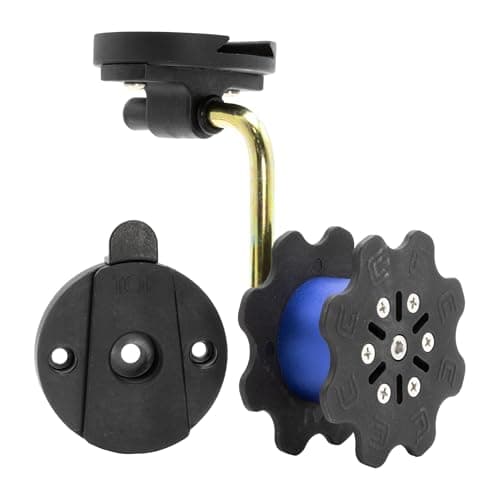
Buy the Clam ClamLock Vertical Rattle Reel, and budget for two things the listing does not include: a ClamLock baseplate to mount it to, and rattle reel line. The reel is the part people shop for and the least important of the three. What actually decides whether a rattle reel catches fish is the tension setting, whether you can hear it from where you sit, and whether the line hanging in the hole is straight. Buy the Eskimo E-Hub reel instead if you fish an Eskimo hub and do not want a mounting system at all - accepting that Eskimo publishes no specifications for it. And if you fish outside rather than in a shelter, you do not want a rattle reel at all; you want a tip-up.
Reel & Rig earns a commission from qualifying purchases made through links on this page, at no extra cost to you. It does not change which gear we pick or what we say about it. Full disclosure.
Quick picks
| # | Product | Best for | Price |
|---|---|---|---|
| 1 | Best rattle reel Clam ClamLock Vertical Rattle Reel Mounts to any ClamLock baseplate, rattles as line is pulled, and carries a tensioning system you set to the size of the bait. | Anyone already running ClamLock accessories, or willing to start | $59.99 · Check price on Amazon #ad how this is funded · price as of October 19, 2026 |
| 2 | 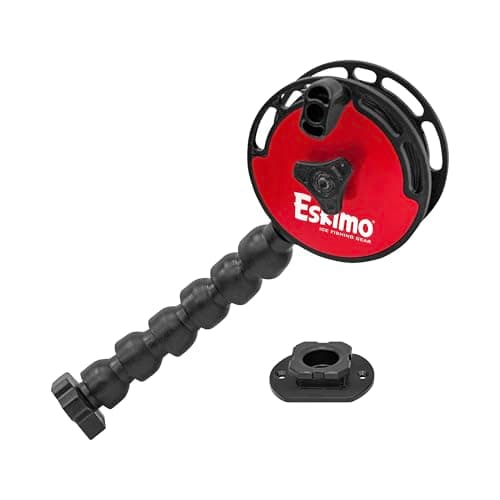 Best without a mounting system Eskimo E-Hub Rattle Reel (41944) The simpler, cheaper option - and the one where nothing is published, so everything below is a gap rather than a figure. | Eskimo hub owners who want one reel and no ecosystem | $37.99 · Check price on Amazon #ad how this is funded · price as of October 19, 2026 |
| 3 | 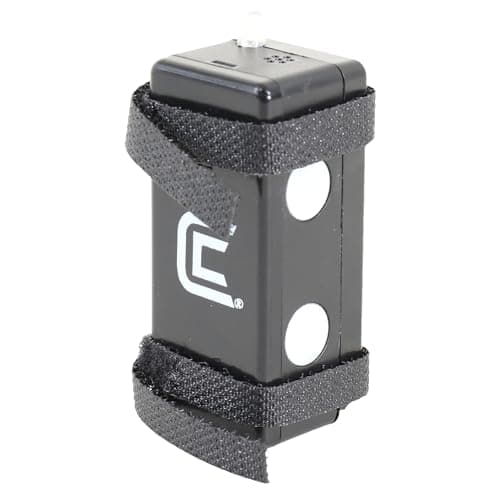 Best five dollars on the whole setup Clam Rattle Reel Indicator Lights up and beeps when the reel runs, and tells you which reel went in a house with several. | Anyone running more than one reel, or fishing with the heater on | $4.99 · Check price on Amazon #ad how this is funded · price as of October 19, 2026 |
What a rattle reel is, and why it is not a tip-up
A rattle reel is a spool on a bracket, mounted on the wall or roof of an ice shelter, with line running from it down into a hole in the floor. There is no rod. A fish takes the bait, pulls line, the spool turns, and the rattle inside it makes a noise you can hear across the shelter. You grab the line and hand-line the fish in.
That is a different machine from a tip-up, and the difference is where you are.
| Rattle reel | Tip-up | |
|---|---|---|
| Where it lives | Mounted inside a shelter or house | Out on the open ice, over its own hole |
| How it alerts | Sound - you have to be within earshot | A flag - you have to be able to see it |
| Distance from you | Arm’s reach, beside the hole you are jigging | Spread out, sometimes hundreds of feet |
| Works overnight | Yes, in a permanent house | Not unattended |
| Freeze-up | Hole is inside, usually heated | Hole freezes; the unit is built to sit over it |
| Cost of a second set | A reel, a mount and line | One tip-up |
If you fish from a sled on open ice and walk between holes, the rattle reel is the wrong product and our tip-ups page is the one to read. If you sit in a hub or a permanent house and cut more holes than you can hold rods over, this is the answer.
Check your line limit before you buy anything
A rattle reel only makes sense if you are allowed to fish a second line, and that is a state-by-state rule rather than a national one. Some states allow one line through the ice, some allow two, some allow more in named waters, and several change the number by county or by season.
We are not going to print a number for your state, because that is exactly the sort of figure that is wrong by the time you read it. Check your current state regulations before you spend anything - it is the one piece of research on this page we cannot do for you, and buying three rattle reels for a one-line state is an expensive way to find out.
The four things that decide which one to buy
Criteria first, because the reels themselves are more alike than the marketing suggests. All of them are a spool, a bracket and a noise.
1. How it mounts, and what that costs. This is the decision that actually sets your budget, and it is the one buried furthest down the listing. The Clam reel mounts to a ClamLock baseplate, which is a separate purchase. That is not a criticism of the system - a baseplate standard means one mounting surface takes a rattle reel today and a rod holder or a cup holder later - but it does mean a $59.99 reel is a $75 purchase, and the second one is cheaper than the first only if you already own the plate.
2. Whether the tension is adjustable. Tension is what stops a lively minnow from running line all night and what stops a cautious walleye from feeling the spool and letting go. Clam publishes an adjustable tensioning system; Eskimo publishes nothing either way. If a reel does not say, assume it is fixed.
3. Whether you will actually hear it. A rattle is a mechanical sound competing with a propane heater, a generator, conversation and the wind on a fabric shelter. In a one-person hub you will hear it. In a four-person house with the heater running you may not, and that is what the $5 LED indicator is for.
4. What line goes on it. The most-skipped decision and the one most likely to cost you fish. See below.
Rattle reel line is a different product, and it matters
The instinct is to spool a rattle reel with whatever is on the bench - leftover mono or old braid. Both are the wrong answer for the same reason: memory.
Line sitting on a small-diameter spool in the cold takes a set. When you drop it down the hole it hangs in coils rather than straight, and a bait on coiled line does two bad things - it sits higher than you think it does, and the coils absorb the first few inches of a take, so the spool does not turn and the reel never rattles.
Clam publishes its rattle reel line as a fly-style line built for rattle reels and tip-ups that comes off the spool straight for a vertical presentation, and as tangle-resistant specifically for running multiple sets or fishing overnight. That is the problem described from the other end. It is a thicker, limper line than you would fish on a rod, which is also what makes it comfortable to hand-line - braid at the same strength cuts cold fingers.
Clam does not publish a pound test for it, which is a real gap on a line sold for predators. Seventy-five feet is the published length, which is plenty for almost all freshwater ice and not enough for deep lake trout water. You still want a leader: our leader page covers the principle, and our wire leader page covers the pike case, which on a dead set with a big bait is a real one.
Setting one up
Mount it high and back from the hole. High enough that the line drops cleanly without touching the edge of the hole, and far enough back that you do not walk into it. A line resting on ice at the hole edge will freeze to it, and then the reel cannot turn.
Set the depth by counting. With no rod and no line counter, depth is whatever you can reproduce. Measure one arm-span of line as you pull it off, count the pulls to bottom, then come up a known number. Writing the number on the shelter wall is not a joke - it is how people fish rattle reels consistently.
Set the tension to the bait, not to the fish. Just enough that a lively minnow cannot turn the spool on its own. Watch it for five minutes before you trust it.
Give the fish line before you pull. The reel rattling is the take, not the hookset. Hand-lining a fish on a dead set means pulling with your hands against no drag at all, so the only thing protecting a light line is how fast you let it slide. This is why the heavier, limper line is the right line.
Keep the hole open. An unattended hole in an unheated corner skims over, and a skimmed hole is a frozen line. Our ice gift page makes the case for a skimmer as the most-used piece of ice equipment nobody buys, and a second set is exactly where that shows up.
What goes on the end
Rattle reels are a live-bait presentation almost everywhere they are used, because the whole point is a bait that works while you ignore it. A jig does nothing on a dead line; a minnow does.
A single hook through the back of a shiner or a sucker, enough weight to hold it down, and a leader. Our ice rigs page covers the hook, weight and leader combinations that work under the ice, and our live bait page covers keeping the bait alive long enough to matter - which in a heated shelter is a different problem from a bucket on the ice.
For what to target with it: a dead set with a big bait beside you is a walleye and pike presentation more than a panfish one, and our panfish against walleye page covers why those two ways of fishing pull in opposite directions.
Who should skip this entirely
Anyone fishing outside a shelter. A sound alert you cannot hear is not an alert. Buy a tip-up.
Anyone in a one-line state. Covered above, and worth repeating because it is the cheapest mistake to avoid.
Anyone who hole-hops. A rattle reel is mounted hardware on a structure you are not moving. If your shelter goes up and down three times a day, you will stop rigging it by the second week. Our ice fishing gear page is the better starting point for mobile fishing.
Anyone who has not yet bought a flasher. If this is a choice between a second unattended line and knowing what is under the first one, buy the electronics. Our ice electronics page covers that end, and our flasher comparison covers which type.
What this actually costs
Worth laying out plainly, because the reel price is the smallest part of the number for a first set.
| Item | Needed? | MSRP |
|---|---|---|
| ClamLock Vertical Rattle Reel | Yes | $59.99 |
| ClamLock accessory baseplate | Yes, for the Clam reel | $14.99 |
| Rattle reel line, 75 ft | Yes - do not use leftover mono | $9.99 |
| Rattle reel indicator | No, but buy it anyway | $4.99 |
Those are the manufacturer’s published MSRPs, read off Clam’s own product pages. What each item costs on Amazon today is live on the cards above and stamped with the date it was checked. The second reel in the same house is the cheap one: you already own the baseplate standard, so it is a reel, line and another indicator.
What we could not tell you
More than we would like on this page, and it is worth being explicit about where the gaps are rather than papering over them.
Clam publishes a description and a SKU for every item here and no spool capacity, no dimensions and no weight for any of them - so how much line a reel holds, and whether it physically fits the wall you had in mind, are both unanswered. The indicator does not publish a battery type or a runtime, which on an overnight set in hard cold is the specification that decides whether it is armed at 3am. And Eskimo publishes nothing at all.
We have left every one of those as a gap rather than filling it from a listing bullet. That is the same standard our how we pick page applies to everything else on this site.
So what do I actually buy?
One reel, the baseplate it mounts to, and line built for the job. The indicator is five dollars and is the first thing we would add. Skip all of it if you fish outside a shelter.
Clam ClamLock Vertical Rattle Reel
$59.99Adjustable tension, audible alert, ClamLock mount. The reel to start with.
#ad how this is funded · price as of October 19, 2026
Clam ClamLock Accessory Base Plate
$12.99The mounting surface the Clam reel needs. Buy it with the reel, not after.
#ad how this is funded · price as of October 19, 2026
Clam Rattle Reel Line (75 ft)
$9.9975 ft of fly-style line that comes off the spool straight. Not leftover mono.
#ad how this is funded · price as of October 19, 2026
Clam Rattle Reel Indicator
$4.99$4.99 MSRP. Lights and beeps, and tells you which reel in the house went.
#ad how this is funded · price as of October 19, 2026
Eskimo E-Hub Rattle Reel (41944)
$37.99The cheaper, simpler alternative - with nothing published about it.
#ad how this is funded · price as of October 19, 2026
The picks, in full
Every card below lists the specs we could read off a published page, the URL they came from, and one honest reason you might not want it.
1. Best rattle reel
Clam ClamLock Vertical Rattle Reel
Clam Outdoors
Mounts to any ClamLock baseplate, rattles as line is pulled, and carries a tensioning system you set to the size of the bait.
The tensioning system is the feature worth paying for, and it is the one most rattle reels do not publish at all. A rattle reel with fixed tension is set up for one weight of bait: too loose and a lively minnow runs line off the spool all evening until you stop believing it; too tight and a walleye feels resistance, drops the bait and you never hear a thing.
Clam publishes the adjustment explicitly as being there so the alert fires even on light bites, which is the right framing. On an overnight set with a big sucker you want tension; on a small shiner for crappie you want almost none.
Vertical or horizontal is the other choice, and Clam makes both on the same design (117719 and 117487). Vertical hangs the line more directly under the reel, which suits a reel mounted above the hole. Horizontal suits a wall mount where the line has to travel sideways before it drops. Pick by where there is room in your shelter, not by performance - the mechanism is the same.
Our shelter page covers hub against flip-over, which is really the question of whether you have a wall to mount anything to in the first place.
The drawback
The listing price is not the price. It mounts to a ClamLock baseplate, which is a separate purchase at around $13 to $15, so the real entry cost is closer to $75 before any line goes on it - and if you are not already in the ClamLock system you are buying into a mounting standard, not just a reel. Clam also publishes no spool capacity, no dimensions and no weight, so you cannot work out how much line it holds or whether it fits the space you have in mind. There is no published depth marking on the spool either, which matters more than it sounds: setting a bait at a known depth means counting pulls.
Published specs
- SKU
- 117719
- Orientation
- Vertical; a horizontal version (117487) is also made
- Mounting
- Any ClamLock accessory baseplate - sold separately
- Alert
- Rattles audibly as line is pulled off the spool
- Sensitivity
- Tensioning system, adjustable to bait size
- MSRP
- $59.99
- Spool capacity
- Clam does not publish a figure
- Dimensions and weight
- Clam does not publish figures
Specs read from Clam Outdoors - ClamLock Vertical Rattle Reel.
#ad how this is funded · price as of October 19, 2026
2. Best without a mounting system
Eskimo E-Hub Rattle Reel (41944)
Eskimo
The simpler, cheaper option - and the one where nothing is published, so everything below is a gap rather than a figure.
This is here because the alternative to the Clam is a real question and leaving it out would be pretending otherwise. It is roughly two thirds of the price, and it does not require you to buy into a baseplate system first, which for a lot of people is the whole decision.
What we cannot tell you is anything about it. Eskimo’s own site, eskimofishing.com, resolves to a single lander page with no product pages at all - no spool capacity, no mounting detail, no materials, not even a specification sheet for the hub shelters the company is better known for. The model number, 41944, is the only hard identifier that exists.
We hit the same wall on this site in October when looking at Eskimo’s Rod Locker bags, and the conclusion is the same: this is a real product from a real brand that publishes nothing, so buy it on the brand and the price rather than on a comparison, because there is no comparison to make.
The drawback
Nothing is published about it - no spool capacity, no tension adjustment, no mounting specification, no materials - so you are buying a brand name and a model number. That matters most on tension: if it has no adjustment, it is set up for one size of bait and you work around it. It is also designed around Eskimo hub shelters, so whether it mounts cleanly in a Clam, a Frabill or a permanent house is something you find out on arrival.
Published specs
- Model
- 41944
- Built for
- Eskimo hub shelters
- Published specifications
- None - eskimofishing.com resolves to a lander with no product pages
- Mounting, spool capacity, dimensions
- Not published anywhere we could cite
Specs read from Eskimo Fishing - no product page exists for this item.
#ad how this is funded · price as of October 19, 2026
3. Best five dollars on the whole setup
Clam Rattle Reel Indicator
Clam Outdoors
Lights up and beeps when the reel runs, and tells you which reel went in a house with several.
A rattle reel is an audible alert in a shelter that contains a running propane heater, a conversation and sometimes a radio. The failure mode is not that the reel does not rattle - it is that you do not hear it, or you hear it and look at the wrong hole.
Clam publishes this as lighting up and sounding a loud beep, and names the specific problem it solves: knowing which reel in the house tripped. In a permanent house with three or four sets that is the difference between getting there in time and arriving at a bare hook.
At $4.99 MSRP it is the cheapest meaningful upgrade in ice fishing, and it is the first thing we would add to either reel above. Our shelter lighting page makes a related argument about running the light dim - a dark shelter is exactly where an LED indicator earns its money.
The drawback
Clam says it attaches to a variety of the most popular rattle reels and then does not publish which ones, so compatibility with a reel you already own is a guess. No battery type and no runtime are published either, which for a device meant to sit armed overnight at well below freezing is the figure you would most want - cold flattens small cells fast. And a beeping, flashing alarm in a shared shelter is a social decision as much as a fishing one.
Published specs
- SKU
- 117476
- Alert
- Lights up and sounds a loud beep when the reel runs
- Fits
- A variety of the most popular rattle reels
- Use case
- Tells you which reel in the house tripped
- MSRP
- $4.99
- Battery type and runtime
- Clam does not publish figures
- Compatible models
- Clam does not publish a list
Specs read from Clam Outdoors - Rattle Reel Indicator.
#ad how this is funded · price as of October 19, 2026
Questions people actually ask
What is a rattle reel for ice fishing?
A spool on a bracket, mounted on the wall or roof of an ice shelter, with line running down into a hole in the floor. There is no rod. When a fish pulls line the spool turns and rattles audibly, and you hand-line the fish in. It is how you fish a second, unattended hole beside the one you are jigging.
What is the best ice fishing rattle reel?
The Clam ClamLock Vertical Rattle Reel, mainly for its adjustable tensioning system - that is what lets you set the reel so a lively minnow cannot trip it while a cautious walleye still can. Budget for a ClamLock baseplate and rattle reel line, neither of which is included.
Do you need special line for a rattle reel?
Yes. Line sitting on a small cold spool takes a set, and coiled line hanging in the hole both sits higher than you think and absorbs the first inches of a take, so the spool never turns. Rattle reel line is a thicker, limper fly-style line that comes off straight - and it is far kinder to hand-line than braid.
Rattle reel or tip-up - which should I buy?
Rattle reel if you fish inside a shelter or a permanent house and want a second hole within arm's reach. Tip-up if you fish out on open ice and want sets spread across a flat, because a sound alert is useless at a hundred feet and a flag is useless indoors.
How much does a rattle reel setup cost?
By published MSRP, about $85 for a first Clam set: $59.99 for the reel, $14.99 for the baseplate it mounts to, and $9.99 for 75 ft of rattle reel line, plus $4.99 if you add the indicator. The second reel in the same house is cheaper because the baseplate standard is already there.
How do you set the depth on a rattle reel?
By counting, since there is no rod and no line counter. Measure one arm-span of line as you pull it off the spool, count the pulls it takes to reach bottom, then come up a known number of pulls. Write the count down - reproducing the depth is the whole trick.
Can you use a rattle reel overnight?
In a permanent house, yes - that is the main reason they exist, and tangle-resistant line and an audible indicator both matter more on an overnight set. Check your state's rules on unattended lines first; they vary by state and sometimes by water.
What bait goes on a rattle reel?
Live bait, almost always. The point of a dead line is a bait that works while you ignore it, and a jig does nothing unattended while a minnow does. A single hook through the back of a shiner or a sucker, enough weight to hold it at depth, and a leader - wire if pike are in the water.
Read next
Sources
Prices on this page come from the retailer at request time and change without notice. If we cannot get a live one we say “check price” rather than show you a number that has gone stale. How we pick.