Tackle
The best leader for braid: what to tie on the end, and how long
Braid solved diameter and sensitivity. It created two new problems, and the leader is the fix for both.
By Sawyer V. · Last updated · How we pick
The short answer
Fluorocarbon, 18 in to 3 ft, at roughly the same pound test as the fish require rather than the braid. Seaguar InvizX publishes 0.011 in for 12 lb; Red Label publishes 0.012 in for the same rating. The leader is there for invisibility and shock absorption, not strength.
Reel & Rig earns a commission from qualifying purchases made through links on this page, at no extra cost to you. It does not change which gear we pick or what we say about it. Full disclosure.
Quick picks
| # | Product | Best for | Price |
|---|---|---|---|
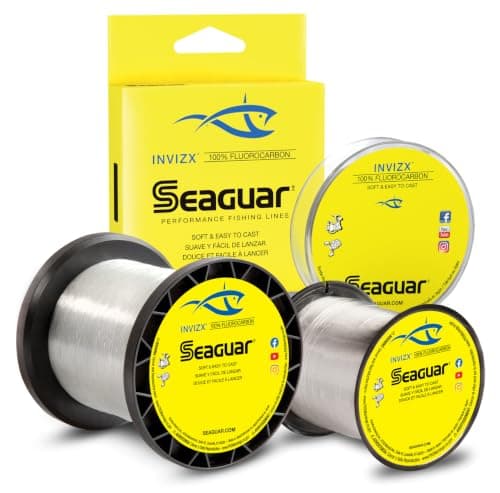
| 1 | Best leader material Seaguar InvizX Fluorocarbon Line Published at 0.009 in for 8 lb, 0.011 in for 12 lb and 0.013 in for 15 lb, in 100% fluorocarbon made in Japan. | Clear water, finesse presentations, and anywhere fish get a long look | $25.09 · Check price on Amazon #ad how this is funded · price as of October 12, 2026 |
| 2 | 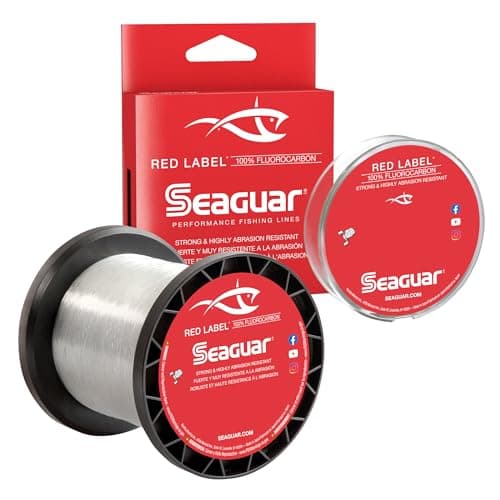 Best value, and the one to practice on Seaguar Red Label Fluorocarbon Line Published at 0.008 in for 6 lb through 0.016 in for 20 lb, 100% fluorocarbon made in Japan. | General leaders, stained water, and anyone burning through leader material | $12.79 · Check price on Amazon #ad how this is funded · price as of October 12, 2026 |
Why braid needs a leader at all
Two reasons, and neither is strength.
Visibility. Braid is opaque and colored. In clear water a fish looking at a small bait sees a solid line running away from it. Our line types page covers the full comparison.
No stretch. Braid has essentially zero stretch, which is why it is so sensitive and also why it pulls hooks. The leader is the only shock absorber in a braid system, and on treble-hooked baits it is the difference between landing fish and not.
There is a third, smaller reason: abrasion. Fluorocarbon is harder than braid and copes better with a rock or a gill plate at the business end.
How long, and why most leaders are too short
18 in to 3 ft for most spinning applications. Long enough that the braid is well away from the bait, short enough that the connection knot stays outside the rod guides on the cast.
Longer, 4 to 6 ft in very clear water or for spooky fish, accepting that the knot will pass through the guides. This is where a small, smooth connection knot stops being optional.
Shorter, 12 in for heavy cover, where you are pulling fish out of something and visibility matters less than the braid doing the work.
The common error is 8 in. That is short enough that the braid is still in the fish’s field of view and short enough that there is no meaningful stretch in the system, so it gets you neither benefit.
What strength to use
| Target | Braid | Leader |
|---|---|---|
| Panfish, trout | 10 lb | 6 to 8 lb fluorocarbon |
| Bass, walleye | 15 to 20 lb | 10 to 12 lb fluorocarbon |
| Heavy cover | 30 to 50 lb | 15 to 20 lb fluorocarbon |
| Pike | 30 lb | Wire, or 40 to 60 lb fluorocarbon |
Note that the leader is always lighter than the braid. That is deliberate: if something has to break, it should be the leader at the lure, not the main line at the rod tip. You lose a lure instead of a hundred yards of braid and a fish towing it.
Pike are the exception, because teeth beat any sensible fluorocarbon. Our pike reels page covers the wire trace.
The connection, which is the whole system
A leader is only as good as the knot joining it to the braid, and braid is slippery enough that most knots that work on mono fail on it.
The FG knot is the strongest and the smallest, and it passes through guides almost unnoticed. It takes practice.
The double uni is easier to tie, bulkier, and perfectly adequate for leaders that stay outside the rod tip.
A small barrel swivel is the mechanical alternative. It is bigger and more visible than either knot and it is a reasonable answer while you learn one. Our swivels page covers sizing it.
Our knots page covers tying both properly, and wetting the knot before you cinch it — on fluorocarbon that step is not optional.
When to use mono instead
Topwater. Fluorocarbon sinks and pulls the nose of a walking bait down. Mono floats, which is what a topwater lure wants. Our topwater page covers it.
Treble-hooked baits generally. Mono stretches more than fluorocarbon, and on crankbaits and jerkbaits that extra give keeps hooks in.
Cost, while learning. Mono leader material costs a fraction of fluorocarbon and ties more forgivingly. Practice the connection on it.
So what do I actually buy?
One spool of fluorocarbon in the strength band you fish, and a knot you can tie in the dark. The leader is a consumable — buy it in a size you will use freely.
Seaguar InvizX Fluorocarbon Line
$25.090.011 in for 12 lb, softer and more manageable. The clear-water leader.
#ad how this is funded · price as of October 12, 2026
Seaguar Red Label Fluorocarbon Line
$12.790.012 in for 12 lb at lower cost. The one to practice knots on and use freely.
#ad how this is funded · price as of October 12, 2026
Power Pro Spectra Braided Line
$44.25The braid it ties to. 15 lb at a published 0.007 in.
#ad how this is funded · price as of October 12, 2026
The picks, in full
Every card below lists the specs we could read off a published page, the URL they came from, and one honest reason you might not want it.
1. Best leader material
Seaguar InvizX Fluorocarbon Line
Seaguar
Published at 0.009 in for 8 lb, 0.011 in for 12 lb and 0.013 in for 15 lb, in 100% fluorocarbon made in Japan.
Fluorocarbon’s refractive index is close to that of water, which is the entire reason it is a leader material. In the clear water where braid is most visible, that is a genuine difference rather than a claim.
InvizX is published as the softer, more manageable fluorocarbon in Seaguar’s range. Suppleness matters more on a leader than people expect: a stiff leader hinges against a light lure and damps its action.
The published diameters are usefully thin. At 0.011 in for 12 lb it is the same thickness as 30 lb braid, which means the leader is not the thing making your presentation visible.
It also sinks, being denser than water. On a bottom bait that helps; on a topwater it does not, which is the one case for a mono leader instead.
The drawback
Fluorocarbon has memory, and a leader coiled on a spool in a hot car comes off coiled. It is the most expensive of the options here per yard, and its knots are unforgiving — a fluorocarbon knot cinched dry or too fast fails at a fraction of its rating. It is also harder than mono, so it is the material most likely to cut into itself in a badly tied knot.
Published specs
- 8 lb diameter
- 0.009 in / 0.23 mm
- 10 lb diameter
- 0.010 in / 0.26 mm
- 12 lb diameter
- 0.011 in / 0.28 mm
- 15 lb diameter
- 0.013 in / 0.33 mm
- 20 lb diameter
- 0.016 in / 0.40 mm
- Spool sizes
- 200, 600, 1000, 3000 yd
- Material
- 100% fluorocarbon, made in Japan
Specs read from Tackle Warehouse — Seaguar InvizX Fluorocarbon Line.
#ad how this is funded · price as of October 12, 2026
2. Best value, and the one to practice on
Seaguar Red Label Fluorocarbon Line
Seaguar
Published at 0.008 in for 6 lb through 0.016 in for 20 lb, 100% fluorocarbon made in Japan.
The same 100% fluorocarbon construction at a lower price, and the published diameters are close: 0.012 in for 12 lb against InvizX’s 0.011.
A thousandth of an inch sounds like nothing and is about a 9% difference. In stained water that is invisible to the fish and visible only on the price.
Leader material is a consumable. You retie after every few fish, after every snag and after every time the leader gets scuffed, so a cheaper spool that you use freely beats a premium one you ration.
Our InvizX against Red Label page compares the two directly across the full diameter ladder.
The drawback
Red Label is published as the stiffer of the two, which shows on light lures and in knots — it is less forgiving to cinch and more prone to coiling. The diameter penalty is real if you fish genuinely clear water and pressured fish. And Seaguar publishes no abrasion figure for either line, so the durability comparison is not something you can check.
Published specs
- 6 lb diameter
- 0.008 in / 0.185 mm
- 8 lb diameter
- 0.009 in / 0.235 mm
- 10 lb diameter
- 0.010 in / 0.260 mm
- 12 lb diameter
- 0.012 in / 0.310 mm
- 15 lb diameter
- 0.013 in / 0.330 mm
- 20 lb diameter
- 0.016 in / 0.405 mm
- Material
- 100% fluorocarbon, made in Japan
- Spool sizes
- 200, 1000, 3000 yd
Specs read from Tackle Warehouse — Seaguar Red Label Fluorocarbon Line.
#ad how this is funded · price as of October 12, 2026
Questions people actually ask
What leader should I use with braid?
Fluorocarbon, 18 in to 3 ft long, at a lower pound test than the braid. It solves braid's two problems — visibility and zero stretch — and it is harder than braid so it copes better with abrasion.
How long should a braid leader be?
18 in to 3 ft for most spinning work. Go to 4 to 6 ft in very clear water and down to about 12 in in heavy cover. Eight-inch leaders are the common error — too short to gain either benefit.
Should the leader be stronger or weaker than the braid?
Weaker, deliberately. If something breaks it should be the leader at the lure rather than the main line at the rod tip, so you lose a lure instead of a hundred yards of braid.
When should I use a mono leader instead of fluorocarbon?
On topwater, because fluorocarbon sinks and drags the nose of a walking bait down. Also on treble-hooked crankbaits and jerkbaits, where mono's extra stretch keeps hooks in.
Read next
Prices on this page come from the retailer at request time and change without notice. If we cannot get a live one we say “check price” rather than show you a number that has gone stale. How we pick.