Kayak
Stake-out poles: the quietest way to hold a kayak in shallow water
An anchor is a rope, a splash and a two-minute job. A stake-out pole is one push, and you are still fishing.
By Sawyer V. · Last updated · How we pick
The short answer
If you can touch the bottom, a stake-out pole is better than an anchor in every way that matters: it is silent, it is instant, there is no rope in the boat, and you can release it with one hand while a fish is on. The sizing rule is the whole decision — buy a pole roughly twice your usual fishing depth, because it has to reach the bottom, push far enough in to hold, and still leave you something to grab. In three feet of water an eight-foot pole is about right. Most people buy one a foot too short and discover it on the flat, not in the shop. Deeper than about five feet and you are back to an anchor and a trolley.
Reel & Rig earns a commission from qualifying purchases made through links on this page, at no extra cost to you. It does not change which gear we pick or what we say about it. Full disclosure.
Quick picks
| # | Product | Best for | Price |
|---|---|---|---|
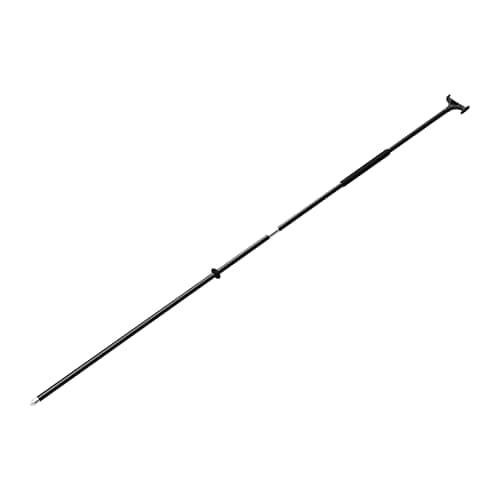
| 1 | Best stake-out pole Pelican Anchor and Push Pole Published at 97.75 in and 1.9 lb in fiberglass, with an anchor pin at one end and a push-pole foot at the other. The cheapest honest answer in the category. | Almost everyone - lakes, flats and creeks under about four feet | $65.99 · Check price on Amazon #ad how this is funded · price as of November 5, 2026 |
| 2 | 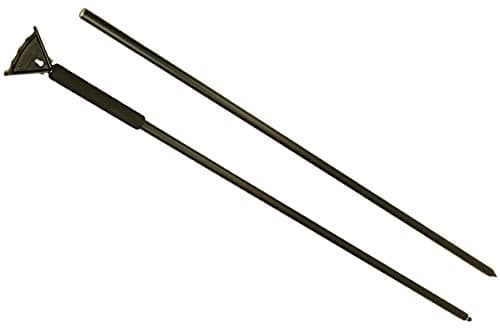 Best two-piece, and the one that grows YakAttack ParkNPole Link 8 ft Stakeout Pole Eight feet in two pieces, and the only pole here that YakAttack publishes as extending - to 12 ft with the 46 in Link extension. | Anyone who car-tops, travels, or is not sure how deep their water really is | $132.95 · Check price on Amazon #ad how this is funded · price as of November 5, 2026 |
| 3 | 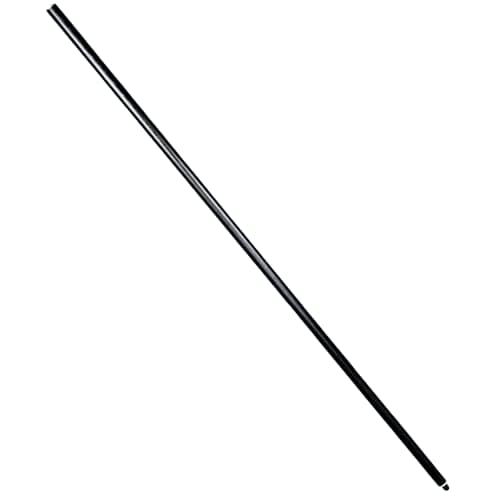 Best upgrade if 8 ft is not enough YakAttack ParkNPole Link 46 in Extension Published at 46 in, taking a ParkNPole Link from 8 ft to 12 ft. Fits the Link only - not the fixed-length poles. | Link owners who found the bottom further away than they expected | $72.95 · Check price on Amazon #ad how this is funded · price as of November 5, 2026 |
| 4 | 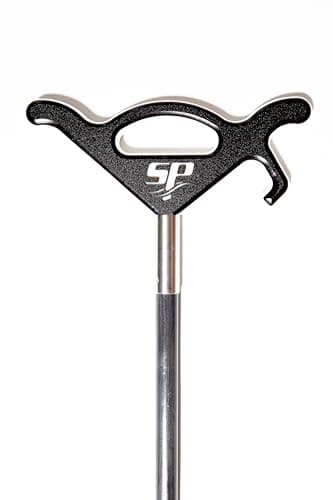 Best for bigger craft and real holding StayPut Anchor Pole Spike (8 ft, Super Handle) Solid resin-injected fiberglass, published in 6, 8, 10 and 12 ft, rated by StayPut for boats up to 24 ft. The serious end of the category. | Heavier kayaks, microskiffs and jon boats, or anyone who stakes out in current | $229.99 · Check price on Amazon #ad how this is funded · price as of November 5, 2026 |
Why a pole beats an anchor in shallow water
This is not a close contest, and it is worth being specific about why, because people buy anchors by default.
It is silent. An anchor goes in with a splash and comes up dragging. A pole goes into the bottom once. In two feet of clear water over a flat, that difference is the difference between fish and no fish.
It is instant, in both directions. Staking out is one push. Releasing is one pull, one-handed, with a rod in the other. An anchor is a rope to pay out, a set to check and a haul to recover, and the fish you saw tailing thirty yards away is gone by the time you finish.
There is no rope. No line across the deck to catch a reel handle, no line in the water to foul, nothing to cut in a hurry. Our kayak safety page is largely a list of things that should not be loose in a cockpit, and an anchor rode is the biggest one.
It doubles as a push pole. Every pole here has a foot as well as a point. Poling is quieter than paddling and keeps you facing forward, which on a flat is worth more than speed.
The catch is the obvious one: a stake-out pole only works where you can reach the bottom. That is the whole decision, and it is the next section.
The sizing rule, which almost everyone gets wrong
Buy roughly twice your usual fishing depth.
A pole has three jobs at once and the length has to cover all of them: reach the bottom, push far enough into it to actually hold, and leave enough above the waterline that you can get a hand on it to pull it out. That last part is what people forget, and it is why "my water is four feet so a four-foot pole" ends with a pole lying on the bottom of the lake.
| Typical depth | Pole length | Where that is |
|---|---|---|
| 1 to 2 ft | 6 ft | Flats, backwaters, creek edges |
| 2 to 4 ft | 8 ft | Most lake and pond fishing. The default. |
| 4 to 6 ft | 10 to 12 ft | Deeper weedlines, tidal flats at mid-water |
| Over about 6 ft | No pole | Anchor and trolley territory |
Eight feet is the right default for most freshwater kayak fishing, which is why it is the length every maker here builds first. If you are between sizes, go longer: a pole too long is slightly awkward on the deck, and a pole too short is useless.
What to look for, in order
1. Length, against your water and not against the price. See above. This is the only decision that cannot be fixed later, unless you buy a pole with a published extension.
2. Whether it floats. You will drop it. A floating base is the difference between an inconvenience and a replacement, and it is the kind of thing only some makers publish.
3. One piece or two. A one-piece pole is stronger and has nothing to work loose. A two-piece fits in a car and can usually be extended. If you car-top your kayak, that is not a close call.
4. Weight, where it is published. This lives on your deck and gets handled one-handed all day. Under two pounds is pleasant; over four is a thing you stop picking up. Note how few makers publish it.
5. Somewhere to put it. The most common complaint about stake-out poles is not the pole, it is that there is nowhere for it to live between uses. Track-mounted pole holders exist for exactly this, and if your kayak has gear track you should budget for one. Our kayak rigging guide covers where on the hull it wants to go.
Stake-out pole, anchor, or power pole
Three ways to stop moving, and they do not overlap as much as people assume.
A stake-out pole is for water you can reach the bottom of, which on a kayak means roughly six feet and under. Silent, instant, nothing in the water but the pole.
An anchor and trolley is for everything deeper, and for holding against current where a pole would simply lever out. It is slower and noisier and needs the trolley to be safe at all — our anchor trolley page explains why a kayak anchored from the side is the one way to roll a stable boat.
A powered shallow-water anchor — the Power-Pole style, deployed with a button — is the same job as a stake-out pole with a motor and a battery. There are kayak-scale versions, and for most people they are a lot of money and complexity to avoid one push of a stick. They are not on this page because the category does not need them.
What this category does not publish
Worth stating plainly, because it shaped which products are here.
Almost nobody publishes a weight. Pelican does: 1.9 lb. Of the rest, YakAttack and StayPut publish construction and length and leave weight out, and retailer listings quote figures that disagree with each other — one popular pole is listed at 4.5 lb by one shop and 2 kg by another, which are roughly the same number but arrived at independently and stated as fact by both.
Nobody publishes holding force. StayPut comes closest with a boat-size rating, up to 24 ft. Everyone else leaves you to infer it from the material.
Shaft diameter is published inconsistently. YakAttack states 0.845 in for its fixed 6 ft pole and nothing for the Link; the others state nothing at all. For a product whose failure mode is snapping, that is the number you would most want.
The practical consequence: compare these on length, material and whether the maker publishes anything at all, and treat any precise weight you see on a retail listing as unverified unless the maker says it too. That is the standard our how we pick page applies across the site.
The budget end, and why nothing from it is featured
There are stake-out poles and anchor pins on the market well under fifty dollars, and several are in stock right now. None is featured here for the usual reason: no reachable manufacturer, no published specification beyond a length in the listing title, and in several cases no brand that exists outside the marketplace.
That is not a claim they are bad. A fiberglass rod with a point on one end is a simple object, and the cheap one probably works. It is a statement that we cannot check them. If budget is the binding constraint, the honest advice is to buy the cheapest pole from a company whose website you can find — which in this category means the Pelican at the top of the page.
So what do I actually buy?
Eight feet unless you know your water is shallower. The Pelican if you want one pole and no decisions, the Link if you car-top or might need twelve feet later, the StayPut if you are staking out something heavier than a kayak.
Pelican Anchor and Push Pole
$65.9997.75 in, 1.9 lb, fiberglass. The cheapest pole here with a real spec sheet.
#ad how this is funded · price as of November 5, 2026
YakAttack ParkNPole Link 8 ft Stakeout Pole
$132.958 ft in two pieces, extends to 12 ft. Floating base, made in the USA.
#ad how this is funded · price as of November 5, 2026
YakAttack ParkNPole Link 46 in Extension
$72.9546 in, 8 ft to 12 ft. Fits the Link only - check before you buy.
#ad how this is funded · price as of November 5, 2026
StayPut Anchor Pole Spike (8 ft, Super Handle)
$229.99Solid resin-injected fiberglass, rated to 24 ft boats. The one for current.
#ad how this is funded · price as of November 5, 2026
The picks, in full
Every card below lists the specs we could read off a published page, the URL they came from, and one honest reason you might not want it.
1. Best stake-out pole
Pelican Anchor and Push Pole
Pelican
Published at 97.75 in and 1.9 lb in fiberglass, with an anchor pin at one end and a push-pole foot at the other. The cheapest honest answer in the category.
Pelican publishes this one properly, which is rarer in this category than it should be: 97.75 in long, 1.9 lb, fiberglass shaft, SKU PS3056-00. That length is worth reading carefully — it is 8 ft 1.75 in, not the round eight feet the retail listings round it to, and in this category an extra two inches is two inches you will use.
Under two pounds matters more than it sounds. A stake-out pole lives on your deck for the whole trip and gets picked up one-handed, often while the other hand holds a rod. A heavy pole is a pole you stop bothering with, and the difference between 1.9 lb and four-and-a-half is the difference between a tool and a chore.
The dual-ended design is the standard shape for the category: a pin at one end that goes into sand, mud or weed, and a wider foot at the other so you can push off without burying it. That second use is underrated. Poling across a flat is quieter than paddling, and quiet is most of what you are buying when you fish skinny water at all — the same argument our kayak starter guide makes about why a kayak gets you fish a boat cannot.
At the price, it is the pole to buy first and find out whether you actually use one. Plenty of people buy a stake-out pole, discover their water is deeper than they thought, and never touch it again.
The drawback
Pelican publishes a length, a weight and a width and not much else - no shaft diameter, no pin dimensions, no stated holding capability, so you are comparing it on two numbers rather than five. Fiberglass at this price is also the part people break: used at an angle, as a lever rather than a spike, this is the category and the price point where poles snap. And 8 ft 1.75 in is a genuinely awkward object to car-top or store, with no two-piece option in the range.
Published specs
- SKU
- PS3056-00
- Length
- 97.75 in (248.29 cm), which is 8 ft 1.75 in rather than a round 8 ft
- Weight
- 1.9 lb (0.86 kg)
- Width
- 5.25 in (13.34 cm)
- Shaft
- Fiberglass
- Uses
- Shallow-water anchor pin and push pole
- MSRP
- $65.99 on Pelican's own store
Specs read from Pelican - Anchor and Push Pole (PS3056-00).
#ad how this is funded · price as of November 5, 2026
2. Best two-piece, and the one that grows
YakAttack ParkNPole Link 8 ft Stakeout Pole
YakAttack
Eight feet in two pieces, and the only pole here that YakAttack publishes as extending - to 12 ft with the 46 in Link extension.
The ParkNPole is the reference product in this category, and the Link is the version worth understanding. It is eight feet in two pieces, which solves the storage problem every one-piece pole on this page has, and it is the only one with a published upgrade path: YakAttack states the PNPL-XT46 extension takes the Link from 8 ft to 12 ft.
That matters because the most common mistake in this category is buying short. You cannot lengthen a fixed pole, and twelve feet of reach covers water almost nobody stakes out in. Buying the Link is buying the option.
YakAttack publishes the ParkNPole line as a fiberglass body with a floating base and a UV-stable, wear-resistant nylon foot and tip — a foot for paddling, a tip for staking into the bottom. The floating base is the detail that reads as marketing and is not: a pole that sinks when you drop it is a pole you buy twice, and you will drop it.
It is made in the USA and carries YakAttack's Built for Life Guarantee, the same cover as the trolleys on our anchor trolley page. For a product whose failure mode is snapping under side load, a lifetime guarantee is worth more than a spec line.
The drawback
It is roughly twice the price of the Pelican for the same eight feet, and the extension that justifies the Link format is another purchase on top. YakAttack's own site is also the thinnest source here for this exact model: it publishes a page for the fixed 6 ft ParkNPole and one for the 46 in extension, but not for the Link itself, so the 0.845 in tubing figure below belongs to the 6 ft and we have not assumed it carries over. Two pieces also means a joint, and a joint is the thing that works loose in sand.
Published specs
- Length
- 8 ft, in two pieces
- Extends to
- 12 ft with the PNPL-XT46 extension. YakAttack publishes this for the Link only - the extension does not fit the fixed-length 3, 6 or 8 ft ParkNPole
- Uses
- Stakeout pole and push pole
- Construction
- YakAttack publishes the ParkNPole line as a fiberglass body with a floating base and a UV-stable, wear-resistant nylon foot and tip - a foot for paddling, a tip for staking into the bottom
- Tubing diameter
- YakAttack publishes 0.845 in for the fixed 6 ft ParkNPole. It does not publish a separate figure for the Link
- Made in
- USA
- Warranty
- YakAttack Built for Life Guarantee
Specs read from YakAttack - ParkNPole Link 46 in Extension (PNPL-XT46).
#ad how this is funded · price as of November 5, 2026
3. Best upgrade if 8 ft is not enough
YakAttack ParkNPole Link 46 in Extension
YakAttack
Published at 46 in, taking a ParkNPole Link from 8 ft to 12 ft. Fits the Link only - not the fixed-length poles.
This is the piece that makes the Link format worth the premium, and it is listed separately here because the compatibility rule catches people out. YakAttack is explicit: it works with the ParkNPole Link and does not work with the fixed-length 3, 6 or 8 ft ParkNPole. Buying a fixed pole and this extension gets you two things that do not join.
Forty-six inches takes an eight-foot pole to twelve. That is a bigger jump than it sounds: twelve feet is tidal-flat and deep-weedline territory, water where most people would reach for an anchor, and it means one pole covers your whole range rather than the shallow end of it.
The honest way to use this pick is as a second purchase. Buy the Link, fish it for a season, and add the extension only if you keep finding the bottom too far down. Most people in lakes and creeks never will.
The drawback
It is an accessory at the price of a whole budget pole, and it is useless on its own or on the wrong pole - the compatibility restriction is narrow and strictly enforced by the hardware. Stock was also thin when this page was written, in single figures, which is worth knowing before you plan a build around it. And every extra joint in a pole you lever against the bottom is another place for grit to get in.
Published specs
- SKU
- PNPL-XT46
- Length added
- 46 in
- Takes the Link from
- 8 ft to 12 ft
- Compatibility
- The ParkNPole Link only. YakAttack states it does not work with the fixed-length 3, 6 or 8 ft ParkNPole
- MSRP
- $67.00
- Made in
- USA
- Warranty
- YakAttack Built for Life Guarantee
Specs read from YakAttack - ParkNPole Link 46 in Extension (PNPL-XT46).
#ad how this is funded · price as of November 5, 2026
4. Best for bigger craft and real holding
StayPut Anchor Pole Spike (8 ft, Super Handle)
StayPut Anchor
Solid resin-injected fiberglass, published in 6, 8, 10 and 12 ft, rated by StayPut for boats up to 24 ft. The serious end of the category.
StayPut is the only maker here that publishes what its pole is rated for: boats up to 24 ft, across kayaks, paddleboards, microskiffs, skiffs and jon boats. Every other pole on this page tells you how long it is and leaves holding capability to your judgment.
The construction is the reason. StayPut publishes this as solid, resin-injected fiberglass — solid, not tube, which is the difference between a pole that flexes and one that does not, and the reason this is the one to buy if you stake out in moving water rather than still.
It is also properly modular. StayPut publishes a 6, 8, 10 and 12 ft range, and builds the longer ones from an 8 ft base plus a 2 or 4 ft extension through a female coupling, so the 8 ft here is the base of a system rather than a dead end. The Super Handle on this listing is StayPut's upgraded grip, sold on its own site as a $50 option over the standard rubber handle.
The drawback
It is three and a half times the price of the Pelican, and the listing here is the upgraded-handle version, so some of that gap is a grip rather than a pole. Mount and extensions are sold separately and StayPut's own ecosystem of bow, stern and transom mounts is clearly designed to be bought into rather than sampled. Solid fiberglass is also heavier than tube - StayPut does not publish a weight, which on a kayak is the number you would most want.
Published specs
- Length
- 8 ft. StayPut publishes the line in 6, 8, 10 and 12 ft
- Material
- Solid, resin-injected fiberglass
- Handle
- Super Handle, which StayPut sells as a $50 upgrade over its standard rubber handle
- Modularity
- Female coupling for optional extensions. StayPut builds its 10 ft from an 8 ft base plus a 2 ft extension and its 12 ft from an 8 ft base plus a 4 ft extension
- Rated for
- Boats up to 24 ft, per StayPut
- Craft
- Kayaks, paddleboards, microskiffs, skiffs and jon boats
- Not included
- Mount and extensions are sold separately
Specs read from StayPut Anchor - Pole Spike.
#ad how this is funded · price as of November 5, 2026
Questions people actually ask
What length stake-out pole do I need for a kayak?
Roughly twice your usual fishing depth. The pole has to reach the bottom, push far enough in to hold, and still leave you something to grab above the water. For most freshwater kayak fishing in two to four feet, 8 ft is the right default - which is why every maker builds that length first. If you are between sizes, go longer.
Is a stake-out pole better than an anchor for a kayak?
In water you can reach the bottom of, yes, on every axis: it is silent, it stakes and releases in one movement with one hand, and there is no rope in the boat to foul or cut. Deeper than about six feet it stops being an option and you want an anchor and an anchor trolley instead.
Can you use a stake-out pole as a push pole?
That is what the second end is for. Every pole here has a point at one end for staking and a wider foot at the other for pushing off without burying it. Poling is quieter than paddling and keeps you facing the direction you are fishing, which on a shallow flat is worth more than speed.
Will a stake-out pole hold in current?
A solid pole in a firm bottom will hold a kayak in light current; moving water levers against the whole length of the hull and the pole takes that load sideways. StayPut is the only maker here that publishes a rating - boats up to 24 ft - and its solid resin-injected fiberglass is the construction to look for if current is normal for you. In real flow, drifting or an anchor off the bow is safer.
Does a stake-out pole float?
Some do and some do not, and it is worth checking before you buy because you will drop it. YakAttack publishes a floating base on the ParkNPole line. Several makers say nothing either way, which in practice means assume it sinks and leash it.
What is the difference between the ParkNPole and the ParkNPole Link?
The Link is the two-piece version, and it is the only one YakAttack publishes as extendable - the 46 in PNPL-XT46 extension takes it from 8 ft to 12 ft. YakAttack states that extension does not fit the fixed-length 3, 6 or 8 ft ParkNPole, so if you want the option of more reach later, the Link is the one to buy.
Where do you store a stake-out pole on a kayak?
This is the most common complaint about owning one, and it is a rigging problem rather than a pole problem. Track-mounted pole holders exist for exactly this and are cheap next to the pole. If your kayak has gear track, budget for one at the same time.
Read next
Sources
Prices on this page come from the retailer at request time and change without notice. If we cannot get a live one we say “check price” rather than show you a number that has gone stale. How we pick.