Reels
Left or right hand retrieve: the decision nobody explains before you buy
One format lets you change your mind in ten seconds. The other locks it in at the checkout.
By Sawyer V. · Last updated · How we pick
The short answer
A spinning reel handle swaps sides in about ten seconds, so it is not a purchase decision. A baitcaster is built for one hand and cannot be changed. The principle worth following: your dominant hand should hold the rod, because that is the hand that sets hooks and works lures.
Reel & Rig earns a commission from qualifying purchases made through links on this page, at no extra cost to you. It does not change which gear we pick or what we say about it. Full disclosure.
The one rule
Your dominant hand should be on the rod, not on the handle.
Reeling is a simple, repetitive motion that either hand learns in an afternoon. Working a lure, setting a hook and controlling a fish are skilled movements that benefit from your better hand.
A right-handed angler should therefore hold the rod in the right hand and reel with the left. That means buying a left-hand-retrieve reel.
The catch is that a great many right-handed anglers do the opposite, for reasons that are historical rather than sound.
Why the two formats have opposite conventions
| Spinning | Baitcasting | |
|---|---|---|
| Default retrieve | Usually left, and reversible | Right hand is the common default |
| Changeable? | Yes, in seconds | No |
| Result for a right-hander | Rod in right hand - correct | Cast right, swap hands, reel right |
Spinning reels get it right by default. The handle is reversible and the common out-of-the-box setup already puts the rod in a right-hander’s dominant hand.
Baitcasters historically shipped right-hand retrieve, which forces a right-handed angler to cast with the right hand, transfer the rod to the left, and reel with the right. That hand-swap after every cast is a real inefficiency, and it is why left-hand-retrieve baitcasters have become steadily more common.
Changing a spinning reel handle
Ten seconds, no tools on most reels, and worth knowing because plenty of people do not realize it is possible.
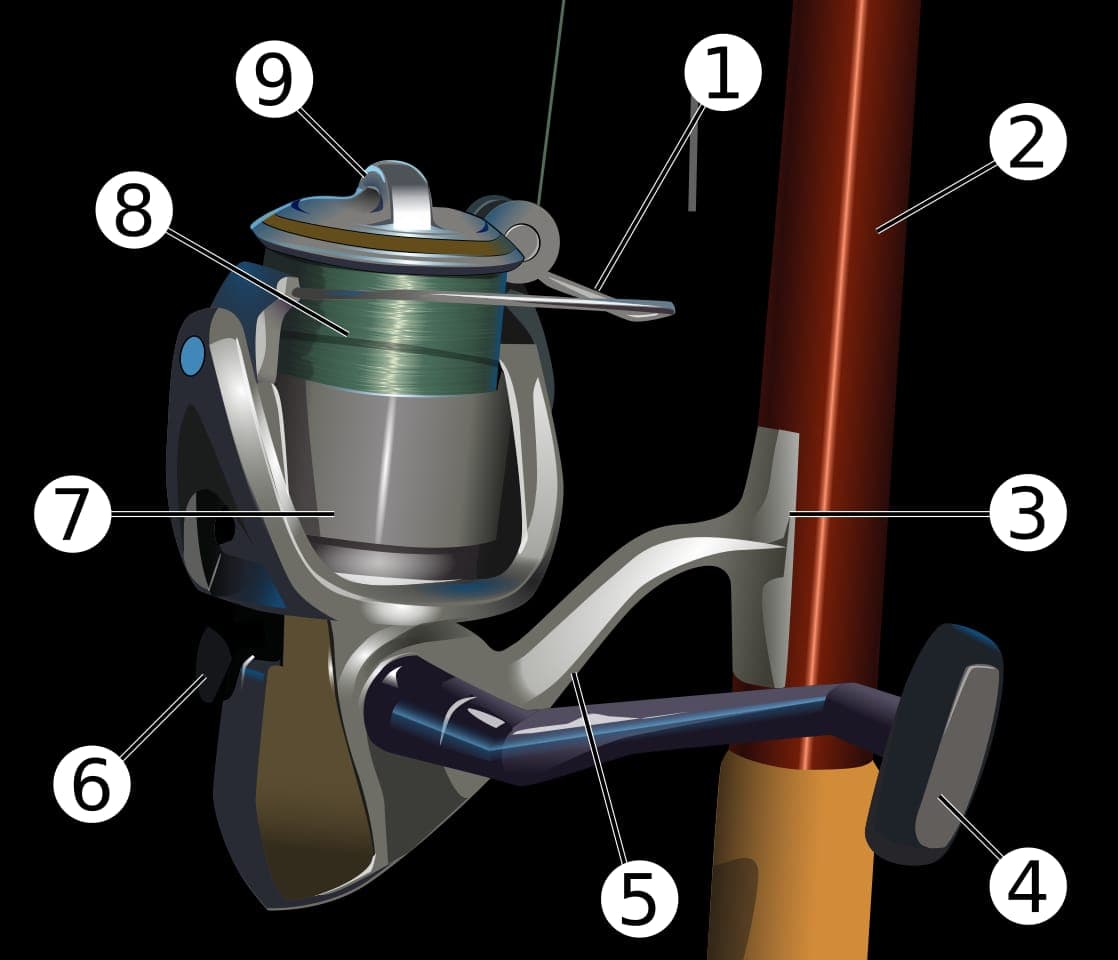
Unscrew the handle. On the opposite side of the reel body there is a cap; unscrew that too. Push the handle through from the other side and screw it in. Screw the cap onto the side the handle came from.
Both the Zebco 33 and most spinning reels on this site publish reversible retrieve as a feature, and it is genuinely the reason the format is easy to recommend.
What actually matters in practice
Not having to swap hands after every cast. The transfer costs a second and it happens hundreds of times a day. More importantly, a fish that hits immediately on the drop catches you mid-transfer with the rod in neither hand properly.
Working a lure with your better hand. Techniques that live in the rod tip — jerkbaits, Ned rigs, walking baits — are noticeably better with the dominant hand on the rod.
Hooksets. A sweep with your strong arm is more controlled.
Not fighting a fish one-handed on your weak side. Under load, holding the rod in your weaker hand for several minutes is tiring in a way it is not on a short fight.
If you already do it the other way
Plenty of very good anglers cast right and reel right. If you have fished that way for years, the honest answer is that switching costs you a season of feeling clumsy for a marginal gain.
Where it is worth switching: if you are buying your first baitcaster, or if you are teaching someone from scratch. Setting the habit correctly at the start costs nothing; changing it later costs real time.
Where it is not: if you are comfortable, catching fish and not thinking about it.
Buying advice by format
Spinning: ignore it entirely. Buy the reel you want and set the handle to whichever side you prefer in the car park. This is one of the quiet advantages of the format that our comparison page does not otherwise dwell on.
Baitcasting: decide before you buy, because you cannot change it. For a right-handed angler buying a first baitcaster, a left-hand-retrieve model is usually the better choice — it removes the hand-swap entirely and matches how you already use a spinning reel.
Check the model code. Manufacturers commonly append an L for left-hand retrieve, and it is easy to miss when ordering.
Spincast: the Zebco 33 publishes a changeable right-or-left-hand retrieve, so the same answer applies as for spinning. Our spincast page covers the format.
Left-handed anglers
The same rule, mirrored: rod in the left hand, reel with the right. That means a right-hand-retrieve reel, which for baitcasters is the more widely available option and for spinning reels is a ten-second change.
It is one of the few situations in fishing where being left-handed is an advantage in availability rather than a disadvantage.
So what do I actually buy?
For spinning gear this is not a purchase decision at all. For a baitcaster it is permanent, so decide before the checkout.
Pflueger President Spinning Reel (30X)
$62.45Like most spinning reels, the handle swaps sides in seconds with no tools.
#ad how this is funded · price as of October 12, 2026
Abu Garcia Max5 X Casting Reel
$105.00A baitcaster is built for one hand — check the model code for an L before ordering.
#ad how this is funded · price as of October 12, 2026
Zebco 33 Spincast Reel
$22.39Publishes a changeable right-or-left-hand retrieve, which is unusual for a spincast reel.
#ad how this is funded · price as of October 12, 2026
Questions people actually ask
Should you reel with your dominant hand?
No — your dominant hand should hold the rod. Reeling is a simple repetitive motion either hand learns quickly, while working a lure, setting a hook and controlling a fish are skilled movements.
Can you change which side a spinning reel handle is on?
Yes, in about ten seconds and usually with no tools. Unscrew the handle, unscrew the cap on the opposite side, push the handle through and swap the cap over.
Should a right-handed angler buy a left-hand baitcaster?
Usually yes, for a first baitcaster. It removes the hand-swap after every cast and matches how you already hold a spinning reel. Check for an L in the model code — it is easy to miss.
Is it worth switching retrieve hands after years of fishing?
Only if you are buying your first baitcaster or teaching someone new. If you are comfortable and catching fish, switching costs a season of feeling clumsy for a marginal gain.
Read next
Prices on this page come from the retailer at request time and change without notice. If we cannot get a live one we say “check price” rather than show you a number that has gone stale. How we pick.