Setups
Fishing gear brands: judge them by what they are willing to publish
Reputation is unfalsifiable. Published specifications are not, and the gap between brands is bigger than the gap between their products.
By Sawyer V. · Last updated · How we pick
The short answer
The most useful thing you can know about a fishing brand is which numbers it prints. A maker that publishes line ratings, lure ratings, retrieve rates and capacities is one you can check; a maker that publishes adjectives is one you cannot. On that test, Ugly Stik, Pflueger, Daiwa, Strike King, Garmin and Plano are the six a first real setup can be built from with confidence.
Reel & Rig earns a commission from qualifying purchases made through links on this page, at no extra cost to you. It does not change which gear we pick or what we say about it. Full disclosure.
Quick picks
| # | Product | Best for | Price |
|---|---|---|---|
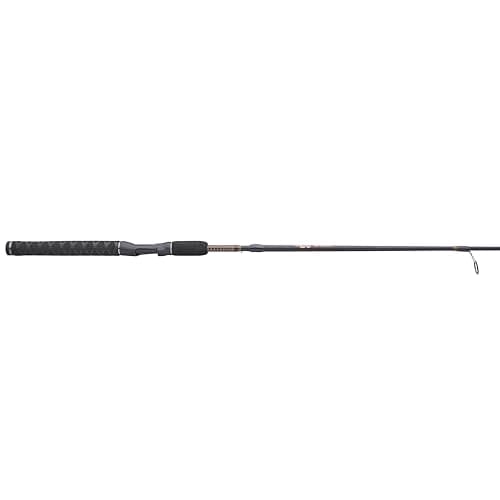
| 1 | Best for range and durability Ugly Stik GX2 Spinning Rod (7' Medium, 4-piece) Publishes model codes, length, power, pieces, line and lure ratings across an unusually wide range. | A first rod, and anyone who transports gear badly | $59.95 · Check price on Amazon #ad how this is funded · price as of October 12, 2026 |
| 2 | 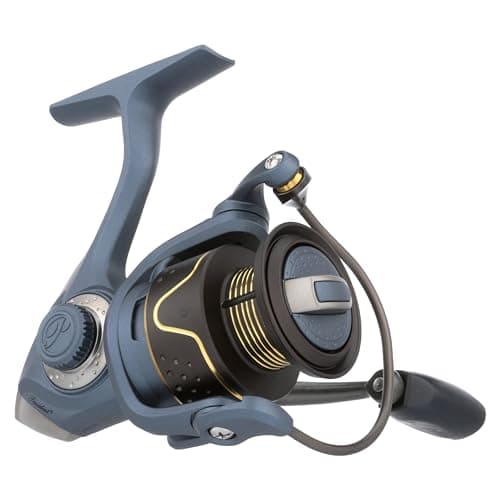 Best published reel numbers Pflueger President Spinning Reel (30X) Publishes line capacity, retrieve rate in inches per turn, gear ratio, bearing count and weight together. | Anyone comparing reels on figures rather than feel | $62.45 · Check price on Amazon #ad how this is funded · price as of October 12, 2026 |
| 3 | No photo Best capacity for the money Daiwa BG Spinning Reel (BG2500) Publishes capacity, ratio and retrieve rate, on a metal-bodied reel at an entry price. | Anyone who needs line capacity rather than light weight | |
| 4 | 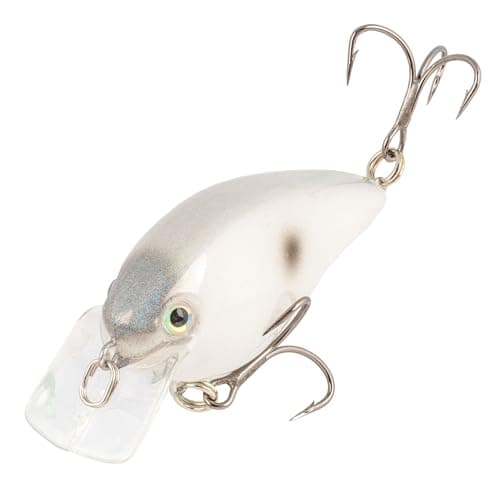 Best lure specifications Strike King KVD 1.5 HC Squarebill Silent Crankbait Publishes length, weight and running depth on hard baits, which most lure makers do not. | Anyone who wants to know how deep a lure runs before buying it | $11.99 · Check price on Amazon #ad how this is funded · price as of October 12, 2026 |
| 5 | 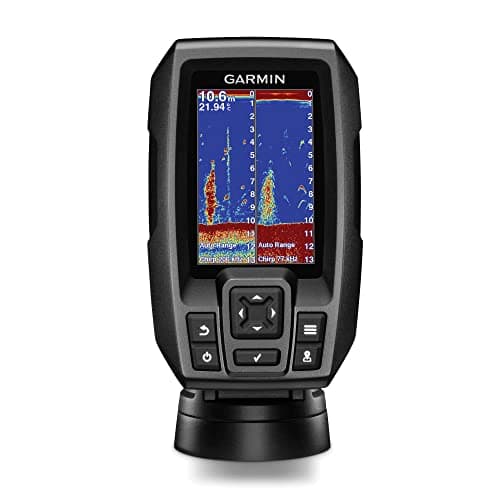 Best entry electronics Garmin STRIKER 4 Publishes screen size, resolution, transducer frequencies, cone angles and depth capability. | A first fish finder on a small boat or kayak | $139.99 · Check price on Amazon #ad how this is funded · price as of October 12, 2026 |
| 6 | 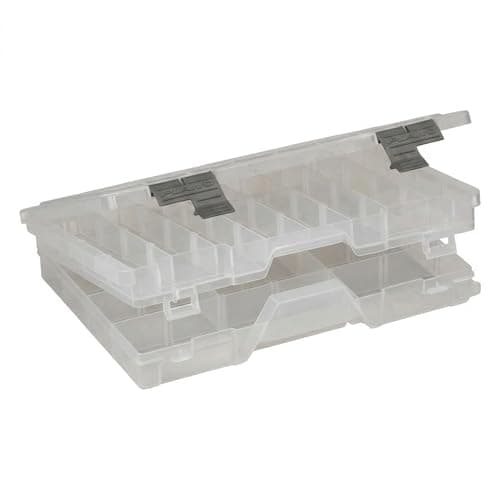 Best storage standardization Plano Guide Series Two-Tier StowAway 3700 Publishes exact box dimensions and compartment counts, and builds to the industry-standard footprints. | Anyone building a tackle system rather than buying one box | $15.99 · Check price on Amazon #ad how this is funded · price as of October 12, 2026 |
Why brand reputation is a bad buying criterion
Ask which fishing brand is best and you will get answers that cannot be checked. A brand is “bombproof”, or “overpriced”, or “not what it used to be”. None of those statements has a number attached, and none of them can be wrong.
There is a more useful question, and it is answerable: which numbers does this brand print?
A maker that publishes line ratings, lure ratings, capacities in yards, retrieve in inches per turn, cone angles in degrees and box dimensions in inches is a maker whose claims you can check against the gear you already own. A maker that publishes “incredible sensitivity” and “smooth drag” is asking you to take its word.
That is the test this page applies, because it is the only one available to a buyer who cannot handle every product first. It is also the test the whole site runs on: every figure we quote came off a published page and carries the URL it came from.
The criteria, in the order they matter
| Criterion | What good looks like | Why it matters |
|---|---|---|
| Published specs | Numbers with units, per model | You can match gear to gear before buying |
| Model codes | A code on every variant | You can buy the exact thing you researched |
| Range depth | Several powers, sizes or weights | You can stay in one system as you learn |
| Availability | Stocked widely, current models | A discontinued bargain is not a bargain |
| Parts and warranty | Stated terms, obtainable spares | Guides, bails and inserts all fail eventually |
| Consistency | The same figures across the range | You can compare within the brand, not just across |
Note what is absent from that list: heritage, sponsorship, pro-staff endorsements and how long the company has existed. None of them predicts whether the rod in your hand matches the lures in your box.
What the six brands publish, side by side
| Brand | Category | Publishes | Notable gap |
|---|---|---|---|
| Ugly Stik | Rods and combos | Model code, length, power, pieces, line and lure ratings | Rod weight |
| Pflueger | Reels | Capacity, ratio, inches per turn, bearings, weight | Maximum drag |
| Daiwa | Reels | Capacity, ratio, inches per turn, body material | Range guidance |
| Strike King | Lures | Length, weight, running depth | Hook size, pack quantity |
| Garmin | Electronics | Screen, frequencies, cone angles, depth capability | Current draw |
| Plano | Storage | Dimensions, compartment counts, footprint | Rod capacity, empty weight |
Every brand in that table has a gap, and we have listed it. A brand with no gap does not exist, and any page claiming otherwise has not looked.
The brands that publish least
It is worth naming the pattern rather than only the winners, because it repeats across categories.
Apparel is the weakest category for published data by a wide margin. Wader and boot makers publish ply counts and neoprene thicknesses, which is genuinely useful, but almost none publish garment weight, breathability ratings or hydrostatic head — the three figures that would let you rank two pairs objectively. Our chest waders page says so explicitly rather than filling the gap with adjectives.
Fly reels are close behind. Arbor size and backing capacity are usually published; start-up inertia, the property that actually breaks fine tippet, almost never is.
Terminal tackle publishes least of all. Hook makers rarely publish gap measurements, and float makers rarely publish weight-carrying capacity, which is why our hooks page tells you to hold the hook against the bait rather than trust the size number.
None of that means those products are bad. It means the honest way to write about them is to state what is known, state what is not, and stop.
Building one setup from these brands
A practical consequence of the criteria above: you can assemble a complete, checkable freshwater setup from four of these six brands, and every number in it can be verified against every other.
A 7 ft Ugly Stik Medium rated 6–15 lb and 1/8–5/8 oz. A Pflueger President 30X holding 130 yd of 8 lb. Ten-pound monofilament that sits in the middle of the rod’s rating. A Strike King squarebill at 3/8 oz, comfortably inside the rod’s casting window. A Plano 3700 box to hold it.
Every one of those numbers came off a published page, and every one of them agrees with the others. That is the point of buying from brands that publish — not that they are better in some abstract sense, but that you can prove the parts fit before you spend anything.
Our complete bass setup builds exactly that stack with the arithmetic shown, and the setup under $200 does the same against a budget.
Where brand genuinely stops mattering
Three categories where we would not choose on brand at all.
Line. The published diameter chart is the product. Power Pro and Sufix 832 both list 30 lb braid at 0.011 in, and at that point you are choosing between two verified-identical diameters on other grounds. Our braid page compares them directly.
Terminal tackle. Hooks, swivels, split shot and beads are commodities. Sharpness is a consumable property rather than a brand property, and any hook is dull after enough rocks.
Soft plastics. Shape, salt content and color matter; the name on the bag is a long way behind. Buy the profile the technique needs.
How to check a brand yourself
The method takes two minutes and works on any product in any category.
1. Open the manufacturer page, not the retailer page. Retailers copy marketing text; manufacturers publish spec tables.
2. Look for a table of numbers with units. If the page is entirely prose, that is your answer.
3. Check whether every variant has its own row. One spec block covering twelve models means the numbers are approximate at best.
4. Write down what is missing. Then decide whether you can live without it. A missing rod weight is survivable; a missing lure rating is not, because the rating is a hard constraint rather than guidance.
5. Compare against the gear you already own. A brand is only useful to you if its numbers connect to your numbers.
If you would rather start from the gear than the brand, our rod buying guide and beginner reel roundup both start from the fishing and work back.
So what do I actually buy?
These six are not the only good brands. They are the six whose published figures let you check the parts against each other before you buy, which for a first real setup is worth more than any reputation.
Ugly Stik GX2 Spinning Rod (7' Medium, 4-piece)
$59.957 ft Medium, 6-15 lb, 1/8-5/8 oz. Twenty models published by code across the range.
#ad how this is funded · price as of October 12, 2026
Pflueger President Spinning Reel (30X)
$62.45145 yd of 6 lb, 25.3 in per turn, 5.2:1, 8.8 oz. The full set of comparable reel figures.
#ad how this is funded · price as of October 12, 2026
Daiwa BG Spinning Reel (BG2500)
Check price210 yd of 6 lb and 33.2 in per turn — 45% more capacity than the President 30X.
Strike King KVD 1.5 HC Squarebill Silent Crankbait
$11.992.5 in, 3/8 oz, published at 3 ft. Running depth printed on the box.
#ad how this is funded · price as of October 12, 2026
Garmin STRIKER 4
$139.99Entry sonar with published frequencies, cone angles and depth capability.
#ad how this is funded · price as of October 12, 2026
Plano Guide Series Two-Tier StowAway 3700
$15.9914 x 9 x 2.75 in, 13-45 compartments. The 3700 footprint everything else fits.
#ad how this is funded · price as of October 12, 2026
The picks, in full
Every card below lists the specs we could read off a published page, the URL they came from, and one honest reason you might not want it.
1. Best for range and durability
Ugly Stik GX2 Spinning Rod (7' Medium, 4-piece)
Ugly Stik
Publishes model codes, length, power, pieces, line and lure ratings across an unusually wide range.
Ugly Stik publishes more of its range in checkable detail than any other brand on this site. The GX2 spinning table alone lists twenty models by code, each with length, power, pieces, line rating and lure rating — from a 4 ft 6 in Ultra Light at 2–6 lb through to a 9 ft Medium.
That matters more than it sounds. It means you can pick a rod against the lures you actually own rather than against a shop assistant’s opinion, which is the whole argument of our rod power and action page.
The construction is consistent across the range and consistently stated: Ugly Tech graphite-and-fiberglass blanks, PVD-coated Ugly Tuff one-piece stainless guides, and the Clear Tip design. One-piece guides matter because there is no ceramic insert to crack, which is the failure mode our rod guides page covers.
The fiberglass content is why these rods survive car doors. Glass bends considerably further than carbon before it fails, and most rods break in transit rather than on fish.
The drawback
Ugly Stik does not publish rod weights anywhere in the ranges we cite, and weight is the single property that most separates their rods from lighter carbon blanks — so the figure that would justify stepping up from a GX2 to an Elite or a Carbon is the one figure you cannot look up. The composite blanks are also genuinely heavy and less sensitive than carbon at the same price from other makers.
Published specs
- Model
- USGXSP704M
- Length
- 7 ft
- Power
- Medium
- Pieces
- 4
- Line rating
- 6-15 lb
- Lure rating
- 1/8-5/8 oz
- Blank
- Ugly Tech graphite + fiberglass, Clear Tip
- Guides
- 6, PVD-coated Ugly Tuff one-piece stainless
- Reel seat
- Ergonomic, with exposed blank
- Assembly
- Alignment markings printed on the ferrules
- Handle
- Shrink tube EVA
- Warranty
- 10 years
Specs read from Ugly Stik GX2 Spinning Rod product page.
#ad how this is funded · price as of October 12, 2026
2. Best published reel numbers
Pflueger President Spinning Reel (30X)
Pflueger
Publishes line capacity, retrieve rate in inches per turn, gear ratio, bearing count and weight together.
Pflueger publishes the set of reel figures that actually let you compare. The President 30X is listed at 145 yd of 6 lb capacity, 25.3 in retrieved per turn, a 5.2:1 ratio and 8.8 oz.
The inches-per-turn figure is the one to notice, because gear ratio alone does not tell you retrieve speed — spool diameter matters as much. A brand that publishes both is a brand you can hold to its claims, which our gear ratio page works through in detail.
Capacity published in yards at a specific test is the other useful habit. It lets you check a reel against the line rating printed on a rod instead of trusting that a “2500” and a “30” are comparable, which our reel size page shows they are not.
The drawback
Pflueger does not publish a maximum drag figure on the President pages we cite, and drag is the component you feel on every fish — so the number most worth knowing is absent. Their size naming also follows its own scheme (30X, 25X) rather than the 2500/3000 convention most brands use, which makes cross-brand comparison slower than it should be.
Published specs
- Gear ratio
- 5.2:1
- Bearings
- 10 stainless + 1 roller
- Weight
- 8.8 oz
- Line capacity
- 6 lb / 145 yd, 8 lb / 130 yd
- Retrieve per turn
- 25.3 in
- Body
- Graphite body and rotor
- Spool
- Aluminum, braid ready
Specs read from Tackle Warehouse — Pflueger President Spinning Reels.
#ad how this is funded · price as of October 12, 2026
3. Best capacity for the money
Daiwa BG Spinning Reel (BG2500)
Daiwa
Publishes capacity, ratio and retrieve rate, on a metal-bodied reel at an entry price.
The BG2500 is published at 210 yd of 6 lb with a 5.6:1 ratio and 33.2 in per turn. Put beside the Pflueger President 30X at 145 yd and 25.3 in, the difference is stark — roughly 45% more line and about 30% more retrieve per crank.
That comparison only exists because both brands publish the same figures in the same units. It is the clearest example on this site of why published specs beat reputation: two reels described identically in prose turn out to differ substantially in fact.
Daiwa also publishes body material, and a metal body at this price is a genuine structural difference rather than a finish. It resists flex under drag pressure, which is what keeps gears meshing properly on a hard-running fish.
The drawback
The capacity comes with weight, and the BG line is noticeably heavier than a comparable Pflueger — which you feel across a full day of casting rather than during a fight. Daiwa's US range is also broad enough to be confusing, with several overlapping families at similar prices and no clear published guidance on which is intended for whom.
Published specs
- Gear ratio
- 5.6:1
- Bearings
- 6 ball + 1 roller
- Weight
- 9.3 oz
- Line capacity
- 6 lb / 210 yd, 8 lb / 170 yd
- Retrieve per turn
- 33.2 in
- Body
- Hard Bodyz body and side cover, Air Rotor
- Spool
- Dynamic Cut aluminum ABS
- Drag
- Carbon ATD, waterproof
Specs read from Tackle Warehouse — Daiwa BG Spinning Reels.
4. Best lure specifications
Strike King KVD 1.5 HC Squarebill Silent Crankbait
Strike King
Publishes length, weight and running depth on hard baits, which most lure makers do not.
Strike King publishes running depth on its crankbaits, and that single habit is unusually useful. The KVD 1.5 HC Squarebill is listed at 2.5 in, 3/8 oz and 3 ft; the Pro Model 5XD at the same 2.5 in body, 5/8 oz and 15 ft.
Identical body length, a twelve-foot difference in depth. That comparison tells you the bill sets the depth, and it is only available because the brand prints the number. Our crankbaits page is built on exactly that pair.
The range is deep enough to cover most freshwater lure categories without leaving the brand — squarebills, deep divers, spinnerbaits, jig heads and soft plastics all appear in our registry with published figures.
The drawback
Strike King does not publish hook sizes on any of the lure pages we cite, and on a treble-hooked bait the hook is the component most likely to be replaced first — so the figure you need in order to buy spares is missing. They also do not publish pack quantities consistently across soft plastics, which makes cost per bait impossible to work out before purchase.
Published specs
- Length
- 2-1/4 in
- Weight
- 3/8 oz
- Running depth
- 3-6 ft
- Rattle
- None — silent
- Lip
- Square bill, deflection design
Specs read from Tackle Warehouse — Strike King KVD 1.5 HC Squarebill Silent Crankbait.
#ad how this is funded · price as of October 12, 2026
5. Best entry electronics
Garmin STRIKER 4
Garmin
Publishes screen size, resolution, transducer frequencies, cone angles and depth capability.
Electronics is the category where published specs matter most, because nothing about a sonar unit can be judged by handling it in a shop. Garmin publishes the figures that decide whether a unit suits your water: screen size and resolution, transducer frequencies, cone angles and depth capability.
Cone angle is the one most buyers overlook and the one that changes what you see. A wide cone covers far more water at a given depth than a narrow one, and in shallow freshwater that difference is larger than any screen-size upgrade. Our sonar types page works the geometry through.
The STRIKER range is also honest about what it is: no charts, no networking, sonar and basic GPS. For a first unit that is the right scope, and it is easier to buy well than a range full of overlapping trims.
The drawback
Garmin does not publish current draw on the entry STRIKER pages we cite, which is the figure you need in order to size a battery — as our battery guide notes, that gap forces you to buy with margin rather than to calculate. Their model naming also changes between generations in ways that make older reviews hard to map onto current products.
Published specs
- Display
- 3.5 in color
- Transducer
- Dual-beam CHIRP, 77/200 kHz, transom + trolling motor mounts
- Transmit power
- 200 W RMS / 1,600 W peak-to-peak
- GPS
- Built-in high-sensitivity, waypoint map
- Extras
- Built-in flasher, sonar history rewind, speed
Specs read from Fish307 — Garmin STRIKER 4 FishFinder with 77/200 kHz transducer.
#ad how this is funded · price as of October 12, 2026
6. Best storage standardization
Plano Guide Series Two-Tier StowAway 3700
Plano
Publishes exact box dimensions and compartment counts, and builds to the industry-standard footprints.
Plano publishes box dimensions to the tenth of an inch and states compartment counts. The Guide Series Two-Tier StowAway is listed at 14 × 9 × 2.75 in with thirteen to forty-five compartments.
Dimensions matter here more than in any other category, because storage is a system rather than a product. A box that is 3700-footprint fits bags, boat hatches, kayak crates and rack systems from other makers. Our tackle organization page argues for standardizing on one footprint precisely because that interoperability is published.
The range spans utility boxes, shoulder bags and rod tubes on the same logic, which makes it possible to grow a storage system incrementally rather than replacing it.
The drawback
Plano does not publish rod capacity for its rod tubes, or empty weights for its bags — so on the two products where you most want to know what fits and what it costs you to carry, the figures are absent. The soft bags also publish denier ratings inconsistently, which makes durability comparisons across their own range harder than it should be.
Published specs
- Exterior
- 14 x 9 x 2.75 in
- Footprint
- Classic 3700
- Compartments
- 13 to 45, adjustable
- Design
- Two tiers, independent latches
Specs read from Tackle Warehouse — Plano Guide Series Two Tier Stowaway 3700.
#ad how this is funded · price as of October 12, 2026
Questions people actually ask
What is the best fishing gear brand?
There is no single answer, and reputation is not a usable test. A more useful question is which brands publish checkable numbers — line and lure ratings, capacities in yards, retrieve in inches per turn. On that test Ugly Stik, Pflueger, Daiwa, Strike King, Garmin and Plano are all buyable with confidence.
Are expensive fishing brands worth it?
Sometimes, and rarely for the reason given. Within one brand's range, published ratings are often identical across price tiers — three Ugly Stik 7 ft mediums all list 6-15 lb and 1/8-5/8 oz. What more money buys is lighter weight and more sensitivity, not more capability.
Which fishing brand is best for beginners?
Ugly Stik for rods, on two grounds: it publishes twenty spinning models by code with full ratings, so you can match a rod to your lures, and its fiberglass-composite blanks survive the transport damage that breaks most beginner rods.
Does the brand matter for fishing line and hooks?
Much less than in other categories. With line the published diameter chart is effectively the product — Power Pro and Sufix 832 both list 30 lb braid at 0.011 in. Hooks and terminal tackle are close to commodities, and sharpness is a consumable property rather than a brand one.
Read next
Sources
Prices on this page come from the retailer at request time and change without notice. If we cannot get a live one we say “check price” rather than show you a number that has gone stale. How we pick.