Tackle
Crankbaits: the bill decides the depth, and nothing else does
The one lure category where the manufacturer tells you exactly how deep it runs, and most anglers ignore the number.
By Sawyer V. · Last updated · How we pick
The short answer
A crankbait’s running depth is set by the bill and published on the box. Strike King lists the KVD 1.5 Squarebill at 3 ft and the Pro Model 5XD at 15 ft. Reeling harder does not make a crankbait dive deeper — it makes it run shallower. Pick the bait whose published depth matches the water you are fishing, and let the lure do the rest.
Reel & Rig earns a commission from qualifying purchases made through links on this page, at no extra cost to you. It does not change which gear we pick or what we say about it. Full disclosure.
Quick picks
| # | Product | Best for | Price |
|---|---|---|---|
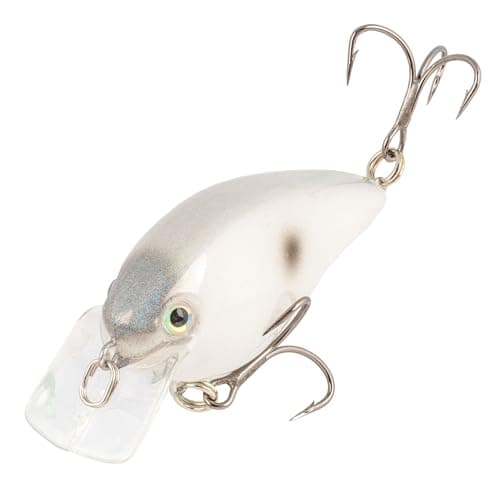
| 1 | Best shallow crankbait Strike King KVD 1.5 HC Squarebill Silent Crankbait 2.5 in, 3/8 oz, published at 3 ft, with a square bill built to deflect off cover. | Water under about 6 ft, and anywhere with cover to hit | $11.99 · Check price on Amazon #ad how this is funded · price as of October 12, 2026 |
| 2 | 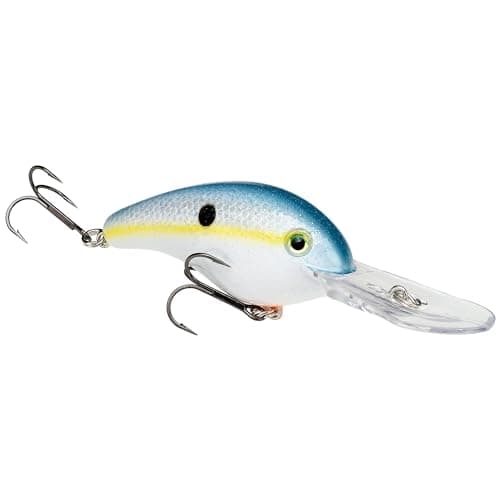 Best deep crankbait Strike King Pro Model 5XD Crankbait 2.5 in, 5/8 oz, published at 15 ft on an extra-long bill. | Offshore structure, ledges and summer fish holding deep | $7.53 · Check price on Amazon #ad how this is funded · price as of October 12, 2026 |
The one number that matters
Crankbaits are unusual among lures: the manufacturer publishes exactly how deep the thing runs. Not a range of vague adjectives — a number, in feet, on the packet.
That number comes from the bill. A longer bill set at a shallower angle pulls the lure down harder; a short, steeply-angled bill barely pulls it down at all. Body shape and weight affect the action and the casting distance, but the depth is the bill’s job.
| Bait | Length | Weight | Published depth |
|---|---|---|---|
| Strike King KVD 1.5 HC Squarebill | 2.5 in | 3/8 oz | 3 ft |
| Strike King Pro Model 5XD | 2.5 in | 5/8 oz | 15 ft |
Identical body length. A twelve-foot difference in depth. If you needed one argument for reading the box, that is it.
Reeling faster does not go deeper
This is the most common misunderstanding in crankbait fishing, and it is backwards.
A crankbait dives because water pushes on the angled bill as the lure moves forward. Up to a point, more speed does mean more downward force. Past that point the bait starts to plane, the same way a water-skier rises as the boat speeds up, and it climbs toward the surface.
So the reliable way to fish a crankbait deep is a steady, moderate retrieve and a long cast — because a crankbait only reaches its stated depth after it has traveled some distance, and it starts climbing again as it approaches the rod tip. The middle of the cast is the part doing the work.
Why deflection is the whole technique
A crankbait swimming through open water in a straight line is a fairly unconvincing imitation of anything. A crankbait that clatters into a rock, veers sideways and briefly loses its rhythm looks exactly like a baitfish that has just made a mistake.
That is why square bills exist. The flat corners of the bill catch cover and kick the lure off it rather than burying the hooks in it. The practical instruction is uncomfortable at first: aim at the stump. Bang the bait into things on purpose.
It follows that a crankbait rated deeper than the water you are fishing is often the right choice. A bait published at 6 ft, fished in 4 ft of water, spends its whole retrieve digging into the bottom and kicking up silt. That is a deliberate technique, not an error.
Rod and line change what a crankbait does
Crankbaits carry treble hooks, and treble hooks come out. A small, thin wire hook held in the corner of a mouth has very little to grip, and any sudden load pulls it free.
That is why crankbait fishing is one of the few places where monofilament genuinely beats braid. Mono stretches, and that stretch is a shock absorber between a lunging fish and three small hook points. Braid transmits the surge directly, and trebles tear out.
The same logic applies to the rod. A fast-action rod loads only at the tip and sets hard, which is right for a single hook buried in plastic and wrong for trebles. A moderate action bends deeper into the blank and gives the fish something forgiving to pull against.
On a general-purpose setup, the compromise that works is a medium-power composite rod with 10 lb monofilament, which is exactly what our bass setup page builds around.
How many do you actually need
Two, to begin. One shallow squarebill for cover, and one deeper bait for when fish are not against the bank. Add a third depth only when you have found water that neither reaches.
Color matters far less than depth here, and we cover the reasoning on our lure color page. A crankbait at the right depth in the wrong color out-fishes the right color at the wrong depth every time.
So what do I actually buy?
Buy the shallow one first. Most fish caught by most anglers are in under six feet of water, and the squarebill is the bait that lets you fish cover without losing lures constantly.
Strike King KVD 1.5 HC Squarebill Silent Crankbait
$11.992.5 in, 3/8 oz, published at 3 ft. The shallow-cover bait, and the one to own first.
#ad how this is funded · price as of October 12, 2026
Strike King Pro Model 5XD Crankbait
$7.532.5 in, 5/8 oz, published at 15 ft. Buy this second, and only once you are fishing offshore structure.
#ad how this is funded · price as of October 12, 2026
Berkley Trilene XL Monofilament Line
$8.9710 lb mono at 0.011 in. The stretch is what keeps treble hooks in — do not fish crankbaits on straight braid.
#ad how this is funded · price as of October 12, 2026
The picks, in full
Every card below lists the specs we could read off a published page, the URL they came from, and one honest reason you might not want it.
1. Best shallow crankbait
Strike King KVD 1.5 HC Squarebill Silent Crankbait
Strike King
2.5 in, 3/8 oz, published at 3 ft, with a square bill built to deflect off cover.
The published figures are 2.5 inches, 3/8 oz and a 3 ft depth. That last number is the one that matters: this is a bait for shallow water, and it is not a compromise that also works deep.
A square bill does something a round bill does not. When it hits a stump, a dock post or a rock, the flat leading edge kicks the lure sideways rather than wedging it. That deflection is not a side effect you tolerate — it is the trigger. A crankbait that never touches anything catches far less than one you deliberately bounce off cover.
This is the silent version, published without internal rattles. On heavily fished water that is often the advantage, because a rattling bait is the one every other angler has already shown these fish this month.
At 3/8 oz it sits inside the 1/4–5/8 oz window printed on a medium rod, so it casts properly on the gear most people already own.
The drawback
Three feet is genuinely shallow. On a lake where fish have moved out to 12 or 15 ft in midsummer, this bait cannot reach them and no retrieve speed will change that. Strike King also does not publish the hook size on this page, which is a figure we would rather state than omit.
Published specs
- Length
- 2-1/4 in
- Weight
- 3/8 oz
- Running depth
- 3-6 ft
- Rattle
- None — silent
- Lip
- Square bill, deflection design
Specs read from Tackle Warehouse — Strike King KVD 1.5 HC Squarebill Silent Crankbait.
#ad how this is funded · price as of October 12, 2026
2. Best deep crankbait
Strike King Pro Model 5XD Crankbait
Strike King
2.5 in, 5/8 oz, published at 15 ft on an extra-long bill.
Same body length as the squarebill — 2.5 inches — and five times the depth. That comparison is the clearest possible demonstration that the bill, not the body, is the depth control.
Strike King publishes it at 15 ft and describes the bill as diving 4–5 ft deeper than the Series 5. Both are checkable claims about geometry rather than vague performance language, which is more than most crankbait marketing offers.
The weight goes up to 5/8 oz, and it has to. A long bill generates a great deal of resistance, and a light bait simply would not have the mass to drive through it and hold a line angle.
This is a bait for a specific job: finding fish that have left the bank. If you only ever fish visible cover in shallow water, you do not need it.
The drawback
It is hard work. A deep crankbait pulls noticeably on every crank, and an hour of it is genuinely tiring on a medium spinning rod — this is the bait that convinces people to own a moderate-action cranking rod. It also needs long casts to reach its stated depth, so it fishes poorly from a bank with trees behind you.
Published specs
- Length
- 2.5 in
- Weight
- 5/8 oz
- Depth
- 15 ft
- Bill
- Extra-deep, published as diving 4-5 ft deeper than the Series 5
- Class
- Deep-diving crankbait
Specs read from Tackle Warehouse - Strike King Pro Model 5XD Crankbaits.
#ad how this is funded · price as of October 12, 2026
Questions people actually ask
How deep does a crankbait dive?
Whatever the manufacturer publishes on the packet. Strike King lists the KVD 1.5 Squarebill at 3 ft and the Pro Model 5XD at 15 ft, and those numbers are set by the bill, not by how fast you reel.
Does reeling faster make a crankbait go deeper?
Only up to a point, then the opposite. Past a certain speed the bait planes upward like a water-skier and runs shallower. A steady moderate retrieve on a long cast is what reaches the stated depth.
What is a squarebill crankbait for?
Shallow water with cover. The flat corners of the bill deflect off stumps, rocks and dock posts instead of snagging, and that deflection is what triggers the strike.
Should you use braid with crankbaits?
Generally no. Crankbaits carry treble hooks, and braid's zero stretch transmits a fish's surge straight to three small hook points and pulls them out. Monofilament's stretch is the right property here.
Read next
Sources
Prices on this page come from the retailer at request time and change without notice. If we cannot get a live one we say “check price” rather than show you a number that has gone stale. How we pick.