Tackle
The best bass lures for spring: follow the water temperature
Three phases in eight weeks. The lure that was perfect in March is the wrong answer in May.
By Sawyer V. · Last updated · How we pick
The short answer
Pre-spawn: a lipless crankbait, published from 1/4 oz at 2 in to 3/4 oz at 3 in. Spawn: a Senko, published in 3 to 7 in. Post-spawn: a squarebill, published at 2 1/4 in, 3/8 oz and 3–6 ft. Water temperature decides which, not the calendar.
Reel & Rig earns a commission from qualifying purchases made through links on this page, at no extra cost to you. It does not change which gear we pick or what we say about it. Full disclosure.
Quick picks
| # | Product | Best for | Price |
|---|---|---|---|
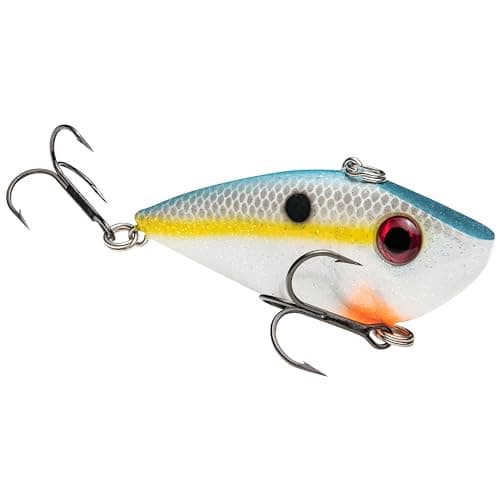
| 1 | Best spring bass lure Strike King Red Eye Shad Lipless Crankbait Four published sinking sizes from 1/4 oz at 2 in to 3/4 oz at 3 in, with no set running depth. | Pre-spawn, when fish are moving shallow and feeding hard | $7.53 · Check price on Amazon #ad how this is funded · price as of October 12, 2026 |
| 2 | 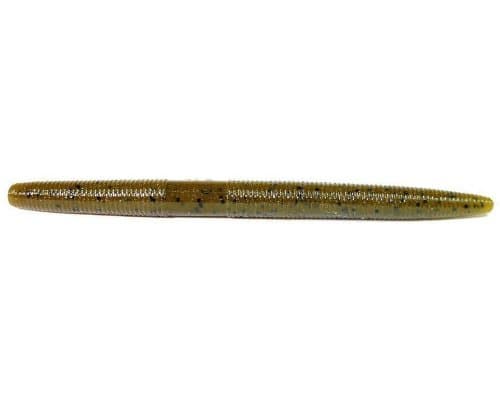 Best for bedding fish Gary Yamamoto Senko Published in 3, 4, 5, 6 and 7 in, heavily salt impregnated, with a horizontal fall and a side-to-side shimmy. | The spawn, and any fish you can see | $7.99 · Check price on Amazon #ad how this is funded · price as of October 12, 2026 |
| 3 | 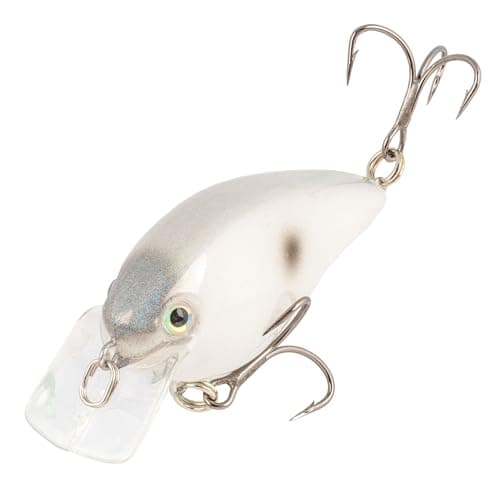 Best post-spawn bait Strike King KVD 1.5 HC Squarebill Silent Crankbait 2 1/4 in, 3/8 oz, published running 3-6 ft, silent, with a square bill built to deflect. | After the spawn, when fish pull back to cover and shade | $11.99 · Check price on Amazon #ad how this is funded · price as of October 12, 2026 |
Spring is three phases, and temperature is the switch
| Phase | Roughly | Fish are | Lure |
|---|---|---|---|
| Pre-spawn | 48-58 deg F | Moving shallow, feeding hard | Lipless crankbait |
| Spawn | 58-68 deg F | On beds, not feeding | Senko, fished slowly |
| Post-spawn | 68-75 deg F | Recovering, holding on cover | Squarebill crankbait |
A thermometer tells you more than a calendar does. The same lake can be pre-spawn in one arm and post-spawn in another, because shallow northern coves warm first.
That is the most useful thing on this page: on a spring day when nothing is working, move to water at a different depth or a different aspect and the phase changes with it.
Pre-spawn: cover water
The fish are moving and they are hungry, which is the easiest combination bass fishing offers. The mistake is fishing too slowly.
Throw something you can cover a flat with and find the group. Once you catch one, the rest are usually within a short cast — pre-spawn bass stage together on the same features.
Look for the first drop-off outside a shallow spawning flat, and for any hard bottom or isolated grass on the way in.
Spawn: slow down and look
Bedding bass are visible in clear water, and sight fishing is its own skill. The bait has to land in the bed and stay there, and you often have to leave it for a long time.
It is worth saying plainly that fish caught off beds are guarding eggs, and returning them quickly and close to where they were caught is the difference between a released fish and an abandoned nest. Some states restrict or close the season for exactly this reason — check yours.
Post-spawn: find the shade
Post-spawn fish are worn out and they hold tight to the first cover they come to. This is the hardest phase of spring, and a deflecting bait bounced off that cover is the most reliable answer.
Accuracy beats distance here. You want the bait hitting the stump, not passing near it.
Our bass setup page covers the rod and reel to throw all three of these on, and our fall bass lures page covers the other half of the year.
So what do I actually buy?
One of each covers eight weeks of spring. Take a thermometer as well — it tells you which one to tie on.
Strike King Red Eye Shad Lipless Crankbait
$7.531/2 oz at 2.5 in for pre-spawn flats. Count it down, then rip it out of the grass.
#ad how this is funded · price as of October 12, 2026
Gary Yamamoto Senko
$7.995 in, wacky-rigged, for bedding fish. Published horizontal fall and shimmy.
#ad how this is funded · price as of October 12, 2026
Strike King KVD 1.5 HC Squarebill Silent Crankbait
$11.993/8 oz running 3-6 ft, silent. Bounce it off post-spawn cover.
#ad how this is funded · price as of October 12, 2026
The picks, in full
Every card below lists the specs we could read off a published page, the URL they came from, and one honest reason you might not want it.
1. Best spring bass lure
Strike King Red Eye Shad Lipless Crankbait
Strike King
Four published sinking sizes from 1/4 oz at 2 in to 3/4 oz at 3 in, with no set running depth.
Pre-spawn bass move from deep winter water onto shallow flats to feed before spawning, and they are the most aggressive they will be all year. A lipless crankbait covers a flat faster than anything else you can throw.
The published sinking classification is what makes it a spring bait. There is no bill and no fixed depth, so you set your own by counting the lure down after the cast — which lets you fish a 4 ft flat and an 11 ft flat with the same lure.
The 1/2 oz at 2.5 in matches the shad that pre-spawn bass are eating, and it casts far enough to cover water from a long way off in the clear conditions early spring usually brings.
Fish it over submerged grass and rip it free when it loads up. That acceleration out of the grass is the trigger, and our lipless crankbaits page covers the technique in full.
The drawback
Two exposed trebles on a sinking bait is the most efficient snag in fishing, so it is a poor choice around wood and dock pilings. Strike King does not publish the hook size. And it is the wrong bait once fish move onto beds — a fast-moving lure ripped past a bedding fish gets ignored or spooks it.
Published specs
- 1/4 oz
- 2 in, sinking
- 3/8 oz
- 2.25 in, sinking
- 1/2 oz
- 2.5 in, sinking
- 3/4 oz
- 3 in, sinking
- Class
- Sinking - it has no bill and no set running depth
- Hook size
- Strike King does not publish it
Specs read from Tackle Warehouse - Strike King Red Eye Shad.
#ad how this is funded · price as of October 12, 2026
2. Best for bedding fish
Gary Yamamoto Senko
Gary Yamamoto
Published in 3, 4, 5, 6 and 7 in, heavily salt impregnated, with a horizontal fall and a side-to-side shimmy.
The published action is the reason: a horizontal fall with a side-to-side shimmy, weightless. During the spawn a bass on a bed is not feeding — it is removing things from its nest — and a bait that falls slowly and stays there is what provokes it.
Heavy salt impregnation is published and it does two jobs: it adds the weight that makes a weightless bait castable, and it makes a fish hold on a beat longer once it has picked the bait up.
Five published lengths is a real range. The 5 in is the standard; drop to 4 in in clear water or on pressured fish, and go to 6 or 7 in when you are specifically hunting a big female.
Rig it wacky — hooked through the middle — for the maximum shimmy on the fall. Our wacky rig page covers the hook and the O-ring that stops you losing a bait a cast.
The drawback
Senkos tear. The soft salted plastic that produces the action also means you lose a bait every few fish, and the published pack size is only 10 for the 3 to 5 in sizes and 5 for the 6 and 7 in. It is also a slow way to fish — a poor choice when you need to cover water and find fish rather than work on one you can see.
Published specs
- Lengths
- 3, 4, 5, 6, 7 in
- Pack size
- 10 per pack (3-5 in), 5 per pack (6-7 in)
- Material
- Soft plastic, heavily salt impregnated
- Signature action
- Horizontal fall, side-to-side shimmy, weightless
Specs read from Tackle Warehouse — Yamamoto Senko.
#ad how this is funded · price as of October 12, 2026
3. Best post-spawn bait
Strike King KVD 1.5 HC Squarebill Silent Crankbait
Strike King
2 1/4 in, 3/8 oz, published running 3-6 ft, silent, with a square bill built to deflect.
The published 3–6 ft running depth is exactly the band post-spawn bass hold in: they pull off the beds onto the first cover they find — laydowns, stumps, dock posts — in shallow to middling water.
A square bill is published as a deflection design and that is the whole technique. You are meant to hit things with it. The bait bounces off a stump, changes direction violently, and a bass that was ignoring a straight retrieve eats the deflection.
This model is published as silent, with no rattle. That matters in spring on pressured water, where every angler on the lake is throwing something noisy and fish have learned the sound.
3/8 oz at 2 1/4 in is a compact bait that still casts, which is what you want when accuracy at a dock post matters more than distance. Our crankbaits page covers the wider family.
The drawback
A silent bait is a deliberate handicap in stained water or heavy wind, where a rattle is how a fish finds the lure at all — Strike King sells a rattling version for exactly that reason. Two trebles also make it a snag risk in brush, and the published 3-6 ft depth band means it is useless once fish move deeper in summer.
Published specs
- Length
- 2-1/4 in
- Weight
- 3/8 oz
- Running depth
- 3-6 ft
- Rattle
- None — silent
- Lip
- Square bill, deflection design
Specs read from Tackle Warehouse — Strike King KVD 1.5 HC Squarebill Silent Crankbait.
#ad how this is funded · price as of October 12, 2026
Questions people actually ask
What is the best bass lure in spring?
It depends on the phase. A lipless crankbait pre-spawn while fish are moving and feeding, a Senko during the spawn when they are on beds, and a squarebill crankbait post-spawn when they pull back to cover.
What water temperature do bass spawn at?
Roughly 58 to 68 degrees F, with pre-spawn from about 48 and post-spawn up to about 75. Different arms of the same lake can be in different phases, because shallow northern coves warm first.
Why do bass hit a squarebill crankbait?
The deflection. A square bill is built to hit cover and change direction violently, and a fish ignoring a straight retrieve will eat the bait the moment it caroms off a stump.
How should I rig a Senko in spring?
Wacky — hooked through the middle — for the maximum side-to-side shimmy on the fall. Use an O-ring around the bait to stop the soft salted plastic tearing off every cast.
Read next
Prices on this page come from the retailer at request time and change without notice. If we cannot get a live one we say “check price” rather than show you a number that has gone stale. How we pick.