Tackle
Spinnerbaits: the lure that works when the water is dirty
The one lure that is genuinely better in stained water than clear, and the blade shape tells you which job it does.
By Sawyer V. · Last updated · How we pick
The short answer
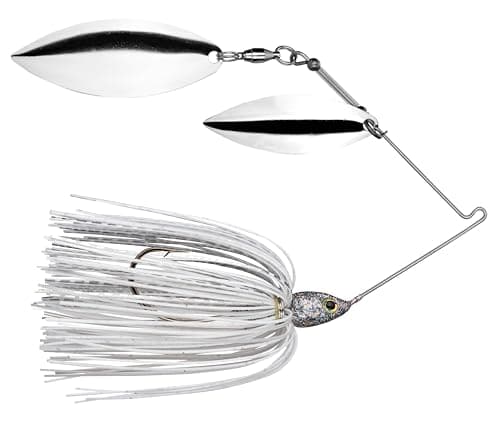
Blade shape is the spec that matters. Willow blades give flash and cut through water fast; Colorado blades give thump and vibration at low speed. Willow for clear water and speed, Colorado for dirty water where fish find the lure by feel rather than sight. A 3/8 oz double willow is the most useful single starting point.
Reel & Rig earns a commission from qualifying purchases made through links on this page, at no extra cost to you. It does not change which gear we pick or what we say about it. Full disclosure.
Quick picks
| # | Product | Best for | Price |
|---|---|---|---|
| 1 | Best all-round Strike King Burner Spinnerbait 3/8 and 1/2 oz with double willow blades and a compact minnow head designed to reduce drag at speed. | Covering water fast, just under the surface | $9.27 · Check price on Amazon #ad how this is funded · price as of October 19, 2026 |
Why a spinnerbait exists
It is an odd-looking lure and it resembles nothing that lives in a lake. It works anyway, for two reasons.
It is nearly weedless. The upper wire arm shields the hook, so a spinnerbait comes through grass, brush and laydowns that would foul a crankbait’s trebles. That alone makes it fishable where a lot of lures are not.
It displaces a lot of water. Spinning blades push a pressure wave that a fish detects through its lateral line, not its eyes. That is why a spinnerbait is one of very few lures that works better in stained or muddy water than in clear.
Blade shape is the whole decision
| Blade | Shape | Produces | Best in |
|---|---|---|---|
| Willow | Long, narrow, pointed | Maximum flash, minimum drag | Clear water; fast retrieves; around grass |
| Colorado | Round, deep-cupped | Maximum thump and vibration | Muddy water; cold water; slow retrieves |
| Indiana | Oval, between the two | A compromise of both | Stained water; medium speed |
| Tandem (willow + Colorado) | One of each | Some flash, some thump | When you do not know; the safe default |
The rule that follows: the dirtier the water, the rounder the blade. In mud, a fish cannot see flash and has to feel the lure, so you want the blade that pushes the most water at the slowest speed.
Weight, and what it actually controls
On most lures weight controls casting distance and depth. On a spinnerbait it mainly controls how fast you must retrieve to keep it at a given depth, because the blades generate lift.
A 3/8 oz bait retrieved slowly will rise toward the surface. The same bait retrieved very slowly sinks. There is a speed at which it holds depth, and finding it is most of the skill.
| Weight | Use |
|---|---|
| 1/4 oz | Shallow, clear, calm. Smaller profile for pressured fish |
| 3/8 oz | The default. Covers 1–6 ft at a normal retrieve |
| 1/2 oz | Wind, deeper water, or slow-rolling along a bottom contour |
| 3/4 oz and up | Deep slow-rolling, or heavy current |
Three retrieves worth knowing
Steady, just under the surface. The default and the one a willow bait is built for. Reel fast enough that you can see a bulge on the surface but the bait stays under. Best in warm water when fish are active.
Slow-rolling. Retrieve just fast enough to feel the blades turning, letting the bait tick along bottom or through the top of grass. This is the cold-water and dirty-water presentation, and it is where Colorado blades earn their place.
Yo-yo. Reel a few turns, stop and let it fall, reel again. Most bites come on the fall. Effective around isolated cover and on suspended fish.
Throw it at things
Like a squarebill, a spinnerbait is a deflection bait. It is at its best hitting something and changing direction, and its weedlessness is what lets you do that.
Aim at laydowns, dock posts, stumps, grass edges and rock. A spinnerbait retrieved through open water catches far less than the same bait bounced off cover.
The trailer question
A soft plastic trailer on the hook adds bulk, slows the fall and gives the bait a different profile. A twin-tail grub or a small swimbait body are the common choices.
It is genuinely optional. Add one when you want the bait to fall more slowly or look bigger; leave it off when you want to fish fast.
What we would skip
Very cheap spinnerbaits. This is a lure where the components matter more than most. The failure modes are a wire arm that bends out of alignment after a few fish so the bait runs on its side, and a blade swivel that seizes so the blade stops turning. Both make the lure useless rather than merely worse.
Buying six blade configurations at once. A 3/8 oz double willow and a 3/8 oz tandem cover most situations. Add a Colorado-bladed bait when you actually find yourself fishing muddy water.
The picks, in full
Every card below lists the specs we could read off a published page, the URL they came from, and one honest reason you might not want it.
1. Best all-round
Strike King Burner Spinnerbait
Strike King
3/8 and 1/2 oz with double willow blades and a compact minnow head designed to reduce drag at speed.
Double willow blades are the flash-and-speed configuration. Willow leaf is the narrow, pointed shape — it spins tight to the wire, produces a lot of visual flash, and creates relatively little water resistance, which is what lets you fish it fast.
Strike King publishes this one with a Raz-R-Blade, described as a thin-cut willow designed to increase blade revolutions. More revolutions at a given speed means more flash, which is the whole point of a willow bait.
The head is published as a compact minnow shape intended to reduce drag at speed. That is consistent with the rest of the design: this is a bait built to be burned just under the surface rather than slow-rolled.
3/8 and 1/2 oz are the published weights, and both sit comfortably inside a medium rod’s 1/4–5/8 oz window. Gamakatsu hook.
The drawback
Willow blades are the wrong choice in genuinely dirty water, where a fish finds the lure by vibration rather than sight — a Colorado-bladed bait thumps far harder at low speed. Strike King also does not publish the hook size or the pack quantity, which are both things we would like to state.
Published specs
- Weights
- 3/8 oz, 1/2 oz
- Blades
- Double willow, Raz-R-Blade thin-cut high RPM
- Hook
- Gamakatsu (size not published)
- Head
- Compact minnow shape, reduced drag
- Colors
- Chart/White, Sexy Shad, Smokey Shad, Super Chartreuse, Super White
Specs read from Tackle Warehouse — Strike King Burner Spinnerbait.
#ad how this is funded · price as of October 19, 2026
Questions people actually ask
What is the best spinnerbait for bass?
A 3/8 oz double willow as a starting point — it covers water fast and fishes well in clear to lightly stained water. Add a Colorado-bladed bait for genuinely muddy water, where fish find the lure by vibration rather than sight.
What is the difference between willow and Colorado blades?
Willow blades are long and narrow: maximum flash, minimum drag, so you can fish them fast. Colorado blades are round and deep-cupped: maximum thump and vibration at low speed. The dirtier the water, the rounder the blade you want.
How do you fish a spinnerbait?
Three retrieves cover it: steady just under the surface for active fish, slow-rolling along bottom or through grass in cold or dirty water, and a yo-yo retrieve where you reel and pause. Throw it at cover — it is a deflection bait.
Why do spinnerbaits work in muddy water?
Because the blades push a pressure wave that a fish detects through its lateral line rather than its eyes. That makes a spinnerbait one of very few lures that genuinely works better in stained water than in clear.
Do you need a trailer on a spinnerbait?
It is optional. A soft plastic trailer adds bulk, slows the fall and gives a bigger profile. Add one when you want a slower fall or a larger look, and leave it off when you want to fish fast.
Read next
Sources
Prices on this page come from the retailer at request time and change without notice. If we cannot get a live one we say “check price” rather than show you a number that has gone stale. How we pick.