Electronics
The best fish finder for crappie
The species sonar was made for. Crappie hang in mid-water clouds, and a screen is the only way to know the depth.
By Sawyer V. · Last updated · How we pick
The short answer
Crappie suspend in schools well off the bottom, and the depth they hold at is the single most useful fact of the day. You need clear mid-water separation more than deep-water capability — a 5 in CHIRP unit with down imaging reads a suspended school far better than a bigger screen with worse sonar.
Reel & Rig earns a commission from qualifying purchases made through links on this page, at no extra cost to you. It does not change which gear we pick or what we say about it. Full disclosure.
Quick picks
| # | Product | Best for | Price |
|---|---|---|---|
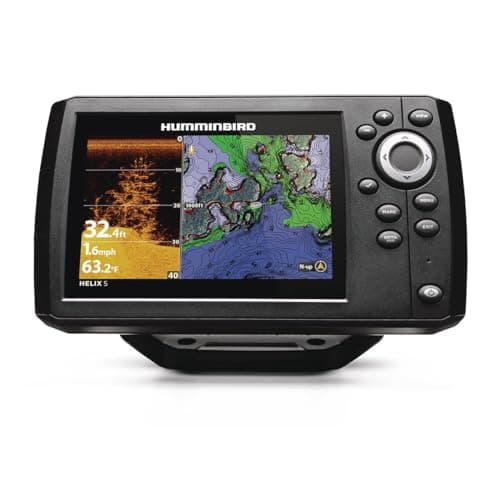
| 1 | Best for crappie Humminbird HELIX 5 CHIRP DI GPS G3 5 in CHIRP with down imaging and GPS, which separates fish in mid-water cleanly. | Reading suspended schools and brush piles | $375.66 · Check price on Amazon #ad how this is funded · price as of October 12, 2026 |
| 2 | 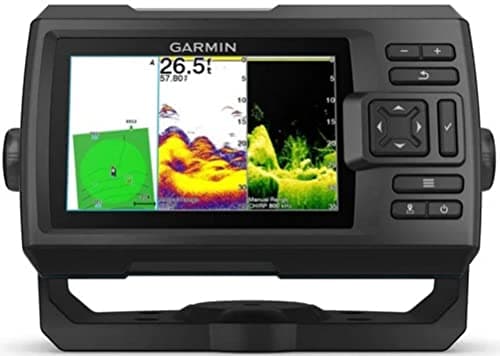 Best screen for the money Garmin STRIKER Vivid 5cv A 5 in color unit with CHIRP and ClearVü down scanning. | Reading fine detail in mid-water | $334.99 · Check price on Amazon #ad how this is funded · price as of October 12, 2026 |
Why crappie are the ideal sonar species
Most freshwater fish sit on or near the bottom, where they are hard to separate from it. Bass tuck into cover. Catfish lie on the floor.
Crappie suspend. They hold in loose schools at a specific depth in open or lightly structured water, often ten to twenty feet down over deeper water. Against a blank mid-water background, a school is unmistakable.
And the depth is directly actionable in a way almost nothing else on a sonar screen is: read the depth, set your bait there, catch fish. Our slip float page exists partly for this — a stopper knot set to the depth on the screen is the most direct translation of sonar into a bite that freshwater fishing offers.
What to prioritize, and what to ignore
| Spec | Priority | Why |
|---|---|---|
| Target separation | Highest | Distinguishing individual fish in a school |
| Down imaging or ClearVu | High | Detailed narrow picture directly below |
| GPS waypoints | High | Brush piles produce for years once marked |
| Deep-water rating | Very low | Crappie water is rarely deep |
| Side imaging | Low | Useful for finding brush, not for reading schools |
| Screen size | Medium | Helps read detail, does not create it |
The row worth acting on is the deep-water rating. A unit advertising 1,900 ft capability performs no better than one rated to 600 on a thirty-foot crappie lake, and paying for it is money not spent on separation.
Reading a crappie school
A school shows as a cloud of marks at a consistent depth, usually with a clear gap between it and the bottom line. Our screen-reading page covers arches generally; crappie specifics are worth adding.
Marks above the school are the active fish. Crappie feed upward. The ones sitting at the top of a cloud are the ones that will eat, which is why you fish above the school rather than in it.
A tight ball means inactive; a spread cloud means feeding. A dense cluster is usually fish holding tight and hard to tempt.
Brush shows as a fuzzy vertical structure off the bottom, and crappie sit in and just above it. Finding the brush is often the whole job.
Turn the fish symbols off
This matters more for crappie than any other species. Fish-ID modes replace returns with icons of a fixed size, which destroys exactly the information you need — whether that is one crappie or fifteen, and whether they are at sixteen feet or nineteen.
Raw returns show the shape of the school. Icons show a guess. Our reading page makes the general case; for crappie it is close to non-negotiable.
Translating the screen into a bite
Read the depth of the top of the school. Then present at or just above it.
A crappie jig counted down to that depth, or a slip float with the stopper set to it, both work. The float is more forgiving because it holds the depth without you maintaining it.
If the school is deeper than about fifteen feet, the jig is better — a float rig that long is awkward to cast even in slip form.
Our complete crappie setup builds the rod and reel side of this, and crappie rods covers the long light rods the technique wants.
So what do I actually buy?
Buy separation and GPS, not depth capability. A crappie lake is thirty feet deep and the fish are at fifteen.
Humminbird HELIX 5 CHIRP DI GPS G3
$375.665 in CHIRP, down imaging and GPS — separation plus the waypoints brush piles need.
#ad how this is funded · price as of October 12, 2026
Garmin STRIKER Vivid 5cv
$334.99Color CHIRP with ClearVü down scanning for fine mid-water detail.
#ad how this is funded · price as of October 12, 2026
Bobby Garland Original Baby Shad
$3.99The bait to count down to the depth the screen just gave you.
#ad how this is funded · price as of October 12, 2026
The picks, in full
Every card below lists the specs we could read off a published page, the URL they came from, and one honest reason you might not want it.
1. Best for crappie
Humminbird HELIX 5 CHIRP DI GPS G3
Humminbird
5 in CHIRP with down imaging and GPS, which separates fish in mid-water cleanly.
Down imaging is the right choice for crappie specifically. It produces a high-detail, narrow picture directly beneath the boat, which is exactly the geometry of a suspended school you are sitting over.
Target separation is what matters and it is what down imaging does well: telling twelve fish at eighteen feet apart from one blob at eighteen feet changes how long you stay.
GPS is more useful for crappie than for most species, because crappie hold on brush piles and specific pieces of structure you will want to return to. Marking one is marking a spot that produces for years.
The drawback
Down imaging's narrowness means you must be almost directly over the school to see it, so finding schools takes more driving than a wide-cone unit would. Humminbird also does not publish current draw, so battery sizing needs margin rather than arithmetic.
Published specs
- Display
- 5 in widescreen, 800H x 480V, 16-bit color
- Transducer
- XNT 9 HW DI T
- Sonar
- Dual Spectrum CHIRP 83/200 kHz (75-155 / 130-250 kHz)
- Down Imaging
- 455 kHz (420-520 kHz)
- Coverage
- 20, 42 and 60 deg @ -10 dB
- Max depth
- 1,200 ft sonar / 350 ft Down Imaging
- Power output
- 4,000 W peak-to-peak / 500 W RMS
- Mapping
- Built-in GPS, AutoChart Live (8 h), LakeMaster/Navionics ready
- Dimensions
- 7.55 W x 4.64 H x 3.3 D in (gimbal)
Specs read from L&M Fleet Supply — Humminbird HELIX 5 CHIRP DI GPS G3.
#ad how this is funded · price as of October 12, 2026
2. Best screen for the money
Garmin STRIKER Vivid 5cv
Garmin
A 5 in color unit with CHIRP and ClearVü down scanning.
Color helps more on crappie than on any other species, because you are looking at the difference between weak returns close together. Stronger returns render differently from weak ones, and separating a crappie from a piece of suspended weed is exactly that judgement.
ClearVü is Garmin’s down-scanning equivalent, giving the same narrow, detailed picture beneath the boat that a suspended school needs.
CHIRP sweeps a range of frequencies rather than pinging one, which is what improves separation between two targets at similar depths — the whole crappie problem.
The drawback
Five inches is small for reading fine mid-water detail, and you will be leaning in. There is also no preloaded mapping on this model, so brush piles are your own waypoints rather than charted structure.
Published specs
- Display
- 5 in color
- Transducer
- GT20-TM, 20 ft cable with temperature sensor
- Traditional sonar
- 77/200 kHz, 500 W
- ClearVu sonar
- CHIRP 455/800 kHz, 500 W
- Max depth
- 1,900 ft traditional / 750 ft ClearVu
- Mapping
- Quickdraw Contours, 1-ft contours
- Mounts
- Transom and trolling motor
Specs read from Fish307 — Garmin STRIKER Vivid 5cv with GT20-TM Transducer.
#ad how this is funded · price as of October 12, 2026
Questions people actually ask
What fish finder specs matter for crappie?
Target separation first, then down imaging or ClearVü, then GPS for marking brush piles. Deep-water capability is nearly irrelevant — a unit rated to 1,900 ft performs no better than one rated to 600 on a thirty-foot crappie lake.
How do you read a crappie school on sonar?
A cloud of marks at a consistent depth with a gap between it and the bottom. Fish at the top of the cloud are the active ones, a tight ball means inactive and a spread cloud means feeding.
Should you turn off fish symbols for crappie?
Yes, more than for any other species. Fish-ID replaces returns with fixed-size icons, which destroys the two things you need: how many fish there are and exactly what depth they are holding at.
How do you fish a crappie school you found on sonar?
Present at or just above the top of the school, because crappie feed upward. A jig counted down works, and a slip float with the stopper set to that depth is more forgiving because it holds the depth for you.
Read next
Prices on this page come from the retailer at request time and change without notice. If we cannot get a live one we say “check price” rather than show you a number that has gone stale. How we pick.