Electronics
Garmin STRIKER 4 alternatives: what to buy instead, and why
It is the unit almost everyone starts with. Here is who should buy something else, and exactly what they gain.
By Sawyer V. · Last updated · How we pick
The short answer
The STRIKER 4 publishes a 3.5 in screen, dual-beam CHIRP at 77/200 kHz, 200 W RMS and a waypoint map with no charts. Want a bigger screen for the same money? The PiranhaMAX 4. Want contour mapping? The STRIKER Vivid 5cv. Want real depth and power? The HELIX 5. Want imaging? None of them — that is a bigger step.
Reel & Rig earns a commission from qualifying purchases made through links on this page, at no extra cost to you. It does not change which gear we pick or what we say about it. Full disclosure.
Quick picks
| # | Product | Best for | Price |
|---|---|---|---|
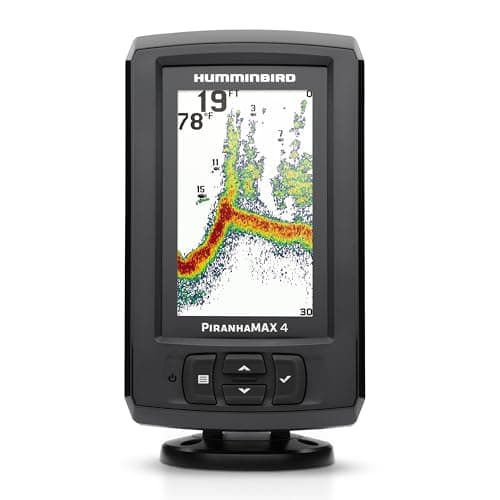
| 1 | Best same-price alternative Humminbird PiranhaMAX 4 4.3 in at 272 x 480, Dual Beam 200/455 kHz, 2,400 W peak-to-peak, 600 ft at 200 kHz. | Anyone who wants the biggest screen available at this price | $136.98 · Check price on Amazon #ad how this is funded · price as of October 12, 2026 |
| 2 | 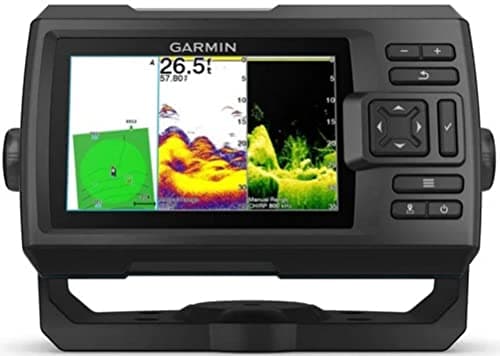 Best step up for mapping Garmin STRIKER Vivid 5cv 5 in color, traditional 77/200 kHz plus ClearVu CHIRP 455/800 kHz, 1,900 ft, Quickdraw Contours. | Anyone who wants to chart their own lake and keep Garmin's interface | $334.99 · Check price on Amazon #ad how this is funded · price as of October 12, 2026 |
| 3 | 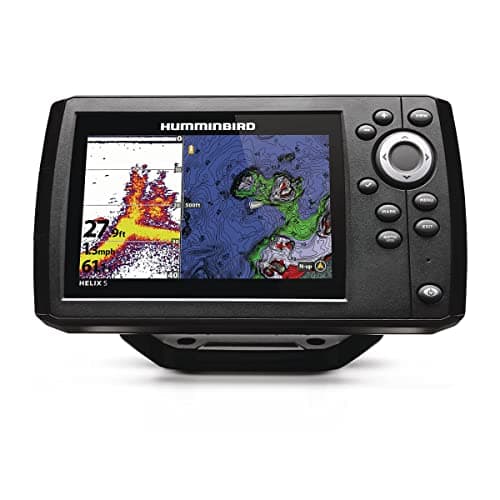 Best for depth and power Humminbird HELIX 5 CHIRP GPS G3 5 in at 800 x 480, Dual Spectrum CHIRP, 4,000 W peak-to-peak, 1,200 ft, AutoChart Live. | Deep or stained water where a weak return disappears | $349.99 · Check price on Amazon #ad how this is funded · price as of October 12, 2026 |
What the STRIKER 4 actually is
It publishes a 3.5 in color display, a dual-beam CHIRP transducer at 77/200 kHz, 200 W RMS and 1,600 W peak-to-peak, a built-in high-sensitivity GPS with a waypoint map, a built-in flasher, sonar history rewind and speed.
That is a complete, working fish finder for very little money, and the reason it appears on more pages of this site than any other unit is that it is genuinely hard to beat on value. Most people looking for an alternative do not actually need one.
The four real reasons to look elsewhere
The screen is small. 3.5 in is small in a way you notice when the boat is moving. The PiranhaMAX 4 publishes 4.3 in for similar money and is the direct answer.
There are no charts. The STRIKER publishes a waypoint map, which stores points but does not show you lake contours. If you want contours, you either buy a unit with cartography or one that draws its own.
There is no imaging. No ClearVu, no DownScan, no SideScan. If you want to look at brush piles as pictures, nothing in the STRIKER 4 class does that.
Transmit power is modest. 200 W RMS is fine for the water most people fish and thin for genuinely deep, cold lakes.
Which alternative answers which complaint
| Figure | STRIKER 4 | PiranhaMAX 4 | Vivid 5cv | HELIX 5 |
|---|---|---|---|---|
| Screen | 3.5 in color | 4.3 in, 272 x 480 | 5 in color | 5 in, 800 x 480 |
| Peak power | 1,600 W P-P | 2,400 W P-P | 500 W per channel | 4,000 W P-P |
| Max depth | Not published | 600 ft @ 200 kHz | 1,900 ft | 1,200 ft |
| GPS | Yes, waypoint map | None | Yes, Quickdraw | Yes, Basemap |
| Imaging | None | None | ClearVu 455/800 kHz | None |
| Own mapping | No | No | Quickdraw Contours | AutoChart Live (8 h) |
Read down the GPS row before anything else. The cheapest alternative on this page gives up GPS entirely, and for a lot of people that single row ends the discussion.
The trade nobody mentions: screen against GPS
At the STRIKER 4’s price you can have a bigger screen or you can have GPS. The PiranhaMAX 4 publishes 4.3 in and no GPS; the STRIKER 4 publishes 3.5 in and a waypoint map.
Which matters more depends entirely on how you fish. If you drift or troll open water and mostly want to see what is under the boat, take the screen. If you fish spots — a brush pile, a hump, a creek channel bend — and want to find them again, take the GPS, because re-locating a spot by eye costs you more fishing time than a small screen does.
Our five decisions guide puts this question second, right after the boat question, for exactly this reason.
When the answer is to buy the STRIKER 4 anyway
If this is your first fish finder, you fish a small boat or a kayak on water under 100 ft deep, and you are not yet certain how much you will use it — buy the STRIKER 4. Every alternative here costs more, and three of the four ask you to commit real money to a capability you have not yet missed.
It is also the unit our kayak page leads with, because low current draw and a small footprint matter more than screen size when the whole boat is six feet of deck.
What none of these do
None of the four publishes side imaging. If scanning outward to find brush and timber is the reason you are shopping, the alternative is not on this page — it is the Eagle class, at roughly four times the STRIKER’s price.
It is worth being blunt about that, because “a better version of the cheap one” and “the thing that does imaging” are two different purchases and conflating them is how people end up disappointed with a perfectly good unit.
So what do I actually buy?
Pick the alternative that answers your actual complaint. If your complaint is only that the STRIKER 4 is cheap and small, that is not a complaint — that is the specification.
Humminbird PiranhaMAX 4
$136.98Bigger screen and more published power for the same money. Gives up GPS entirely.
#ad how this is funded · price as of October 12, 2026
Garmin STRIKER Vivid 5cv
$334.99Quickdraw Contours and ClearVu imaging. The step up if mapping is the reason.
#ad how this is funded · price as of October 12, 2026
Humminbird HELIX 5 CHIRP GPS G3
$349.994,000 W peak-to-peak and 1,200 ft. The step up if depth and power are the reason.
#ad how this is funded · price as of October 12, 2026
Garmin STRIKER 4
$139.99Still the right answer for a first finder on a small boat or kayak.
#ad how this is funded · price as of October 12, 2026
The picks, in full
Every card below lists the specs we could read off a published page, the URL they came from, and one honest reason you might not want it.
1. Best same-price alternative
Humminbird PiranhaMAX 4
Humminbird
4.3 in at 272 x 480, Dual Beam 200/455 kHz, 2,400 W peak-to-peak, 600 ft at 200 kHz.
The clearest reason to buy this instead: it publishes 4.3 in against the STRIKER’s 3.5 in, at roughly the same money. On a unit this small, eight tenths of an inch is a noticeable share of the screen.
2,400 W peak-to-peak and 300 W RMS is published, against the STRIKER’s 1,600 W peak-to-peak and 200 W RMS. More transmit power, published, at the same price point.
The 455 kHz beam at 16 deg is genuinely narrow, and it separates fish that the STRIKER’s 77/200 kHz pairing shows as one return. Maximum depth is published as 600 ft at 200 kHz and 320 ft at 455 kHz.
This is the unit our under $200 page and our beginners page both carry for the same reason.
The drawback
No GPS at all. The STRIKER 4 publishes a built-in high-sensitivity receiver and a waypoint map, and the PiranhaMAX 4 publishes neither. If you want to mark a brush pile and come back to it, this is the wrong unit and the difference is not close. The screen is also 272 x 480 against the STRIKER's color panel, and Humminbird publishes 256 colors — this is a basic display.
Published specs
- Display
- 4.3 in, 272H x 480V, 256-color TFT
- Transducer
- XNT 9 28 T, transom mount
- Sonar
- Dual Beam, 200/455 kHz
- Coverage
- 28 deg and 16 deg @ -10 dB
- Max depth
- 600 ft @ 200 kHz / 320 ft @ 455 kHz
- Power output
- 2,400 W peak-to-peak / 300 W RMS
- Dimensions
- 3.91 W x 7.34 H x 3.62 D in (gimbal)
- Input
- 10.8-20 VDC
Specs read from L&M Fleet Supply — Humminbird PiranhaMAX 4.
#ad how this is funded · price as of October 12, 2026
2. Best step up for mapping
Garmin STRIKER Vivid 5cv
Garmin
5 in color, traditional 77/200 kHz plus ClearVu CHIRP 455/800 kHz, 1,900 ft, Quickdraw Contours.
Quickdraw Contours is the headline. It draws 1 ft contours of water as you drive it, which is the capability that turns an unsurveyed pond into a mapped one. The STRIKER 4 publishes a waypoint map and nothing more.
ClearVu at CHIRP 455/800 kHz and 500 W is published, giving you a genuine down-looking imaging view that the STRIKER 4 does not have. It is not side imaging, but it is a picture rather than a trace.
Maximum depth is published at 1,900 ft traditional and 750 ft ClearVu, and the GT20-TM transducer ships with a 20 ft cable and a temperature sensor. Cable length matters more than people expect on a bigger boat.
The 5 in color screen is the other half of it. Our STRIKER against ECHOMAP page covers where the Garmin line goes above this.
The drawback
It is well over twice the price of the STRIKER 4, which is a serious step for a beginner who is not yet sure they will use a fish finder. There is no side imaging, so it does not answer the structure-scanning question either. And Quickdraw only helps after you have driven the water, which on a big reservoir is a project rather than an afternoon.
Published specs
- Display
- 5 in color
- Transducer
- GT20-TM, 20 ft cable with temperature sensor
- Traditional sonar
- 77/200 kHz, 500 W
- ClearVu sonar
- CHIRP 455/800 kHz, 500 W
- Max depth
- 1,900 ft traditional / 750 ft ClearVu
- Mapping
- Quickdraw Contours, 1-ft contours
- Mounts
- Transom and trolling motor
Specs read from Fish307 — Garmin STRIKER Vivid 5cv with GT20-TM Transducer.
#ad how this is funded · price as of October 12, 2026
3. Best for depth and power
Humminbird HELIX 5 CHIRP GPS G3
Humminbird
5 in at 800 x 480, Dual Spectrum CHIRP, 4,000 W peak-to-peak, 1,200 ft, AutoChart Live.
4,000 W peak-to-peak against the STRIKER’s 1,600 is the largest single published gap in this comparison. Transmit power is what keeps a return readable in deep or dirty water.
1,200 ft is published as standard. The STRIKER 4 source used here does not publish a maximum depth figure at all, which is itself informative about the class of water it is built for.
800 x 480 on 5 in is a genuinely higher-resolution panel than either 3.5 in unit here, and AutoChart Live records eight hours of your own soundings. Our HELIX 5 against Eagle 7 page takes this unit further.
The drawback
No imaging of any kind, so it does not solve the structure problem either — it solves the depth and power problem. It draws 615 mA at 12 V, the highest of anything on this page. And at this price the honest question is whether you should save a little more and buy imaging instead.
Published specs
- Display
- 5 in, 800H x 480V color TFT
- Transducer
- XNT 9 HW T
- Sonar
- Dual Spectrum CHIRP: narrow 180-240, wide 140-200, full 150-220 kHz
- Coverage
- 20, 42 and 60 deg @ -10 dB
- Max depth
- 1,200 ft standard (3,000 ft with optional 50 kHz)
- Power output
- 4,000 W peak-to-peak / 500 W RMS
- Mapping
- Humminbird Basemap, AutoChart Live (8 h)
- Waypoints
- 2,750 waypoints / 45 routes / 50 tracks
- Dimensions
- 7.55 W x 4.64 H x 3.3 D in (gimbal)
- Power draw
- 615 mA
Specs read from Rogers Sporting Goods — Humminbird HELIX 5 CHIRP GPS G3.
#ad how this is funded · price as of October 12, 2026
Questions people actually ask
What is a good alternative to the Garmin STRIKER 4?
It depends on the complaint. For a bigger screen at the same money, the Humminbird PiranhaMAX 4. For mapping, the Garmin STRIKER Vivid 5cv. For depth and transmit power, the Humminbird HELIX 5. For side imaging, none of them.
Does the Humminbird PiranhaMAX 4 have GPS?
No. Humminbird publishes no GPS on the PiranhaMAX 4. The STRIKER 4 publishes a built-in high-sensitivity receiver and a waypoint map, so you give that up to gain screen size.
Is the Garmin STRIKER 4 still worth buying?
For a first fish finder on a small boat or kayak in water under 100 ft, yes. It publishes dual-beam CHIRP, GPS with a waypoint map, a built-in flasher and sonar rewind for very little money.
Which cheap fish finder has the most transmit power?
Of the units here, the Humminbird HELIX 5 at 4,000 W peak-to-peak and 500 W RMS. The PiranhaMAX 4 publishes 2,400 W peak-to-peak and the STRIKER 4 publishes 1,600 W peak-to-peak.
Can I get side imaging on a budget fish finder?
Not in this class. None of the four units on this page publishes side imaging. The cheapest side imaging covered on this site is the Lowrance Eagle 7, at several times the STRIKER 4's price.
Read next
Sources
Prices on this page come from the retailer at request time and change without notice. If we cannot get a live one we say “check price” rather than show you a number that has gone stale. How we pick.