Ice
Ice jigs: what to buy, and how to make them do something
Three weights and two profiles cover a winter. What separates a good day from a blank is what you do with them.
By Sawyer V. · Last updated · How we pick
The short answer
Buy 1/32, 1/16 and 1/8 oz jig heads and one small soft-plastic body. That is a winter’s selection. The variable that actually decides your day is cadence: lift, drop, and then hold dead still. Most ice bites come during the pause, not the movement.
Reel & Rig earns a commission from qualifying purchases made through links on this page, at no extra cost to you. It does not change which gear we pick or what we say about it. Full disclosure.
Quick picks
| # | Product | Best for | Price |
|---|---|---|---|
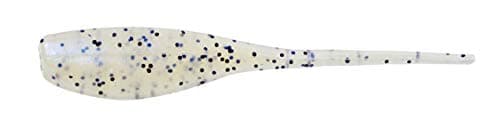
| 1 | Best all-round ice plastic Bobby Garland Original Baby Shad 2 in, 18 per pack, with a body that tapers to a thin tail that quivers on the drop and on the pause. | Crappie and perch on a finesse head | $3.99 · Check price on Amazon #ad how this is funded · price as of October 19, 2026 |
| 2 | 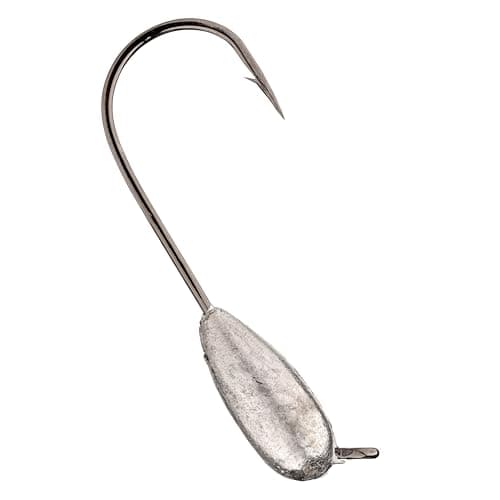 Best jig head for tipping plastics Strike King Tour Grade Shakey Head 1/8, 3/16 and 1/4 oz with a 60-degree flat-eye Gamakatsu hook and a barb that stands the bait up. | Holding a soft plastic upright and still | $5.99 · Check price on Amazon #ad how this is funded · price as of October 19, 2026 |
Weight is depth, not size
The most common mistake is choosing jig weight by the size of the fish. Choose it by depth and by how fast you want to be fishing.
| Weight | Use |
|---|---|
| 1/32 oz | Shallow, under 12 ft. Slowest fall, most bites, hardest to feel |
| 1/16 oz | The default. 10–25 ft, and it still falls slowly enough to trigger |
| 1/8 oz | 25 ft and deeper, or when you want to get back down fast between fish |
| 1/4 oz and up | Deep water, current, or a bigger profile for walleye and pike |
Use the lightest jig that still lets you feel the bottom and get down in reasonable time. A slower fall gets more bites, and the only reason to add weight is that you have stopped being able to tell what the lure is doing.
The cadence that works
More important than any purchase on this page. The sequence that catches fish on ice is almost always the same three moves.
- Lift. Raise the jig a foot or two with the rod, fairly briskly. This is the attention-getter, and on a screen you will see fish come to it.
- Drop. Lower the rod at roughly the speed the jig falls, keeping a semi-slack line. Most takes happen here.
- Hold. Stop completely and count to five. This is the step people skip and it is the one that converts followers into biters.
If a fish comes up and stops short, the answer is almost never to jig harder. Go still, or lift very slightly and stop again — a bait moving away slowly is far more convincing than one thrashing.
Tipping: plastic, bait, or both
A bare jig head catches very little on ice. It needs something on it.
Soft plastic keeps working indefinitely, does not freeze, and survives a lot of fish. It is the default and the reason a 2-inch body with a quivering tail is the standard ice plastic.
Live bait — waxworms, spikes, minnow heads — adds scent, which genuinely matters when fish are inactive in very cold water.
Both is common and sensible: a plastic body for action and durability with a single grub on the hook point for scent.
Color, briefly
Less important than cadence and depth, as always. Two rules cover it: bright or glow in stained water and low light, natural in clear water and bright conditions.
Glow is genuinely more useful on ice than in summer, because you are often fishing under a foot of snow-covered ice where very little light reaches. Recharge it with a phone flashlight rather than assuming it is still working an hour later.
What to skip
The 100-piece assorted ice jig kit. The same problem as its summer equivalent: a handful of usable sizes and ninety pieces you will never tie on, priced to make the piece count impressive.
Anything above 1/4 oz for panfish. It falls too fast to trigger and you cannot see what it is doing. Weight is for depth, not for fish size.
The picks, in full
Every card below lists the specs we could read off a published page, the URL they came from, and one honest reason you might not want it.
1. Best all-round ice plastic
Bobby Garland Original Baby Shad
Bobby Garland
2 in, 18 per pack, with a body that tapers to a thin tail that quivers on the drop and on the pause.
The published design is exactly what an ice bait needs: a bulbous dense body tapering to a thin, spear-shaped tail. The mass is at the front so it sits correctly on a jig head, and the thin tail keeps moving after the jig itself has stopped.
That last property is the whole point. Winter fish very often take during the pause, which means the useful bait is the one still doing something when you are doing nothing.
Eighteen per pack matters more here than it sounds. You will lose baits to the ice edge, to perch that shred them, and to numb fingers. A bait you are reluctant to lose is a bait you fish too cautiously.
The drawback
Two inches is a panfish profile. It will catch an incidental walleye but it is small for a fish that eats four-inch baitfish, and it is far too small for pike. Size up for those rather than hoping.
Published specs
- Length
- 2 in
- Pack size
- 18 per pack
- Body
- Bulbous dense body tapering to a thin spear-shaped tail
- Action
- Quivering tail on the fall and on a slow drag
- Rigs
- Finesse jig head, dropshot
Specs read from Tackle Warehouse — Bobby Garland Original Baby Shad.
#ad how this is funded · price as of October 19, 2026
2. Best jig head for tipping plastics
Strike King Tour Grade Shakey Head
Strike King
1/8, 3/16 and 1/4 oz with a 60-degree flat-eye Gamakatsu hook and a barb that stands the bait up.
This is an open-water bass head being recommended for ice on purpose, and the reason is the published barb design: it holds a soft plastic in place and stands it up rather than letting it slide down the shank.
On ice that geometry is worth real money, because a bait that has slipped down the hook hangs wrong and stops quivering, and you cannot see that happening thirty feet down.
The 60-degree flat eye also keeps the knot where it belongs, which matters when the jig is hanging vertically rather than being dragged.
The 1/8 oz is the useful size for ice; the heavier two are for deep water or current.
The drawback
The lightest published size is 1/8 oz, which is the top of the ice range rather than the middle. For crappie in shallow water you want 1/32 and 1/16 oz heads, and this range does not go there.
Published specs
- Weights
- 1/8, 3/16, 1/4 oz
- Hook
- 60-degree flat-eye Gamakatsu
- Pack size
- 3 per pack painted, 4 per pack unpainted
- Head design
- Barb to stand the bait up; eye flush with the head
- Colors
- Green pumpkin, black, unpainted
Specs read from Tackle Warehouse — Strike King Tour Grade Shakey Head.
#ad how this is funded · price as of October 19, 2026
Questions people actually ask
What size jig for ice fishing?
A sixteenth of an ounce as the default, a thirty-second for shallow water under twelve feet, and an eighth for twenty-five feet and deeper. Choose weight by depth rather than by the size of the fish.
How do you jig for fish through the ice?
Lift the jig a foot or two fairly briskly, drop the rod at the speed the jig falls keeping a semi-slack line, then stop completely and count to five. Most bites come on the drop or during that pause.
Should you tip an ice jig with bait or plastic?
Plastic keeps working indefinitely and survives more fish; live bait adds scent that matters when fish are inactive in very cold water. Many anglers run both — a plastic body for action with a single grub on the point.
Does jig color matter for ice fishing?
Less than cadence and depth. Bright or glow in stained water and low light, natural in clear water. Glow is more useful on ice than in summer because very little light gets through snow-covered ice — recharge it with a flashlight.
Read next
Sources
Prices on this page come from the retailer at request time and change without notice. If we cannot get a live one we say “check price” rather than show you a number that has gone stale. How we pick.