Setups
Your first boat: the four things that change when you leave the bank
The rods you already own are fine. What a boat adds is four problems the bank never gave you.
By Sawyer V. · Last updated · How we pick

The short answer
Sonar to find the water, a trolling motor to move on it quietly, a bag that will not spill when the boat rocks, and a tube so the rods survive the drive. Your existing rods and reels are almost certainly fine. Do not start by replacing them.
Reel & Rig earns a commission from qualifying purchases made through links on this page, at no extra cost to you. It does not change which gear we pick or what we say about it. Full disclosure.
The stack, in the order you buy it
- 1. Sonar
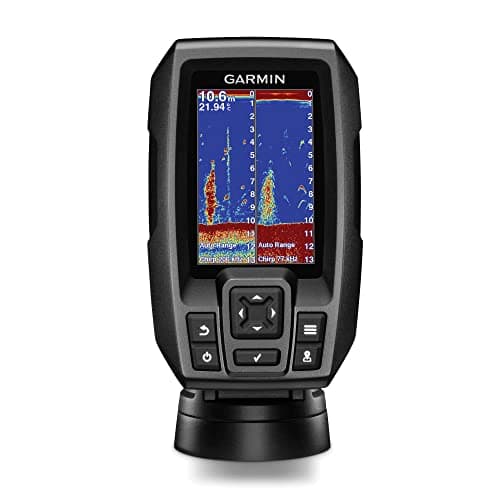
Garmin STRIKER 4
$139.993.5 in color, dual-beam CHIRP at 77/200 kHz, 200 W RMS, with built-in GPS and a waypoint map. Small, cheap and low draw. The waypoint map is the half that matters on a boat: finding a spot again is the whole advantage of not being on the bank.
$139.99 · Check price on Amazon#ad how this is funded · price as of October 12, 2026
- 2. Quiet propulsion
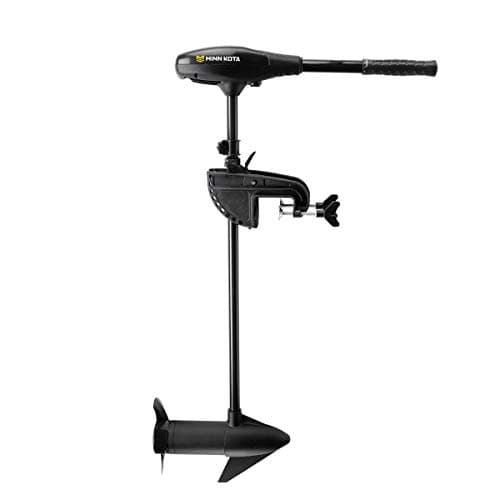
Minn Kota Endura Max Transom-Mount Trolling Motor
$293.0445 lb and 55 lb thrust published at 12 V, with 36 in and 42 in shafts and a published 50 A maximum draw on the 55. Digital Maximizer variable speed and a push-to-test battery meter, so you can see how much day you have left.
$293.04 · Check price on Amazon#ad how this is funded · price as of October 12, 2026
- 3. Storage
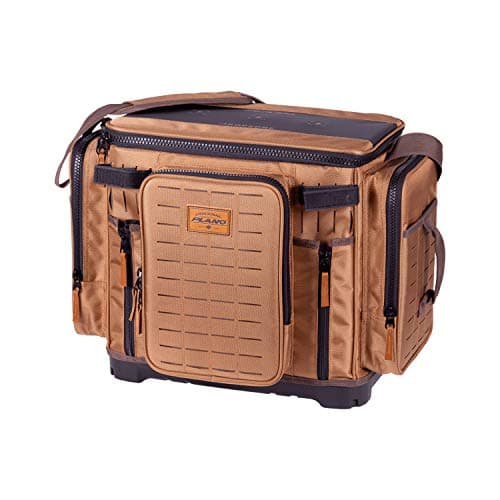
Plano Guide Series 3700XL Tackle Bag
$106.75A bag rather than a hard box. On a boat everything slides, and a bag with a shoulder strap stays where you put it and comes out in one trip. Sized on the 3700 footprint, which is the standard most trays use.
$106.75 · Check price on Amazon#ad how this is funded · price as of October 12, 2026
- 4. Rod transport
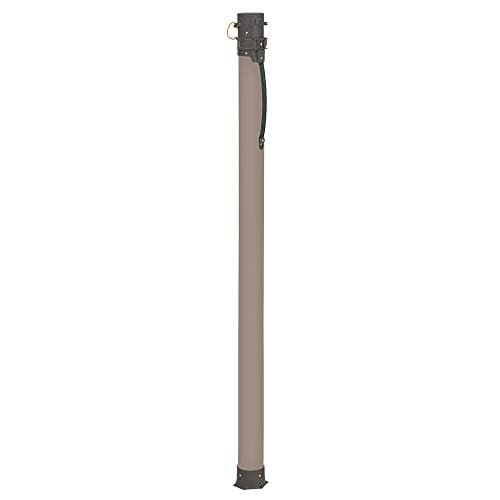
Plano Telescoping Rod Case (35102)
$77.82Telescopes from 58 to 106 in, 3.5 in across, foam-padded and lockable, and published as taking rods up to 8 ft 6 in. Rods do not break on fish, they break in vehicles — and a boat means a trailer and a drive at both ends of every trip.
$77.82 · Check price on Amazon#ad how this is funded · price as of October 12, 2026
We do not print a running total here. Every one of these prices moves independently, and a total we typed last week would be wrong today — check the five current prices above and add them up, which takes about twenty seconds and is always right.
What a boat actually changes
It is tempting to treat a first boat as a reason to rebuild your tackle. It is not. A largemouth caught from a boat is caught on the same rod, the same line and the same lure as one caught from the bank.
What changes is access. You can now reach water nobody walks to, and hold a position over it. That creates four new problems, and the gear above solves those four rather than improving your fishing generally.
| Problem | On the bank | In a boat |
|---|---|---|
| Finding fish | You fish what you can reach | Too much water, so sonar |
| Position | You stand still | Wind moves you, so a trolling motor |
| Gear | Stays where you set it down | Slides and gets wet |
| Rods | Carried by hand | Driven, trailered and stacked |
Sonar first, and smaller than you think
The reason to buy sonar on a first boat is not to see fish. It is to see depth, bottom hardness and structure — and, through the GPS, to be able to come back to the place where something happened.
A small unit with a waypoint map does that. Spending several times more on imaging is a reasonable upgrade later, once you know which lake you fish and how, and our five decisions guide puts the boat question before the feature question.
Match the unit to the hull. Our jon boat page and aluminum boat page cover mounting space, which on a small boat constrains the choice more than the budget does.
Thrust and shaft length are the two motor decisions
Minn Kota publishes 45 lb and 55 lb thrust at 12 V, and 36 in and 42 in shafts.
Thrust scales with boat weight and with how much wind you intend to fight. More is rarely wrong, but it costs amps — the 55 lb model publishes a 50 A maximum draw, which sets the battery you need.
Shaft length is the one people get wrong. Too short and the propeller ventilates in any chop, which is loud, inefficient and exactly what a trolling motor exists to avoid. Measure from the mounting point to the waterline before choosing, and our trolling motor page covers the arithmetic.
The battery is a purchase, not an afterthought
A 55 lb motor publishing 50 A maximum draw is not something a car battery is built for. Cranking batteries deliver a large current briefly; a trolling motor wants a moderate current for hours, which is a deep-cycle job.
Your sonar also draws from somewhere. A small unit is a modest load next to the motor, but it is worth counting.
Our battery page covers amp hours and chemistry. Budget for it at the same time as the motor rather than discovering it on the first trip.
Everything on a boat moves
This is the part nobody warns you about. On the bank you put a box down and it stays. On a boat it slides on the first wake, and an open tray of jig heads ends up in the bilge.
A soft bag holding 3700-footprint trays solves it: trays latch shut individually, the bag holds them upright, and it does not skate around the deck the way a hard box does. Our tackle bags page makes the case in general and our boat storage page covers what gets wet.
Anything you would hate to lose over the side gets a lanyard or lives in the bag. Pliers in particular.
Rods break in vehicles
A boat means a trailer, which means a drive at both ends of every trip, which means rods loaded and unloaded in a hurry in the dark.
A telescoping tube published from 58 to 106 in with a lockable door and foam padding is not a luxury for someone doing that weekly. Our rod storage page opens with the observation that most rods break in a car rather than on a fish, and boat ownership roughly doubles the number of car journeys your rods take.
The things this page has not listed
A PFD for everyone on board, which is not optional and in most places is not legal to skip. Our PFD page covers the argument that the one you wear is the one that works.
A landing net, an anchor suitable for your bottom type, and a bilge sponge. None of them is interesting and all of them are noticed the day you do not have one.
And nothing at all for the rods. If you were catching fish from the bank, you will catch them from the boat with the same gear — our kayak against boat page covers what the different craft actually buy you.
Questions people actually ask
What do I need to buy when I get my first fishing boat?
Sonar with GPS, a trolling motor and a deep-cycle battery for it, storage that will not slide around the deck, and a rod tube for transport. Your existing rods and reels almost certainly need no changes.
How much trolling motor thrust do I need?
Thrust scales with boat weight and with how much wind you expect to fight. Minn Kota publishes 45 lb and 55 lb at 12 V, and the 55 lb model publishes a 50 A maximum draw, which is what sets your battery.
What shaft length trolling motor should I get?
Measure from the mounting point to the waterline first. Too short and the propeller ventilates in any chop, which is loud and inefficient. Minn Kota publishes 36 in and 42 in shafts on this model.
Can I use a car battery for a trolling motor?
No. A cranking battery delivers a large current briefly, and a trolling motor wants a moderate current for hours. That is a deep-cycle job, and it should be budgeted alongside the motor.
Do I need a different fishing rod for boat fishing?
No. The same rods that caught fish from the bank catch them from a boat. What a boat adds is access and position, which is what the sonar and trolling motor are for.
Read next
Sources
Prices on this page come from the retailer at request time and change without notice. If we cannot get a live one we say “check price” rather than show you a number that has gone stale. How we pick.