Tackle
Squarebill or lipless: one has a running depth, the other sinks
Both are called crankbaits and they are fished in opposite ways. The published specifications make the split obvious once you look.
By Sawyer V. · Last updated · How we pick
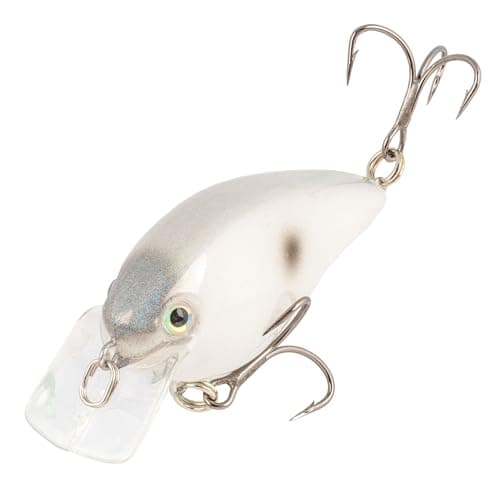
The short answer
The squarebill publishes 3–6 ft running depth and a deflection lip. The lipless publishes four weights from 1/4 to 3/4 oz, all sinking, with no running depth at all. Squarebill for shallow wood and rock you want to bang into. Lipless for any depth you can count down to, and for water with no cover to deflect off.
Reel & Rig earns a commission from qualifying purchases made through links on this page, at no extra cost to you. It does not change which gear we pick or what we say about it. Full disclosure.
Quick picks
| # | Product | Best for | Price |
|---|---|---|---|
| 1 | Best for shallow cover Strike King KVD 1.5 HC Squarebill Silent Crankbait 2-1/4 in, 3/8 oz, published 3-6 ft running depth, square deflection bill, published silent. | Laydowns, stumps, riprap and anything you want to bounce a lure off | $11.99 · Check price on Amazon #ad how this is funded · price as of October 12, 2026 |
| 2 | 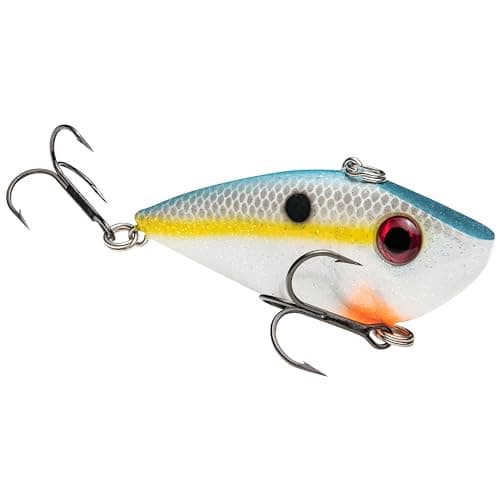 Best for any depth Strike King Red Eye Shad Lipless Crankbait Four weights from 1/4 oz at 2 in to 3/4 oz at 3 in, all sinking, no bill and no set running depth. | Open water, deep grass, and searching a flat at speed | $7.53 · Check price on Amazon #ad how this is funded · price as of October 12, 2026 |
The published figures
| Figure | KVD 1.5 HC squarebill | Red Eye Shad lipless |
|---|---|---|
| Length | 2-1/4 in | 2 to 3 in by weight |
| Weight | 3/8 oz | 1/4, 3/8, 1/2, 3/4 oz |
| Running depth | 3-6 ft | None published — it sinks |
| Bill | Square, deflection design | None |
| Sound | Published silent | Not published |
| Hook size | Not published | Not published |
The running depth row is the whole comparison. One lure has a depth built into it and the other has a depth you choose on every cast.
A bill is a depth control, and it costs you everything else
A crankbait lip catches water and drives the bait down until the pull of the line balances it. That is why the depth is a published figure rather than a technique — it is a property of the lure.
The upside is repeatability. You can fish a 4 ft flat all afternoon and know the lure is at 4 ft on every single cast, with no counting, no line watching and no judgment.
The downside is that 6 ft is a hard ceiling. There is no way to fish a squarebill at 15 ft. For that you need a different bill entirely, which is what the deep-diving class exists for — our crankbaits page lays the bills out by depth.
No bill means you are the depth control
A lipless crankbait is denser than water and published as sinking. Cast it, and it goes down at a steady rate until you start winding.
Count as it falls. Three seconds might be 6 ft, eight seconds might be 16 ft, depending on the weight you chose. Start winding at the count you want and the bait swims roughly level.
This makes one lure cover the entire water column, which is genuinely useful when you do not yet know where the fish are. It is also why it is the better choice on a strange lake: you can search vertically as well as horizontally.
Cover decides it more often than depth does
Here is the practical rule that matters more than any specification on this page.
Wood and rock: squarebill. The square lip deflects instead of wedging, and the whole design assumes contact. Fishing a lipless through a laydown costs you lures.
Grass: lipless. You can rip it free of vegetation and the snap triggers strikes. A squarebill fouls and stays fouled.
Nothing at all: lipless. On a bare flat or over deep structure the squarebill has nothing to deflect off, so its main advantage is switched off.
Our lure color page makes a similar argument about water clarity — the conditions pick the lure far more often than the fish do.
Season is a decent proxy for both
Squarebills shine when bass are shallow and near cover, which is most of spring and much of autumn. Our spring lures page carries the squarebill for exactly that reason.
Lipless baits shine when fish are deeper or when you need to cover water fast, which is winter, early spring before the water warms, and any day when the fish have moved off the bank. Our winter lures page leads with one.
That is a generalization and generalizations about bass are wrong roughly a third of the time. Treat it as a starting point rather than a rule.
The silent specification is worth a paragraph
Strike King publishes this KVD 1.5 as silent. Most squarebills rattle, and the silent version exists because on heavily fished water a quiet bait sometimes out-fishes a loud one.
It cuts the other way in stained or muddy water, where sound is one of the few ways a bass locates a lure at all. In that water a rattling bait is the better tool, and this specific model is the wrong one.
Strike King does not publish a sound specification for the Red Eye Shad in the source used here, so we are not going to tell you what it does or does not do. Buy the silent squarebill for clear, pressured water and buy on published depth everywhere else.
If you only buy one
Buy the lipless. It covers the entire water column, it searches water faster, and it works in grass and open water — which between them is most freshwater bass fishing.
Buy the squarebill second, as soon as you find yourself fishing wood or rock in less than 6 ft of water. At that point it stops being a nice-to-have and becomes the only right tool in the box.
So what do I actually buy?
Buy the one that matches your cover. Wood and rock in shallow water is squarebill country; everything else is better served by a bait you can count down.
Strike King Red Eye Shad Lipless Crankbait
$7.53Four weights, all sinking. Count it down to any depth, and rip it out of grass.
#ad how this is funded · price as of October 12, 2026
Strike King KVD 1.5 HC Squarebill Silent Crankbait
$11.993-6 ft published, square deflection lip, silent. For banging into shallow cover.
#ad how this is funded · price as of October 12, 2026
Strike King Pro Model 5XD Crankbait
$7.53If 6 ft is not deep enough: a published 15 ft from an extra-deep bill.
#ad how this is funded · price as of October 12, 2026
The picks, in full
Every card below lists the specs we could read off a published page, the URL they came from, and one honest reason you might not want it.
1. Best for shallow cover
Strike King KVD 1.5 HC Squarebill Silent Crankbait
Strike King
2-1/4 in, 3/8 oz, published 3-6 ft running depth, square deflection bill, published silent.
A published running depth of 3–6 ft is what a bill buys you. Wind it in and it goes to a known depth and stays there, which means you can fish it along a specific contour without thinking about it.
The square lip is a deflection design, published as such. A square corner catches a stump or a rock and kicks the bait sideways, and that erratic deflection is what triggers the strike. This is a lure built to hit things, not to avoid them.
Strike King publishes this particular model as silent — no rattle. That is a deliberate choice for pressured or very clear water, where a noisy bait can put fish off a lure they have already seen a dozen times this season.
3/8 oz at 2-1/4 in casts well on a medium spinning or casting outfit. Our crankbaits page covers how the bill decides the depth across the whole category.
The drawback
6 ft is the published ceiling, and that makes it useless for the deep fish that dominate summer and winter. It has no ability to be fished vertically or counted down, so in open water with no cover it does very little a lipless does not do better. Strike King publishes no hook size for it, and a silent bait is a disadvantage in stained water where sound is how a bass finds the lure.
Published specs
- Length
- 2-1/4 in
- Weight
- 3/8 oz
- Running depth
- 3-6 ft
- Rattle
- None — silent
- Lip
- Square bill, deflection design
Specs read from Tackle Warehouse — Strike King KVD 1.5 HC Squarebill Silent Crankbait.
#ad how this is funded · price as of October 12, 2026
2. Best for any depth
Strike King Red Eye Shad Lipless Crankbait
Strike King
Four weights from 1/4 oz at 2 in to 3/4 oz at 3 in, all sinking, no bill and no set running depth.
“Sinking, no set running depth” is the published spec and it is a feature rather than an omission. You cast it, count it down, and start winding at whatever depth you chose. No other hard bait in a normal tackle box is that flexible.
Four published weights from 1/4 oz at 2 in to 3/4 oz at 3 in means you can match the sink rate to the depth. The heavy one gets down fast in 20 ft; the light one hovers over shallow grass.
With no bill, it can be ripped free of grass. That is the classic winter and early spring presentation — wind it until it fouls in the weed, snap the rod to tear it loose, and let it fall. The fall is when it gets eaten.
It is also the better searching bait. You can cover a flat quickly at a set depth, which is why our lipless page treats it as the tool for finding fish rather than for picking cover apart.
The drawback
Exposed trebles and no deflection design means it snags in wood. Fishing it through a laydown is how you lose it, and that is precisely the water the squarebill owns. Strike King publishes no hook size and no sound specification for it, so if you want a rattle you are buying on reputation rather than on a stated figure. It also sinks, so a pause over hard cover buries it.
Published specs
- 1/4 oz
- 2 in, sinking
- 3/8 oz
- 2.25 in, sinking
- 1/2 oz
- 2.5 in, sinking
- 3/4 oz
- 3 in, sinking
- Class
- Sinking - it has no bill and no set running depth
- Hook size
- Strike King does not publish it
Specs read from Tackle Warehouse - Strike King Red Eye Shad.
#ad how this is funded · price as of October 12, 2026
Questions people actually ask
What is the difference between a squarebill and a lipless crankbait?
A squarebill publishes a running depth — 3 to 6 ft here — and a square lip designed to deflect off cover. A lipless has no bill, publishes no running depth, and sinks, so you choose the depth by counting it down.
How deep does a squarebill crankbait run?
Strike King publishes 3-6 ft for the KVD 1.5 HC. That is a property of the lip, so it runs to roughly that depth on every cast regardless of how you fish it.
How do you fish a lipless crankbait?
Cast it, count it down to the depth you want, then wind. Because it sinks and has no bill it can be fished at any depth, and it can be ripped free of grass, which is the classic cold-water presentation.
Which crankbait is better for grass?
The lipless. It has no bill to foul and can be snapped free of vegetation, and the strike usually comes as it falls afterwards. A squarebill fouls in grass and stays fouled.
Should a crankbait rattle?
In stained or muddy water a rattle helps a bass find the lure. In clear, heavily fished water a silent bait often does better, which is why Strike King publishes a silent version of this squarebill.
Read next
Sources
Prices on this page come from the retailer at request time and change without notice. If we cannot get a live one we say “check price” rather than show you a number that has gone stale. How we pick.