Tackle
Tube baits: a hollow body and tentacles, and two ways to rig it
The bait that imitates a crayfish, a baitfish or nothing in particular, depending entirely on how you rig it.
By Sawyer V. · Last updated · How we pick
The short answer
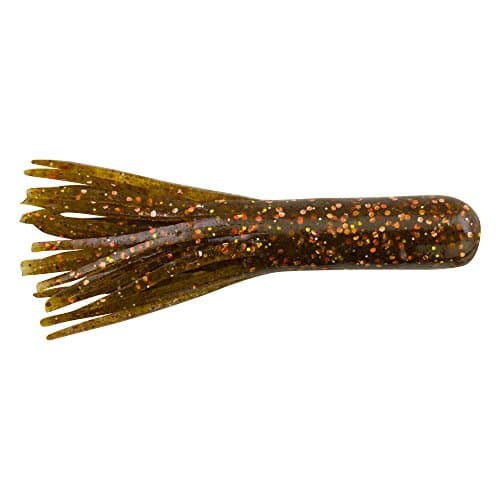
A tube is a hollow plastic body with a skirt of tentacles. Rigged with the jig head inside, it spirals as it falls; rigged Texas-style on an offset hook, it is weedless. The Berkley PowerBait Power Tube is published at 3 1/2 in, eight per pack, in Berkley’s PowerBait scent-and-flavor formula.
Reel & Rig earns a commission from qualifying purchases made through links on this page, at no extra cost to you. It does not change which gear we pick or what we say about it. Full disclosure.
Quick picks
| # | Product | Best for | Price |
|---|---|---|---|
| 1 | Best tube bait Berkley PowerBait Power Tube (3.5 in) 3 1/2 in, eight per pack, hollow body, in Berkley's PowerBait scent-and-flavor formula. | Smallmouth on rock, and bass anywhere crayfish live | $6.99 · Check price on Amazon #ad how this is funded · price as of October 12, 2026 |
Why hollow changes everything
Almost every other soft plastic is solid. A tube is a hollow cylinder, closed at the nose, split into tentacles at the tail.
That hollow body traps water and air, and it makes the bait unstable as it sinks. Instead of dropping straight, a tube glides and spirals — it circles downward in a wide helix.
That fall is the entire attraction. It looks like something injured and out of control, it covers a wider area than a straight drop, and it takes longer, which keeps the bait in the strike zone. The overwhelming majority of tube bites come on the fall.
The tentacles do the rest, waving continuously with almost no movement from you — the same quality that makes a Ned rig work when it is doing nothing.
Two ways to rig one, and they are different lures
| Internal jig head | Texas rigged | |
|---|---|---|
| Head position | Inside the body, hook out the side | Offset hook, point buried in plastic |
| Fall | Spirals - the classic action | Straighter |
| Weedless | No | Yes |
| Hook-up rate | High - the point is exposed | Lower |
| Use in | Rock, gravel, open bottom | Grass, wood, brush |
The internal head is the traditional method and produces the spiral. A specialised tube jig head goes in nose-first and the hook eye pokes out through the side of the body. Our jig heads page covers head selection, though tube-specific heads are a distinct shape.
Texas rigging treats a tube like any other soft plastic — offset worm hook, point buried, as our Texas rig page describes. You lose most of the spiral and gain the ability to fish it through cover.
Start with the internal head. The spiral is the reason to own tubes at all.
Why smallmouth eat them
A tube on the bottom looks remarkably like a crayfish, and crayfish are a large part of the smallmouth diet on rocky water.
The imitation is not just visual. Dragged along gravel, the tentacles splay and the body tips nose-down, which is very close to a crayfish backing away with its claws raised.
That is why our smallmouth setup has one in it, and why tube fishing is most strongly associated with rocky rivers and clear northern lakes.
How to fish it
Cast and let it fall on a semi-slack line. This is the important part. A tight line pulls the tube toward you and kills the spiral. Slack line lets it circle.
Watch the line, not the rod. Bites on the fall show as the line twitching, jumping, or simply stopping before it should have reached the bottom.
Then drag, do not hop. Once it is down, move it slowly along the bottom with the rod, then pause. A crayfish scuttles and stops; it does not leap.
Set the hook on anything unusual. Tube bites are frequently just weight.
Color, briefly
Green pumpkin covers most water and most conditions. Watermelon in clear water, something darker in stained.
Berkley publishes seven colors for this tube — green pumpkin, watermelon red, watermelon vapor, breen green, goby magic, lucky penny and white — and most of them are variations on those themes. Our lure color page explains why this category matters less than depth or presentation.
Gear that suits them
A medium or medium-light spinning rod with a fast tip, and light line. You are feeling for subtle bites at range and you need enough tip sensitivity to detect a line twitch.
Fluorocarbon is the usual choice: it sinks, which helps keep contact with a bait on the bottom, and it is abrasion-resistant against the rock where tubes are most often fished. Our fluorocarbon page covers the trade.
So what do I actually buy?
A pack of 3 1/2 in tubes in a natural color and a few tube jig heads. That is the whole entry cost, and the internal head is what produces the action.
Berkley PowerBait Power Tube (3.5 in)
$6.993 1/2 in, eight per pack, PowerBait formula. The general smallmouth and bass size.
#ad how this is funded · price as of October 12, 2026
Seaguar InvizX Fluorocarbon Line
$25.99Fluorocarbon sinks and resists abrasion on rock, which is where tubes are fished.
#ad how this is funded · price as of October 12, 2026
Pflueger President Spinning Reel (25X)
$63.70A 25-size reel on a fast-tipped rod is the right pairing for feeling a fall bite.
#ad how this is funded · price as of October 12, 2026
The picks, in full
Every card below lists the specs we could read off a published page, the URL they came from, and one honest reason you might not want it.
1. Best tube bait
Berkley PowerBait Power Tube (3.5 in)
Berkley
3 1/2 in, eight per pack, hollow body, in Berkley's PowerBait scent-and-flavor formula.
Published at 3 1/2 inches with eight baits per pack. That size is the smallmouth and general bass standard — large enough to interest a good fish, small enough that a two-pounder eats it without hesitating.
Berkley publishes this one as infused with the PowerBait scent-and-flavor formula. That is a scent claim rather than a salt claim, and it is the one specification on the pack you cannot verify by looking at the bait.
Whether fish care about scent is genuinely debated, and we have not tested it. The argument for it is that a bass holds a scented bait fractionally longer, and on a rig where you are waiting to feel a soft pick-up, fractions of a second are the difference between a hooked fish and a missed one. Treat that as the claim it is.
Published as a hollow body with molded tentacles that fits a standard tube jig head, and equally as a Texas-rigged flipping bait in heavier cover.
The drawback
Tubes tear at the head, which is where the hook exits, and eight per pack disappears quickly on a good day — this is a consumable, not a lure. Berkley also does not publish a body diameter, which is the figure you would want in order to match an internal jig head properly, so head fitting is trial and error. Berkley publishes no country of manufacture for it either.
Published specs
- Length
- 3 1/2 in (9 cm)
- Pack quantity
- 8
- Material
- Soft plastic, PowerBait scent-and-flavor formula
- Body
- Hollow, with molded tentacles
- Colorway linked
- Lucky Penny
- Rigging
- Tube jig head inside, or Texas rigged and flipped
- Made in
- Not published
Specs read from Tackle Warehouse - Berkley Powerbait Power Tubes.
#ad how this is funded · price as of October 12, 2026
Questions people actually ask
What is a tube bait?
A hollow soft-plastic cylinder closed at the nose and split into tentacles at the tail. Being hollow makes it unstable as it sinks, so it spirals downward rather than dropping straight — and most bites come on that fall.
How do you rig a tube bait?
Two ways. An internal tube jig head goes in nose-first with the hook eye out the side, which produces the spiral. Texas rigging on an offset hook makes it weedless but straightens the fall.
Why do smallmouth like tube baits?
Because a tube dragged along gravel looks very like a crayfish backing away with its claws up, and crayfish are a large part of the smallmouth diet on rocky water.
How should you fish a tube on the fall?
On a semi-slack line, watching the line rather than the rod. A tight line pulls the tube toward you and kills the spiral. Bites show as the line twitching, jumping or stopping early.
Read next
Sources
Prices on this page come from the retailer at request time and change without notice. If we cannot get a live one we say “check price” rather than show you a number that has gone stale. How we pick.