Tackle
The best walleye lures: jigs, cranks and one suspending bait
One lure catches most walleye, and the other two exist for the days it does not.
By Sawyer V. · Last updated · How we pick
The short answer
A jig with a soft plastic on it catches more walleye than everything else combined. Add a deep crankbait for covering water and a suspending jerkbait for cold, and you are done. A 3.8 in paddle tail on a 1/4 to 3/8 oz head is the starting point.
Reel & Rig earns a commission from qualifying purchases made through links on this page, at no extra cost to you. It does not change which gear we pick or what we say about it. Full disclosure.
Quick picks
| # | Product | Best for | Price |
|---|---|---|---|
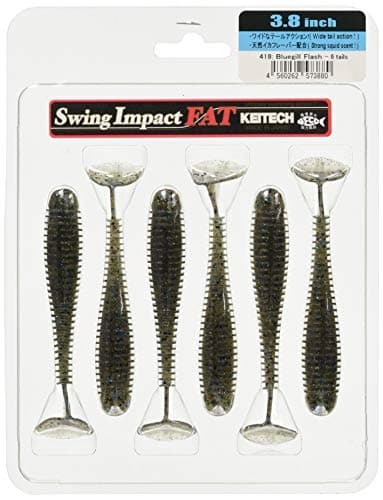
| 1 | Best walleye lure Keitech Swing Impact FAT Swimbait Published in eight sizes from 2.8 to 7.8 in — the 3.8 in is the walleye size. | Vertical jigging and casting to structure | $10.84 · Check price on Amazon #ad how this is funded · price as of October 12, 2026 |
| 2 | 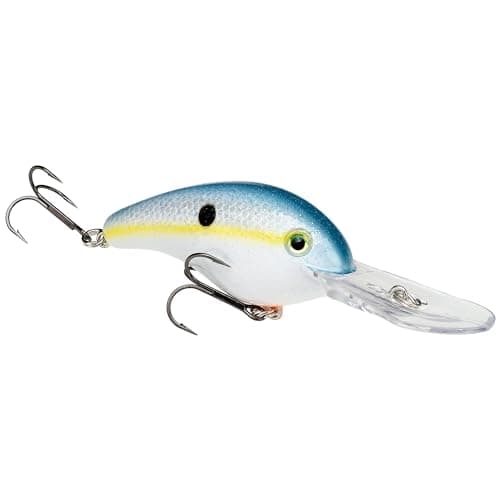 Best for covering water Strike King Pro Model 5XD Crankbait 2.5 in, 5/8 oz, published at 15 ft on an extra-long bill. | Finding walleye on flats and along breaks | $7.53 · Check price on Amazon #ad how this is funded · price as of October 12, 2026 |
| 3 | 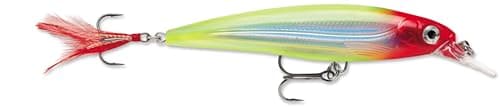 Best for cold water Rapala X-Rap 10 Jerkbait 4 in, 7/16 oz, published as suspending at 4-6 ft. | Early spring, late fall, and fish that will not chase | $15.97 · Check price on Amazon #ad how this is funded · price as of October 12, 2026 |
Why the jig dominates
Walleye feed close to the bottom, on or near structure, and they take a bait quietly. A jig is the only presentation that does all three at once: it gets to the bottom, stays there, and can be worked slowly enough for a fish that is not in a hurry.
It is also the presentation that transmits a bite. A walleye take is frequently just weight, as our walleye rods page explains, and a jig on a tight line is the most direct connection you can have to it.
The practical instruction is to fish it slower than feels right. Lift a foot, let it fall on a controlled line, pause, repeat. Most bites come as the jig falls or sits.
Head weight by depth
| Depth | Still water | Current or wind |
|---|---|---|
| Under 10 ft | 1/8 oz | 1/4 oz |
| 10-20 ft | 1/4 oz | 3/8 oz |
| 20-30 ft | 3/8 oz | 1/2 oz |
| 30 ft plus | 1/2 oz | 3/4 oz |
The rule underneath the table: use the lightest head that keeps you in contact with the bottom. Too heavy and the fall is unnaturally fast; too light and you cannot feel bottom, so you cannot feel a bite either.
The seasonal pattern
Early spring. Shallow rock and current. The suspending jerkbait is at its best, and a jig fished very slowly is the alternative.
Summer. Deeper structure, main-lake points and breaks. Jigs and the deep crankbait, with the crankbait finding fish and the jig working them.
Fall. Feeding heavily and willing to chase. The best crankbait period of the year.
Winter and through the ice. Vertical, slow, small. Our ice setups page covers the hard-water version.
Live bait, honestly
A jig tipped with a minnow or a leech out-fishes a plain plastic jig on a lot of days, and it would be dishonest to leave that out of a lure page.
Plastics win on durability, on not needing a bait shop, and on covering water — you can cast a plastic all day without re-baiting. Live bait wins on the days fish are fussy.
Our live bait vs lures page works through the whole comparison rather than pretending one always wins.
Where to fish them
Depth changes and structure: points, reefs, the edge of a break, and current seams in rivers. Walleye sit on the transition rather than in open water, the same logic our river page applies to trout and smallmouth.
Low light matters more for walleye than for almost any other species. Dawn, dusk and after dark are genuinely better, which is another argument for the sensitive rod our rods page recommends — at night, feel is all you have.
Our complete walleye setup ties the whole thing together.
So what do I actually buy?
Buy the paddle tails and a range of jig heads first. The crankbait and the jerkbait are seasonal additions rather than starting points.
Keitech Swing Impact FAT Swimbait
$10.84Eight published sizes; the 3.8 in is the walleye standard.
#ad how this is funded · price as of October 12, 2026
Strike King Pro Model 5XD Crankbait
$7.532.5 in, 5/8 oz, published at 15 ft. Covers water fast to find fish.
#ad how this is funded · price as of October 12, 2026
Rapala X-Rap 10 Jerkbait
$15.974 in, 7/16 oz, suspending at 4-6 ft. The cold-water bait.
#ad how this is funded · price as of October 12, 2026
Power Pro Spectra Braided Line
$44.25Braid transmits the weight-only take that mono absorbs at depth.
#ad how this is funded · price as of October 12, 2026
The picks, in full
Every card below lists the specs we could read off a published page, the URL they came from, and one honest reason you might not want it.
1. Best walleye lure
Keitech Swing Impact FAT Swimbait
Keitech
Published in eight sizes from 2.8 to 7.8 in — the 3.8 in is the walleye size.
The 3.8 in size is the walleye standard, and the eight published sizes let you scale down to 3.3 in when fish are fussy or up to 4.8 in when they are aggressive.
Dual-injection molding is published: two salted plastics in one bait, which in practice means a softer tail on a firmer body. The soft tail kicks at very low retrieve speeds, and low speed is what walleye jigging is.
That matters because a paddle tail that only works when retrieved briskly is useless vertically. This one thumps on the lift and on the drop.
Match it to a jig head weight rather than to the bait: 1/4 oz for fifteen feet, 3/8 oz for twenty-five, heavier in current. Our jig heads page covers head selection.
The drawback
The soft plastic that makes the tail work at low speed also tears quickly, and a productive walleye day costs several baits. Keitech does not publish pack quantities on the product page, which makes cost per bait impossible to work out before buying.
Published specs
- Sizes
- 2.8, 3.3, 3.8, 4.3, 4.8, 5.8, 6.8, 7.8 in
- Body
- Dual-injection molded from two salted plastics
- Tail
- Thickened paddle
- Scent
- Squid; the French Pearl color is published as unscented
- Pack quantity
- Not published on the product page
Specs read from Tackle Warehouse - Keitech Swing Impact FAT Swimbait.
#ad how this is funded · price as of October 12, 2026
2. Best for covering water
Strike King Pro Model 5XD Crankbait
Strike King
2.5 in, 5/8 oz, published at 15 ft on an extra-long bill.
Published at 15 ft, which is the depth band a great deal of walleye fishing happens in. That number is the reason to choose this bait — you are matching a published depth to the water rather than guessing.
A jig finds fish slowly and precisely; a deep crankbait finds them quickly over a large area. On a big flat where you do not yet know where the fish are, that speed is worth more than presentation quality.
Once a crankbait has told you where they are, the jig is usually the better tool for working them properly. The two are a sequence rather than alternatives.
The drawback
A deep crankbait pulls hard on every crank and an hour of it is tiring on a medium spinning rod — this is the bait that convinces people to buy a moderate-action cranking rod. It also needs long casts to reach its stated depth, so it fishes poorly from a bank.
Published specs
- Length
- 2.5 in
- Weight
- 5/8 oz
- Depth
- 15 ft
- Bill
- Extra-deep, published as diving 4-5 ft deeper than the Series 5
- Class
- Deep-diving crankbait
Specs read from Tackle Warehouse - Strike King Pro Model 5XD Crankbaits.
#ad how this is funded · price as of October 12, 2026
3. Best for cold water
Rapala X-Rap 10 Jerkbait
Rapala
4 in, 7/16 oz, published as suspending at 4-6 ft.
Suspending is the published class, and it is what makes this work when a jig does not. Left alone the bait hangs at depth in front of a fish rather than sinking away or floating up.
Walleye in cold water are the definition of unwilling to chase. A bait that stops and waits removes the chase, and pauses of five to ten seconds are normal.
The 4–6 ft published depth is shallower than most walleye fishing, which is correct for the season it suits: cold-water walleye frequently move surprisingly shallow onto rock flats.
The drawback
The 4-6 ft depth band limits it to shallow presentations, so it is useless for the deep summer fishing where most walleye are. Three treble hooks also foul in weed and make releasing fish slower than a single-hook jig.
Published specs
- Length
- 4 in
- Weight
- 7/16 oz
- Depth
- 4-6 ft
- Class
- Suspending
- Hooks
- VMC black nickel trebles
- Body
- Textured translucent, internal holographic foil
- Construction
- Stainless through-wire
- Tail
- Flash feather teaser
- Casting
- Long-cast system
- Colors
- 12 offered
Specs read from Tackle Warehouse - Rapala X-Rap 10 Jerkbaits.
#ad how this is funded · price as of October 12, 2026
Questions people actually ask
What is the best lure for walleye?
A jig with a soft plastic paddle tail, in 3.8 in on a 1/4 to 3/8 oz head. It gets to the bottom, stays there, can be worked slowly enough for an unhurried fish, and transmits the quiet take.
What weight jig head for walleye?
The lightest that keeps you in contact with the bottom — roughly 1/4 oz at ten to twenty feet, 3/8 oz at twenty to thirty, heavier in current. Too heavy and the fall is unnatural; too light and you cannot feel bottom or a bite.
When should you use a crankbait for walleye?
To find fish over a large area, especially in fall when they chase. A deep crankbait published at 15 ft covers a flat quickly; once it has told you where they are, a jig usually works them better.
Is live bait better than lures for walleye?
On fussy days, often yes — a jig tipped with a minnow or leech out-fishes plain plastic. Plastics win on durability, on not needing a bait shop, and on covering water without re-baiting.
Read next
Sources
Prices on this page come from the retailer at request time and change without notice. If we cannot get a live one we say “check price” rather than show you a number that has gone stale. How we pick.