Tackle
Paddle-tail swimbaits: the most versatile plastic you can own
One soft plastic that catches everything from crappie to pike, depending entirely on which size you pull out of the bag.
By Sawyer V. · Last updated · How we pick
The short answer
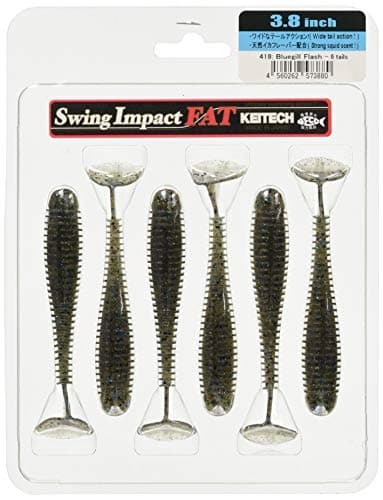
A paddle-tail swimbait is the most versatile soft plastic there is. The Keitech Swing Impact FAT is published in eight sizes from 2.8 in to 7.8 in. Size selects the species: 2.8–3.3 in for panfish and crappie, 3.8–4.8 in for bass and walleye, and above that for pike and musky.
Reel & Rig earns a commission from qualifying purchases made through links on this page, at no extra cost to you. It does not change which gear we pick or what we say about it. Full disclosure.
Quick picks
| # | Product | Best for | Price |
|---|---|---|---|
| 1 | Best paddle-tail swimbait Keitech Swing Impact FAT Swimbait Eight published sizes from 2.8 to 7.8 in, dual-injection molded from two salted plastics. | Anyone who wants one plastic that works for several species | $10.95 · Check price on Amazon #ad how this is funded · price as of October 12, 2026 |
Why the paddle is the whole design
A swimbait body on its own is just a plastic minnow. The flat, angled paddle at the back is what makes it work.
As the bait moves forward, water pushes on the paddle’s flat face and forces the tail to one side; the tail then swings back and the cycle repeats. The result is a rhythmic thump you can feel through the rod, and that thump is the fish attractor. Sight is secondary.
The practical consequence: if you cannot feel the tail working, the bait is not working. Slow down or speed up until you can. A paddle-tail retrieved too slowly to activate the tail is a dead piece of plastic.
Size selects the species
| Size | Typical target | Rig it on |
|---|---|---|
| 2.8 in | Crappie, perch, bluegill | 1/16-1/8 oz jig head |
| 3.3 in | Crappie, smallmouth, trout | 1/8 oz jig head |
| 3.8 in | Bass, walleye | 1/8-1/4 oz jig head or weedless hook |
| 4.8 in | Bass, big walleye | 1/4-3/8 oz head, or as a spinnerbait trailer |
| 5.8 in and up | Pike, musky, big bass | Heavy weighted swimbait hook |
If you buy one size, buy 3.8 in. It is small enough that a crappie will eat it and big enough that a five-pound bass will not ignore it.
Three ways to rig one
On a jig head. The simplest and the best starting point. The weight sits at the nose, the hook exits the back of the bait, and the whole thing swims level. Match the head weight to the depth you need, not to the bait size — heavier for deeper or for wind.
On a weighted weedless hook. The hook point is buried in the plastic, so it comes through grass and wood that a jig head would foul. You lose some hook-up rate and gain the ability to fish cover.
As a trailer. Behind a spinnerbait or a bladed jig, a paddle tail adds a second source of vibration and a bigger profile. This is a genuinely different lure, not a garnish.
Our jig head guide covers head shape and weight selection in detail, and it applies directly here.
Retrieve: slower than you think
The most common error is fishing a swimbait like a crankbait — fast, steady, and well above the fish.
A better default is a slow, steady retrieve just fast enough to feel the tail, kept close to the bottom. Let it sink after the cast, count it down, and start the retrieve from there. Most fish that eat a swimbait eat it in the bottom third of the water column.
The one variation worth learning is a stop. Pause the retrieve, let the bait fall for a second or two, then start again. The fall is where the bites come, and it works for exactly the same reason a jerkbait pause does.
Why this is the crossover bait
Almost nothing else in a tackle box works for crappie in the morning and pike in the afternoon. Swapping from a 2.8 in on a 1/16 oz head to a 5.8 in on a heavy hook is a genuine change of target species using one product line.
For a bank angler carrying one small box, that flexibility is worth more than any single specialist lure. It is also why our panfish setup and our bass setup both have room for one.
So what do I actually buy?
Start with the 3.8 in and a few jig heads. That single combination catches bass, walleye, crappie and perch, which is more than any hard bait on this site can claim.
Keitech Swing Impact FAT Swimbait
$10.95Published in eight sizes from 2.8 to 7.8 in. The 3.8 in is the one to buy first.
#ad how this is funded · price as of October 12, 2026
Bobby Garland Original Baby Shad
$3.99A smaller soft-plastic option when the target is specifically crappie and panfish.
#ad how this is funded · price as of October 12, 2026
Power Pro Spectra Braided Line
$44.25Braid transmits the tail thump clearly, which is how you know the bait is working.
#ad how this is funded · price as of October 12, 2026
The picks, in full
Every card below lists the specs we could read off a published page, the URL they came from, and one honest reason you might not want it.
1. Best paddle-tail swimbait
Keitech Swing Impact FAT Swimbait
Keitech
Eight published sizes from 2.8 to 7.8 in, dual-injection molded from two salted plastics.
Eight sizes: 2.8, 3.3, 3.8, 4.3, 4.8, 5.8, 6.8 and 7.8 inches. That range is the reason this bait is worth a page of its own — one design covers panfish through to musky simply by changing which bag you reach into.
The construction is published as dual-injection molding, which combines two different salted plastics in one bait. In practice that means a softer tail on a firmer body: the tail kicks at very low speeds, and the body still holds a hook.
That soft tail is what a paddle-tail is for. The flat paddle catches water and thumps from side to side, which is a vibration a fish detects through its lateral line before it sees anything at all.
It is published as impregnated with squid scent, with the French Pearl color listed as the exception. Whether scent matters is arguable; that they publish which color lacks it is a good sign.
The drawback
The soft plastic that makes the tail work is also the reason these tear. Expect to lose baits to fish and to hook tears far faster than with a firmer plastic. Keitech also does not publish the pack quantity on the product page, which makes cost-per-bait impossible to work out before you buy.
Published specs
- Sizes
- 2.8, 3.3, 3.8, 4.3, 4.8, 5.8, 6.8, 7.8 in
- Body
- Dual-injection molded from two salted plastics
- Tail
- Thickened paddle
- Scent
- Squid; the French Pearl color is published as unscented
- Pack quantity
- Not published on the product page
Specs read from Tackle Warehouse - Keitech Swing Impact FAT Swimbait.
#ad how this is funded · price as of October 12, 2026
Questions people actually ask
What size swimbait should you use?
3.8 inches if you buy one. Sizes around 2.8 to 3.3 in suit crappie and panfish, 3.8 to 4.8 in suits bass and walleye, and 5.8 in and up is pike and musky territory.
How do you rig a paddle-tail swimbait?
Three ways: on a jig head for open water, on a weighted weedless hook for grass and wood, or as a trailer behind a spinnerbait or bladed jig. The jig head is the simplest and the place to start.
How fast should you retrieve a swimbait?
Just fast enough to feel the tail thumping through the rod, and no faster. If you cannot feel it, the bait is not working. Most fish eat it in the bottom third of the water column, so count it down first.
Why do swimbaits tear so easily?
Because the soft plastic that lets the tail kick at low speed is also weak at the hook. It is a direct trade-off — a firmer bait lasts longer and swims worse. Treat torn baits as a running cost.
Read next
Sources
Prices on this page come from the retailer at request time and change without notice. If we cannot get a live one we say “check price” rather than show you a number that has gone stale. How we pick.