Rods
The best walleye rods: a soft tip on a rod with backbone
The species where the bite is often just weight, so the rod has to report it before you can react.
By Sawyer V. · Last updated · How we pick
The short answer
A walleye bite is frequently just weight on the line. You need a tip sensitive enough to report it and enough blank behind the tip to set a hook at depth. A 6 ft 6 in to 7 ft medium-light or medium with a fast tip is the standard answer, and a longer rod suits trolling and rigging.
Reel & Rig earns a commission from qualifying purchases made through links on this page, at no extra cost to you. It does not change which gear we pick or what we say about it. Full disclosure.
Quick picks
| # | Product | Best for | Price |
|---|---|---|---|
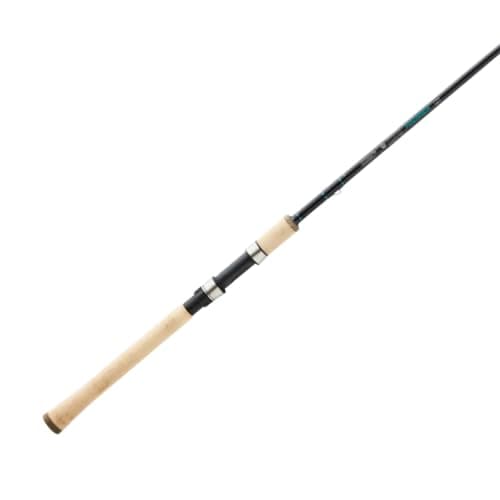
| 1 | Best walleye jigging rod St. Croix Premier Spinning Rod (7'6" Medium) 7 ft 6 in medium — length for line control, with enough tip to feel a soft take. | Vertical jigging and live-bait rigging | $185.00 · Check price on Amazon #ad how this is funded · price as of October 12, 2026 |
| 2 | 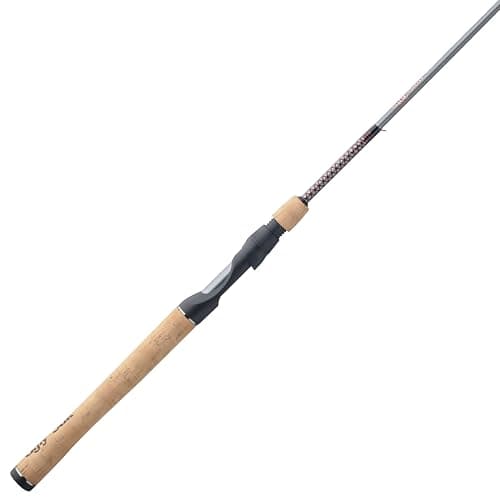 Best all-round walleye rod Ugly Stik Elite Spinning Rod (7' Medium) 7 ft medium, 6-15 lb and 1/8-5/8 oz, on a lighter composite blank with cork. | Anyone who also fishes bass and pike on the same rod | $84.95 · Check price on Amazon #ad how this is funded · price as of October 12, 2026 |
What a walleye bite feels like
This is the whole reason walleye rods are specified the way they are.
A bass usually hits. A walleye often just closes its mouth on the jig and holds. What you feel is not a tap but a change in weight — the jig getting slightly heavier, or the expected tick of the bottom not arriving.
Some takes go the other way and the line goes slack, because the fish lifted the jig. That is the hardest bite in freshwater to detect and it is why sensitivity dominates this category.
The hookset is a firm sweep rather than a snap, because you are moving a lot of line at depth and a snap on a single hook in a bony mouth tends to tear rather than penetrate.
What that asks of the rod
| Property | Target | Why |
|---|---|---|
| Blank material | Graphite or graphite-heavy | The bite is often weight, not a tap |
| Power | Medium-light to medium | Carries 1/8-3/8 oz jigs, still sets at depth |
| Action | Fast tip | Reports the take, then the blank does the work |
| Length, jigging | 6 ft 6 in - 7 ft 6 in | Line control and hookset reach at depth |
| Length, trolling | 7 ft 6 in - 8 ft 6 in | Spread lines wider from the boat |
Note that power is not the priority. Walleye do not fight especially hard for their size; the rod needs to detect and to set, not to overpower.
Jigging, rigging and trolling want different rods
Vertical jigging is the technique most walleye rods are built for: a jig straight down, lifted and dropped, with the bite detected on the fall. Sensitivity and a fast tip matter most.
Live-bait rigging drags a lightly weighted bait behind a slow-moving boat. You want a slightly slower tip so a fish can take line without feeling resistance — the same logic as the sliding egg sinker in catfish rigs.
Trolling crankbaits wants a longer, softer rod. The fish hooks itself against the moving boat, so sensitivity is irrelevant and a soft tip keeps treble hooks in — the same argument our crankbaits page makes.
If you buy one rod, buy the jigging rod. It is the technique that most rewards the right tool.
Line changes the rod’s behavior
Walleye jigging is one of the strongest cases for braid to a fluorocarbon leader in freshwater.
Braid has no stretch, so a subtle take at twenty-five feet arrives at your hand rather than being absorbed by the line. Monofilament stretches enough to hide exactly the bite you are straining to feel.
The leader is there because walleye water is often clear and frequently rocky. Fluorocarbon is hard to see and resists abrasion, which our fluorocarbon page covers.
Reel size: a 2500 or 3000 depending on depth, and our walleye reels page works through the published capacity figures.
Where walleye actually are
Structure and depth changes, and usually deeper than bass. Points, reefs, the edge of a break, and current seams in rivers — where our river setup page applies directly.
They also feed heavily at low light, which is why walleye anglers fish dawn, dusk and after dark far more than bass anglers do. That is another argument for a sensitive rod: at night, feel is all you have.
Our complete walleye setup builds the whole stack.
So what do I actually buy?
Buy the graphite rod if walleye are your target and the composite if they are one species among several.
St. Croix Premier Spinning Rod (7'6" Medium)
$185.007 ft 6 in medium graphite — sensitivity and length for vertical jigging.
#ad how this is funded · price as of October 12, 2026
Ugly Stik Elite Spinning Rod (7' Medium)
$84.957 ft medium, 6-15 lb and 1/8-5/8 oz. The mixed-species choice.
#ad how this is funded · price as of October 12, 2026
Power Pro Spectra Braided Line
$44.25Braid transmits the weight-only take that mono absorbs.
#ad how this is funded · price as of October 12, 2026
Seaguar InvizX Fluorocarbon Line
$25.09Fluorocarbon leader for the clear, rocky water walleye hold in.
#ad how this is funded · price as of October 12, 2026
The picks, in full
Every card below lists the specs we could read off a published page, the URL they came from, and one honest reason you might not want it.
1. Best walleye jigging rod
St. Croix Premier Spinning Rod (7'6" Medium)
St. Croix
7 ft 6 in medium — length for line control, with enough tip to feel a soft take.
Seven and a half feet is longer than most bass rods and that is deliberate for walleye. Length gives line control when you are jigging vertically in current or drifting, and it picks up more line on the hookset at depth.
A graphite blank is the important part. Walleye takes are famously subtle — often no tap at all, just the jig feeling heavier — and a composite blank mutes exactly the signal you are listening for. This is one of the few freshwater techniques where blank material genuinely changes your catch rate.
Medium power carries the 1/8 to 3/8 oz jigs walleye fishing lives on while still having enough backbone to drive a single hook home in twenty feet of water.
The drawback
Seven and a half feet is awkward from a small boat and unwieldy on a crowded one, and it is long enough that transport becomes a real consideration — see our rod storage page. Graphite is also brittle relative to composite, which matters on a rod this long.
Published specs
- Model
- SCPS76MF
- Length
- 7 ft 6 in
- Power
- Medium
- Action
- Fast
- Line rating
- 6-12 lb
- Lure rating
- 1/4-5/8 oz
- Pieces
- 1
- Guides
- 8 + tip
- Handle
- Premium full cork; length not published
- Blank
- SCII carbon fiber
- Rod weight
- Not published
- Warranty
- 5-year limited, with a stated $60 fee
- Made in
- USA
Specs read from St. Croix Rod - Premier (SCPS76MF spec table).
#ad how this is funded · price as of October 12, 2026
2. Best all-round walleye rod
Ugly Stik Elite Spinning Rod (7' Medium)
Ugly Stik
7 ft medium, 6-15 lb and 1/8-5/8 oz, on a lighter composite blank with cork.
The published ratings — 6–15 lb line, 1/8–5/8 oz lures — cover walleye jigging, crankbait work and a bass day on the same rod. For anglers who do not fish walleye exclusively, that flexibility is worth more than a specialist blank.
The Elite blank carries more graphite than a GX2, so it transmits more than the budget composite while keeping some of the toughness. On a mixed-species rod that is a sensible middle.
Cork rather than EVA on the handle, which transmits vibration slightly better and is warmer in the cold water walleye fishing often happens in.
The drawback
It is less sensitive than a full graphite rod, and on the softest walleye bites that is the difference between feeling a take and reeling in an empty hook. Seven feet is also shorter than ideal for vertical jigging in current, where the extra six inches of the St. Croix genuinely helps.
Published specs
- Model
- USELSP701M
- Length
- 7 ft
- Power
- Medium
- Action
- Fast
- Line rating
- 6-14 lb
- Lure rating
- 1/4-5/8 oz
- Guides
- 7 + tip, Ugly Tuff PVD stainless
- Handle
- 15-1/2 in, premium cork
- Blank
- Ugly Tech, 35% more graphite than GX2
Specs read from Tackle Warehouse — Ugly Stik Elite Spinning Rods.
#ad how this is funded · price as of October 12, 2026
Questions people actually ask
What rod is best for walleye jigging?
A 6 ft 6 in to 7 ft 6 in medium-light or medium graphite rod with a fast tip. Sensitivity dominates because a walleye take is often just the jig feeling heavier rather than a tap.
Why does blank material matter more for walleye?
Because the bite is frequently weight rather than a tap, and sometimes the line simply goes slack because the fish lifted the jig. A composite blank mutes exactly that signal, so graphite genuinely changes your catch rate here.
Should you use braid for walleye?
Braid to a fluorocarbon leader is the strongest freshwater case for it. Braid's zero stretch delivers a subtle take at twenty-five feet to your hand, where mono absorbs it, and the leader handles clear rocky water.
How do you set the hook on a walleye?
A firm sweep, not a snap. You are moving a lot of line at depth, and a snap on a single hook in a bony mouth tends to tear rather than penetrate.
Read next
Prices on this page come from the retailer at request time and change without notice. If we cannot get a live one we say “check price” rather than show you a number that has gone stale. How we pick.