Tackle
Bass jigs: the lure that catches the biggest fish in the box
The least exciting-looking lure in the box, and the one that produces the biggest average fish.
By Sawyer V. · Last updated · How we pick
The short answer
A bass jig is a weighted hook with a skirt, fished slowly on the bottom. Head style is chosen for the cover, weight for the depth, and the trailer changes the fall. A 3/8 oz jig with a compact trailer covers most water, and jigs produce a bigger average fish than any other lure category.
Reel & Rig earns a commission from qualifying purchases made through links on this page, at no extra cost to you. It does not change which gear we pick or what we say about it. Full disclosure.
Quick picks
| # | Product | Best for | Price |
|---|---|---|---|
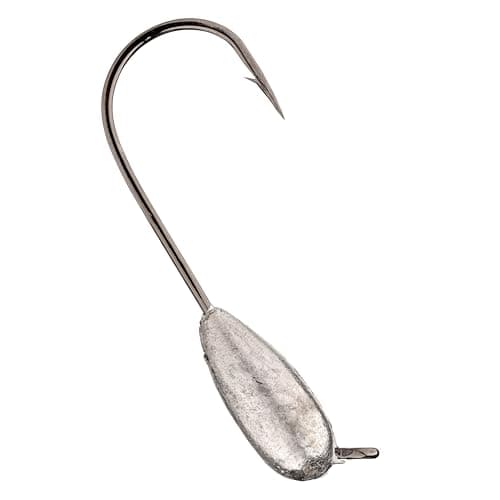
| 1 | Best finesse jig Strike King Tour Grade Shakey Head A light head designed to stand a worm up off the bottom. | Clear water, pressured fish and open bottom | $5.99 · Check price on Amazon #ad how this is funded · price as of October 12, 2026 |
| 2 | 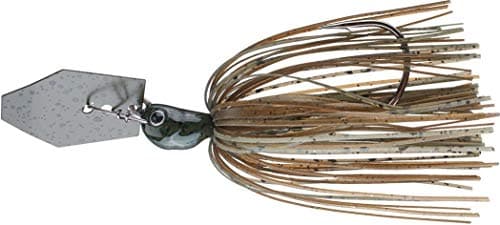 Best moving jig Z-Man Evergreen ChatterBait Jack Hammer Published in 3/8, 1/2, 3/4 and 1 1/4 oz, with a Gamakatsu heavy wire hook. | Stained water and grass, when you need to cover ground | $19.79 · Check price on Amazon #ad how this is funded · price as of October 12, 2026 |
Why jigs produce bigger fish
Two reasons, and both are about what a jig looks like rather than how it moves.
It imitates a crayfish. A skirted jig dragged along the bottom, with the skirt flaring and a trailer kicking, reads as a crayfish backing away with its claws up. Crayfish are high-calorie food and big bass eat a lot of them.
It is a big mouthful fished slowly. A large bass does not want to chase a fast bait for a small return. A jig sitting on the bottom looking substantial is exactly the cost-benefit calculation a big fish will accept.
The trade is bite count. You will get fewer bites on a jig than on a spinnerbait or a crankbait, and the fish will be larger.
Head style is chosen for the cover
| Style | Head shape | Use in |
|---|---|---|
| Arkie / round | Rounded, all-purpose | General cover, wood, rock |
| Football | Wide, flat-sided | Rock and gravel - resists wedging |
| Flipping / pointed | Narrow, pointed nose | Heavy grass and mats - parts vegetation |
| Swim jig | Pointed, upward eye | Retrieved through grass, not dragged |
| Shakey head | Small, light | Open bottom, clear water, finesse |
The pattern: pointed heads part cover, wide heads resist wedging in rock, and light heads are for open bottom. Our jig heads page covers the same logic for soft plastics.
Weight by depth and cover
1/4 oz for shallow, clear, calm water and finesse work.
3/8 oz is the default. It covers most water down to about fifteen feet and sits inside a medium rod’s printed casting window.
1/2 oz for deeper water, wind, or dragging along a rock bottom.
3/4 oz and up for punching through matted vegetation, which is a specific technique rather than a general choice.
Use the lightest weight that reaches the bottom and stays in contact. A jig that falls too fast skips the fall bites, and most jig bites come on the fall.
The trailer is half the lure
A bare jig is incomplete. The trailer changes the profile, the action and — most importantly — the fall rate.
A compact craw trailer is the default. It adds bulk without slowing the fall much, and the claws flare on the drag.
A paddle-tail trailer turns it into a swim jig, adding a thumping tail. Our swimbaits page covers the tail action.
A big bulky trailer slows the fall substantially, which is what you want in cold water or when fish want a long look.
Trim the trailer if the profile is too big. Nothing stops you.
Gear, and the hookset
Medium-heavy power with a fast action, and heavy line. The hook is thick wire buried against a skirt, so it needs real force delivered quickly — the exact case our technique matrix assigns a fast action to.
Fluorocarbon in clear water for its invisibility and abrasion resistance; braid in grass where you need to pull fish free. Our line comparison covers the trade.
Set the hook hard and sweep. A jig bite often feels like the jig has become slightly heavier rather than a distinct tap, so the instruction is to set on anything unusual.
So what do I actually buy?
Start with a 3/8 oz jig and a bag of compact craw trailers. Add the finesse head for clear water and the bladed jig for covering ground.
Strike King Tour Grade Shakey Head
$5.99The finesse head that stands a worm up on open bottom.
#ad how this is funded · price as of October 12, 2026
Z-Man Evergreen ChatterBait Jack Hammer
$19.793/8 to 1 1/4 oz published, Gamakatsu heavy wire. The moving jig.
#ad how this is funded · price as of October 12, 2026
Keitech Swing Impact FAT Swimbait
$10.95A paddle tail as a trailer turns a jig into a swim jig.
#ad how this is funded · price as of October 12, 2026
Seaguar InvizX Fluorocarbon Line
$25.99Fluorocarbon for clear water — invisible and abrasion resistant on rock.
#ad how this is funded · price as of October 12, 2026
The picks, in full
Every card below lists the specs we could read off a published page, the URL they came from, and one honest reason you might not want it.
1. Best finesse jig
Strike King Tour Grade Shakey Head
Strike King
A light head designed to stand a worm up off the bottom.
A shakey head is the finesse end of the jig category: a light head, no skirt, and a straight worm threaded on so it stands up off the bottom when the jig rests.
That standing posture is the whole point. A worm waving vertically off the bottom is visible and looks alive while you do nothing, which is the same principle that makes the Ned rig work.
It is the jig to reach for when a skirted jig is too much bait — clear water, heavily fished lakes, cold fronts. You catch more fish and, on average, smaller ones.
The drawback
The exposed hook fouls in grass and wood, so it is an open-bottom bait rather than a cover bait — the opposite of what a skirted jig is for. It also produces smaller average fish than a full-size jig, which is the direct cost of the finesse presentation.
Published specs
- Weights
- 1/8, 3/16, 1/4 oz
- Hook
- 60-degree flat-eye Gamakatsu
- Pack size
- 3 per pack painted, 4 per pack unpainted
- Head design
- Barb to stand the bait up; eye flush with the head
- Colors
- Green pumpkin, black, unpainted
Specs read from Tackle Warehouse — Strike King Tour Grade Shakey Head.
#ad how this is funded · price as of October 12, 2026
2. Best moving jig
Z-Man Evergreen ChatterBait Jack Hammer
Z-Man
Published in 3/8, 1/2, 3/4 and 1 1/4 oz, with a Gamakatsu heavy wire hook.
A bladed jig is a jig you retrieve rather than drag, and it belongs in this category because underneath the blade it is a skirted jig with a heavy wire hook.
The four published weights cover shallow grass at 3/8 oz through to deep or windy water at 1 1/4 oz. Start at 3/8, which sits inside a medium rod’s casting window.
A Gamakatsu heavy wire hook is published, and heavy wire is correct for a lure you fish in grass — you are pulling fish out of vegetation rather than playing them in open water.
Our bladed jigs page covers the retrieve options in more depth.
The drawback
It is one of the more expensive single lures in freshwater and grass fishing loses lures. Z-Man also does not publish an overall length or the hook size, only the hook brand and wire gauge, so two figures we would normally state are unavailable.
Published specs
- Weights
- 3/8, 1/2, 3/4, 1 1/4 oz
- Head
- Flat-bottom, published as a low center-of-gravity design
- Blade
- Thin stainless steel
- Skirt
- Hand-tied silicone rubber
- Hook
- Gamakatsu heavy wire
- Length
- Z-Man does not publish an overall length
Specs read from Tackle Warehouse - Z-Man Evergreen Chatterbait Jack Hammer.
#ad how this is funded · price as of October 12, 2026
Questions people actually ask
Why do jigs catch bigger bass?
Two reasons: a skirted jig dragged on the bottom reads as a crayfish, which is high-calorie food big bass eat a lot of, and it is a substantial mouthful fished slowly, which suits a large fish's cost-benefit calculation.
What weight bass jig should you use?
3/8 oz as a default — it covers water down to about fifteen feet and fits a medium rod's casting window. Go lighter for shallow clear water and heavier for depth, wind or punching matted vegetation.
Which jig head style for grass?
A pointed flipping head, which parts vegetation rather than collecting it. Football heads are for rock because the wide shape resists wedging, and light shakey heads are for open bottom.
Do you need a trailer on a bass jig?
Yes — a bare jig is incomplete. The trailer changes profile, action and fall rate. A compact craw is the default; a bulky trailer slows the fall for cold water, and a paddle tail turns it into a swim jig.
Read next
Prices on this page come from the retailer at request time and change without notice. If we cannot get a live one we say “check price” rather than show you a number that has gone stale. How we pick.